When the Fame Machine Breaks Down: Kim Scott, J.Lo's Mansion, and the Cost of Living in Public
A single TMZ broadcast surfaces three stories. A suicide attempt, a $50M real estate trap, and a homeschool culture war. That share one architecture: what happens when celebrity exposure has nowhere left to go.
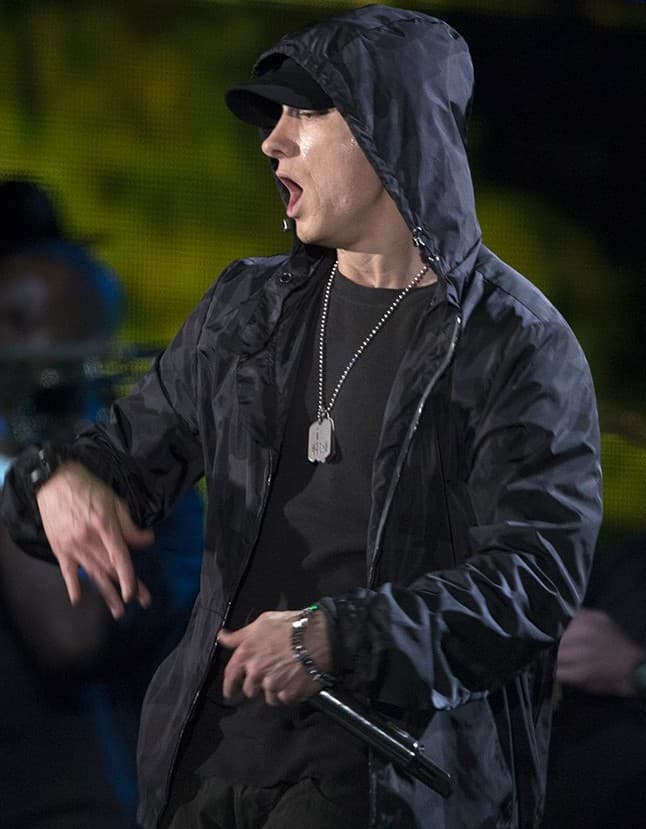
The 911 call came from a nephew. His aunt had cut her wrists and was sitting on the couch, listening to music, the knife still in her hand. The dispatcher's voice was trained flat. The woman on the couch was Kim Scott. Known to most of the world not by that name, but as Eminem's ex-wife, the subject of some of the most vicious songs in mainstream rap history.
Hours later, that same broadcast cycled to Jennifer Lopez, who is currently underwater on a $60 million mansion she cannot sell, stuck in a West Los Angeles luxury market that has more $50 million listings than it does buyers willing to commit. And then, a few segments after that, a podcast spat about homeschooling devolved into a live argument about MAGA, vaccines, and whether wanting to spend time with your children is ideologically suspicious.
Three stories. One throughline. Each is, at its core, about what the machinery of celebrity does to the people it touches. And what happens when the machine keeps running long after the person inside it has stopped being able to keep up.
Kim Scott's hospitalization is the darkest possible outcome of a fame that was never…
Kim Scott was hospitalized after a suicide attempt at her Michigan home, according to a family member who called 911. Scott has struggled publicly for years. Including a recent DUI. But was never a willing participant in the celebrity that defined her life.
The 911 audio, as reported by TMZ Live on July 15, is genuinely hard to absorb. A family member describing the scene. The knife. The music. The unconsciousness that followed. Scott survived, and is hospitalized. That is the fact. The analysis, necessarily, sits at some remove from the facts. Because the story of Kim Scott and celebrity is almost entirely a story about someone who did not choose the exposure that shaped her public life.
Eminem wrote about her constantly. Some of those songs were love songs. Some were rage. '97 Bonnie and Clyde, Kim, the sustained fury of the Marshall Mathers LP. She was a recurring character in one of the best-selling rap catalogs in history, and she had very little say over how that character was drawn. The public developed a relationship with a version of her that her ex-husband rendered in verse. That is an unusual and genuinely brutalizing form of involuntary fame.
She has a daughter with Eminem. Hailie Jade, who has built her own platform, carefully and on her own terms, and who by all accounts has navigated the weight of that lineage better than almost anyone could have expected — see Sandra Bullock's Comeback Is Quieter Than Her First Act, and Smarter. The ripple effects of a parent's public breakdown land differently on a child who is, herself, in the public eye. Hailie has not commented. Eminem has not commented. The silence from both is understandable. It is also, in its own way, part of the story. A family that has been narrated by tabloids for two decades, choosing, finally, not to narrate.
Scott's recent DUI, which ended with her car in her own house, was treated as tabloid fodder. The appropriate frame was always crisis. The distinction matters because celebrity media tends to monetize instability. The mugshot, the ambulance photo, the 911 audio. Without then doing the harder work of asking what sustained public exposure does to a person who never had the infrastructure, the publicists, the management, or the earnings that might otherwise buffer it. Kim Scott had the exposure. She did not have the rest.
Why Eminem's silence is the only rational response. And what it costs him either way
Eminem has made no public statement following Kim Scott's hospitalization. Any response he makes carries significant reputational risk, given his long history of writing about her in explicitly hostile terms.
There is no good statement for Eminem to make here. Express concern and he invites the obvious rejoinder. That the catalog he built partly by humiliating her in song may itself have been a factor in a life that has, by any observable measure, not gone well. Say nothing and the silence reads as cold. He is, right now, saying nothing. That is the correct calculation, even if the calculation itself is uncomfortable to name.
His fans have, as TMZ noted on air, always felt a strange intimacy with Scott precisely because he wrote about her so often. She was, in that sense, part of the emotional texture of his best work. Not as a collaborator but as a subject, and often as a target. That intimacy is parasocial in the purest sense: millions of people feel they know someone who never consented to being known. You can find that dynamic across music's wealthiest careers, but rarely with this particular shape. A man who built a fortune partly on the raw material of someone else's suffering, who now has to figure out where his public obligation to that person begins and ends.
The business angle is this: Eminem is in the back nine of a career that still generates significant catalog revenue. Any resurgence of the Kim Scott story in the press cycle puts his back catalog's more extreme material back in front of streaming algorithms and editorial desks that are more attentive to that kind of content than they were in 2000. He has navigated that before. The question is whether he can get through it while a real human crisis is unfolding around someone he once claimed to love, in a way that is legible to an audience that has changed enormously since the Marshall Mathers LP dropped.
"The house is not just a property. It is a symbol. And symbols are harder to price than square footage."
Jennifer Lopez's $50 million mansion problem is not really a real estate problem
A prospective buyer backed out of a deal to purchase Jennifer Lopez's West Los Angeles mansion, which is listed at $50 million. Roughly $10 million below what Lopez and Ben Affleck paid for it, before renovation costs and carrying charges. Lopez has cycled through multiple realtors without closing a sale.
The buyer, described as a prominent figure in tech, got the offer in within a week of the relisting. Put down a deposit. Then, within the contingency window. The standard period during which a buyer can walk and retrieve their earnest money. Took advice from people in his circle and walked. No inspector found a defect. No financing fell through. He simply decided, apparently, that his fifty million dollars had a better home elsewhere.
That is a specific kind of market signal, and it is not flattering. The LA luxury realtor TMZ spoke with framed it as normal competition. The $40-to-$100 million bracket in West LA has genuine inventory — see Survivor Greece Contestant Lost His Leg. Now He's Suing for $100 Million.. But the subtext is harder to ignore. This house has a story. It was purchased during the height of Bennifer 2.0, one of the more media-saturated celebrity reunions in recent memory. It appeared on television. It was written about constantly. And it did not sell. Then it was relisted. And it still has not sold.
TMZ made the observation that this house is now effectively stigmatized by its own coverage. You cannot quietly wait out a stale listing when the listing is famous. Every week it sits on the market is another week of data points for the next prospective buyer to google. The house had a prior life as a rental property. Mariah Carey's former fiancé James Packer reportedly leased it and held an option to buy before walking away. Which means this is not even the first time the property has chewed through a promising relationship.
The carrying costs here are real. A mortgage reported at around $20 million, realtor commissions at this price point running into the millions, and the ongoing operational cost of maintaining a property of this scale. Ben Affleck, who exited the marriage and reportedly signed the asset over to Lopez around tax time. With what was described as a possible tax benefit on his end. Is no longer on the hook. She is. Which means every month this house does not sell, the gap between the purchase price and any realistic exit narrows further. She bought another property and presumably has a path, but the optics of a Hollywood star unable to find a buyer for a $50 million house are not nothing. They are, in fact, the latest chapter in a public narrative about the dissolution of a marriage that the internet watched in real time.
The Bennifer real estate saga reveals how celebrity divorce plays out in asset markets
The failed sale of the Lopez-Affleck mansion shows how celebrity-associated properties carry an invisible premium. And a hidden liability. Buyers at the ultra-luxury tier are often sophisticated enough to see the attention as a disadvantage rather than a selling point.
There is a category of ultra-high-net-worth buyer for whom discretion is the primary value. These are not people who want a house that has been on TV. They are not people who want neighbors speculating about them by association. And they are especially not people who want to absorb the residual narrative of a very public romance that ended in very public divorce. The house, at this point, is not just a property. It is a symbol. And symbols are harder to price than square footage.
Lopez has changed realtors multiple times, which is itself a signal. When a seller cycles through representation at this price point, it usually means one of two things: the price is wrong, or the product has a characteristic that no amount of marketing can overcome. In this case, it may be both, and the characteristic in question is not a leaky roof. It is fame itself. The business of celebrity has always had a complicated relationship with asset values. Fame inflates some things and quietly destroys others.
The obvious move, floated on air and apparently also by people in Lopez's circle, is to rent the property. That route was reportedly taken by a prior owner. It solves the carrying cost problem without forcing a sale at a loss. But renting a $50 million house is its own market. The pool of people who can and will rent at that price point is not large, and the house remains on your balance sheet, unresolved, for as long as it takes. Lopez is not in financial distress. But she is also not, by any reasonable accounting, coming out ahead on this particular investment.
The Nolan Wells investigation and what Congresswoman Jasmine Crockett actually said
Congresswoman Jasmine Crockett told TMZ that race cannot be excluded from the Nolan Wells death investigation, citing Mississippi's history and circumstances that she argues would have produced arrests if Wells had been white.
Crockett was direct. She told TMZ on Capitol Hill that as a Black American she would always question racial motivation in a case like this. And she went further, saying flatly that if the races were reversed, the friends would already be in custody. That is not a subtle statement. It is a political intervention, made by an elected official with national standing, into a local law enforcement matter in Mississippi.
The sheriff's early declaration that there was no evidence of foul play is the friction point. As TMZ's own panel noted, that framing. No obvious sign of blunt force trauma. Is not the same as ruling out homicide. The absence of visible trauma does not exclude a range of other causes that would constitute foul play. Saying it too early, before autopsy results, does two things simultaneously: it reassures one community and alienates another. In a state with Mississippi's documented civil rights history, that asymmetry is not abstract.
Wells's former football coach told TMZ he saw no racial tension in the friend group and said Wells was universally liked. That account matters. It does not, however, resolve the question Crockett and others are raising. Which is less about whether racial animus caused the death and more about whether racial dynamics are shaping the investigation and its public communication. Those are different questions, and conflating them is where a lot of the national conversation has gone wrong.
The phone is the most concrete factual thread. Attorney Ben Crump told TMZ that when the phone was returned, data had been deleted. The friends' handling of that device. Whatever the full sequence of events. Is now central to both the legal and the public narrative. An investigation that clears itself too quickly on foul play while that question remains open will not stay cleared in public perception, regardless of what the autopsy shows.
How the homeschooling segment became a proxy war for every culture-war fissure of 2026
A podcast clip in which hosts Jennifer Welch and Angie Sullivan called homeschooling universally bad. Linking it to MAGA, anti-vaccination sentiment, and parental pathology. Generated significant backlash and illustrated how education choices have become fully absorbed into political identity.
Welch's framing was not subtle: 'trickle down stupidity,' 'MAGA on steroids,' parents who want their kids around them all day as a red flag. She was not talking about curriculum. She was talking about ideology, coded into a domestic choice. The backlash was immediate and predictable, and it was also, in a narrow sense, beside the point. Because the more interesting question is how we got to a place where where a child learns to read is a statement of political allegiance.
The pandemic is the obvious inflection point. Homeschooling enrollment surged after 2020, and it did not return to pre-pandemic levels. A meaningful share of those new homeschool families were not ideological crusaders. They were parents who had watched school systems fail or terrify their children and made a practical choice. Binding that entire population to a single political identity is analytically lazy and, as TMZ's panel noted, tactically counterproductive. It guarantees that the parents who might otherwise be open to the critique dig in instead.
The school safety dimension is real and underreported in this conversation. Parents who cite fear of school shootings as a factor in homeschooling decisions are not fringe. They are not, by definition, anti-vaccine or theologically motivated. They are people doing a risk calculation that the United States has forced on them by failing, across decades and administrations, to solve a problem that virtually no other developed country has. Collapsing that fear into a cultural pathology is a way of not engaging with it.
The segment landed in a broader conversation about oversight. What a teacher from Alabama, calling in, framed most usefully: the problem is not parents who want to teach their children, it is the absence of consistent state-level accountability mechanisms. That is a structural critique, not a cultural one, and it is considerably harder to turn into a shareable clip.
The Air Force One leak investigation and what it tells us about press freedom in 2026
The White House has launched an investigation into the source of a New York Times story reporting that the Qatari-gifted plane was deemed unsafe, with officials seizing reporters' phones and searching their homes under post-9/11 legal authority that permits such action in national security cases.
Harvey Levin's disclosure, on air, that the LA County Sheriff's Department obtained search warrants for his phones after TMZ broke the Mel Gibson story is the most useful context here. He did not know it had happened until a reporter called him a year later — see King Charles Called Him 'Dear Cousin.' What That Word Costs in Royal Diplomacy.. That is the legal architecture: post-9/11 statutes gave law enforcement significantly expanded authority to investigate journalists' communications, and the mechanism can operate without the journalist's knowledge until it is complete.
The national security framing in the Air Force One case is considerably easier to apply than it was in a DUI cover-up. If the argument is that reporting on the security vulnerabilities of the presidential aircraft endangered the president, that argument will find receptive courts. The precedent is not new. What is new, or at least newly visible, is the speed and the scope. Phones of reporters, searches of homes, and now a parallel internal purge of White House staff suspected of being the source.
As a caller to TMZ put it accurately: the cover-up has become bigger than the leak — see Kamri Peterson's DWTS Moment Is Bigger Than a Dream Come True. The original story. That a gift aircraft from Qatar was not adequately equipped for a high-threat security situation. Is now a secondary narrative. The primary narrative is the investigation into the story. That inversion is exactly how administrations prefer it.
AOC and 'looks maxing': when Congress finds the algorithm
Representative Alexandria Ocasio-Cortez engaged TMZ's congressional correspondents in a substantive conversation about the 'looks maxing' trend popularized by the fitness personality known as Clavicular, expressing concern about young men being drawn into appearance-focused rabbit holes. Without dismissing the trend outright.
The fact that this conversation happened at all is the story. Two years ago, TMZ's DC correspondents were getting brushed past in Capitol hallways. Now AOC is on camera, unprompted, discussing the psychological drivers of a TikTok fitness subculture. And doing it with some precision. She distinguished between the cosmetics industry's longstanding body-image messaging to women and the specific concern she had about young men going down optimization rabbit holes that end, sometimes, with people 'chiseling their face at home.'
That phrase. Chiseling your face at home. Is doing a lot of work. It is a reference to bone-sculpting practices and mewing techniques that have migrated from fringe forums into mainstream short-form video, and it sits at the intersection of body dysmorphia and online male identity formation in a way that is genuinely worth serious attention. AOC's instinct, that the conversation should go 'beyond looks,' is correct and also somewhat insufficient. Because the looks maxing community is not simply vain. It is, in many cases, young men seeking structure, discipline, and a legible framework for self-improvement in a landscape that has not offered them many other options.
The Kardashian comparison landed on air, and it is fair. The beauty and body modification industry is worth billions, and its primary architects are celebrities who made surgical transformation aspirational for an entire generation of women. The concern about young men doing dangerous things to their bodies is legitimate. It is also a conversation that arrives rather late, and from a culture that profited handsomely from the female version of the same dynamic. You can find that tension running through nearly everything on our latest reporting about image and the business that surrounds it.
What one TMZ broadcast reveals about the celebrity-media economy in mid-2026
A single TMZ Live broadcast now routinely moves between a celebrity mental health crisis, a luxury real estate failure, a congressional press freedom standoff, and a TikTok trend. A range that reflects how completely celebrity culture and political culture have merged as a single content stream.
TMZ invented a format. Aggressive, camera-first, legally sophisticated tabloid journalism. That has proven more durable than almost anyone predicted when Harvey Levin launched it. The format has mutated. What began as a celebrity stakeout operation now includes Capitol Hill correspondents, civil rights attorneys, and serving members of Congress as regular on-camera presences. That is not mission creep. It is market response. The audience that wants to know about Kim Scott also wants to know about Jasmine Crockett. The audience that wants to know about Jennifer Lopez's house also wants to know about the First Amendment.
The through-line across all four major segments in this broadcast is exposure. Specifically, what happens to people and institutions when they cannot control their own narrative. Kim Scott never controlled hers. Jennifer Lopez is losing control of hers in real estate terms. The White House is trying, brutally, to reassert control over a narrative that slipped. And AOC is doing the opposite. Voluntarily stepping into a content ecosystem that would have seemed beneath congressional dignity a decade ago, because she understands that the ecosystem is now where the audience is.
That is the business of fame in 2026. The celebrity wealth profiles we track across industries. Music, film, tech, sports. All share one variable: the people who hold their value longest are the ones who figured out, early, the difference between being in the story and being consumed by it. Kim Scott was consumed. Jennifer Lopez built an empire and is now watching one asset inside it become a liability she cannot offload. The machinery keeps moving. The question is always whether you are driving it or whether it is driving you.