Sorry to This Man, Still: What Keke Palmer's Longest-Running Joke Reveals About the Business of Staying Viral
Zendaya's recreation of "Sorry to this man" made headlines. Keke Palmer's unbothered reaction made a career argument. The real story is how a single offhand line became an annuity. And what that says about fame in the attention economy.
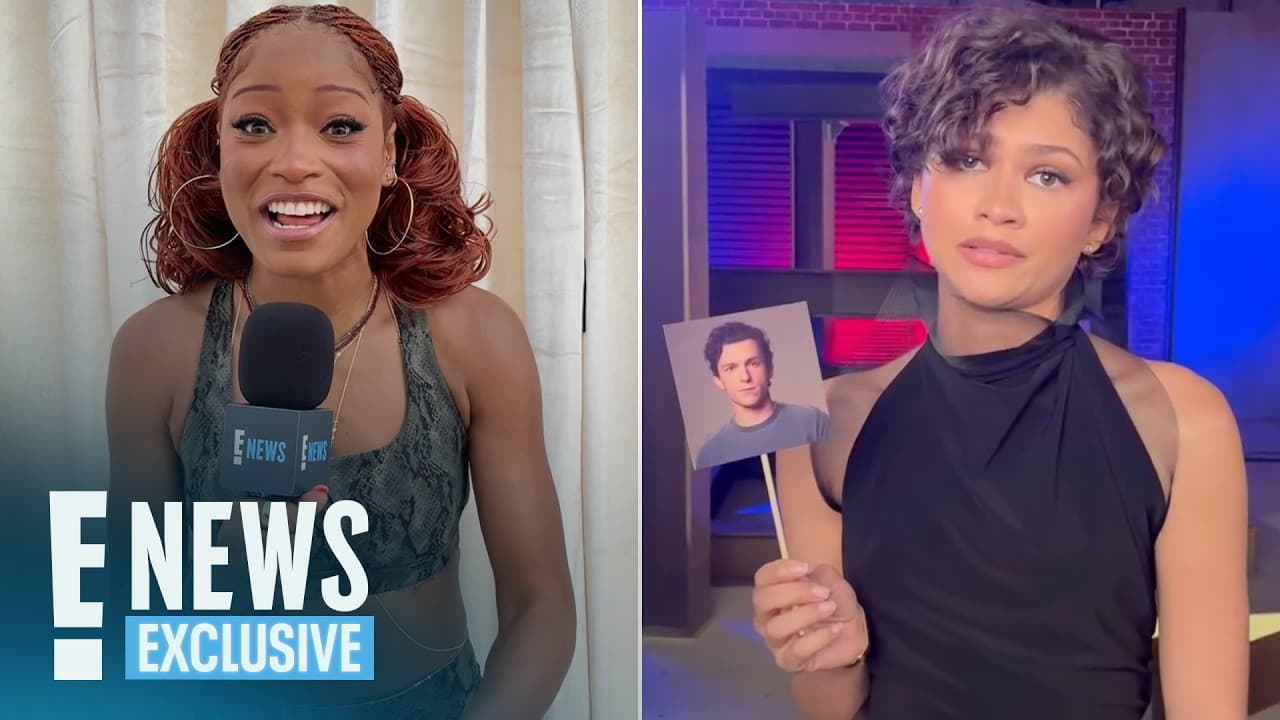
The chicken wings, apparently, were sweet. That is the origin story, as Keke Palmer told it this week in a sit-down with E! News: a throwaway line, a piece of food, an expression of mild sensory pleasure. And somehow, years later, it is still coming back to her as a cultural artifact. "Mhm, this one has a little sweetness to it," she said, reprising the delivery from memory, laughing at herself. That is either the most accidental brand in modern celebrity, or the most skillfully allowed one.
The news hook is Zendaya. The Euphoria star and newly minted Challengers leading lady recently resurfaced the clip that made Palmer a meme first and an icon second. The moment on Which Celebrity Doesn't Know Me where Palmer, confronted with a man she did not recognize, delivered "Sorry to this man" with a shrug so precise it entered the pop-culture lexicon permanently. Zendaya's recreation went viral. Palmer's response, when E! News put the question to her directly, was equally precise: "Sorry to this man lives on." Three words. Zero anxiety. Total ownership.
But strip back the charm and what you are actually looking at is a case study in the economics of cultural durability. Who benefits when a moment refuses to die, why certain celebrities become the container that other celebrities pour their own visibility into, and how Palmer has managed to convert an almost comically slender premise into a career throughline that now includes a hosting gig on a prime-time network competition. The meme is the least interesting part of this story.
What "Sorry to This Man" actually is. And why it keeps coming back
"Sorry to this man" originated as an off-the-cuff Keke Palmer reaction on a celebrity-recognition game segment, expressing cheerful ignorance of an unnamed man.
There is a specific architecture to a line that lasts. It needs to be short enough to quote verbatim, specific enough to conjure a scene, and elastic enough to apply to almost any situation. "Sorry to this man" is all three. You can deploy it about a forgotten acquaintance, an ex-partner, a political figure, a discontinued snack. That elasticity is what transforms a clip into a meme and a meme into linguistic infrastructure. The kind of phrase that other people build jokes on top of, indefinitely.
Palmer herself, telling E! News this week, seemed genuinely amused rather than possessive about it. "Who knew that being sorry to a man could create all that?" she offered, with the rhetorical ease of someone who has long since made peace with the fact that one of her best-known cultural contributions involves expressing indifference to someone she cannot name. That ease is not accidental. It is a studied posture: claim the joke, don't over-explain it, let it breathe.
The longevity is also a product of how the internet now recirculates cultural material. Legacy platforms like Twitter. Or whatever it is being called at any given moment. Create threads. TikTok creates recreations. Instagram creates tribute edits. Each new wave of recirculation introduces the original to an audience that wasn't there the first time, which means the meme is not just surviving; it is actively recruiting new participants. Palmer's clip has functioned less like a joke and more like an open-source sound file that anyone can sample.
The Zendaya recreation is the latest. And among the highest-profile. Of those samples. When a star of Zendaya's current commercial weight picks up your material and restages it, the effect is not just flattering. It is a valuation event. It says: this reference still has enough shared currency that I, at my level of cultural saturation, can assume my audience will get it.
Why Zendaya recreating the bit matters more than it looks
When a celebrity at Zendaya's level of commercial prestige recreates another performer's viral moment, it functions as a public endorsement of that performer's cultural capital, conferring legitimacy and extending the original clip's reach to entirely new audience segments.
Zendaya is, at this particular point in Hollywood's commercial cycle, one of the most carefully managed image properties in the business. The choices her team makes about what she engages with publicly. What she shares, what she recreates, what she cosigns. Are not casual. So when she picks up "Sorry to this man" and restages it, that is not a fan moment. That is a signal: this reference is safe, it is understood across demographics, and aligning with it carries no reputational risk and some measurable upside.
For Palmer, the benefit runs in multiple directions at once. The recreation keeps her original material in active circulation without her having to do anything. It reinforces, for industry observers, that her cultural footprint is durable enough to be worth referencing by peers at the top of their game. And it gives interviewers. Like the E! News team this week. A concrete hook to revisit Palmer's whole persona, which she then uses to pivot to what she actually wants to talk about: her new hosting role on The Voice.
This is the mechanism that so much celebrity press operates on, and it is worth naming clearly. A viral callback from a high-profile peer generates earned media coverage. That coverage creates an interview opportunity. The interview opportunity creates space to announce something new. The announced thing. In this case, The Voice. Now carries the warm associative glow of the viral moment that opened the door. It is a chain of attention transfer, and Palmer navigated every link of it with notable economy.
Zendaya, for her part, gets her own return: she positions herself as someone with cultural memory, someone who watches and appreciates and participates, rather than a star so elevated she has lost contact with the texture of the internet. In the current moment, when parasocial relatability is itself a market asset, that matters. Both women win. The man nobody can identify loses nothing, because he never had anything to protect in the first place.
"A meme is not just a cultural artifact. It is an economic event that repeats itself every time it is shared. And Palmer has been collecting interest on hers for years."
Keke Palmer's career arc: how she built a business from being underestimated
Keke Palmer built her entertainment career across three decades by consistently moving between mediums. Child acting, music, hosting, film, television. Treating each transition as an expansion rather than a pivot, which has left her with an unusually broad and resilient professional foundation.
The rap on Palmer, if you were a certain kind of industry observer in the 2010s, was that she was charming but undefined. Too comedic for prestige drama, too earnest for edge, too everywhere to be taken seriously in any one lane. That assessment misread what she was actually building. While the conventional Hollywood wisdom was organizing careers around a singular defining project or role, Palmer was doing something more built that way interesting: she was accumulating cultural surface area.
By the time the "Sorry to this man" clip landed, Palmer already had Akeelah and the Bee, True Jackson VP, Scream Queens, Hustlers, and a music catalog behind her. The meme didn't define her career. It translated it. It gave people who didn't have an organizing frame for who she was a single shareable artifact that captured her energy. That is a different function than a breakout role. It is a personality compression, a shortcut to the vibe.
What followed demonstrated how bankable personality compression can be in the attention economy. The fan edits multiplied. The hosting opportunities multiplied. The brand partnerships followed the eyeballs. Palmer began appearing not just as a performer but as a cultural reference point. Someone whose mode of being, not just her output, was the product. This is a rarer achievement than it sounds, and it tends to produce more durable revenue than any single project.
The trajectory lands, in August 2026, at a hosting role on The Voice during a celebrity-edition season. That booking is not incidental to the above history. It is its direct consequence. Palmer didn't get The Voice because of any single credit. She got it because years of accumulated cultural presence made her name mean something specific and usable to a network that needed a host with warmth, wit, and genuine cross-demographic recognition.
The Voice hosting gig: what the booking actually signals about Palmer's market value
Keke Palmer's appointment as host of The Voice's celebrity season signals that NBC views her as a prime-time anchor capable of delivering both tonal warmth and broad audience recognition. A profile that typically commands seven-figure hosting fees for major network competitions.
Network competition television is a specific business, and the host role within it is a specific financial instrument. The host is not the star of the show in the sense of carrying a character arc. The host is the connective tissue. The person who makes the pacing work, who reads the room in real time, who gives the audience someone to follow emotionally when the contestants are too numerous to individually track. It is, arguably, harder than acting a scripted part, and the best hosts make it look frictionless.
Palmer's answer to E! News about what she brings to the role was characteristically direct. She said she believes in trying new things, in starting at level one, in the dignity of being a beginner. That framing is not just personal philosophy; it is a production asset. A celebrity-edition season of The Voice, by definition, asks famous people to be vulnerable and uncomfortable on national television. The host who can model non-judgmental enthusiasm for that discomfort without becoming saccharine is doing precision tonal work.
The booking also tells us something about where Palmer sits in Hollywood's current hierarchy of trust. Hosting a major network tentpole requires the production company, the network, and the studio to collectively decide that this person will not generate unwanted controversy, will show up prepared, and will be capable of handling live or near-live television over multiple episodes. That is a high-stakes endorsement of reliability. Networks do not hand it to performers on the basis of virality alone. They hand it to performers who have demonstrated, over time, that they can be the stable center of a production.
For anyone tracking Palmer's position in the broader entertainment landscape, the Through-line is visible now in a way it perhaps was not a decade ago. She has crossed from performer to institution. Not in the stuffy sense, but in the structural one. She is someone a network builds a season around.
The economics of a durable meme: who actually profits when a clip won't die
When a celebrity meme maintains active cultural circulation for years, the primary financial beneficiaries are the original creator. Through sustained press visibility and booking use. And the platforms that host and algorithmically resurface the content, which monetize engagement without sharing revenue with performers.
This is the part of the conversation that rarely makes it into the celebrity profile, but it is the most built that way important part. A meme is not just a cultural artifact. It is an economic event that repeats itself every time it is shared, recreated, or searched. The question of who captures the value from that repetition is a genuinely complicated one. And in most cases, the answer is: not primarily the person whose face and voice are in the original clip.
The platforms. YouTube, TikTok, Instagram. Are the clearest winners from sustained meme virality. They capture advertising revenue every time the content generates engagement. The original creator, unless they posted the content themselves to their own monetized channel, typically sees little of that. What they do capture is the softer currency of press coverage and booking use, which is real but harder to price.
Palmer's case is interesting because she has been unusually effective at converting the soft currency into the hard kind. Each wave of "Sorry to this man" recirculation has, historically, corresponded with a visibility bump that she has been able to use commercially. This week's cycle. Triggered by Zendaya's recreation. Is a textbook example. She did not create the conditions for it. She didn't have to. She simply showed up to the E! News interview, delivered three composed sentences, and walked out with renewed press coverage for The Voice. The return on no investment is infinite.
The broader lesson here connects to a dynamic we've examined elsewhere on these pages. The way celebrity influence operates as an invisible floor that only becomes visible when it starts to crack. Palmer's floor is load-bearing. A single line, a single shrug, a single moment of genuine personality on camera. And she has been collecting interest on it for years.
Palmer's fitness commentary: why a gym pet peeve is actually image strategy
Keke Palmer's on-record complaint about fitness instructors who prioritize difficulty over client retention is a low-stakes but precise image choice: it positions her as someone who values accessibility and results over performance, reinforcing the approachable-expert persona her brand requires.
It would be easy to file the fitness segment of the E! News interview as filler. The kind of breezy chat-show exchange that exists to pad a segment before you get to the real subject. Read it more carefully, though, and it is doing quiet work. Palmer's gym pet peeve, as she laid it out, is trainers who use their classes to demonstrate their own toughness rather than serve their clients' goals. "People should be coming to your workout classes wanting to come back," she said, framing the whole thing around outcomes rather than ego.
That framing is not incidentally similar to the persona she projects everywhere else. The Palmer brand, in its most stable form, is: I am genuinely capable, I take the work seriously, and I am not going to make you feel bad about yourself in the process. It is the anti-gatekeeping stance, the welcome-mat version of competence. It is also, not coincidentally, the stance that maximizes audience size. You lose nobody on the left end of the intimidation spectrum, and you keep everyone who was already with you.
Applied to The Voice, it is exactly the right energy. Celebrity contestants who are being asked to sing in a discipline they have not mastered professionally need a host who is going to be in their corner without condescending to them. Palmer telegraphed, in a conversation nominally about Pilates, that she understands what that relationship should feel like. Whether it was calculated or instinctive almost doesn't matter. The output is the same.
The "iconic lines" question: how celebrity soundbites become brand IP
Celebrity soundbites that achieve meme saturation function as a form of brand intellectual property. Unregistered but commercially potent, generating recurring press visibility and association with positive cultural moments that builds up over time like a media asset.
E! News asked Palmer directly: of all her iconic lines, which is her favorite? Her answer. That it changes day to day, and lately has been "this one has a little sweetness to it". Was both honest and built that way clever. By refusing to crown a single line as definitive, she keeps all of them active. She does not let any one quote calcify into the thing she is known for, which would implicitly downgrade the rest. The catalog stays open.
This is more sophisticated than it sounds. Many celebrities, when they acquire a signature line or moment, either over-rely on it (running the callback into the ground) or visibly bristle at being defined by it (which reads as ingratitude and alienates the fans who kept it alive). Palmer does neither. She recites the line on demand, she credits the context. The chicken wings. She laughs, and she moves on. The line keeps its potency because she does not drain it by explaining it or resent it by distancing herself.
The commercial dimension of this is worth underlining. In an era when music wealth and entertainment income increasingly flow through personal brand licensing. Partnerships, ambassadorships, platform deals. The value of a recognizable, positive, widely understood personality signature is real money. It shows up in the room when a brand is deciding between two roughly equivalent candidates for a campaign. "Sorry to this man" is not just a meme. It is a negotiating asset.
Across the full atlas of entertainment wealth we track, the pattern holds: the performers who build the most durable commercial positions are not always the ones with the biggest singular credits. They are the ones whose personalities have become porous. Who have given the culture enough surface to attach to, enough distinct material to quote and recreate and pass around. Palmer is a case study in that exact dynamic, and she has been building toward it longer than any single viral moment suggests.
What Palmer's unbothered reaction reveals about modern celebrity image management
Keke Palmer's composed, three-sentence response to news of Zendaya's recreation exemplifies a sophisticated celebrity image strategy: acknowledge without over-claiming, express gratitude without performing it, and redirect attention efficiently toward the current professional priority.
The temptation, when a peer of Zendaya's stature recreates your moment, is to over-react. To gush, to amplify, to make it the entire news cycle. Palmer did none of that. "Sorry to this man lives on," she said, and the sentence closed itself. It was warm, it was funny, it was complete. It also, within about four seconds, created the impression that Palmer is someone who does not need Zendaya's validation to feel good about her own legacy. That is a posture worth tens of millions of dollars in sustained cultural credibility.
Compare it to the alternative: the celebrity who responds to a peer's recreation with effusive gratitude that implicitly positions the recreator as the authority on what was always the original creator's material. Palmer's response reversed the polarity without being rude. She received the compliment, she expressed appreciation through her ease rather than her words, and she maintained the implied hierarchy: this is my thing, it was always my thing, and I'm glad everyone knows it.
This kind of image discipline. Knowing what not to say, knowing when three words are better than thirty. Is one of the least-taught but most commercially consequential skills in celebrity management. It is what separates stars who remain relevant through multiple cultural cycles from those who peak and fade. The industry's relationship with performers who lose that discipline is not gentle. Palmer, in this moment, demonstrated exactly why she has not required that kind of intervention.
It also lands cleanly with the specific demographic Palmer has built her core audience from: people who value self-possession, who read confidence without arrogance as aspirational, who are suspicious of the over-produced and the overwrought. For that audience, "Sorry to this man lives on" is more satisfying than any long-form tribute to the moment's cultural significance could ever be. She trusts her audience to get it. They always have.
The broader career lesson: what Palmer's trajectory teaches about multi-medium survival
Keke Palmer's ability to sustain a headline-level career across more than two decades of shifting entertainment formats demonstrates that medium-agnostic performers. Those who can move credibly between film, television, music, and hosting. Carry structural career advantages over those who optimize for a single lane.
The entertainment business has undergone more structural disruption in the past fifteen years than in the previous fifty. Streaming collapsed the theatrical window. Social media redistributed cultural authority away from gatekeepers and toward individuals. Competition television, long written off as a format in decline, staged a comeback by leaning into celebrity and nostalgia. Each of these shifts reshuffled the deck for performers who had organized their careers around assumptions that were no longer operative.
Palmer survived all of it. Not just survived, but compounded. Because she never organized her career around a single assumption. She moved laterally when moving laterally was the right call. She treated a hosting gig not as a step down from acting but as a different stage with a different kind of audience, one worth cultivating. She let a food-adjacent offhand comment become a meme, and then she let the meme become a personality asset, and then she let the personality asset open doors to prime-time network television.
None of this is accidental, and calling it luck undersells the decision-making involved. But the starting condition. A willingness to not be precious about format, about genre, about what counts as legitimate. Is the foundational variable. Performers who draw bright lines between "real" work and "commercial" work, between "artist" credibility and "entertainer" accessibility, tend to find those lines become walls. Palmer drew no such lines, and the floor plan of her career reflects it.
For readers tracking the full spectrum of entertainment career economics, the Palmer model offers a practical template: accumulate cultural surface area early, convert it into press use consistently, and approach each new medium as an expansion of the same fundamental product. Which is, at its core, a personality specific enough to be memorable and warm enough to be universally welcomed. "Sorry to this man" is a punch line. But it is also a business plan, and it is still, apparently, in very good health.