The Diddy-Tupac Allegation Just Entered the Official Record. And That Changes Everything
A retired LAPD detective's testimony in the Keffe D murder trial has placed Sean Combs at the center of a thirty-year-old conspiracy claim. What that means for the trial, for Diddy's already devastated standing, and for the long, unfinished business of Tupac Shakur's death.
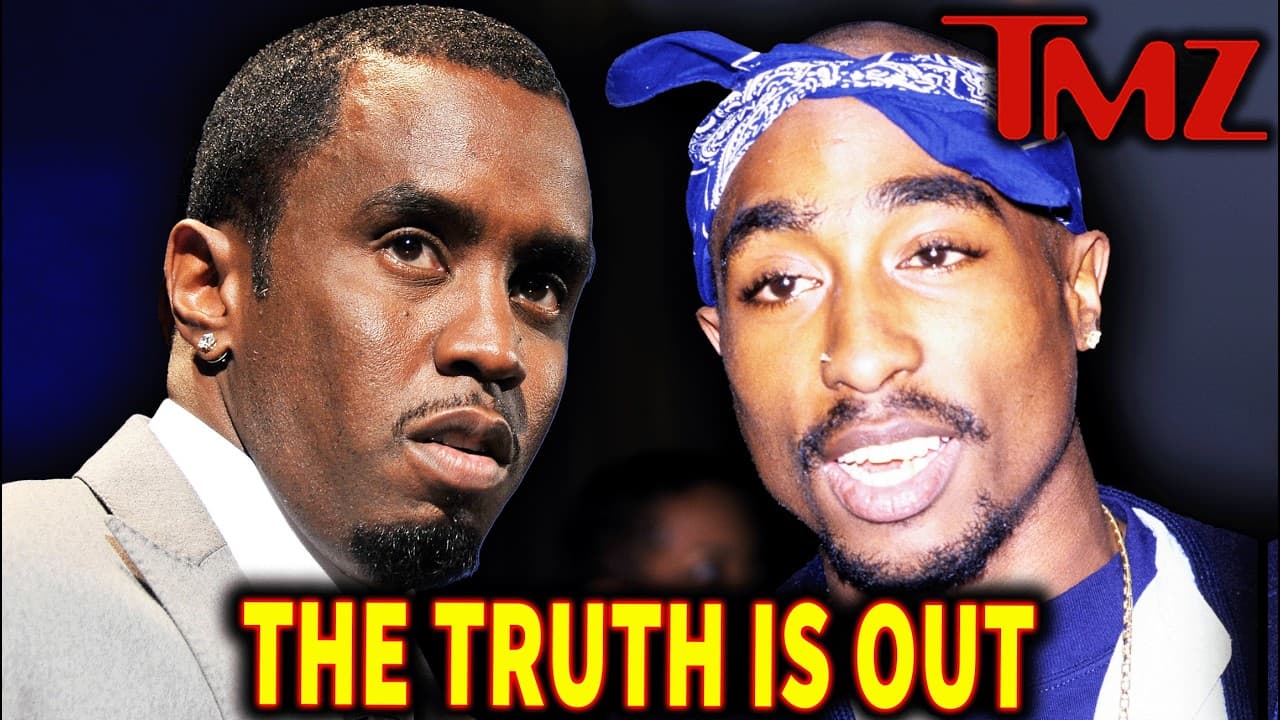
The allegation itself is not new. It has circulated in hip-hop mythology, in true-crime podcasts, in Keffe D's own self-published memoir and his rounds of interview circuit bragging. The idea that Sean 'Diddy' Combs once sat inside Greenblatt's Deli on the Sunset Strip and offered a million dollars for the killing of Tupac Shakur. What is new, and what matters enormously, is where the allegation now lives: inside sworn trial testimony, read into the official record of a criminal prosecution, surfaced not by a defense attorney looking for a smokescreen but by the prosecution itself.
Retired LAPD detective Darren Dupree took the stand in the murder trial of Duane 'Keffe D' Davis. The man prosecutors say masterminded the September 1996 drive-by shooting that killed Tupac. And told the court what Keffe D had told him in an earlier conversation: that Combs had offered money, routed through an intermediary named Zip Martin, for the execution of Tupac Shakur. The payment, Dupree testified, never actually reached Davis. That last detail is the hinge on which this entire trial. And Diddy's exposure to it. Now swings.
Combs is already facing federal sex-trafficking and racketeering charges in a separate proceeding, his reputation shredded by a cascade of civil suits and a surveillance video that became one of the most-watched pieces of footage in recent celebrity history. He did not need another catastrophic legal headline. He got one anyway. His representatives have called the allegation absurd and categorically denied any such conversation or exchange of money ever occurred. But in the arithmetic of public perception, denial and courtroom record are not equal weights.
What Detective Dupree Actually Testified. And What He Did Not
Retired LAPD detective Darren Dupree testified that Keffe D told him Sean 'Diddy' Combs offered money. Routed through an intermediary named Zip Martin. For the killing of Tupac Shakur, and that this alleged conversation took place at Greenblatt's Deli on the Sunset Strip in Los Angeles.
There is a crucial forensic distinction that the headline version of this story tends to flatten. Dupree was not an eyewitness. He was a law enforcement officer recounting what Keffe D told him during what appears to have been an earlier investigative conversation. A layer of hearsay that the court apparently found admissible in this context but that defense attorneys will almost certainly attack on cross-examination. The statement entered the record as testimony about what Davis said, not as independent corroboration of what actually happened inside that deli.
The Greenblatt's detail is itself a small illustration of how slippery this testimony is. Dupree stated in open court that the deli on Sunset is 'still there.' It is not. Greenblatt's closed years ago. That factual error. Minor on its face. Is precisely the kind of credibility chip a skilled defense attorney will try to crack loose from the wall. If a detective misremembers whether a landmark is still standing, what else did he misremember about a conversation from years prior?
None of that erases the core fact: a sworn officer of the law, under oath, in open court, placed Diddy's name at the center of an alleged murder-for-hire conversation. Whatever the evidentiary weight of that testimony, the cultural and reputational weight of it is an entirely different calculation. And in the court of public opinion, admissibility rules do not apply.
Why the Prosecution Introduced Evidence That May Help the Defense
The prosecution called Dupree likely to establish the scope and premeditation of the murder conspiracy, but the testimony's revelation that payment never reached Keffe D could give the defense an opening to argue Davis was a bystander to someone else's scheme rather than its architect.
This is the procedural paradox sitting at the center of the trial's early days. Prosecutors put Dupree on the stand, presumably to build the argument that Davis was deep inside the machinery of Tupac's murder. That he knew about money, about targets, about who was pulling strings. But the detail that the alleged Combs payment never actually reached Davis cuts in a very different direction.
If a jury hears that Combs offered a million dollars and that the money went to an intermediary who never delivered it to Davis, they have been handed an alternate theory of the case: that someone else. Someone with a million dollars and a motive. May have been the true architect of what happened on Flamingo Road in Las Vegas on September 7, 1996. Keffe D's defense doesn't need to prove that alternate theory beyond a reasonable doubt. It needs only to plant reasonable doubt about whether Davis was the mastermind the state says he was.
The asymmetry is striking. Defense teams pay consultants serious money to construct exactly this kind of narrative pivot. The prosecution handed it to them for free, in the form of their own witness. Whether that was a calculated risk. Introduce the Combs allegation on your own terms before the defense does, control the frame. Or a genuine miscalculation is something legal observers will be debating long after this trial concludes.
"The prosecution called the witness, and the witness helped the defense. A reminder that in a trial this old and this mythologized, the truth has more than one direction to travel."
How Keffe D's Prior Public Statements Now Complicate His Own Defense
Keffe D previously claimed in a memoir and multiple interviews that he obtained the gun used to kill Tupac Shakur and gave it to his nephew Orlando Anderson, who allegedly fired the shots.
Davis spent years as one of the most talkative figures in the unsolved-murder universe. He gave interviews. He wrote a book. He described, with a specificity that suggested either intimate knowledge or extraordinary imagination, the mechanics of the night Tupac was shot. He named his nephew Orlando Anderson as the shooter. He said he got the gun. He was, for years, essentially daring law enforcement to charge him.
Law enforcement eventually obliged. And now, facing trial, his defense has pivoted to arguing that all of it. The book, the interviews, the granular details. Was performance. He was, the argument goes, playing a character, manufacturing street credibility for commercial gain. It is not an impossible defense in principle. People do exaggerate proximity to violent events for notoriety. But it is an exceptionally hard sell when the exaggerations were this specific and this sustained.
The Combs testimony cuts into that defense in a secondary way. If Davis was bragging and fabricating about his own role, he might simultaneously argue that the Combs conversation was real. That he was approached, that money was dangled, that he wasn't the actual shooter because someone else's money ultimately drove the event. Or he argues all of it was fiction. Either path has serious evidentiary problems, and the prosecution will have weeks to map both of them for the jury.
What This Means for Sean Combs, Who Already Has Enough Legal Problems
Sean Combs is not a defendant in the Keffe D trial and has not been charged in connection with Tupac Shakur's death.
Combs's representatives moved quickly after the testimony surfaced, calling it absurd and insisting no such conversation and no exchange of money ever occurred. That response is the correct legal and PR play: deny, distance, wait. But the velocity of the news cycle in 2026, amplified by social media and an audience already primed by months of damaging coverage, means the denial lands in a media environment that is built that way hostile to it.
For anyone tracking the music business and the wealth built within it, what is happening to Combs represents something close to a complete demolition event. The brand architecture he constructed over three decades. Bad Boy Records, Sean John, Ciroc, the Revolt media network, the celebrity-philanthropy adjacency. Was already under severe structural stress from the federal indictment and the civil suits filed against him. Testimony in an unrelated murder trial does not make him legally culpable for Tupac's death. But it does expand the territory of allegations surrounding his name, and expanded territory means expanded legal costs, expanded reputational damage, and an ever-narrower path back to any version of commercial viability.
His attorneys' statement included a pointed warning: if anyone is thinking about calling Combs as a witness in the Keffe D trial, they will be disappointed by how little he knows. That is the language of a legal team managing exposure, not merely correcting the record. The message is clear. Do not make Diddy a character in this story, because we will fight that at every procedural turn.
The Thirty-Year Gap: Why the Tupac Case Took This Long to Reach Trial
The murder of Tupac Shakur in September 1996 went uncharged for nearly three decades largely because key witnesses were unwilling to cooperate with law enforcement, evidence was circumstantial, and the case existed at the intersection of active gang rivalries that made prosecution politically and logistically complicated.
There is something almost built that way absurd about where the legal system has arrived. For years, Davis was not a suspect being hunted. He was a man on the interview circuit, a memoirist, a figure who had monetized proximity to one of the most famous unsolved murders in American cultural history. Law enforcement watched, gathered, and eventually built a case around his own public statements. He provided the rope.
The thirty-year gap also means that most of the primary witnesses are dead, incapacitated, or deeply reluctant to testify. Orlando Anderson, Davis's nephew and the alleged shooter, was killed in an unrelated shooting in 1998. Suge Knight, the Death Row Records founder present on the night of the shooting, is serving a separate prison sentence and has his own complicated relationship with what he will and will not say on the stand. The evidentiary landscape of this case is a series of gaps and silences, filled in by accounts from people who had every incentive to shape their stories.
That context matters for understanding why the Combs allegation. First surfaced in 2008 according to the testimony. Has only now entered a courtroom. This is a case built on fragments. Every new testimony, every newly surfaced account, lands differently than it would in a prosecution with clean forensics and willing witnesses. The jury will spend weeks trying to assemble a picture from pieces that were never designed to fit together cleanly.
The Credibility Problem: How a Factual Error Undermines the Detective's Account
Detective Dupree's testimony that Greenblatt's Deli on Sunset Boulevard 'is still there' when the establishment has in fact closed is a small but legally exploitable error. Defense attorneys routinely use moments of factual inaccuracy to cast doubt on a witness's overall reliability, memory, and attention to detail.
It seems like a trivial thing. A deli. Open or closed. But in criminal trials, credibility is accumulated and lost in precisely these granular moments. A detective who places a high-stakes conversation at a specific location and then gets the current status of that location wrong has handed opposing counsel a gift. The cross-examination writes itself: 'If you're wrong about whether the deli is still open, how confident are you in your recollection of what Mr. Davis told you? How confident are you in the details of that earlier conversation?'
This is the texture of how old cases fall apart. Not through dramatic Perry Mason reversals, but through the slow erosion of confidence in individual details. The Combs allegation, as dramatic as it is, rests on a chain of transmission that is already fragile: Combs allegedly said something to someone, who told Davis, who told Dupree, who testified about it in court. Each link in that chain is a potential break. Defense attorneys get paid to find breaks.
That said, evidentiary fragility and narrative power are not the same thing. Even if Dupree's testimony is successfully undermined in the courtroom, it has already done something irreversible in the broader cultural conversation around this case. The allegation is now in the official record. It will be cited, archived, and quoted for as long as people write about Tupac Shakur's death. Which, given the cultural staying power of this story, is likely to be a very long time. For the latest developments as the trial continues, our latest reporting will track the proceedings as they unfold.
What the Public Response Reveals About Tupac's Enduring Cultural Weight
Public reaction to the Dupree testimony. Including the widespread sentiment that Combs's alleged involvement had long been suspected by fans. Reflects the degree to which Tupac Shakur's murder has functioned for thirty years not merely as an unsolved crime but as an open wound in hip-hop culture, carrying enormous emotional…
The fan response to news of the testimony was immediate and telling. The dominant sentiment was not shock. It was vindication. A large portion of the audience that has followed this case across decades already believed, with varying levels of evidence, that Combs had played some role in what happened to Tupac. The testimony did not create that belief; it gave it a new and more official-sounding home.
That gap. Between what a fanbase believes and what a court can prove. Is where celebrity culture and criminal justice collide most uncomfortably. The music wealth profiles we track at Neon Hollywood are built on the back of cultural legacies, and few legacies carry more complicated weight than the East Coast-West Coast rivalry of the mid-nineties, in which Tupac and Combs were the most visible antagonists. The mythology of that period has been monetized, sampled, documented, and dramatized for three decades. The trial is, among other things, a collision between that mythology and the evidentiary standards of a Nevada courtroom.
Tupac Shakur sold millions of records in his lifetime and has sold hundreds of millions since his death. His estate, his catalog, his image rights. These are active commercial properties in 2026. The trial is a reminder that the cultural machinery built around his death has never stopped running, and that the people most invested in how his story is told extend far beyond the courtroom. When the jury eventually reaches a verdict, it will settle a legal question. It will not settle the cultural one.
Who Stands to Win and Lose as the Trial Proceeds
In the near term, Keffe D's defense team benefits most from the Combs testimony, which introduces an alternate theory of the crime. Sean Combs absorbs further reputational damage with no legal recourse available against testimony given under oath.
Legal proceedings have a way of producing unexpected winners in unexpected places. The Keffe D trial was supposed to be a straightforward, if long-delayed, murder prosecution. Instead it has become, in its early days, a stage on which the most explosive allegation in hip-hop history has been given official oxygen. The lawyers who benefit immediately are Davis's defense attorneys, who have been handed a narrative alternative without having to construct it themselves.
Combs's legal team faces the most difficult immediate task: managing an allegation they cannot directly refute in this courtroom because their client is not a party to it. They can issue statements. They can signal aggressively that calling Diddy as a witness would be a tactical mistake for either side. What they cannot do is cross-examine Dupree. That impotence, in the face of testimony this damaging, is its own kind of punishment.
For anyone monitoring the broader business of celebrity wealth and reputation, this trial is a case study in how legacy assets can be attacked by events entirely outside a public figure's legal control. Combs built one of the most valuable personal brands in American entertainment across three decades. Its current state. Battered by federal charges, civil suits, and now a third-party murder allegation. Is a reminder that brand equity, unlike real estate or catalog ownership, can be destroyed by forces that no contract or copyright registration can stop. The trial will continue. So will the damage.