Inside Diddy's Solitary Confinement: What the Handbook Reveals About His Sentence
A prison brawl at Fort Dix has landed Sean Combs in disciplinary segregation. And the real cost isn't the stripped privileges. It's the good-conduct time he may never get back.
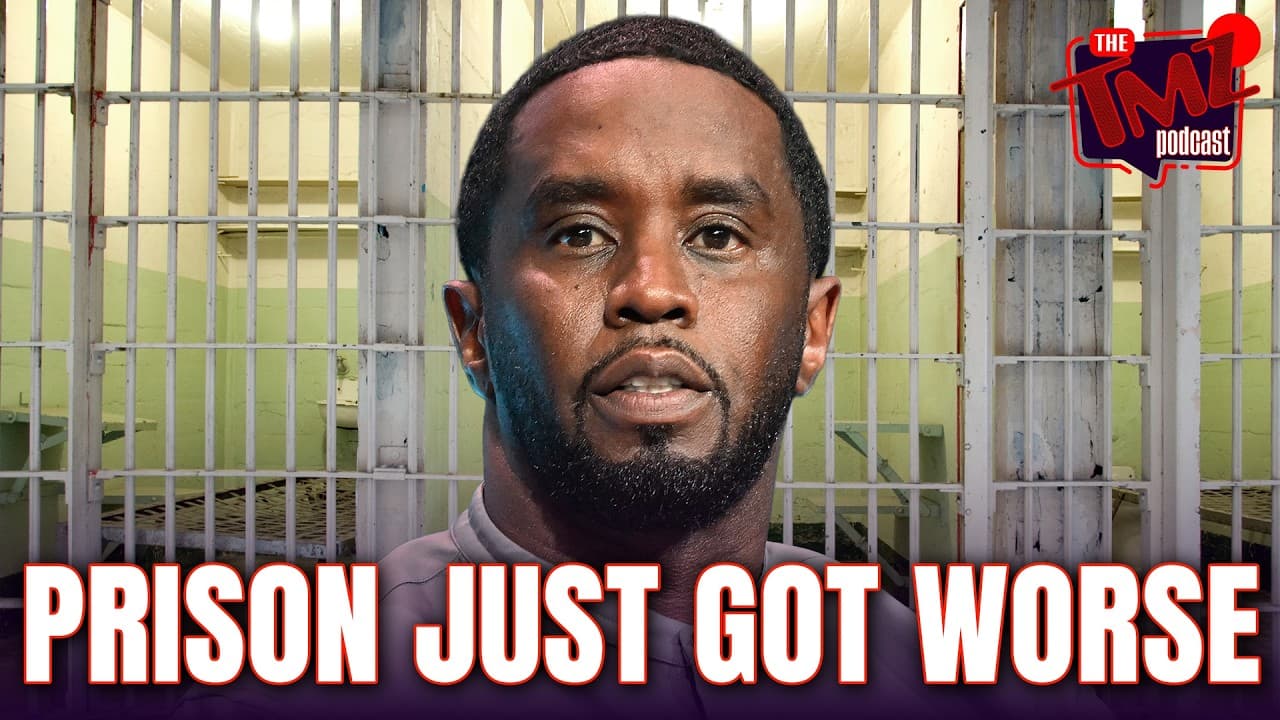
The blanket, the mattress, the pillow, the toilet paper. That is what Sean Combs. The man who once threw white parties in the Hamptons for a thousand guests and flew entourages across continents. Is permitted to keep with him in disciplinary segregation at FCI Fort Dix. One social visit per week. A doctor each day. Some shaving equipment of indeterminate variety. Reading material, legal or otherwise. That is the inventory of a life scaled down to its bare minimum, and it is the direct consequence of a prison fight that, until last week, almost no one had seen coming.
The fight itself. Details of which surfaced through TMZ's reporting on the inmate handbook governing disciplinary segregation at Fort Dix. Was, in isolation, just another incident in a federal facility that houses thousands of men. But for Combs, nothing that happens inside that building is just another incident. His legal team spent enormous resources negotiating a sentence with a theoretical exit point. The fight puts that exit point in jeopardy. Good conduct time, the federal sentencing mechanism that can shave meaningful months off a term, is now on the table. And not in the way his lawyers would prefer.
What the handbook reveals, and what the moment around it exposes, is the brutal arithmetic of incarceration for someone who built his entire brand architecture on the projection of freedom, power, and excess. The question now is not whether Fort Dix is unpleasant. Obviously it is. The question is what this episode tells us about the structural fragility of Combs's legal position, how long he actually stays inside, and what. If anything. Survives of the business universe he leaves behind.
What disciplinary segregation at Fort Dix actually means for Combs
Disciplinary segregation at FCI Fort Dix. Known colloquially as 'the hole'. Strips inmates of personal property and limits them to a mattress, blanket, pillow, toilet paper, shaving equipment, and reading materials. One social visit per week and a daily medical check are the principal human contacts permitted.
The federal Bureau of Prisons operates on a tiered privilege system, and disciplinary segregation sits at the bottom of that hierarchy. FCI Fort Dix's inmate handbook. The document TMZ obtained and reported on this week. Lays out the conditions with the brisk clarity of a government document written by people who know no one outside will read it carefully. Combs, as of this reporting, is subject to all of it.
The stripping of personal property matters more than it might initially appear. Federal inmates build a kind of micro-economy inside their units. Commissary goods, books, personal electronics where permitted, clothing beyond the institutional minimum. These are not luxuries in any meaningful sense; they are the texture of daily existence, the small choices that preserve some shadow of agency. Disciplinary segregation removes that texture entirely. What remains is purely functional: a surface to sleep on, tools to stay minimally clean, materials to read.
The doctor's daily visit is mandated, not optional. The Bureau of Prisons has long faced litigation over medical neglect in segregation units, and the handbook language reflects those hard-won policy requirements. The weekly social visit is more complicated. Whether Combs qualifies for it, and under what conditions, depends on the formal findings of the disciplinary review process currently underway. The review assesses the severity of the incident, who initiated it, and what the appropriate sanction level is. A process that runs on its own timeline, independent of any external pressure.
What the handbook does not convey, but what anyone familiar with federal segregation understands, is the psychological weight of the arrangement. Extended isolation in a small space, without the routine structures of the general population, is a documented stressor. Courts have increasingly scrutinized long-term solitary use. For Combs, currently serving time while his broader legal legacy is still being written, the condition is both a punishment and a negotiating variable. Because everything that happens in that unit feeds into the good-conduct calculus that governs his actual release date — see Diddy's Moving Release Date and Hollywood's Appetite for Redemption.
Good conduct time: the mechanism that makes the fight matter most
Federal good conduct time allows inmates to earn up to 54 days off per year of their sentence, but it can be reduced or eliminated as a disciplinary sanction. Losing it could push Combs's earliest possible release date well past the February 2028 window that had been his theoretical benchmark.
Here is the number that matters. Not the size of his cell. Not the precise nature of the shaving equipment. The number that matters is 54. The maximum number of days per year a federal inmate can accrue under the First Step Act's good conduct time provisions. Multiply that across the relevant portion of a sentence and you are talking about a release date that can move by months, not days.
The disciplinary review now underway at Fort Dix will make a finding on Combs's conduct. If the finding goes against him. If he is deemed the aggressor, or if the incident is classified at a severity level that triggers good-conduct sanctions. Those accumulated days get clawed back. February 2028, the date TMZ's reporting identified as his theoretical benchmark, is no longer guaranteed.
The perverse logic here is one that anyone who has covered federal sentencing understands: the inmates who most need good conduct time to be real. Who have the most to gain from the system working as designed — see The Lindsay Clancy Mistrial Was Not an Accident, It Was a System Working Exactly as Designed. Are the ones whose notoriety makes every incident inside subject to heightened scrutiny. A fight involving an anonymous inmate gets reviewed by a case manager and a disciplinary hearing officer. A fight involving Sean Combs gets reviewed by the same people, but also by prosecutors, by the press, and by anyone with a political interest in his case.
The other inmate involved in the brawl is also, per reporting, currently in segregation. That symmetry matters for the disciplinary review. The question of who threw the first punch, who escalated, who bears the greater institutional responsibility, is not yet settled. Until it is, Combs sits in a state of procedural suspension, with his release timeline genuinely uncertain in a way it was not a month ago.
"The fight is not just a personal indignity. It is a business event, with downstream consequences for everyone who holds a contractual stake in the Combs enterprise."
Why it took this long for a fight to surface. And what that signals
Despite his celebrity and the high-profile nature of his charges, Combs had avoided reported incidents in general population for an extended stretch, suggesting either effective protective management by prison staff or a intentional effort on his part to preserve good-conduct time he understood he needed.
The absence of prior incidents is, in its own way, a data point. Federal facilities like Fort Dix are not quiet places, and someone with Combs's profile. Convicted on charges that carry social stigma even within prison hierarchies. Would not naturally pass through months of general population without friction. The fact that this is the first reported physical confrontation suggests one of two things, possibly both.
First, facility management likely took steps to limit Combs's exposure to situations that could escalate. High-profile inmates are often quietly managed. Unit assignments, meal timing, movement schedules. In ways that reduce contact with other inmates who might see an attack as a reputational prize. The Bureau of Prisons does not advertise these arrangements, but they are standard practice for anyone whose safety incident would generate a news cycle.
Second, and perhaps more instructive, Combs himself had every financial and legal incentive to keep his head down. His lawyers understood the good-conduct arithmetic. His supporters outside were watching. The discipline of staying clean was not just a moral posture; it was a strategic one. The fact that something happened anyway. That an incident occurred despite those incentives. Is what makes the disciplinary review's findings genuinely interesting. Was this something he could not avoid? Or did something shift in his calculus inside the unit?
Those questions may never be answered publicly. What is answerable is the outcome: the streak ended, the review clock started, and the sentence length that had seemed like a settled figure is now a variable again.
The business wreckage Combs left behind. And who holds it now
Combs's incarceration froze a sprawling entertainment and spirits portfolio mid-operation. The people who manage, license, or have contractual stakes in those assets. Not Combs himself. Are the ones making decisions about their futures while he reads in a disciplinary cell.
The man in the hole at Fort Dix built one of the more architecturally interesting entertainment-and-consumer businesses in modern music history. Bad Boy Records was the headline, but the real construction was what surrounded it: a spirits business, a clothing line, a production infrastructure, and a decade-long effort to move from artist-adjacent executive to genuine brand owner. For a detailed look at where those assets stood at their peak, the Neon Hollywood Atlas tracks the wealth mechanics across the entertainment spectrum.
Incarceration does not pause those assets. It does, however, remove the central animating figure from any decisions about their direction. Licensing agreements run on contract cycles that don't care about the licensee's institutional address. Brand equity in a spirits business is a function of distribution relationships and retail shelf presence. Both of which require active management. A label roster requires A&R attention, promotional infrastructure, and leadership that can show up in a room. None of those things are happening with Combs present.
The question of who benefits from the continued operation of those assets during his incarceration is genuinely complex, and not one that public reporting has fully resolved. What is clear is that the longer Combs stays inside. And the more his release date becomes uncertain. The more those assets drift toward becoming legacy properties rather than active enterprises. Legacy properties still generate revenue. They generate it on other people's terms.
This is the economic dimension of the prison fight that gets lost in the focus on the blanket and the mattress. The fight is not just a personal indignity. It is a business event, affecting a timeline that has downstream consequences for everyone with a contractual stake in the Combs enterprise. From attorneys billing hourly to label partners hoping for some form of eventual resolution.
How celebrity inmates lose. And occasionally rebuild. Brand equity during incarceration
Historical cases show that celebrity incarceration typically produces one of two outcomes: a managed narrative of redemption that reconstructs the brand post-release, or a protracted legal and public-relations collapse that leaves the commercial infrastructure permanently reduced.
The American entertainment industry has processed a number of high-profile incarcerations, and the pattern is neither uniformly fatal nor uniformly recoverable. The variable that tends to matter most is not the charges, or even the sentence length. It is the coherence of the narrative that management and legal teams are able to construct during the period of incarceration. A consistent story, maintained over time, gives something to work with on the other side.
Martha Stewart is the most cited example of managed rehabilitation, and it is worth being precise about what made it work: the charges were financial, the sentence was relatively short, the brand had a domestic-comfort positioning that could absorb a period of absence without collapsing, and her team executed a re-entry so intentional it looked choreographed. Because it was. The prison appearance, the post-release interviews, the immediate return to programming, all of it was sequenced.
Combs's situation differs on almost every dimension. The charges are not financial. The sentence is not short. The brand positioning. Which for decades traded on aspiration, freedom, and the performance of power. Is almost perfectly misaligned with the reality of his current circumstances. And now a prison fight has introduced an unpredictable element into whatever timeline his team had been quietly managing around.
The precedents for music industry figures getting through this kind of structural brand collapse during incarceration are less encouraging than the Stewart model. What tends to survive is catalog. Songs and their associated royalty streams, which are contractual and largely impervious to reputation. What tends not to survive is the personal brand that sat on top of the catalog: the executive identity, the taste-maker positioning, the ability to command a room. That is a harder thing to rebuild, particularly when the exit date keeps moving.
The White House correspondents' dinner subplot. And what Trump's Kaitlan Collins moment…
President Trump's targeting of CNN's Kaitlan Collins at the redo White House correspondents' dinner. Mocking her journalism award and posting a photoshopped image to Truth Social. Followed a playbook of calculated media provocation that has defined his relationship with major networks since 2015.
It is easy to dismiss the correspondents' dinner exchange as noise. The president being the president, doing what he does at an event that exists precisely to test the distance between power and the press. But the mechanics of what happened are worth a moment of attention, because they reveal something consistent about how this White House manages its media relationships.
Collins won a journalism award. Trump, speaking at the dinner, called the award fake, then pivoted to telling her to smile. An instruction that has a long, documented history as a diminishment tactic aimed at women in professional settings. And then deployed a joke that reached back to the 2023 Bud Light controversy, comparing Collins's appearance to Dylan Mulvaney's. He then followed the speech by posting a photoshopped version of the comparison to Truth Social.
The sequence is not chaotic. It is layered. The live remark establishes the frame. The Truth Social post extends the reach to an audience that was not in the room. Collins's response. An Eleanor Roosevelt quote emphasizing that no one can make you feel inferior without your consent. Was measured enough to deny him the visible reaction he was clearly angling for. CNN's institutional statement was similarly restrained. Neither the correspondent nor her network gave him the escalation he needed to run a second news cycle. That restraint, whatever one thinks of the underlying politics, was strategically correct.
The Bud Light reference is the detail worth filing away. The controversy around Mulvaney and Anheuser-Busch is now several years old; that Trump reached for it suggests he has been watching Collins and found a visual comparison he wanted to deploy. Whether or not the comparison is apt. And reasonable people will disagree. It indicates a level of attention to CNN's White House coverage that goes well beyond casual awareness. These are not random targets. They are selected ones.
Bunny XO's Rolls-Royce and what a half-million-dollar car purchase says about…
Bunny XO's purchase of a Rolls-Royce Cullinan. A vehicle carrying a roughly $500,000 price tag. During the period following her divorce from Jelly Roll functions simultaneously as a personal declaration and a public-facing financial signal, regardless of whether the settlement funds or her podcast income primarily financed it.
There is a version of this story that is purely personal: a woman who had a difficult year made a significant purchase and posted it online, and the internet did what the internet does. That version is boring. The version that has some analytical traction is about what the purchase communicates, to whom, and why the choice to document it publicly matters.
Bunny XO's podcast has genuine commercial traction. She has built an audience and a corresponding revenue stream independent of her marriage. That is worth stating plainly, because the instinct to read the car entirely as divorce-settlement spending ignores the possibility that she earned it conventionally. The two sources of funds are not mutually exclusive, and without access to the settlement terms or her business financials, no one outside that transaction actually knows the composition.
What is clear is the deliberateness of the documentation. The dealership video, the Instagram post, the invite to a Calabasas-adjacent figure to appear in the content. These are not accidental. They are the mechanics of someone who understands that her public presence is part of her commercial value. The car is a content asset as much as it is a vehicle. The controversy it generates is traffic. The sports and entertainment wealth dynamics that tend to surround high-profile divorces create exactly this kind of public financial theater, and Bunny XO is playing it competently.
The Dylan Wolf subplot. The Calabasas figure who turned up at the dealership and has now reappeared in Bunny XO's orbit after a brief period of apparent estrangement. Adds a layer of narrative continuity that tabloid coverage requires and creators with her audience size understand how to manage. Whether the relationship is real, performative, or somewhere in the compound middle is less important than the fact that it keeps her name in the conversation during a period when staying relevant is, itself, a form of revenue generation.
What the Fort Dix fight reveals about the long tail of the Combs legal saga
The Fort Dix incident confirms that Combs's incarceration will remain an active news story regardless of whether new legal developments emerge, because the conditions of his imprisonment. And the sentence arithmetic surrounding them. Will continue to generate consequential updates throughout his term.
Cases of this scale and profile do not end at sentencing. They enter a second phase. The incarceration phase. That produces its own news cycles, its own procedural developments, and its own commercial consequences for the people and entities surrounding the central figure. The Fort Dix fight is the first significant event of that second phase, and it will not be the last.
What the fight establishes is a pattern of attention that will follow Combs for the duration of his sentence. Every disciplinary review, every adjustment to his conditions, every legal filing from his team or from the government will be covered. The handbook that TMZ obtained this week will be cited again the next time something happens. The February 2028 benchmark will be referenced every time his good-conduct status changes. This is the informational infrastructure of a story that is not going away.
For those tracking the business of celebrity legal narratives. The way the justice system and the entertainment press interact around high-profile cases. The Combs incarceration is already a study in how that infrastructure gets built and maintained. The documents are public. The timeline is fixed. The cast of characters is large and motivated to talk. What changes is the specific development; the structural attention does not diminish.
The more interesting long-term question. And the one that the disciplinary handbook, for all its procedural specificity, cannot answer. Is what, if anything, Combs's brand represents when the term is complete. The catalog survives. The intellectual property survives, in whatever legal form it takes. The man who walks out of Fort Dix is a different commercial proposition than the man who walked in. That gap, between what was and what will be permitted to exist, is where the real story lives. For now, the story is a mattress, a blanket, and a disciplinary review whose findings no one outside the facility yet knows.