Cheetah Girls 4 Is Happening. And the Business Case Is Bigger Than Nostalgia
Twenty-three years after the original film, Raven-Symoné and Adrienne Bailon are heading to South Africa to shoot Next Gen. What the revival reveals about Disney's IP playbook, the economics of franchise nostalgia, and why this one might actually work.
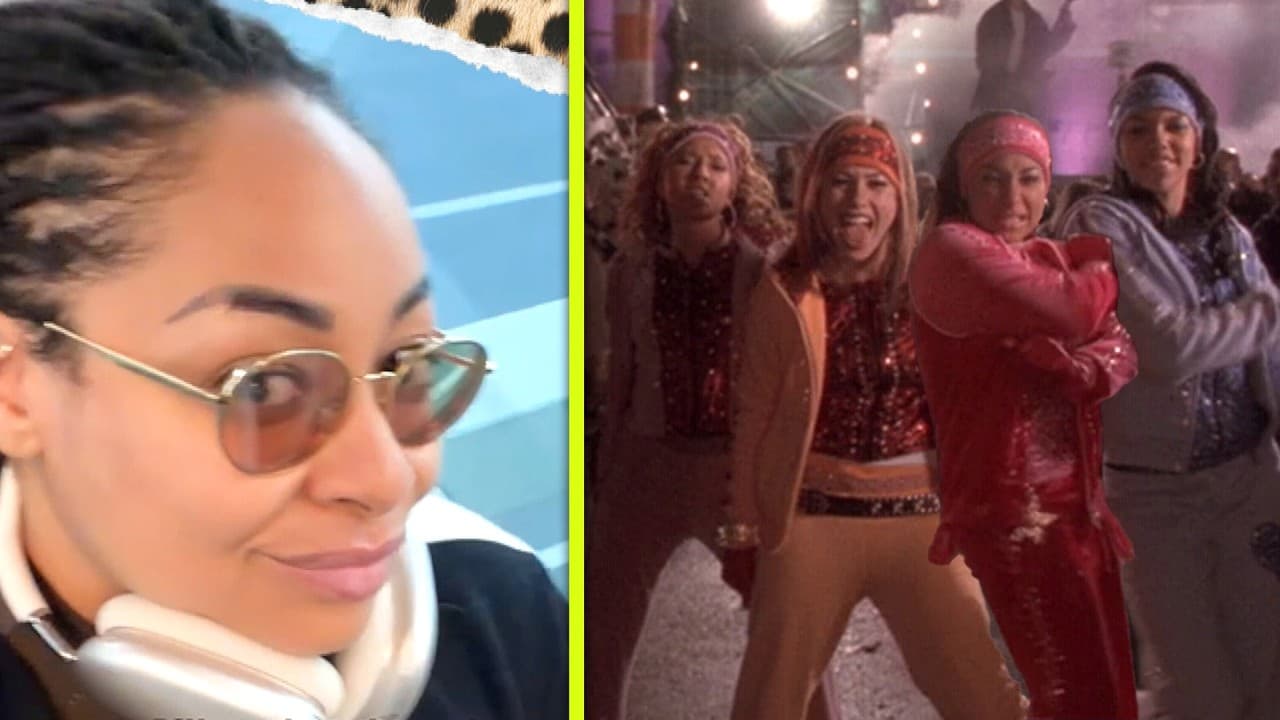
The cameras start rolling this month in South Africa. That fact alone. Location, timeline, confirmed. Signals something the months of hints and hedged Instagram posts never quite did: Cheetah Girls 4 is not a rumor in development hell. It is a production.
Raven-Symoné, 40, is executive producing and starring. Adrienne Bailon is back as Chanel. Lynn Whitfield and Lori Alter are reprising their roles as the girls' mothers. Sabrina Bryan will appear in a cameo. The only original cast member not attached, as Entertainment Tonight confirmed this week, is Kiely Williams. And even that door, by the sound of it, has not been slammed shut.
Officially titled Cheetah Girls 4: Next Gen, the film plants the franchise's flag in a new generation of young stars while keeping the original women front and center as anchors. The structure is almost too clean: Galleria is now a mother, her daughter Faith leads the new cohort, and the whole apparatus. The friendships, the songs, the stage. Regenerates around her. It is a machine designed to run twice. And that, more than the reunion heat, is the part worth examining.
Why 23 Years Is the Right Gap for a Disney Franchise Revival
A 23-year gap puts the original Cheetah Girls audience squarely in their late 20s and 30s. Old enough to spend on their own nostalgia and young enough to introduce the franchise to their own children, creating a two-tier audience that Disney can monetize simultaneously.
Disney's relationship with its own back catalogue is not random. The studio has spent the better part of a decade stress-testing the revival window. The span of time long enough for nostalgia to mature into genuine cultural warmth, short enough that the original cast is still recognizable and marketable. The original Cheetah Girls film arrived in 2003, which puts its core audience at roughly 28 to 38 right now. That cohort is precisely the demographic that drives streaming subscription renewals, buys the merchandise alongside their kids, and turns up to watch a Disney+ premiere as a household event rather than a solo one.
That dual pull is the whole point. The new cast. Leah Jeffries as Faith, Carmen Sanchez, Kaylyn Chang, and Sophie Lennon rounding out the Next Gen quartet. Gives younger viewers their own entry point, characters their age getting through the same themes of girl solidarity and self-discovery. The returning stars give parents a reason to sit down and watch with them. Disney has used this scaffolding before, with varying results, but rarely with source material that carries as much genuine affection as the Cheetah Girls films do.
The South Africa shoot is not incidental either. The original 2006 sequel, Cheetah Girls 2, was set in Barcelona; the third film went to India. International locations are part of the franchise's DNA. They signal ambition, they make for visually distinct films, and in an era when streaming catalogs are global from day one, they give the property an immediate international relevance that a domestic shoot simply cannot.
What Raven-Symoné's Executive Producer Credit Actually Means
Raven-Symoné taking an executive producer credit on Cheetah Girls 4 means she holds creative authority over the project, not just a performance fee. A structural shift that protects the franchise's tone and gives her a financial stake beyond her acting deal.
The executive producer credit is not cosmetic. In Disney Channel and Disney+ productions, a star-turned-EP typically earns the title through active development involvement. Script notes, casting input, tone-setting decisions. For Raven-Symoné, who has watched the Cheetah Girls brand orbit her entire adult public life, the credit represents something more specific: insurance. It means that if the film is going to carry her name and her face, she has a hand in what it actually says.
That kind of control matters particularly here because the franchise's legacy is tied up in questions of authenticity. The Cheetah Girls were never a manufactured pop group in the traditional sense. They were characters in a story about young women who built something on their own terms, resisted the machinery trying to shape them, and stayed loyal to each other. Any revival that flattened that into simple nostalgia product would be noticed immediately by the audience that made the original films matter. Raven-Symoné, by taking the EP seat, is the person responsible for making sure that does not happen.
There is also the matter of compensation architecture. An executive producer credit on a Disney production of this scale typically comes with points. A percentage of defined proceeds that sits on top of any acting fee. Given that Raven-Symoné is also the character the entire narrative hinges on, her financial position in this film is meaningfully different from what it was in 2003, when she was a young star working under a studio deal with no equity stake. That shift is worth noting. It reflects a broader pattern visible across our film wealth profiles: the entertainers who build durable wealth from franchise work are almost always the ones who moved from talent to owner at some point.
"The franchise is built to run twice. Once for the fans who grew up with it, once for the kids discovering it now."
Adrienne Bailon's Return and What the Chuchi-Bubbles Dynamic Is Worth
Adrienne Bailon's return as Chanel anchors the emotional core of Cheetah Girls 4 and brings her own media platform. Including her years as a co-host on The Real. Into the film's promotional machinery, multiplying its reach without additional marketing spend.
When Bailon told Entertainment Tonight that she and Raven are "Chuchi and Bubbles forever," she was not just being warm. She was describing a brand relationship that has survived two decades, a complete absence of new content, and the ordinary attrition of two people building separate careers in different corners of the entertainment industry. That durability is commercially valuable.
Bailon's years on The Real gave her something she did not have in 2003: a daytime talk-show platform and the kind of audience that watches it. Her fans are not exclusively people who grew up with the Cheetah Girls. They are women who found her later, who know her as a television personality and recording artist in her own right. When Cheetah Girls 4 markets itself, Bailon's network is an asset that the production gets essentially for free. Every interview she does, every social post she puts up in the South Africa sun, is promotional infrastructure that does not appear on a media-buy budget.
There is something else worth sitting with here. Both Raven-Symoné and Bailon have spoken, in various contexts over the years, about the emotional weight of the franchise. What it meant to play characters who celebrated girl community at a moment when pop culture was not always generous with that. That sincerity tends to translate on screen. It is not the kind of thing you can cast your way into with four new faces alone, which is exactly why the production structured itself to keep the OG women at the center rather than handing them a thirty-second cameo and calling it a reunion.
The New Cast: Leah Jeffries, Carmen Sanchez, Kaylyn Chang, Sophie Lennon
The four young leads of Cheetah Girls 4. Leah Jeffries, Carmen Sanchez, Kaylyn Chang, and Sophie Lennon. Carry the franchise forward as the daughters of Galleria and Chanel's generation, a passing-of-the-torch structure that mirrors how Disney has extended its most durable IP.
Leah Jeffries arrives with a specific kind of momentum. She played Annabeth Chase in Disney+'s Percy Jackson and the Olympians series, which means she has already survived the particular scrutiny that comes with stepping into a beloved franchise role and carrying it. That experience is not trivial. A young actor who has navigated fan expectation at that scale once is better prepared for the weight of a Cheetah Girls revival than someone coming in cold.
The character structure gives the new quartet room to breathe. Faith. Galleria's daughter. Carries the franchise surname and some of the franchise DNA, but she is not a carbon copy of her mother. The other three girls, including Carmen Sanchez as Chanel's sister Dior, create their own group identity rather than simply re-enacting the original dynamic. That is a smart design choice. The version of this film that fails is the one where the young cast functions as a nostalgic mirror; the version that works is the one where they feel genuinely new.
Disney has a commercial incentive to get this right that goes beyond the single film. If the Next Gen cast connects with audiences, the franchise can continue without requiring the original stars to commit indefinitely. That is the machine running twice. And it is why the South Africa shoot, the new character names, and the care taken to differentiate the young cast from a simple echo of the 2003 group all signal that Disney is not making a one-off cash-in. They are planting a flag.
Kiely Williams and the Open Door: What Her Absence Signals
Kiely Williams is the only original Cheetah Girl not confirmed for Next Gen, but both the production's framing and comments from her co-stars suggest her absence is logistical or contractual rather than a permanent break. Leaving the door open for her participation later.
The phrase "at least for now" is doing real work in the official framing. When a studio confirms an absence that specifically, with that specific qualifier, it is rarely accidental. It tells the audience. And, frankly, the holdout. That the conversation is still open, that the production has not written the character out, and that a late addition remains possible.
Bailon's comments reinforced that read. She told Entertainment Tonight she could not see all the women saying no to the project, given how good it made them all feel to be part of it. That is a public appeal dressed as a personal reflection. It names the emotional currency. The feeling of inspiring young women, the eyes of six-year-old kids lighting up. And implicitly invites Williams back into it.
Whether Williams ultimately joins the film or not, her absence has already generated its own story. That story keeps the reunion conversation alive through the entire production and release cycle. A complete, perfect, all-four-members reunion would have been one headline. An almost-complete reunion with an open question attached is a storyline that runs from announcement through press tour. Whether that is a designed tension or an accident of negotiation, the effect on attention is the same.
The Streaming Economics Behind Bringing Back a Disney Channel Property
Disney+ has a structural incentive to revive Cheetah Girls because Disney Channel originals from the early 2000s are among the platform's highest-performing legacy titles, and a new film reactivates that entire back catalogue while giving the platform a marquee event premiere.
Disney Channel films from the 2003-to-2008 era occupy a specific position on Disney+. They are not prestige content. They do not drive Emmy conversations or land in the trade reviews that influence award season. What they do is drive enormous engagement among the families who grew up with them. Families who now have Disney+ subscriptions and children of their own. In streaming economics, that kind of reliable, repeat-watch catalog content is worth more than its production cost suggests.
A new Cheetah Girls film does something a catalog title alone cannot: it creates event energy. Disney+ has been building its programming calendar around exactly this kind of moment. A release with built-in audience awareness, a social conversation that spins up before the premiere, and a marketing story that largely tells itself because the IP already has three decades of goodwill behind it. The promotional spend required to explain what the Cheetah Girls are is essentially zero.
The latest reporting across the entertainment space shows Disney doubling down on franchise extensions rather than new IP bets, particularly for its streaming platform. Next Gen fits that pattern precisely. It costs less to develop than an original concept, carries lower audience acquisition costs, and generates ancillary revenue. Soundtrack, merchandise, potential stage productions. That original content rarely can. The South Africa shoot will produce images and footage that feed the social cycle for months. By the time the film premieres, it will feel like it has already been everywhere.
For context on how these IP economics play out at the top of the entertainment business, our film wealth profiles and the broader Atlas track how franchise stakes translate into long-term financial position. Raven-Symoné's EP credit is the kind of participation that, if the franchise extends, builds on itself in ways a flat acting fee never would.
The Girl Power Franchise as a Cultural Argument, Not Just a Product
The Cheetah Girls franchise endured because it made a specific argument. That girls build each other up rather than compete. That felt countercultural in 2003 and resonates differently but no less urgently in 2026, which is why the revival has cultural traction beyond pure nostalgia.
Bailon made the point explicitly in her comments to Entertainment Tonight: this new generation of girls, she said, already lives the "I got you, girl" ethos. The franchise, in her framing, is not teaching something foreign. It is mirroring something that already exists in the culture. That is a smarter pitch than nostalgia. Nostalgia says: remember when things were this good. A cultural mirror says: look, this is who you already are.
The original films drew their emotional charge from something specific to their moment. In the early 2000s, the dominant pop culture narrative around young women was competitive, individual, often cutthroat. Girl groups were framed as rivalries barely contained. Reality television was just arriving and would spend the next decade making female competition its core entertainment engine. The Cheetah Girls, in that context, were genuinely against the grain. Four girls who wanted to make it together or not at all.
Twenty-three years on, the cultural conversation has shifted but not resolved. Girl solidarity is more visible as a value. It shows up in fan communities, in social media aesthetics, in the way young women talk about their friendships publicly. But the entertainment industry still defaults to competition framing when it puts young women on screen. A film that centers mutual support, set against the spectacular backdrop of South Africa, and anchored by two women who have genuinely sustained a friendship across decades of industry life, is not a generic product. It has a specific argument to make. That is the reason it might matter beyond the weekend it premieres.
This kind of cultural resonance is also what separates a revival that generates genuine conversation from one that simply cashes a check. The 2026 Emmy landscape showed clearly how audiences and industry alike are paying close attention to which stories about women feel earned and which feel performed. Cheetah Girls 4 will be measured by the same standard.
What Next Gen Means for Raven-Symoné's Career Arc Right Now
Cheetah Girls 4 repositions Raven-Symoné as both a franchise anchor and a creative producer at 40, a pivot that reframes her television-comedy legacy into something with more lasting IP equity and industry authority.
Raven-Symoné's career has moved through distinct phases in a way that is worth mapping. Child star. Disney Channel anchor. That's So Raven, which ran long enough and deep enough into the culture that Disney+ eventually gave it a sequel series, Raven's Home, which ran for multiple seasons. Then the View co-host years, which brought a different kind of visibility. Adult, opinionated, sometimes bruising. She has been, at various points, a punchline and a champion, and through all of it she has remained recognizable in a way that most child stars do not.
The EP credit on Next Gen is a reframing. At 40, getting up close and personal with a real cheetah on the South Africa set and posting the footage to social media is not just endearing. It is a signal about where she wants to be seen. Not as a nostalgia act being wheeled out to bless the new cast and disappear. As the person who built this thing, who still runs it, who is actively shaping what it becomes next. That is a different kind of industry position, and it is one that has financial implications well beyond the film's release date — see Diddy's Moving Release Date and Hollywood's Appetite for Redemption.
The music piece of this matters too. The music wealth profiles we track at Neon Hollywood consistently show that artists who hold on to their franchise associations. Rather than selling or licensing them away. Accumulate value over a much longer runway than those who take the flat fee and move on. The Cheetah Girls soundtrack catalog is not a Beyoncé-scale asset, but it is a real one, and a new film with a new generation of fans discovering it will push streams on the back catalogue in ways that add up. Raven-Symoné's position in that upside, if structured with any equity at all, is quietly worth watching.