The Nolan Effect: How Zendaya's Odyssey Casting Rewrites Her Career Calculus
Christopher Nolan didn't just cast Zendaya in The Odyssey. He handed Tom Holland a gift to deliver. That domestic moment reveals something larger about how prestige gravitates toward a power couple and what it means for both their trajectories.
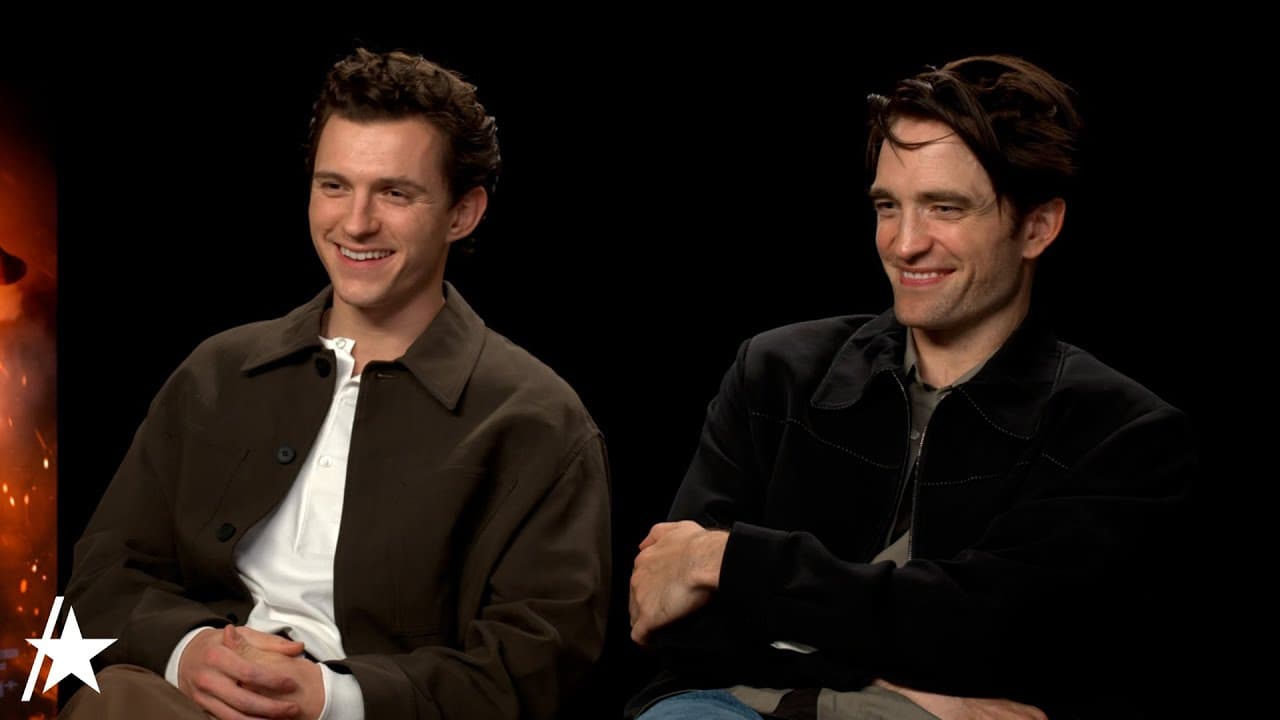
Tom Holland came home from a meeting with Christopher Nolan buzzing. That's the word he used. Buzzing. Not the restrained excitement of a working actor who has learned to hold the temperature down. Genuine, door-opening, can't-contain-it electricity. And the reason wasn't entirely about him.
Nolan had offered Holland the role of Telemachus. Holland had said yes before he'd finished reading the script. 'why wouldn't you,' he told the Access Hollywood interviewer, with the kind of rhetorical shrug that answers itself. But somewhere inside that first meeting, Nolan had leaned across the desk and asked, carefully, whether Holland might be offended if Zendaya were asked to play Athena. Holland's answer was immediate. Then he asked if he could be the one to tell her.
What followed. The drive home, the cryptic instruction to read the script again, the moment the corners of her mouth gave her away. Has already calcified into the kind of couple mythology that publicists spend years trying to construct organically. But the anecdote is doing something more than warm the room. It is, if you read it clearly, a case study in how prestige transfers, how a director's trust becomes a career instrument, and why the Nolan ecosystem may be the single most efficient star-making machine still operating in theatrical cinema.
Why Nolan's casting process is unlike any other in the industry
Christopher Nolan conducts casting through in-person office meetings rather than phone calls, pitching the story's ambition directly to actors before asking for a commitment. A practice that signals mutual respect and generates unconditional buy-in before a script is ever read.
Holland was specific about the mechanics, speaking to Access Hollywood during the film's promotional run in London: it isn't a phone call. You go sit in his office. Nolan pitches the story, articulates the ambition, and then makes the offer. The script comes later, that night, to take home. The sequence is intentional and it matters enormously, because it front-loads trust and artistic vision rather than negotiating points.
That structure produces a specific psychological result. When Robert Pattinson reportedly asked to read The Batman script before committing. A perfectly reasonable professional instinct. It became a minor legend on the Nolan circuit, a punchline about the road not taken. Holland told it that way. The subtext is clear: in the Nolan process, asking to read first is already a slight misread of the room. You are being invited into something. The correct response is yes.
The business logic underneath this is not romantic. A director who can secure commitments on the pitch alone commands a different class of above-the-line talent and, critically, can build an ensemble before any single piece is publicly attached. Secrecy becomes a controlled asset. The AMC ticketing app crashing when The Odyssey presale opened is the downstream consequence of that machinery working at full efficiency.
For Holland, the meeting was transformative enough on its own terms. Playing Telemachus. The son waiting for Odysseus. Opposite Matt Damon as his father is a generational-weight role, the kind of casting that repositions an actor permanently. But what made the drive home genuinely electric was the second thing Nolan had asked.
How Zendaya was cast in The Odyssey. The full story
Zendaya was cast as Athena in The Odyssey after Christopher Nolan asked Tom Holland, during Holland's own casting meeting, whether Zendaya would be offended to play the goddess. Holland carried the news home and prompted her to reread the script with Athena in mind.
Nolan's framing of the question is worth holding still for a moment. 'Would you be offended if I asked you to play Athena?' The care in that phrasing. The double hedge, the preemptive apology. Suggests a director acutely aware that asking a major star to shift from a leading role she might have expected to a supporting deity required a kind of diplomatic dexterity. Holland's response, as he told it, was immediate bewilderment. Why would she be offended? Athena is the most powerful figure in The Odyssey short of Zeus himself.
Zendaya's own account, given to the same Access Hollywood interview, fills in the texture on her end. She'd already been peeking over Holland's shoulder while he read the script the night before his meeting. Curious, she said, about what Nolan would do next. She knew the material. She understood the architecture. So when Holland came home and told her to read it again, specifically to read Athena closely, the corners of her mouth gave the game away before the words did. She saw it.
The framing of Interstellar as Zendaya's favorite film is not a throwaway detail. It establishes that her attachment to Nolan predates any career calculation. That this wasn't a box to check but a director she had actively revered. Holland had even arranged a private IMAX screening of Interstellar for the two of them at a Nolan facility before production began. That kind of preparation signals seriousness in an industry where it is often performed rather than felt.
Athena in The Odyssey is not a small part in the conventional sense. She is the divine architect of Odysseus's return, present at the story's moral spine — see The Reverse Megxit: What Meghan's Return to Acting Reveals About the Sussex Business Model. In Nolan's telling, she is also apparently the kind of role that makes a cast member want to see the film a second time the moment the first screening ends. High praise in a world where contractual obligations often account for most of a star's theatrical enthusiasm.
"The Nolan credit does something others cannot replicate: it signals that a director who is famously particular decided Zendaya belonged in the same frame as Matt Damon."
What The Odyssey casting means for Zendaya's career arc
Landing Athena in Christopher Nolan's The Odyssey moves Zendaya definitively into the prestige-auteur tier of Hollywood, pairing her Dune and Challengers credentials with a Nolan credit that signals durability and range beyond franchise and awards-bait drama.
There is a specific ceiling in Hollywood that even commercially dominant stars can find themselves pressing against. It is the moment when the industry. And the press corps that covers it. Needs to see you choose difficulty over safety. Denis Villeneuve gave Zendaya a version of that with Dune. Luca Guadagnino gave her something more concentrated with Challengers. Both demonstrated range. But Nolan is a category unto himself.
The Nolan credit does something the others cannot fully replicate: it signals that a director who is famously particular, who builds ensembles over years and rarely revisits the same actor twice without intention, looked at Zendaya's body of work and decided she belonged in the same frame as Matt Damon, Anne Hathaway, and a cast that will be dissected in film criticism for a generation. That is a different kind of institutional endorsement than a Best Actress campaign or a franchise anchor.
She is also, at this stage of her career, making these moves while running a parallel business architecture. Brand partnerships, production development, a cultural footprint that extends well beyond any single film release. The Odyssey does not just add a credit. It recalibrates the prestige weight of every other thing attached to her name. You can track how that builds up across our film wealth profiles.
The role of Athena carries specific symbolic freight worth noting. A goddess of wisdom and strategic warfare, present in every pivotal moment but rarely at the physical center of the battle. It is, arguably, a character who operates exactly the way a certain kind of power operates in the real world. Quietly. Precisely. With enormous consequence.
Tom Holland's Telemachus. What playing Matt Damon's son actually means
Tom Holland playing Telemachus, son of Odysseus, opposite Matt Damon gives him his most dramatically weighty non-franchise role to date. A coming-of-age mythological lead that directly addresses the career question of whether he can carry gravity beyond Spider-Man.
Holland has spent the better part of a decade as one of the most commercially successful actors alive while simultaneously facing a quiet industry question: what happens when the suit comes off? The Spider-Man films are a case study in franchise durability, but they also create a specific kind of ceiling. The character is beloved. The actor risks being beloved in exactly the same way. Warmly, enthusiastically, and without the weight that turns box-office into legacy.
Telemachus is a gift because he requires the opposite of Spider-Man. Where Peter Parker is reactive, comedic, morally uncomplicated at his core, Telemachus is an heir who does not know if he has an inheritance. He is waiting for a father who may be dead, managing a kingdom in chaos, discovering his own authority in real time. It is the kind of interiority that demands stillness rather than movement. Holland said he was jumping up and down after reading the script at home. That is the sound of an actor recognizing his own opportunity.
The fight sequence with Damon. Described as genuinely frightening, with a solid piece of wood and saliva that got concerning. Is almost beside the point dramatically, but it matters to the public narrative. It puts Holland physically and emotionally in the arena with one of the most respected American actors of the last thirty years. The Jason Bourne joke Damon made mid-take ('tell me everything you know about Tread Stone') is a perfect encapsulation of how Damon works: elite focus, then sudden warmth, then back. Holland said he filed that away. You can see why.
There is also a straight business read here. Holland is at an age and a career moment where the next three to five years will determine whether he is remembered as a great Spider-Man or as a great actor who happened to play Spider-Man. The Odyssey, if it performs as the crashing ticketing apps suggest it might, accelerates that reclassification considerably.
The couple-as-brand dynamic. How joint Nolan casting changes the calculus
With both Tom Holland and Zendaya cast in The Odyssey, the couple's combined cultural footprint reaches into prestige cinema simultaneously for the first time, creating a promotional and branding convergence that neither could achieve with solo credits alone.
There is a version of this story that is purely personal. Two people who love each other, both landing dream roles on the same film, sharing a private moment about a script. That version is real and it matters. But it coexists with a harder-edged reality, which is that two of the most followed people on earth appearing in the same prestige theatrical event is a commercial phenomenon with structural consequences.
Think about what their joint presence does to the promotional cycle. Every press junket, every red carpet, every interview becomes an occasion to talk about both the film and the relationship, which means the film enters cultural circulation through a channel that pure critical coverage cannot replicate — see Quinta Brunson's Red-Carpet Ambush Reveals How Abbott Elementary Stays Culturally Alive. They sat together in London doing press. They told the same story from different angles. The interview subjects and the interviewer all understood what was happening. It is not cynical. It is simply how attention works at this scale.
The couple-as-cultural-unit is not a new concept in Hollywood, but it has historically been unstable. Prone to the kind of public unraveling that poisons the underlying work. What Holland and Zendaya have managed, thus far, is a studied privacy that makes the moments of genuine openness feel earned rather than engineered. The Odyssey casting story. With its specificity, its domesticity, its small physical detail of mouth corners giving feelings away. Lands as authentic precisely because it sounds like something that actually happened, not something developed in a communications meeting.
For a broader look at how celebrity couples convert proximity into stacking brand value, the mechanics are not entirely unlike what Taylor Swift and Travis Kelce built at MSG. Different industry, same underlying logic of two enormous audiences briefly pointed at the same thing.
What Matt Damon's presence signals about The Odyssey's commercial ambitions
Matt Damon's casting as Odysseus, anchoring a Nolan epic alongside a multigenerational ensemble, signals a film designed for broad theatrical dominance rather than awards-circuit prestige. A commercial event first, a cultural artifact second.
Damon described the shoot's physical demands in terms that made any single previous difficult film look manageable by comparison. A characterization that, coming from someone who has worked with Steven Soderbergh, the Coens, and Ridley Scott, is not modest hyperbole. The cave in Greece, set alight with 400 extras, Hoyte van Hoytema tracking the chaos with an IMAX camera: this is not a production that is hedging on scale.
Holland's description of Damon on set. The work ethic, the empathy, the refusal to let difficulty kill the fun. Reads as a portrait of a particular kind of movie-star professionalism that is rarer than it should be. Fearless leader is the phrase the interviewer used and Holland didn't correct it. On an ensemble of this size and ambition, the above-the-line actors set the culture of the set as much as the director does. Damon, by all accounts, set a good one.
The AMC app crash at presale is the cleanest data point available right now for where audience appetite sits. Apps crash when demand is genuinely unexpected. When the ticketing infrastructure, built for manageable peak loads, encounters something that exceeds its model. That happened. The Odyssey has not yet opened and it has already generated the kind of earned media that studios used to purchase with nine-figure marketing budgets.
Samantha Morton's Circe. What a career-renaissance role reveals about Nolan's ensemble…
Samantha Morton's casting as Circe in The Odyssey, which she described as a rebirth after years of smaller opportunities, illustrates Nolan's pattern of building ensembles with actors at inflection points. People who bring hunger and history simultaneously.
Morton, speaking in the Access Hollywood sit-down alongside Zendaya, was the most unguarded voice in the room. She talked about being an older actress who just wants to work, about having three kids and a mortgage, about the years between major dramatic opportunities that accumulate quietly while the industry moves around you. She referenced Walking Dead, playing Alpha, and said it clearly: that was a long time without this kind of role.
What she described. Showing up to a Nolan set for the first time, encountering a scale she had never seen before, trying to absorb rather than impose. Is the portrait of an actor who understands exactly what she has been given and is not about to waste it. 'If I never work again,' she said, 'I got to experience that.' The gratitude is real. But so is the recalibration it represents: a Nolan credit resets the offer sheet in ways that years of solid television cannot.
Nolan's ensemble choices are rarely accidental. He tends to cast actors who carry weight. Either the weight of a long career, or the weight of an image that the role can redefine. Morton carries both. As Circe, the sorceress who transforms men and then watches them go, she is in a role that demands exactly the kind of controlled ferocity she built on the independent circuit two decades ago — see Dolly Parton Is Gone at 80. The Machine She Built Will Outlast the Grief.. Nolan found the frequency she was already operating on.
This is the logic that makes the Nolan ensemble feel different from a typical prestige picture's all-star call sheet. He is not collecting names. He is collecting specific actors at specific moments in their arcs, and betting that the resulting chemistry will be irreducible. That it could only have happened on this film, at this time, with these people. That bet, historically, has paid off.
The IMAX theatrical bet. What the ticketing chaos tells us about cinema's current…
The AMC app crashing during The Odyssey's presale launch signals genuine uncapped demand for a large-format theatrical event. Evidence that the audience for premium cinema experiences is not shrinking but concentrating around rare, director-driven spectacles.
Both Holland and Morton, in their respective interviews, made the same unprompted argument: see it in IMAX. Not as a contractual talking point. The phrasing was too specific, too personal for that. Holland talked about the way you want to experience something like this. Morton talked about life-changing in its purest, truest form. These are actors who had seen a cut of the film and came out evangelical.
The theatrical experience argument has been a constant of the post-pandemic industry conversation, often made defensively, as a response to streaming's advance. What is different about The Odyssey's presale moment is that it requires no defense. The app broke. That is supply meeting demand in the most literal possible way, and it has genuine implications for how studios think about the theatrical window, premium pricing tiers, and the economics of director-brand investment.
Nolan has functioned, for the better part of two decades, as proof of concept for the argument that the theatrical experience is not dead. It is merely selective. Audiences will still make the trip, buy the full-price ticket, sit in the dark together, if the object of the exercise justifies it. The Odyssey appears to justify it. The infrastructure cracked under the weight of that answer.
For the broader economics of how fame converts into theatrical draw. And how the stars attached to a film function as part of its financial architecture. The convergence of Holland, Zendaya, Damon, Hathaway, and Morton under a single Nolan banner is not just a casting achievement. It is a film industry event in the financial sense: a coordinated concentration of audience loyalty that, on opening weekend, becomes a number. That number will be watched very closely.
Who actually wins from The Odyssey's success. The career math
Christopher Nolan wins most from The Odyssey's commercial success in pure brand terms, but Zendaya stands to gain the most career-relative value. A prestige auteur credit that her existing filmography has been building toward without yet achieving at this scale.
Holland arrives with the most to consolidate. He is already a global star; the question was always about depth of credential. Telemachus answers it. Damon's position is largely unchanged. He is one of the most durable leading men in American cinema and The Odyssey reinforces rather than transforms. Hathaway's reported presence as a figure who puts Telemachus in his place is the kind of scene-stealing that generates its own separate conversation.
Zendaya's gain is the sharpest on a relative basis. She enters The Odyssey as a critically acclaimed, commercially formidable actress whose net worth and business infrastructure are built on a combination of franchise film, independent drama, and brand partnership. She exits. Assuming the film performs as the presale suggests. As a Nolan actress. That is a specific category. It follows you for the rest of your career in the best possible way.
Morton wins something different and arguably more rare: a second act on her own terms — see Sandra Bullock's Comeback Is Quieter Than Her First Act, and Smarter. The industry's treatment of actresses in their forties and fifties is well-documented in its cruelties, and what she described in that London interview was not bitterness but clear-eyed accounting. She knows what she had and what she now has again. Circe is not a supporting role in the pejorative sense. It is a mythological force. That distinction will matter to every project she is offered from here forward.
And then there is the couple. Holland and Zendaya have built, together and separately, a cultural presence that is genuinely unusual in its discipline. Visible enough to drive enormous commercial value, private enough to retain the mystique that makes people curious. The Odyssey is their first shared major theatrical event. If it is what the early signals suggest, they will have done something that very few couples in the history of this industry have managed: made a great film together without either one diminishing the other. That is the rarest win of all. Track how it builds up on our latest reporting.