Carla Jeffery Built a Career on Joy. The Industry Lost That Too Soon.
The actress who played Bree across Disney's Zombies trilogy died at 33. Her death is a moment to examine what she actually built, and what a 20-year career in the margins of the industry really costs.
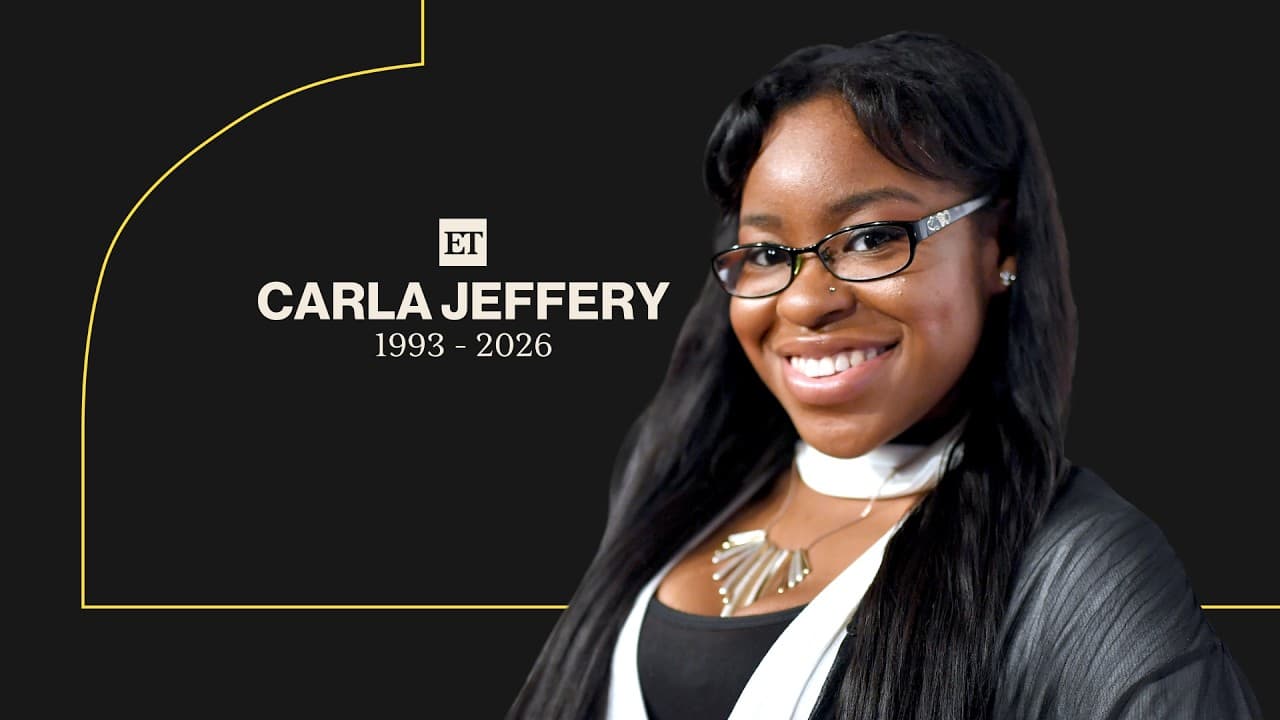
The news came through Instagram, which is how the entertainment industry announces things now, not via studio communications or a publicist's formal statement, but through a management team post that lands in the same feed as birthday snapshots. Carla Jeffery's team confirmed her death on that platform. She was 33. No cause of death was given.
Her management noted they had overseen her career for more than 20 years. That number is worth sitting with. Twenty years. Jeffery was a working actress from childhood through her early thirties, getting through an industry that chews through young performers and rarely offers the ones who survive its earliest pressures a second act worth having. She did not just survive that gauntlet. She found, in the Disney Channel ecosystem, a role that gave her genuine cultural traction.
Bree, the bubbly cheerleader at the centre of the Zombies franchise, was not a supporting footnote. She carried the emotional warmth of three films. Jeffery played her in every one. That consistency is rarer than it sounds in a franchise economy that routinely recasts or writes out secondary characters between sequels. Understanding what Jeffery built, and how she built it, requires looking past the grief and into the mechanics of the career itself.
How Carla Jeffery first broke through as a child actress
Carla Jeffery's first significant screen credit came as a child in the film Fat Girls, opposite Mo'Nique, a demanding dramatic context that distinguished her early résumé from the lighter fare typical of child performers.
Most child actors debut in commercials or sitcom walk-ons. Jeffery's entry point was different. Her breakout came in Fat Girls, opposite Mo'Nique, one of the most forceful comic and dramatic performers of her generation. That context matters. A child holding her own in scenes with Mo'Nique is not doing background work. She is being tested at full intensity, and the fact that the role registered at all signals real technical ability at an early age.
From there, her teenage years were what the industry calls 'working steadily', a phrase that sounds like faint praise but describes something genuinely difficult. Most child performers who get one notable credit disappear within five years. Jeffery did not. She accumulated guest-starring appearances across Disney Channel series, including Good Luck Charlie and Shake It Up. Those credits kept her in the Disney ecosystem and, more practically, kept her in the rooms where future casting decisions were made.
The business reality of that period is worth naming. Guest roles on Disney Channel series pay modestly. They do not create lasting financial security. What they do create is institutional familiarity, the producers and casting directors who saw her work year after year were the same ones staffing Zombies when it went into production. Her résumé, read correctly, is a two-decade campaign of relationship maintenance as much as it is a record of performance.
What the Zombies franchise actually is, and why landing it mattered
Disney's Zombies franchise, which launched in 2018, is a musical comedy series built around a high school where zombies and humans coexist, blending pop music, choreography, and broad social allegory in the tradition of High School Musical.
Zombies arrived in 2018 at a specific moment in Disney Channel's programming arc. The network had spent years chasing the cultural footprint of High School Musical, which premiered in 2006 and became one of the defining franchise events in the history of children's television. Zombies was the most explicit structural heir to that template: an original movie with an original pop soundtrack, built around a romantic lead pairing, and designed from the start to sustain multiple sequels.
The social allegory embedded in the concept, zombies and humans learning to coexist, gave the franchise a slightly more pointed edge than its predecessors. It also gave the ensemble cast something to do beyond dance breaks. Bree, Jeffery's character, functioned as the cheerleader who never lost her warmth even as the world around her asked harder questions. It was, in character terms, a role that required consistent likability across three films without tipping into saccharine irrelevance. That is a genuinely difficult tonal line to hold.
The franchise ran to three entries, with Jeffery appearing in all of them. For perspective on what that represents: franchise consistency at that level signals that producers trusted her enough to anchor an emotional throughline across years of production. Secondary characters in Disney Channel franchises are frequently deepened, recast, or sidelined between films depending on which relationships test well with audiences. Bree tested well every time. That is the market's answer to a question about whether Jeffery's performance was working.
The Zombies films also generated a touring musical stage production, recorded soundtracks, and significant merchandise. Jeffery's participation in those ancillary streams, and the precise terms of that participation, is not public. But the franchise's commercial footprint meant that her name and face were attached to an IP with real ongoing revenue. She was not a peripheral figure in a minor property. She was a core cast member in Disney's most sustained attempt at a new musical franchise.
"In a franchise economy that consolidates credit around the IP and its leads, an ensemble performer's legacy requires active preservation, it is not a given."
What a management relationship spanning 20-plus years reveals about her career
A management team that stays with a performer for more than 20 years, from childhood through a franchise role, indicates stable, long-term career stewardship rather than the short-term deal-making that often governs young Hollywood talent.
The management team's Instagram statement included one detail that cut through the grief-language: they had worked with Jeffery for more than 20 years. That longevity is structurally unusual. The Hollywood talent management business is not built for continuity. Managers pivot to hotter clients, clients outgrow their first representation, and the economics of a career that earns modest working-actor rates rarely sustain the kind of sustained attention a major management firm lavishes on its headliners.
A 20-year relationship means Jeffery's team was with her as a child, through the lean years of Disney Channel guest slots, and into the Zombies franchise. That implies either a genuinely close professional bond or a boutique management operation that built its business around a small roster of long-term clients rather than chasing short-term commission volume. Most likely both.
What that relationship also signals is something about Jeffery's professional conduct. Managers do not stay with clients for two decades out of charity. They stay when the client shows up prepared, handles setbacks without drama, and builds the kind of industry reputation that makes the manager's job easier. The working actor who survives 20 years in this business does so partly through raw talent and partly through professional comportment. Her management's public tribute, describing her warmth, her humor, her spirit, reads, between the lines, like a portrait of someone who was easy to go to bat for.
Meg Donnelly and the ensemble bonds the franchise built
Carla Jeffery's final Instagram post, published in July 2026, was a tribute to co-star Meg Donnelly's birthday, evidence of a sustained real-world friendship with her Zombies castmate that outlasted production on the films.
Her final public Instagram post was a birthday tribute to Meg Donnelly, her on-screen best friend in the Zombies franchise. Donnelly played Addison, the romantic lead, the role with the most screen time and the biggest commercial profile. Jeffery played Bree, Addison's closest friend. The fact that their friendship extended into real life, and that Jeffery's last public gesture was celebratory rather than promotional, says something about the texture of the relationships she built inside a franchise ecosystem that can be highly transactional.
Franchise productions are, intentionally, pressure cookers. Extended filming schedules, shared choreography and vocal rehearsal, and the specific social intensity of a young ensemble cast create relationships that either calcify into professional politeness or deepen into genuine connection. Jeffery and Donnelly appear to have landed in the latter category. The management team specifically named Donnelly as Jeffery's 'Zombies on-screen bestie', a description that carries more weight coming from a professional team than it would from a fan account.
That kind of castmate bond matters for reasons beyond sentiment. When a franchise performer dies young, the people who grieve most publicly are often the ones who shape how that performer is remembered. Donnelly has a substantial platform. Her response, whatever form it takes, will do more to crystallize Jeffery's legacy in the public imagination than any studio statement.
The triple-threat label and what it demands from performers
The entertainment industry's 'triple threat' designation, actor, singer, and dancer, describes performers who can execute all three disciplines at a professional level, a standard that Disney Channel franchise productions routinely require of their ensemble casts.
Jeffery's management described her as a triple threat. The term is used loosely in entertainment coverage, but in the context of a Disney musical franchise it carries specific technical meaning. The Zombies productions required their ensemble cast to act, sing recorded tracks, and execute choreography designed for both film and stage. Performing all three at a professional standard simultaneously is not a given, even for people who are genuinely gifted in each discipline individually.
The singing and dancing demands of the franchise were not incidental. The Zombies soundtracks were released commercially and generated streaming numbers independent of the films. The choreography was reproduced in a touring stage production. These were not background elements. They were revenue-generating outputs that required the cast to function as a pop act as much as a dramatic ensemble. A performer who could not hold her own across all three disciplines would not have lasted three films.
What that skill set also does, and this is the career-economics point worth making, is it broadens the potential market for a performer's services. A triple threat can audition for straight dramatic roles, musical theatre, touring productions, and live branded events. Each of those is a separate economic channel. Jeffery's range was not just an artistic attribute. It was a diversification of income potential. At 33, she had the tools to pursue multiple paths forward. That is what makes the loss, professionally as well as personally, so sharp.
What a working career in the Disney Channel system actually looks like financially
Disney Channel franchise ensemble members typically earn union scale plus negotiated overages for films and ancillary productions, with income varying significantly based on billing level and contract terms, information that is rarely public for secondary cast members.
The financial architecture of a Disney Channel franchise career is not widely understood outside the industry. Guest-starring roles on Disney Channel series pay SAG-AFTRA scale, which for a single-episode appearance falls well below what most people would assume. The rates improve for recurring roles and improve again for principal cast members in original films. But the specifics of those deals are almost never public for ensemble members who are not the franchise leads.
What we can say with reasonable confidence is this: Jeffery's income across 20 years of working-actor credits would have been inconsistent. The lean periods between significant roles are a feature of the career type, not a failure of it. The Zombies franchise provided a period of relative stability, three films across several years, with ancillary productions adding to the total, but franchise income also ends when the franchise ends. The third Zombies film appears to have concluded the series.
The broader point is that even a successful secondary career in the Disney Channel system does not produce the kind of wealth that makes the financial page of a celebrity magazine. Our Atlas tracks net worth across the entertainment landscape, and the gap between franchise leads and franchise ensembles is consistently significant. Jeffery's story is representative of a large and underexamined cohort: performers who are unambiguously good at their craft, who accumulate real credits over long careers, and who exist almost entirely outside the financial conversation that dominates entertainment coverage.
That gap is not a critique of Jeffery's career. It is a critique of the system that undervalues ensemble work while deriving significant revenue from it. The Zombies franchise was not built on the lead couple alone. It was built on an ensemble that made the world of the films feel inhabited and warm. Jeffery was central to that. The accounting, such as it was, did not reflect that centrality.
Karlin Jeffery, her twin brother, and the family architecture behind the career
Carla Jeffery is survived by her twin brother Karlin Jeffery, who is also a working actor, a sibling relationship that placed both of them inside the entertainment industry from an early age.
The management statement confirmed that Jeffery is survived by her family, including her twin brother Karlin, who also works as an actor. Twin performers in Hollywood occupy a particular niche. They are sometimes cast in the same production, twins are useful for productions that need to split screen time between two characters who look identical, but more often they pursue separate careers within the same professional world.
The significance of a twin sibling who is also an actor is partly practical and partly emotional. Practically, it means Karlin Jeffery understood the specific pressures of his sister's career at a granular level that most family members cannot. He was not interpreting her professional life from the outside. He was living a version of it simultaneously. The grief of losing a sibling is not made simpler by that shared context, but the shared context shapes how that grief will be expressed and processed in a very public way.
Jeffery's family more broadly, her management described them in the tribute, represents the private architecture behind a public career. The entertainment industry produces enormous amounts of coverage about celebrity and almost nothing about the support structures that make careers possible. A performer who enters the industry as a child and sustains a working career for 20 years does not do so alone. She does it with a network of people who showed up.
What Jeffery's death reveals about youth and mortality in the Disney generation
Carla Jeffery's death at 33 is the latest in a pattern of premature losses among performers who came of age inside Disney Channel's late-2000s and 2010s franchise ecosystem, a cohort that is now entering its thirties.
Jeffery was 33. The performers who built the Disney Channel franchise era of the late 2000s and 2010s are now entering or moving through their thirties. That cohort, and it is a large one, is old enough to have accumulated adult pressures on top of the particular psychological weight of having been young and visible in a demanding industry. The entertainment media tends to cover the success stories of that generation. The losses, when they come, arrive with particular force because they are unexpected.
There is a /latest reporting pattern here that the industry has not fully reckoned with. Young performers who grew up inside heavily managed franchise ecosystems spent their formative years in conditions that bore little resemblance to ordinary adolescence. The professional pressures were real. The scrutiny was real. The financial stakes, often controlled by adults rather than by the performers themselves, were real. What the long-term effects of that environment look like, on a population-level basis, is still being understood.
Jeffery's death, cause as yet unrevealed, should not be retrofitted into any particular narrative about that environment. That would be unfair to her and inaccurate in the absence of information. What it does, simply by happening, is add a name to a list that the entertainment industry has never been comfortable examining. Our film coverage has chronicled the careers of many who emerged from that same ecosystem. The business of manufacturing young celebrities has always been better at the manufacturing than at what comes after.
Grief in public life travels through networks. The Zombies cast, Jeffery's management team, the Disney Channel alumni community, and the audiences who grew up watching her will each process this loss differently. What they share is the specific texture of missing someone who made a particular kind of warmth feel effortless on screen. That is not a small thing to have done. It is, in fact, the thing most performers spend entire careers trying to learn. Jeffery had it from the beginning, and she had it until the end.
What her legacy looks like inside a franchise economy that rarely preserves ensemble work
In franchise economies built around lead performers, ensemble members' contributions are often absorbed into the property's brand rather than credited to the individual, making posthumous legacy preservation an active effort, not a given.
The Zombies franchise will continue to exist as intellectual property regardless of what happens next. Disney owns it. The three films are on Disney+. The soundtracks stream. The merchandise circulates. Bree will remain in that material as Jeffery played her, buoyant, warm, present in every frame. But the way franchise economies work, the credit for a property's success tends to consolidate around the IP itself and around its lead performers. Ensemble contributions are real, but they are not always legible from the outside.
Preserving Jeffery's specific contribution to that franchise requires an active effort from the people who knew the work closely. Her management's statement was a start. It named her explicitly, described her as a triple threat, and situated her within a career that predated Zombies by more than a decade. That framing matters because it positions her as a performer with a full arc rather than as a character in someone else's franchise story.
The broader career, the Fat Girls credit, the Disney Channel guest appearances, the sustained ensemble work across three Zombies films, represents a body of work that deserves to be read as a whole. The individual pieces might look modest by the metrics the industry uses to measure success: no solo headlining credit, no major awards, no public-facing business ventures that would have generated the kind of profile coverage this magazine more typically covers. But read as a complete career, it is the story of someone who stayed professional, stayed employed, and stayed genuinely good at a difficult job for two decades. In an industry that fails most of its young talent within the first five years, that is its own form of achievement.
Carla Jeffery told Entertainment Tonight fans she was their girl from Zombies 3. It was a breezy, warm, entirely characteristic piece of self-presentation, the kind of thing a skilled ensemble performer does so naturally it looks like nothing at all. It was not nothing. It was the whole job, done well, for an audience of young people who deserved someone doing it exactly that way. The industry should be honest about how rarely it gets that right, and how much it has lost in losing her.