Brandy Sings the Reboot Into Existence: What the 'A Different World' Revival Means
Netflix hands Brandy the keys to one of Black television's most sacred theme songs. The casting choice is shrewder than it looks. And the business logic runs deeper than nostalgia.
The original ran for six seasons, launched careers, and put an HBCU on the cultural map in a way no network drama had managed before or since. Then it ended, in 1993, and spent the next three decades metastasizing into myth. That is both the opportunity Netflix is chasing and the trap it has to avoid.
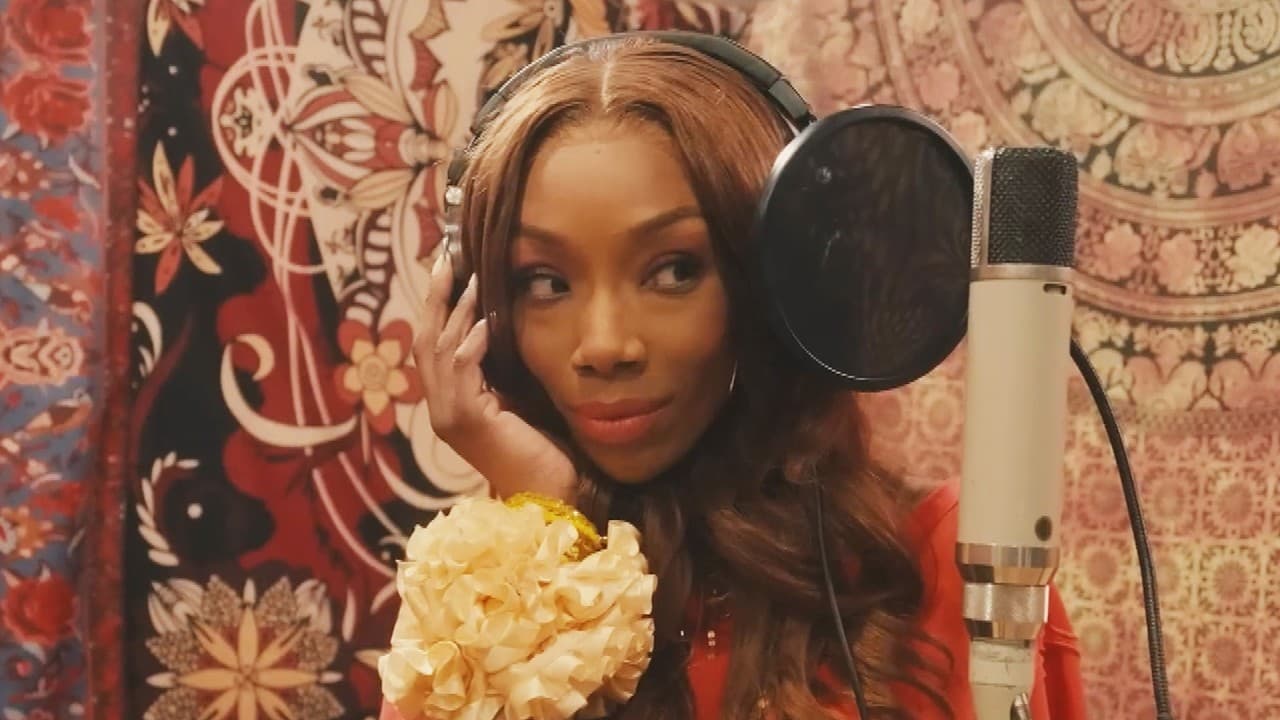
The streamer's reboot of A Different World premieres September 24th, and the first real signal of its intentions arrived not in a casting announcement or a teaser trailer but in a single recording-booth clip: Brandy, in the studio with showrunner Felicia Pride, remaking the theme song. As told to Entertainment Tonight this week, Brandy says she was 'blown away' to be asked, framing the assignment as an act of stewardship rather than celebrity placement. That framing is doing a lot of work.
The original theme had two legendary voices attached to it across its run. Aretha Franklin on the recording that effectively made the song untouchable, and Boyz II Men on the version that closed out the final season. Brandy now steps into a lineage that most singers would decline out of sheer self-preservation. The fact that she said yes, and that Netflix wanted her specifically, tells you something about how both parties are positioning this reboot in the marketplace for prestige IP revivals.
Why Brandy. Not a bigger current name. Got this assignment
Brandy is a Grammy-winning R&B artist whose career arc spans the mid-1990s peak of the original show's cultural moment, making her a bridge figure: recognizable to the parent generation that loved A Different World without alienating younger viewers discovering the franchise through Netflix.
The instinct to cast a maximally famous contemporary artist would have been wrong here, and whoever made this call at Netflix understood that. A Beyoncé or a SZA would have pulled the song into their own gravitational field. The theme would have become their moment, not the show's. Brandy occupies a different register. She is famous enough to confer prestige, grounded enough in the era to feel like continuity, and hungry enough for a mainstream reclamation arc to bring genuine investment to the material.
Her television history matters too. Brandy spent formative years as the lead of Moesha, which ran on UPN from 1996 to 2001 and occupied a tonal and demographic lane adjacent to A Different World. She understands the specific grammar of Black network television, the way storylines carry social weight without tipping into after-school-special territory. That institutional knowledge is not easily transferable from outside the tradition.
Dawn Lewis, who co-wrote the original theme before the show even aired in 1987, put it plainly in the ET clip: the song was always meant to function as an anthem rather than a mere title card. Brandy's version, from what the teaser reveals, honors that architecture. The melody is recognizable. The arrangement has been updated. The emotional stakes remain intact. That is a harder needle to thread than it sounds.
The original theme song's musical lineage. Franklin, Boyz II Men, and now Brandy
The A Different World theme song was originally performed by Aretha Franklin for most of the show's run; Boyz II Men recorded a version for the final season in 1993. Brandy's 2025 recording for the Netflix reboot is only the third major version in the song's 38-year history.
Aretha Franklin singing your television theme does not happen accidentally. It signals institutional muscle. Someone at Carsey-Werner Productions had the relationships and the budget to secure the Queen of Soul for what is, built that way, a piece of promotional infrastructure. Once she recorded it, the song became something else entirely. As Lewis recalled this week, the original plan was to re-record the theme every season with a different artist. Franklin's version stopped that conversation. 'I don't think we need to do this again,' was the room's consensus, by Lewis's telling.
Boyz II Men's entry in the final season of 1993 was the exception. A valedictory gesture rather than a reset. Their version arrived as the show was saying goodbye, which gave it elegiac weight the earlier seasons' theme never needed. It closed a circle. Now Brandy is tasked with opening a new one, which is an entirely different creative problem.
The weight Brandy herself feels is audible in the Tudum interview the ET segment draws from: she says she hopes to 'do it as much justice as the late Aretha Franklin.' That is not false modesty. It is an accurate assessment of the pressure. But it also functions as a public framing device. By naming Franklin directly, Brandy positions herself as a respectful inheritor rather than a replacement. Savvy image management and genuine reverence are not mutually exclusive.
"Nostalgia is the entry fee. What Netflix is actually selling is the argument that Hillman still matters."
What the returning original cast signals about Netflix's creative strategy
Netflix's A Different World reboot brings back Jasmine Guy, Kadeem Hardison, Cree Summer, Charnele Brown, and Darryl M. Bell, with Debbie Allen returning as a producer-director.
The ensemble list reads like a network's dream pitch: Whitley and Dwayne are back, Freddie is back, Kimberly and Ron are back. Debbie Allen, who helmed significant portions of the original and whose creative authority over the franchise has never really been in question, is back helming this. The new protagonist. Deborah, Whitley and Dwayne's daughter, played by newcomer Malia Joy Moon. Is introduced through existing family ties rather than as a standalone arrival. Netflix is not blowing up the mythology. It is extending it by one generation.
This is a built that way conservative choice, and on purpose so. The streamers that have attempted wholesale reboots of beloved properties. New casts, new tones, surface-level nods to the original. Have had a mixed record. The ones that fared better tend to be the ones that preserved institutional memory while opening the door to new characters. A Different World's IP advantage is its specificity: the HBCU setting, the social consciousness baked into the premise, the Hillman College mythology. All of that transfers forward without reintroduction.
Hardison's reported observation in the ET clip. That the new cast is 'bright-eyed and bushy-tailed and very, very impressive'. Functions as both genuine endorsement and strategic reassurance aimed at the skeptical original fan base. Veterans vouching for newcomers is a time-tested mechanism for managing franchise transitions. It also shifts some responsibility: if the new cast delivers, everyone shares the credit. If they don't, the original cast's visible enthusiasm becomes context rather than culpability.
For Debbie Allen specifically, this reboot is legacy consolidation. Her production company has remained active across decades in television, and her continued creative stewardship of this property keeps her name attached to what may become one of the higher-profile streaming premieres of the fall season. That is not a small thing for a filmmaker whose career has outlasted most of her contemporaries.
The HBCU cultural moment Netflix is tapping. And why timing matters
HBCUs have experienced a documented surge in cultural visibility and enrollment interest since roughly 2020, driven by a broader reexamination of Black institutional life in America. Netflix's A Different World reboot arrives inside that momentum window, not ahead of it. Which is both its advantage and its risk.
Hillman College, the fictional HBCU at the center of A Different World, was always a composite portrait drawn from real institutions. Howard, Spelman, Morehouse. The original show aired during a period when HBCU enrollment was already solid, but its cultural footprint extended well beyond its audience. Students who had never seen the show knew what Hillman represented. That is the kind of brand permanence money cannot manufacture after the fact.
The post-2020 period brought renewed mainstream attention to HBCUs. Donation surges, celebrity enrollment announcements, a measurable uptick in application rates at institutions that had spent decades underfunded and underrepresented in mainstream media. Netflix, which has a documented commercial interest in Black-audience programming after the success of properties like Bridgerton and Queen Charlotte in adjacent spaces, is reading that moment correctly.
The risk is timing lag. Streaming development cycles are long. A reboot greenlit in the cultural moment of 2021 or 2022 arrives in 2025. And the question of whether the cultural temperature has held, cooled, or shifted is genuinely open. Netflix is betting that the underlying appetite is structural rather than cyclical. The original cast's enthusiasm and Brandy's involvement are part of the argument that this show is an event, not just a catalog addition.
Brandy's career arc and why this role matters beyond the theme song
Brandy Norwood's recording career peaked in the mid-to-late 1990s, and her mainstream visibility has been intermittent since the mid-2000s. The Netflix reboot. In which she has both a performing role and the theme-song credit. Represents her highest-profile entertainment placement in several years.
The Brandy story is one of the stranger career trajectories in modern R&B. She debuted at 15, sold tens of millions of records across her first three studio albums, starred in a top-rated network sitcom and a landmark Cinderella telecast, and was, for a window in the late 1990s, one of the most commercially potent musicians in the country. Then the 2000s happened. A long-running rivalry narrative with Monica that overshadowed both of their work, a 2006 car accident that carried legal and personal consequences, and a series of albums that were critically admired and commercially underwhelming.
She has remained a prestige figure within R&B circles. Producers want her voice on their records, the industry gives her her flowers. But her mainstream footprint has been inconsistent. Moesha's arrival on Netflix in 2020 triggered a genuine rediscovery cycle, particularly among younger audiences encountering her work for the first time. That moment established a proof of concept: the streaming platform was a viable engine for Brandy's rehabilitation in the broader cultural conversation.
This reboot is the follow-through. By placing her in front of the A Different World audience. Which overlaps significantly with the Moesha audience but extends further into the adult demographic that remembers the original run. Netflix is effectively accelerating a reclamation arc that began with catalog licensing and now advances to original involvement. For her music career profile and long-term earnings potential, the distinction between 'legacy artist on a streaming catalog' and 'active participant in a high-profile reboot' is substantial.
The theme song credit is not incidental. Songwriting and recording royalties, particularly on a piece of IP that will be attached to every episode of every season, represent a revenue stream that builds up over time. Whether or not her acting role expands across seasons, her voice on that theme is permanent IP. A fact that becomes more valuable as the show builds its own legacy.
How Netflix monetizes nostalgia IP without cannibalizing it
Netflix's approach to legacy IP revivals. Preserving original mythology while centering new characters. Attempts to capture both existing fan loyalty and new subscriber acquisition without alienating either audience. The A Different World reboot's structure mirrors this playbook precisely.
The streaming economy has created a specific category of content: the prestige nostalgia revival. It is not a remake, which implies replacement. It is not a simple reunion special, which implies a one-time event with no growth potential. The Netflix model. And this applies to their handling of several beloved properties across the past five years. Is the generational handoff. Keep the elders in the frame. Build the story around their children. Let the mythology do the marketing.
For A Different World, that means the Hillman mythology travels intact into a new story about a new student, Deborah, while Whitley and Dwayne's presence keeps the original fan base emotionally invested. The show does not need to re-earn trust with the audience that loved the original. It just needs to not waste it. There is a real difference between those two creative problems.
Netflix's subscriber acquisition logic is equally legible. The core A Different World audience. Viewers who were college-aged when the show ran from 1987 to 1993. Are now in their 50s and 60s, a demographic that streams heavily and churns relatively slowly. Their adult children, who may have grown up with the show on in the background, are in their 30s and represent a secondary acquisition target. Malia Joy Moon's newcomer character is the on-screen surrogate for that younger viewer. The show is architectured to work on multiple registers simultaneously.
The September 24th premiere date places it squarely in fall programming season, when streaming platforms typically deploy their highest-confidence content. That positioning, more than any other single data point, tells you how much confidence Netflix has in this property. You don't give your prestige slot to a gamble. You give it to a calculated bet.
What Dawn Lewis's dual-role origin story tells us about creative ownership
Dawn Lewis co-wrote the A Different World theme song and was separately hired as a cast member before the producers realized they had hired the same person for both roles. A coincidence that, 38 years later, illustrates how creative ownership of franchise IP is rarely structured in favor of the original creator.
The Lewis anecdote is genuinely remarkable. She wrote the theme song, booked the acting job, and the production was sufficiently siloed that no one connected the two until after the contracts were signed. In 1987, that kind of administrative disconnect was not unusual in network television. What it produced, inadvertently, was a songwriter with an insider's relationship to the property she had scored.
The more pointed question. One the ET segment gestures at without pursuing. Is how Lewis has benefited financially from 38 years of that song's use. Theme song royalties in television exist in a complicated ecosystem. The original deals struck in the late 1980s often did not anticipate the streaming era, syndication at global scale, or the possibility that a show would be revived decades later. Whether Lewis's arrangement has been updated to reflect the property's current commercial life is an open question, and one worth asking.
Her evident warmth about the reboot in the ET clip. 'it's still changing lives,' she says, with what reads as genuine feeling rather than promotional affect. Suggests she is not nursing grievances about how the property has been managed. But her story is a useful entry point into the broader conversation about who profits from legacy IP when it gets revived. The creators who built the original architecture are not always the ones capturing the most value when the archive goes back to work. Tracking who controls what across entertainment's revival economy is one of the more revealing exercises in the business of celebrity.
The stakes for a September 24th premiere in a crowded fall streaming landscape
A Different World premieres on Netflix on September 24th, entering a fall slate crowded with legacy revivals and original programming across multiple platforms. Its HBCU setting and multigenerational cast give it a relatively clear lane, but cultural goodwill alone does not guarantee sustained viewership.
Fall is when streaming platforms play their highest cards. It is also when audiences have the most choices. The A Different World reboot will land in a marketplace that has been conditioned by years of revival content. Some of it transcendent, much of it disappointing, all of it competing for the same finite hours of viewer attention. The show's built-in mythology is a genuine asset. Goodwill is a real resource. It is not, however, an inexhaustible one.
The critical variable is the new cast. Malia Joy Moon carries the narrative weight of the new story, and an actor almost no one has seen before will be asked to hold the screen alongside veterans who have spent decades building audience trust. Hardison's endorsement. 'very, very impressive,' he says, with the careful specificity of someone who means it. Is encouraging. But the audience will make its own assessment within the first two episodes, and Netflix's renewal calculus will respond accordingly.
What the reboot has going for it, beyond the nostalgia infrastructure, is the specificity of its setting. HBCU campus life in 2025 is a dramatically richer environment than the one the original writers navigated in 1987. Social media, transfer culture, NIL deals, mental health conversations that were entirely absent from the original run. If the writers' room uses Hillman's continued existence as a lens on all of that, the show earns its revival. If it plays the nostalgia card too heavily and forgets to have a point of view on the present, it will feel like a very expensive reunion special.
Brandy's theme song will open every episode regardless. That is the floor. How high the ceiling goes depends on whether the new generation. On screen and off. Can do what the original cast did: make the audience feel like Hillman is a place they already belong.