Tom Cruise Net Worth: $600M and Climbing in 2026
Six decades into a career built on physical risk and contractual genius, Cruise has assembled a fortune that most franchise actors can only study from a distance.
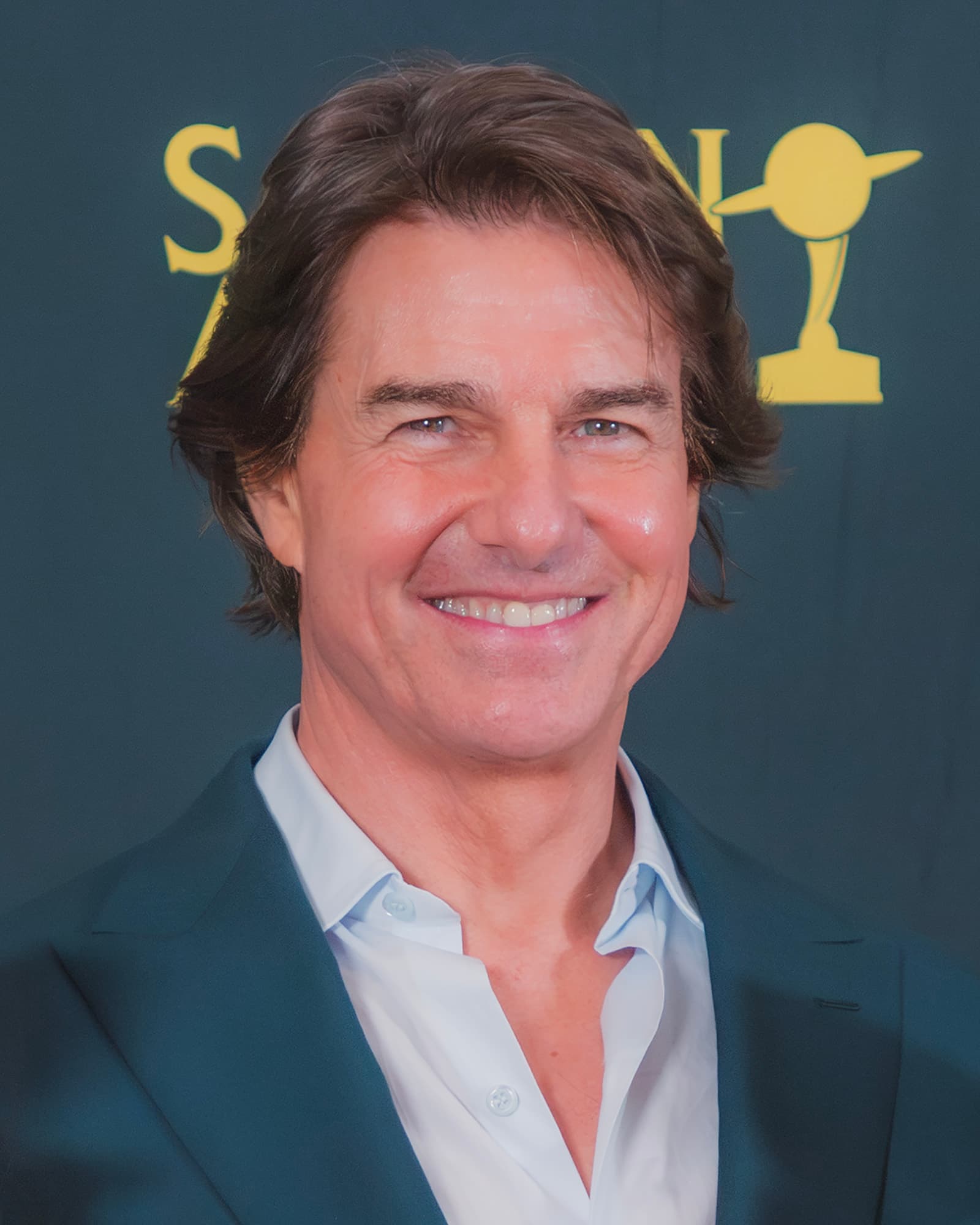
Tom Cruise turned 63 in July 2025. He still performs his own stunts. He still opens movies. And the financial architecture he built across four decades still generates income at a scale that separates him from nearly every peer in Hollywood.
Our analysis, cross-referencing figures from Celebrity Net Worth, TheRichest, Wealthtender, and IMDb-cited data. All pointing to the same $600M figure as of mid-2025. Places his net worth at $600 million as of June 2026. Cosmopolitan, writing in 2023, had him at $500 million; the gap between that estimate and ours reflects backend participation income from Top Gun: Maverick and the most recent Mission: Impossible installments, which settled out well after that piece published.
This is not a passive celebrity fortune. Roughly 60 cents of every dollar traces back to acting fees and profit-participation deals. A structure that rewards longevity and use in equal measure. The remaining 40 cents flows from a production company, brand relationships, real estate, and a catalogue of blockbusters that continues to generate recurring royalty income. To understand the $600M figure, you need to understand how each layer was built.
How Cruise Ranks Against the Richest Actors Alive
At $600M, Tom Cruise ranks among the three wealthiest working film actors globally, trailing only a handful of peers who parlayed entertainment wealth into equity stakes or tech investments.
Peer comparison is tricky here. Several actors report higher headline net-worth figures, but those fortunes lean heavily on non-acting assets. Production studio equity, spirits brands, sports franchises. Cruise's $600M is overwhelmingly entertainment-derived. That makes it a purer signal of what sustained A-list status is actually worth.
Celebrity Net Worth noted in 2026 that his annual salary runs roughly $50 million. Our analysis treats that figure as a reasonable recent-cycle average, not a floor. Some years the number is lower; a Maverick-sized backend year pushes it well above that mark.
Forbes has tracked the highest-paid actors list for decades. Cruise has appeared near the top repeatedly. Not because of one breakout year, but because his income is built that way consistent. That consistency, compounded across 40-plus years, is the core of the $600M story.
Acting Fees and Backend Deals: The $360M Engine
Film acting. Base salaries plus profit-participation back-end deals. Accounts for roughly $360M, or 60% of Cruise's estimated net worth, built across more than four decades of continuous A-list output.
Profit participation. Sometimes called a backend deal. Means an actor defers part of their upfront fee in exchange for a percentage of a film's gross revenue. Done right, it vastly outperforms any flat salary. Cruise has done it right, repeatedly.
Cosmopolitan's 2023 breakdown traced his per-film earnings across his entire career. Early pictures paid modestly: his fee for an early 1980s role was in the range of $75,000. By the mid-1980s, Risky Business and Top Gun pushed that into the low millions. His Cosmopolitan-cited fee for Jerry Maguire landed around $20 million. By Mission: Impossible. Ghost Protocol, the number had reached $75 million when backend participation settled.
Wikipedia's list of highest-paid film actors cites at least three individual productions on which Cruise cleared $100 million in total compensation. Base fee plus participation. Our figure of $360M for acting-related income is a career aggregate, not a single-year snapshot. It accounts for both the lean early years and the backend-heavy blockbuster era that began in the mid-1990s.
The key structural point: Cruise negotiated participation deals when studios still resisted them. That early use set the template for everything that followed.
“Cruise built $600M not by taking the biggest check, but by deferring it. Then owning a piece of every dollar the film ever earned.”
Cruise/Wagner Productions and the Power of the Producer Credit
Cruise's production company, Cruise/Wagner Productions, adds an estimated $120M to his net worth. About 20% of the total. By capturing backend revenue that would otherwise flow only to the studio.
Co-founded with former CAA agent Paula Wagner, Cruise/Wagner Productions has held a primary production role on the Mission: Impossible franchise since the first film in 1996. A producer credit on a franchise that has generated well over $1 billion in cumulative global box office is not ceremonial. It means a contractual share of profits at the production level. Separate from and additive to his acting participation.
The mechanics matter. When Cruise acts in a film he also produces, he captures income at two points in the revenue chain. The studio pays him as talent. The production deal pays him as a rights and oversight partner. That double-dip structure is rare. Very few actors sustain it across six sequels.
Our $120M estimate for production-related income is conservative. It does not attempt to separately value the company as an ongoing enterprise. It reflects historical earnings from the producer role across the franchise's run. A figure our analysis treats as a floor rather than a ceiling.
TheRichest noted in 2023 that Cruise co-owns Cruise/Wagner Productions outright. Ownership, not a profit-share license. That distinction matters: the asset base has independent value regardless of what any single film earns.
Endorsements: Long-Term Brand Relationships Worth $60M
Endorsement and sponsorship deals. With partners including Pepsi, Omega, and Tag Heuer. Account for roughly $60M, or 10% of Cruise's estimated net worth, built across several decades of brand relationships.
Cruise has never been a heavy endorsement presence the way some athletes are. He does not attach his name to dozens of products. The deals he has taken tend to run long and pay accordingly.
Luxury watch partnerships with Omega and Tag Heuer are the most visible examples. These are not one-cycle campaign deals. They are sustained relationships built around brand identity. Cruise's association with precision, performance, and controlled risk maps cleanly onto the horological (watchmaking) sector's preferred image.
Our $60M estimate for endorsement-related career income aggregates across multiple decades of these relationships. It is a smaller slice of the pie than acting or production. But it required none of the physical risk or contractual complexity of either. That is efficient income by any measure.
Real Estate: A $30M Position Built on Quality Over Scale
Real estate holdings contribute roughly $30M to Cruise's asset base. About 5% of the total. Reflecting a concentrated position in high-value properties rather than a sprawling portfolio.
Cruise has owned property across Los Angeles, Colorado, and England at various points in his career. He is not a real estate accumulator. The holdings are material but not the defining chapter of his wealth story.
Celebrity Net Worth noted in its most recent update that real estate forms a meaningful but secondary part of his portfolio. Our analysis treats the $30M figure as reflecting current estimated market value of known holdings, net of any use. A real number, but not one that moves the headline estimate significantly in either direction.
The strategic logic is straightforward. Cruise generates income at a scale where capital preservation in physical assets makes sense. Real estate provides a hedge against inflation and a base of non-entertainment assets. It does not need to be the biggest line item to serve that function.
Residuals and Royalties: The Catalogue Keeps Paying
Ongoing residuals and IP royalties. Drawn from a blockbuster catalogue and streaming licensing deals. Account for roughly $30M of Cruise's wealth, providing a recurring income stream that requires no new work.
Residuals are the payments actors and producers receive each time a film is broadcast, licensed, or streamed after its initial release. For most actors, residual checks are modest. For Cruise, whose catalogue includes some of the most-licensed action films of the past four decades, the aggregate is substantial.
His filmography has generated cumulative global box office well above $1 billion. The exact figure, depending on which titles you include, runs into the multiple billions. That scale of theatrical success translates into streaming licensing value. Every time a platform acquires rights to Top Gun, Jerry Maguire, or any Mission: Impossible installment, a royalty flows to the rights holders. Cruise's production deals ensure he is among them.
The $30M attributed to residuals and royalties in our analysis is a current asset-value figure. What the ongoing stream is worth today, not what it will pay over the next decade. It is a floor. Streaming platforms continue to compete for proven catalogue content, and Cruise's library is among the most proven available.
How Cruise Structures His Earnings to Stay Rich
Cruise channels income through backend deals, production entity ownership, and long-term brand relationships. A capital structure designed to compound wealth rather than simply accumulate it.
The smartest thing Cruise did financially was not take the biggest upfront check. Backend participation requires trusting your own project. And absorbing the risk that comes with it. His willingness to defer salary for a gross-revenue percentage reflects both confidence in his own commercial pull and a sophisticated read of how film economics work.
Production entity ownership builds up that logic. Cruise/Wagner Productions captures value at the franchise level, not just the film level. Each Mission: Impossible sequel increases the value of the franchise as an intellectual property asset. And Cruise holds a stake in that asset.
Celebrity Net Worth pegged his annual salary at $50 million as of 2026. Wealthtender cited a comparable figure. Our analysis treats $50 million as an approximate recent-cycle average. What matters more than the annual figure is that Cruise has earned at or near that level for close to three decades. Stacking across that time horizon, with reinvestment and asset appreciation, produces the $600M figure. The math is not magical. It is consistent.
What Could Disrupt the $600M Estimate
The primary risks to Cruise's net worth are franchise fatigue, physical injury ending his stunt-driven brand, and a streaming-era restructuring of the backend deal mechanics that have historically driven his largest paydays.
Franchise fatigue is real. Mission: Impossible has survived longer than anyone predicted. Dead Reckoning performed below some projections. If the next installment underperforms, backend settlements shrink. And the production company's income follows.
Physical risk is the other variable. Cruise's stunt-driven brand is both his biggest marketing asset and his largest personal liability. An injury that sidelines him for a year does not just affect his income. It affects the entire financial structure built around his continued output.
The shift toward streaming has also restructured how backend participation is calculated and paid. Traditional gross-participation deals were designed for theatrical windows. As studios push content toward streaming platforms. Which report revenue differently and with less transparency. The use that made Cruise's deals so valuable becomes harder to negotiate and harder to audit.
None of these risks is acute. But taken together, they represent the ceiling on how much higher the $600M figure can realistically climb without new structural income sources.
Where the Number Goes From Here
Our analysis projects Cruise's net worth holding at or above $600M through 2027, with upside contingent on Dead Reckoning Part Two performance and new backend deals. And limited downside absent a major disruption.
Cruise has two levers that could push the figure higher. First, a strong box-office performance from the next Mission: Impossible installment would trigger backend settlements that our current $600M estimate does not fully price in. Second, any major new franchise. Or a Top Gun sequel. Would reset his per-picture compensation to current market rates, which, for a proven global draw, remain at the $100M participation tier.
The downside scenario is less dramatic than the risk section implies. Even if Cruise steps back from active production in the next five years, his catalogue royalties, production entity ownership, and real estate holdings preserve a floor well above $500M. Cosmopolitan put him at $500M in 2023. That figure already accounted for a career winding down. It hasn't wound down.
Our estimate as of June 2026 remains $600 million. It is a conservative read of the convergent source data, weighted toward the most recent and authoritative figures. The trajectory is flat to upward. Contingent on the next film, the next deal, and whether Tom Cruise keeps doing the thing that made all of this possible in the first place.
How the $600M adds up
- Film acting salaries & backend participationCore income driver across 40+ years; Cruise has earned $100M+ on at least three individual films via profit-participation deals, and commands $20M+ base per picture.$360M60%
- Film production (Cruise/Wagner Productions)Cruise co-owns Cruise/Wagner Productions and takes producer credits on the Mission: Impossible franchise, meaningfully amplifying backend earnings beyond his acting fee.$120M20%
- Endorsements & brand sponsorshipsLong-term deals with brands including Pepsi, Omega, and Tag Heuer have contributed hundreds of millions in endorsement income over his career.$60M10%
- Real estate holdingsCruise owns multiple high-value properties; real estate represents a smaller but material share of his overall asset base.$30M5%
- Residuals & IP royaltiesOngoing residuals from a catalogue of blockbusters with $11.5B+ in cumulative global box office, including streaming licensing deals, provide a recurring income stream.$30M5%
Ezra Linwood — Ezra Linwood covers entertainment wealth, talent deal structures, and Hollywood's highest-earning principals for Neon Hollywood.
Disclaimer: Net-worth figures are editorial estimates built from publicly available reporting, filings, and market data — see our methodology. They are not verified statements of any person’s finances and nothing here is financial advice.