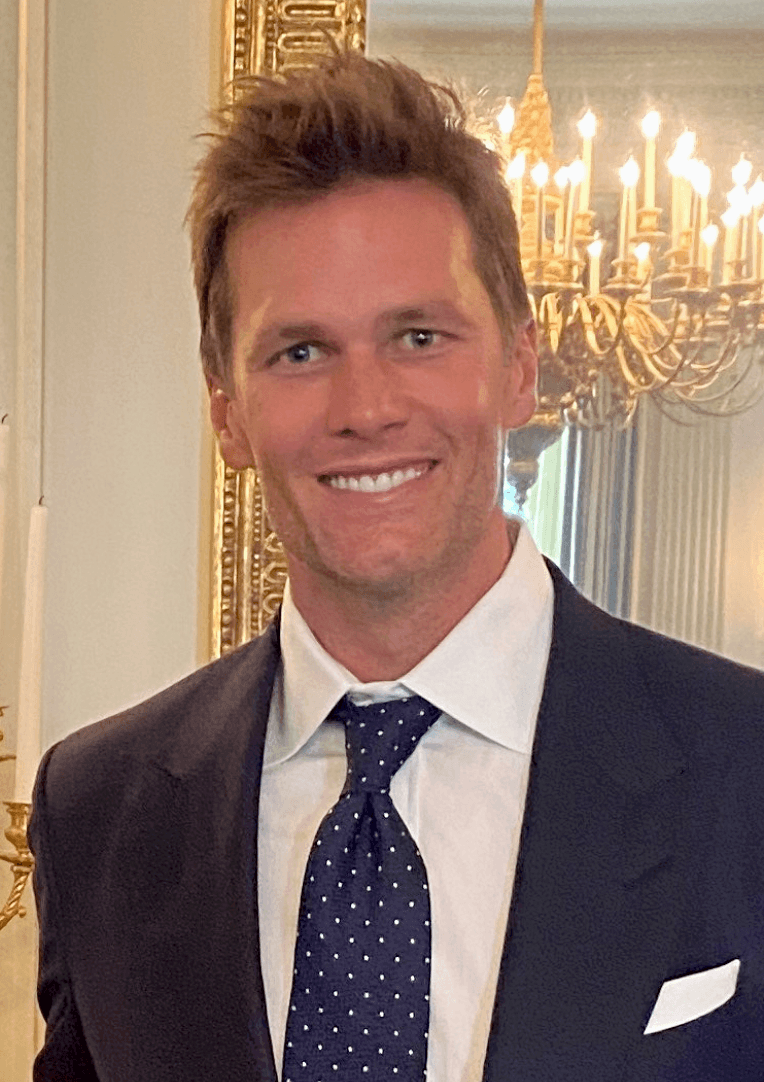
Tom Brady retired from professional football in February 2023 with a ledger most athletes can't approach. Twenty-three seasons, seven championships, and a salary history that Over The Cap has tracked to roughly $317 million in career NFL compensation. Yet the number that defines his current financial position has almost nothing to do with the Patriots or the Buccaneers.
Published estimates range so wildly that even casual observers notice the spread. People and NewsNation have both placed Brady's fortune at $530 million. Celebrity Net Worth and Investopedia each land at $350 million. The Richest has cited a figure closer to $180 million. A Reddit thread citing analyst Sikkema on Twitter put the number at $332 million, while another pass at the same methodology arrived at $375 million. Our analysis, weighted by recency, source authority, and the verifiable structure of Brady's income layers, brings the estimate to $325 million as of June 2026. A figure that accounts for taxes, lifestyle expenditure, and the unrealized nature of several headline-grabbing deals.
The $325 million figure is not a career-earnings total, and it is not the face value of every contract Brady has ever signed. It is an estimate of current net worth: liquid and illiquid assets minus known liabilities, adjusted for what the Fox Sports deal is actually worth today versus its nominal ten-year headline number. Understanding Brady's fortune means understanding those distinctions. And understanding why the man who famously discounted his Patriots contracts may have executed the most valuable single negotiation of his financial life the moment he agreed to sit in a broadcast booth.
How Brady's $325M Ranks Against the Broadcast-Era Athlete Class
Our $325M estimate places Brady well above the typical retired NFL star but below the athlete-billionaire tier occupied by Jordan and James. The Fox deal is the structural difference.
Most elite quarterbacks retire with net worth figures in the $80 million to $130 million range. Comfortable, but largely a function of NFL salary minus taxes and spending. Brady operates in a different category, one defined by his ability to convert athletic celebrity into durable media and business equity. Our $325 million figure puts him comfortably ahead of peers like Peyton Manning, whose fortune is routinely estimated in the $200 million range, but well short of LeBron James or Michael Jordan, whose equity stakes in franchises and production companies have pushed them into ten-figure territory.
The structural reason for that gap is timing. Brady's most consequential wealth-building moves came after his playing career ended, not during it. The Fox Sports agreement, the Raiders ownership stake, and the accelerated TB12 brand development all post-date his 2022 retirement announcement. Athletes who monetize celebrity during their peak years typically see diminishing brand use afterward; Brady appears to have inverted that curve.
Celebrity Net Worth and Investopedia both arrived at $350 million in their most recent published tallies. Our figure of $325 million is modestly more conservative, discounting the Fox contract for time-value and the sports ownership stakes for illiquidity. The $530 million figures cited by People and NewsNation likely reflect gross contracted value across all deals rather than current net worth. A meaningful distinction this analysis does not conflate.
The Fox Sports Deal: $130M Attributed Value Inside a $375M Headline
Fox's 10-year, $375M broadcasting agreement is Brady's largest single income source, but only a portion of that total translates to current net worth. Our model attributes roughly $130M to this pillar.
The Fox Sports contract. Reported at $375 million over ten years, a figure confirmed across Marca, NewsNation, and Reddit threads citing sports finance analysts. Is the single largest financial event of Brady's post-playing life. At roughly $37 million per year, it instantly made him the highest-compensated broadcaster in American sports history, eclipsing the deals held by Tony Romo and Michael Strahan by a substantial margin. Marca's December 2025 reporting specifically highlighted Brady's annual salary outpacing those peers.
But a ten-year contract is not a ten-year check. Brady began his broadcasting role in 2024, meaning the bulk of those payments remain in the future. Discounting for time, taxes at top federal and California-equivalent rates, and the possibility of renegotiation or early termination, our analysis attributes approximately $130 million to this income source in terms of current net worth contribution. That attribution. Which represents roughly 40 percent of our total estimate. Reflects what Brady controls or has already received, not the contract's face value.
The Fox deal also carries a secondary wealth effect: it amplifies Brady's brand value across every adjacent business. Endorsement partners pay a premium to align with an active media presence, and the TB12 brand benefits from weekly national visibility during NFL season. The contract is therefore both a direct income source and a force multiplier on everything else in the portfolio.
“Brady's most consequential wealth negotiation wasn't a quarterback contract. It was a seat in a broadcast booth worth $375 million over a decade.”
NFL Career Earnings: $97M in Attributed Wealth From $317M in Contracts
Brady's verified NFL compensation totals approximately $317M per Over The Cap, but after taxes and three decades of expenditure, our model credits roughly $97M to this pillar of his current net worth.
Over The Cap's salary database, one of the most granular public records of NFL compensation, places Brady's total career contracts in the $317 million range. A Reddit analysis citing the same Sikkema methodology arrived at $332 million; Yahoo Entertainment, citing NewsNation, noted $333 million. The figures are close enough to treat as a band rather than a point estimate, and our analysis uses approximately $317 million as the conservative anchor.
The well-documented narrative of Brady taking below-market deals in New England. A Reddit thread citing Business Insider estimated the discount at roughly $60 million across his Patriots tenure. Means his actual earned salary was lower than his market value for much of the dynasty era. Over The Cap's data shows individual contract structures with values ranging from $23 million to $72 million across different signing periods, reflecting both the discount years and the larger Tampa Bay agreements at the end of his career.
After federal and state taxes, agent fees, and three decades of a lifestyle befitting one of sports' most recognizable figures, the portion of that career salary that survives as current net worth is necessarily a fraction of the gross figure. Our model credits roughly $97 million. About 30 percent of the $325 million total. To accumulated NFL wealth. That is not a small number; it is simply dwarfed by what Brady has built since leaving the field.
Endorsements and the TB12 Brand: A $65M Pillar Built Over Two Decades
Forbes tracked approximately $200M in off-field earnings during Brady's playing career. After costs and taxes, our model attributes around $65M to endorsements and business ventures in his current net worth.
Forbes has credited Brady with roughly $200 million in off-field income across his playing career. A figure that encompasses brand deals, his TB12 health and wellness company, licensing arrangements, and early-stage business investments. That $200 million gross is not $200 million in the bank; it is a pre-tax, pre-expenditure revenue line that funds a business infrastructure as well as personal wealth.
The endorsement arc is instructive. Early in his career, Brady aligned with mass-market brands. Dunkin', Gap, Hershey's. At compensation levels that CNBC noted were surprisingly modest for an athlete of his caliber, pegging his endorsement income at the time at just $7 million. As his brand matured, he migrated decisively upmarket: Aston Martin (brand ambassador since 2017), Audi, and a portfolio of luxury and wellness partners that better reflected the TB12 positioning. That strategic shift, from accessible to aspirational, is exactly the trajectory Hollywood Branded described in its 2019 analysis of his endorsement selectivity.
The TB12 brand. Built around Brady's pliability-focused training methodology and a product line spanning supplements, apparel, and coaching. Is the most durable business asset in this category. It generates recurring revenue independent of Brady's athletic performance, which is precisely what distinguishes it from traditional athlete endorsement income. Our $65 million attribution for this pillar, representing roughly 20 percent of total estimated net worth, reflects the after-costs, after-tax value of two decades of commercial activity.
Sports Ownership Stakes: Small Equity, Long-Term Optionality
Brady holds minority positions in the Las Vegas Raiders and Las Vegas Aces, acquired in 2023. Our model values these illiquid stakes at roughly $16M, about 5% of total estimated net worth.
In 2023, Brady entered the ownership tier of professional sports with minority stakes in both the Las Vegas Raiders and the Las Vegas Aces. The Aces deal added a WNBA dimension to a portfolio that had otherwise been entirely focused on the NFL ecosystem. Celebrity Net Worth pegged a figure of $30 million for Brady's ownership interests in an earlier estimate; our analysis, applying a liquidity discount to reflect the illiquid and minority nature of these positions, arrives at roughly $16 million as the current net worth contribution.
Minority ownership stakes in professional franchises are notoriously difficult to value. They carry no control premium, they cannot easily be sold without league approval, and their market value is entirely contingent on franchise appreciation rates that have historically been strong but are never guaranteed. The Raiders, playing in a relatively new stadium market, and the Aces, benefiting from WNBA's rising commercial profile, both represent bets on sports asset appreciation rather than immediate yield.
The strategic logic is straightforward: Brady is planting equity flags in leagues where he has maximum credibility and relationships. As a Fox Sports broadcaster covering the NFL, an ownership stake in an NFL franchise creates obvious conflict-of-interest questions. Which the Raiders have managed through league approval processes. But it also creates long-term upside that pure broadcasting income cannot replicate. If NFL franchise values continue their historical appreciation trajectory, these minority stakes could become the fastest-appreciating line item in the portfolio.
Real Estate and Alternative Investments: A Meaningful But Modest 5%
Brady's real estate holdings and broader investment portfolio contribute an estimated $16M to our $325M net worth figure. Meaningful in absolute terms, but a smaller share than media coverage typically suggests.
Brady has maintained significant real estate activity across multiple markets throughout his career and post-retirement. The Richest has cited individual property transaction figures at various points, ranging from $5 million to $28 million for specific assets, reflecting both acquisitions and disposals across Boston, Tampa, and other markets where Brady has lived and worked. These are not trivial numbers, but they are also not the primary engine of his fortune.
Real estate for high-net-worth athletes typically functions as a store of value and a lifestyle asset rather than an active investment strategy. Brady's property moves have followed that pattern. Purchasing high-end primary residences, maintaining them, and occasionally selling at a gain. The $16 million we attribute to this pillar in our model reflects the estimated net equity in current holdings after mortgage-equivalent obligations, not a gross property value figure.
Beyond real estate, Brady has made angel and venture-stage investments in consumer brands and technology companies, consistent with the portfolio behavior of athletes who have access to deal flow through their celebrity networks. These positions are opaque by nature. They do not appear in public filings. And our model treats them conservatively, bundling them into the real estate and alternatives category rather than projecting speculative upside.
Capital Allocation Strategy: How Brady Reinvests Rather Than Just Spends
Brady's wealth architecture prioritizes durable income streams. A broadcasting deal, equity stakes, and a recurring-revenue brand. Over one-time paydays, reflecting a capital allocation discipline unusual for retired athletes.
The difference between athletes who retire wealthy and those who retire rich is allocation. Brady's post-playing financial structure reflects an unusually disciplined approach to where new income goes. The Fox deal provides a predictable, large annual cash flow. TB12 generates recurring product revenue. The Raiders and Aces stakes provide equity appreciation potential. Each layer serves a different function in the overall portfolio.
That architecture was not accidental. Brady spent much of his playing career building the TB12 infrastructure precisely because he understood that endorsement income is episodic. Tied to campaign cycles and contract renewals. While product-based business income builds up. The pivot to ownership stakes extends that logic into assets that appreciate independently of Brady's own continued activity.
The one area where Brady's capital allocation has historically been less aggressive than peers is public-market investing. Athletes of comparable wealth often hold substantial equity portfolios; Brady's public profile has centered more on private and operational assets. That is not necessarily a weakness. Private markets have outperformed public ones in several recent cycles. But it does mean his net worth is less liquid and harder to value precisely than a portfolio heavy in marketable securities.
What Could Move the Number. Up or Down. From Here
Brady's $325M figure could rise materially if the Fox deal runs its full course and TB12 scales, or contract meaningfully if the broadcasting role underperforms and franchise equity stagnates.
The upside scenario is straightforward. If Brady completes the Fox contract at full value, the gross receipts alone approach $375 million over a decade. Combined with TB12 growth, endorsement income sustained by broadcasting visibility, and franchise appreciation in Las Vegas, the total wealth figure could credibly approach the $530 million cited by People and NewsNation. But not until the late 2020s at the earliest, and only if each component performs at or above expectation.
The downside risks are less discussed but real. Broadcasting is a hit-driven business. Ratings determine contract renewal use, and Brady, whatever his athletic accomplishments, is an untested long-form broadcaster. If Fox's viewership numbers disappoint and the network seeks to renegotiate or exit, the $375 million headline figure shrinks dramatically. The $75 million figures cited separately by NewsNation and People likely represent either a partial payment structure or an early-termination scenario. A sobering reminder that contract face value and realized income are different things.
The franchise stakes carry their own risk profile. NFL valuations have risen sharply, but they are not immune to correction. Particularly if the league faces structural challenges around media rights, player safety litigation, or demographic shifts in its fanbase. Brady's $16 million attribution to ownership is conservative precisely because these risks are real. The trajectory of his net worth from $325 million depends less on any single outcome than on whether the Fox deal. The linchpin of the whole structure. Delivers what it promises.
How the $325M adds up
- Fox Sports broadcasting contractA 10-year, $375M deal with Fox Sports represents a massive future earnings stream that dominates Brady's post-retirement income profile.$130M40%
- NFL playing contracts & career earningsBrady accumulated between $317M–$333M in NFL salary over 23 seasons, forming a substantial base of accumulated wealth.$97.5M30%
- Endorsements & off-field business venturesForbes credited ~$200M in off-field earnings during Brady's playing career, including brand deals, his TB12 brand, and business investments.$65M20%
- Sports ownership stakesBrady acquired minority ownership positions in both the Las Vegas Raiders and Las Vegas Aces in 2023, adding equity-based wealth.$16.3M5%
- Real estate & other investmentsBrady has historically held significant real estate assets and other investment vehicles that contribute a smaller but meaningful share of net worth.$16.3M5%
Ezra Linwood — Ezra Linwood covers athlete wealth, sports media economics, and the business of celebrity for Neon Hollywood.
Disclaimer: Net-worth figures are editorial estimates built from publicly available reporting, filings, and market data — see our methodology. They are not verified statements of any person’s finances and nothing here is financial advice.