Tiger Woods Net Worth: How the Golf Billionaire Built $1.4B by 2026
Fifty years old, barely active on Tour, and still the most commercially powerful name in golf — Woods' fortune is less a sports story than a study in brand permanence.
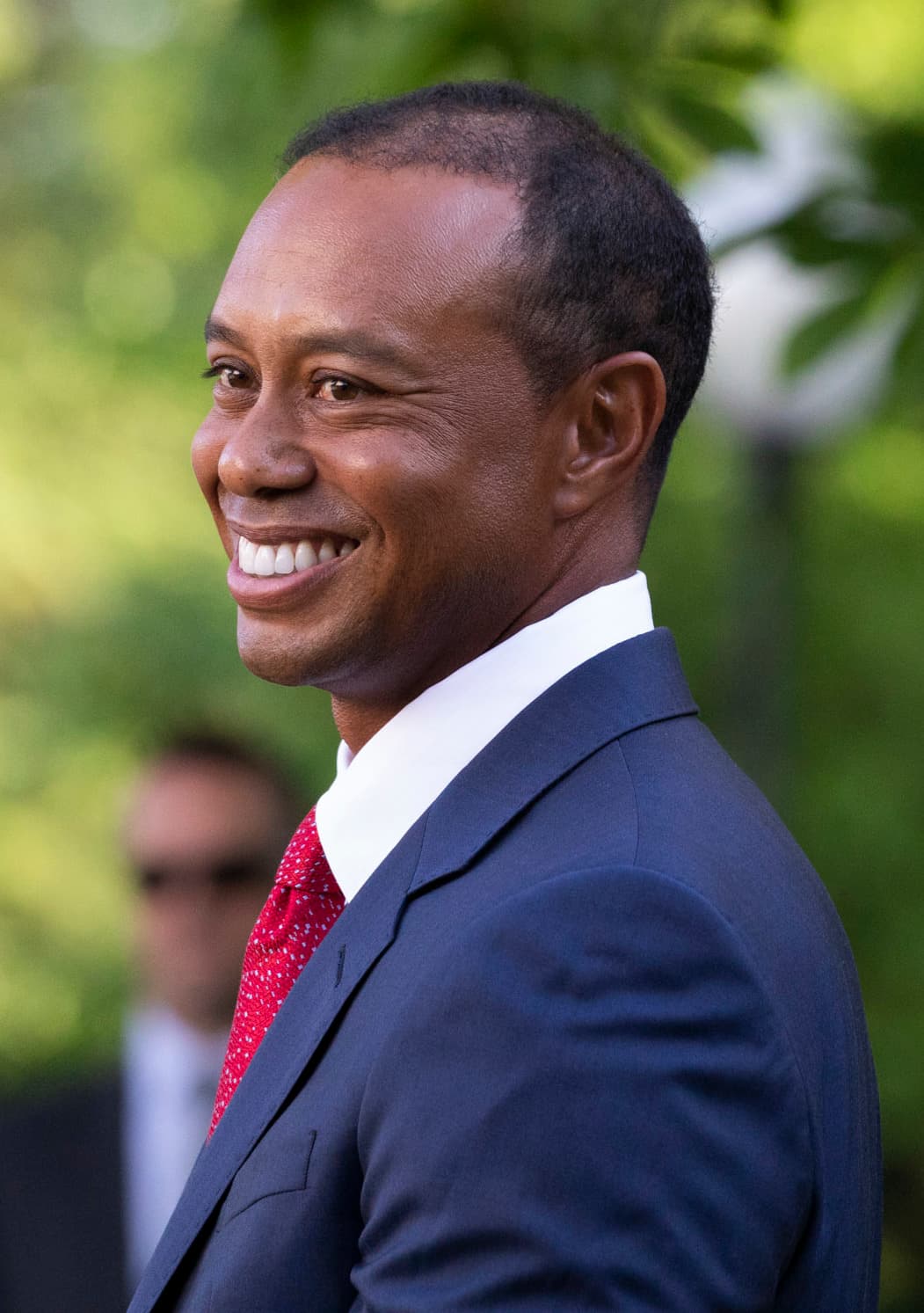
The number that matters most about Tiger Woods' wealth is not the one on any leaderboard. Our analysis, drawn from Sportico's end-of-2025 valuation, Golfweek/USA TODAY's March 2026 reporting, and Yahoo Sports' Forbes-sourced February 2026 figure, arrives at an estimate of $1.4 billion as of June 2026. That places him in a rare category — one of a handful of athletes globally whose fortune has crossed into ten-digit territory while still nominally active in their sport. This is capital-allocation money, not prize-money money. It is the fortune of a man who understood, earlier than almost any athlete before him, that the course was a stage and the real theater was the balance sheet.
Context sharpens the figure. Sportico, in its most bullish assessment published at the close of 2025, put the career-earnings ceiling at $2.0 billion in gross pre-tax receipts — a staggering cumulative haul that positions Woods alongside Floyd Mayweather as one of the two highest-earning athletes in recorded sporting history. Golfweek/USA TODAY's more conservative net-worth peg, published in March 2026, landed at $1.5 billion. Yahoo Sports, citing Forbes' real-time tracking in February 2026, reported a figure of $1.3 billion. The spread between those estimates — from $1.3 billion to $1.5 billion — reflects genuine methodological disagreement about how to value privately held operating businesses, illiquid real-estate holdings, and deferred partnership interests. Our analysis, weighted toward recency and adjusted for known asset discounts on private ventures, settles at $1.4 billion.
What category of fortune is this, exactly? Woods sits at the intersection of three distinct wealth archetypes: the legacy endorsement machine, the operating entrepreneur, and the passive capital allocator. Most athlete billionaires lean heavily on one of those pillars. LeBron James built his fortune through equity positions and production. Michael Jordan monetized a surname through branded licensing. Woods, uniquely, has done all three simultaneously — and the endorsement pillar alone dwarfs what most athletes accumulate across entire careers. That structural diversity is precisely why the fortune has proven so durable in the face of physical decline, legal turbulence, and years of near-total competitive absence.
Endorsements and sponsorships account for roughly 55 percent of everything Woods has ever earned — our analysis puts the cumulative figure from this category alone at approximately $770 million. The anchor of that number is a Nike relationship that, across its full multi-decade life, generated a deal value in the neighborhood of $660 million. No single athlete-brand partnership in the history of the sport has approached that sum on a sustained basis. Nike's 2024 announcement that it was exiting equipment and apparel effectively ended the most lucrative arrangement in golf's commercial history, but the cash that arrangement generated across nearly three decades had already been banked, reinvested, and compounded. Beyond Nike, Woods assembled an endorsement portfolio — Accenture, Buick, AT&T, Gillette, EA Sports, PepsiCo — that operated as an index of blue-chip American consumer spending. When the sponsorship scandal following 2009 prompted several partners to exit, the structural income from remaining deals absorbed the shock. What is remarkable, in retrospect, is how quickly the commercial ecosystem reconsolidated around him. The PGA Tour's 2024 Player Impact Program, which distributes $40 million to the Tour's most marketable personalities, awarded Woods the maximum individual payout of $10 million — not because he had won a tournament, but because his name still moved search traffic and fan awareness higher than any other player in the field. That $10 million arrived despite Woods having appeared in only thirteen Tour events and earning just $212,000 in actual prize money across the prior six years, per Sportico's December 2025 reporting.
The business-venture portfolio — roughly 25 percent of our estimated total, or approximately $350 million in aggregate value — represents the portion of the Woods fortune that is growing fastest, and that carries the greatest uncertainty. TGR Ventures, the umbrella entity Woods controls, houses a range of subsidiaries: TGR Live, which manages golf-adjacent event production; The Woods Jupiter, his flagship restaurant concept in Florida; and PopStroke, the experiential putting-focused entertainment brand that has expanded aggressively across the Sun Belt. PopStroke is the most interesting of these from a valuation standpoint. It operates at the intersection of the experiential-dining and sports-entertainment verticals, both of which commanded premium multiples from institutional investors through the mid-2020s. The chain's expansion into multiple markets gives it the unit-economics profile of a QSR rollout dressed in a premium experiential wrapper — a combination that, if it sustains comparable traffic, could eventually represent the largest single line item in the TGR portfolio. The risk, as with any branded hospitality concept, is that the brand premium erodes the moment the namesake steps further from public life.
Prize money and appearance fees — the revenue stream that casual observers most closely associate with athletic wealth — tell an almost paradoxical story in Woods' case. Golfweek/USA TODAY confirmed, as of June 8, 2026, that Woods holds the all-time PGA Tour career-earnings record with just over $121 million in official prize money. That figure is genuinely historic; no player in Tour history had previously reached nine figures in official earnings when Woods first crossed the threshold, and the record stood unchallenged for years. Rory McIlroy and Scottie Scheffler are now closing rapidly on that mark — McIlroy sat at roughly $115 million and Scheffler at approximately $111 million as of mid-2026 — which underscores how the prize-money landscape has shifted with dramatically higher purses in the modern era. Yet $121 million, against a total fortune of $1.4 billion, represents barely eight cents on every dollar Woods ever generated. Our analysis places official prize money and Tour-adjacent appearance fees at approximately $112 million in net contribution to total wealth — a line item that, in isolation, would rank Woods among the richest athletes in most sports, but that functions here merely as a rounding error against the endorsement column.
The TGR Design division, which oversees Woods' course-design commissions and associated royalty agreements, contributes what our analysis estimates at approximately $98 million to the total — roughly seven percent of the aggregate. Course design is a high-margin, low-overhead business for a name at Woods' level. A single commission from a luxury private club or resort developer can generate fees that, for most architects, would represent years of work. Sportico's data, which groups design income with broader off-course revenues in noting that more than 90 percent of career earnings derive from non-playing sources, implicitly validates the scale of this contribution. The recurring royalty component — fees tied to ongoing licensing of the TGR Design brand to affiliated projects — provides a more predictable cash flow than one-off commissions, which tend to cluster around periods of peak brand visibility. The design pipeline's longevity will depend significantly on how Woods manages his public profile through the back half of his fifties.
Real estate and direct investment holdings round out the picture at an estimated $70 million, or approximately five percent of total net worth. Woods' primary concentration is in Jupiter Island, Florida, one of the most expensive residential enclaves per square mile in the United States. The physical asset base is material but not outsized relative to the operating portfolio — it functions more as a capital-preservation position than a return-generating one, consistent with how many athletes at this wealth level treat residential property. Beyond real estate, Woods has deployed capital into investment projects whose specifics remain largely private, a disclosure posture that is standard for individuals managing wealth through family-office-adjacent structures rather than public vehicles.
The capital-allocation logic underlying TGR Ventures deserves more analytical attention than it typically receives. Woods did not build a conglomerate by accident. The structure — event production feeding venue activation, venue activation feeding branded hospitality, branded hospitality feeding course design, course design feeding the broader TGR identity — is a flywheel in which each operating unit reinforces the brand equity that makes all the others possible. It is a tighter strategic logic than most celebrity business portfolios, which tend to accumulate verticals opportunistically rather than architecturally. The chief vulnerability is concentration: almost every dollar of business value ultimately references the Woods name, which means any sustained deterioration in public perception carries a multiplier effect across the entire portfolio.
The most analytically useful way to read the gap between Sportico's $2.0 billion gross-earnings ceiling and our $1.4 billion net-worth estimate is as a rough proxy for taxes, operating costs, business losses, and asset illiquidity discounts absorbed over a thirty-year professional career. Golfweek/USA TODAY's reporting of $1.8 billion in gross pre-tax career earnings provides a middle reference point between Sportico's peak figure and the after-tax reality. The spread between $1.8 billion gross and $1.4 billion net implies an effective blended rate of capital consumption — taxes, living expenses, legal settlements, business write-downs — of roughly twenty percent on lifetime earnings. For someone who earned the bulk of their income in California and Florida at the peak of U.S. marginal tax rates, that effective consumption rate is, if anything, conservative. It implies disciplined capital preservation.
Where does the number go from here? The trajectory is genuinely uncertain in a way that distinguishes Woods from most wealth peers. The operating businesses — PopStroke in particular — carry real upside if the experiential-entertainment category sustains its post-pandemic momentum. A single institutional investment round or strategic acquisition of any TGR subsidiary at a premium multiple could add hundreds of millions in recognized value overnight. On the downside, the Nike income floor has permanently lowered since the equipment exit, reducing the passive endorsement baseline that historically cushioned everything else. A new anchor sponsorship at remotely comparable scale has not yet materialized publicly, though the Player Impact Program income — effectively a $10 million annuity from the Tour itself — provides a structural substitute at a fraction of the former rate. Woods' age and physical condition also mean that each passing season without a competitive return compresses the window for a Tiger-comeback premium to re-inflate brand value. The $1.4 billion estimate is stable in the near term; the long-term trajectory depends on whether TGR's operating businesses can sustain their growth independent of any return to competitive golf.
A methodological note. Our $1.4 billion figure represents the midpoint of a credible range bounded by Yahoo Sports/Forbes at $1.3 billion on the low end and Golfweek/USA TODAY's Forbes citation at $1.5 billion on the high end. Sportico's $2.0 billion represents cumulative career gross earnings rather than a net-worth figure and is not directly comparable to the others, though it provides the most useful context for understanding scale. We weight the Forbes real-time tracker methodology modestly higher than static feature estimates for liquid and semi-liquid assets, while applying our own discount to the private-business valuations, which Forbes' methodology has historically tended to mark generously. The result — $1.4 billion — is our analysis, and we stand behind it as the most defensible single figure available as of June 2026.
“Woods' most durable competitive advantage was never the golf swing — it was the commercial infrastructure he built around it while everyone watched the swing.”
How the $1.4B adds up
- Endorsements & SponsorshipsLong-term partnerships—most notably a ~$660M Nike deal—plus Accenture, AT&T, Buick, Gillette, EA, PepsiCo, and others have historically been the single largest driver of Woods' wealth, comprising well over half of total career earnings.$770M55%
- Business Ventures (TGR Ventures, TGR Live, PopStroke, The Woods Jupiter)Woods' umbrella company TGR Ventures and subsidiaries including event production, restaurant operations, and the PopStroke mini-golf chain represent a growing share of his current wealth base.$350M25%
- PGA Tour Prize Money & Appearance FeesOfficial PGA Tour career prize money totals approximately $121 million—substantial in absolute terms but under 10% of his estimated $1.5–2B total earnings given injury-related limited play in recent years.$112M8%
- Golf Course Design (TGR Design) & RoyaltiesCourse design fees and related royalties from TGR Design form a recurring revenue stream that Sportico groups with other off-course income comprising over 90% of career earnings.$98M7%
- Real Estate & InvestmentsWoods owns multiple properties in Jupiter Island, Florida, and has deployed capital into investment projects, contributing a modest but material share to overall net worth.$70M5%
Ezra Linwood — Ezra Linwood covers athlete wealth, sports-business valuations, and the financial architectures of professional franchises for Neon Hollywood.
Disclaimer: Net-worth figures are editorial estimates built from publicly available reporting, filings, and market data — see our methodology. They are not verified statements of any person’s finances and nothing here is financial advice.