Stephen Curry Net Worth: The $300M Fortune Behind the Greatest Shooter
Nine seasons as the NBA's highest-paid player, a landmark Asian shoe deal, and a venture portfolio built in Silicon Valley's backyard have made Curry a case study in athlete capital formation.
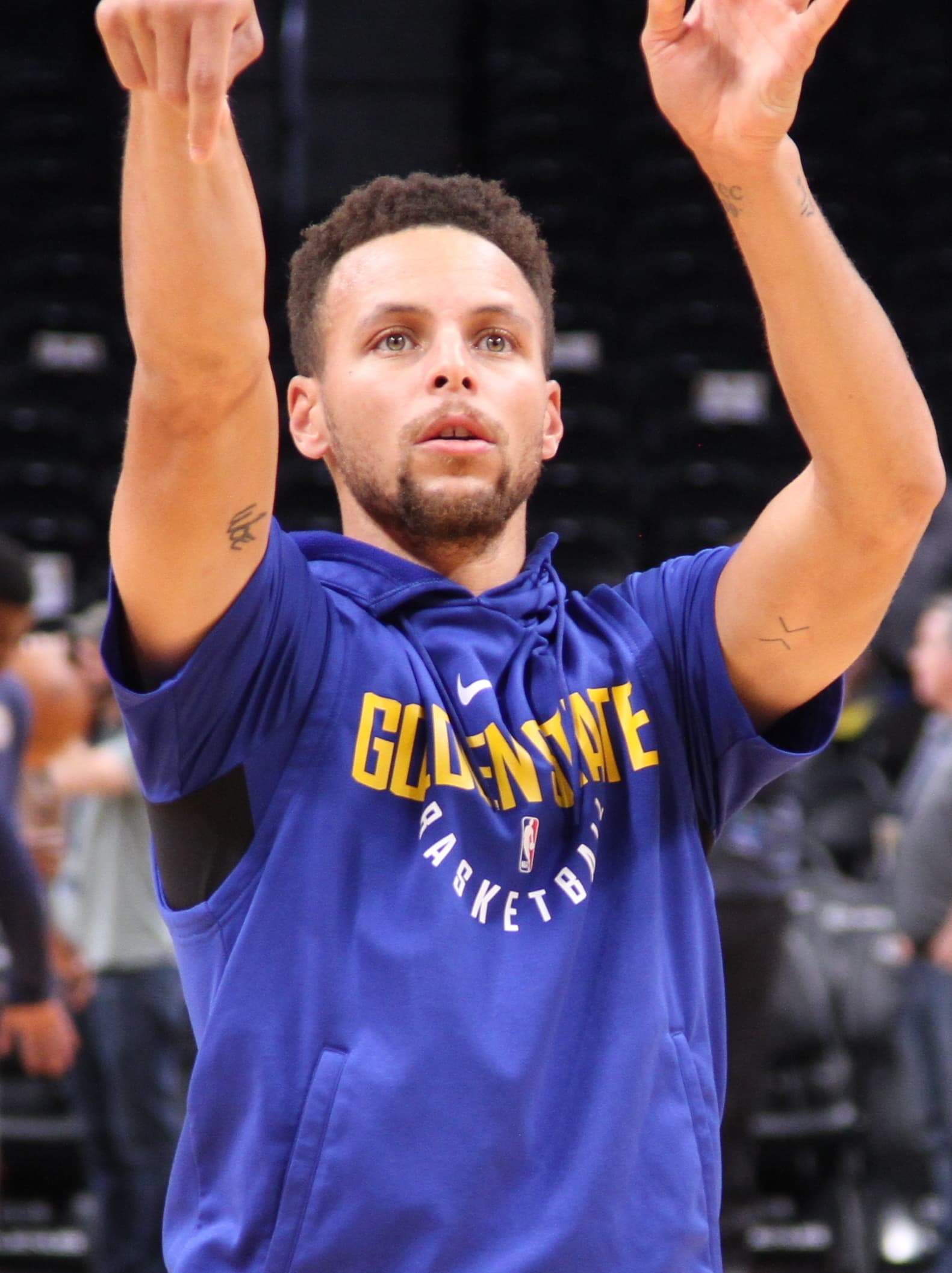
Stephen Curry turned 38 in March 2026 still leading the league in salary. That single fact explains a great deal about how his fortune was constructed. Not through a single windfall, but through seventeen years of stacking contracts, each larger than the last.
Published estimates scatter wildly. Wikipedia and Bleacher Report have placed the figure near $470M. Forbes, writing in 2021, anchored its analysis to the $215M extension signed that summer. Celebrity Net Worth lands at $300M. Our own analysis. Weighting recency, known salary data, and the structural limits of athlete liquidity. Arrives at $300M as of June 2026. The $470M figures likely conflate gross career earnings with actual net worth; they ignore taxes, agent fees, and spending over nearly two decades of professional life.
What this number represents is a three-pillar fortune: NBA salary that has not stopped climbing, endorsements anchored by one of the largest shoe deals in sports history, and a venture capital (VC) portfolio seeded in the innovation corridor of the San Francisco Bay Area. Each pillar has a different risk profile. Together they form one of the more durable athlete balance sheets in professional sports.
How Curry's $300M Fortune Ranks Against NBA Peers
At $300M, Curry sits in the top tier of active NBA wealth. Ahead of most peers by salary alone, but behind LeBron James's cross-sport empire. His fortune is built on salary depth, not a single asset.
LeBron James remains the benchmark for athlete wealth accumulation, with a brand empire spanning media production and ownership stakes. Curry is not in that conversation. Yet. His $300M is a salary-anchored figure, not a business-empire number. That distinction matters when projecting where the total goes.
Among guards, Curry has no peer on the salary ledger. ESPN's 2025-26 data lists him at roughly $59M for the current season. A gap of several million dollars above Joel Embiid and Nikola Jokic in second place. Nine times he has led the league in annual pay. No other player in NBA history has done that.
The peer comparison that ages best is not LeBron but Kobe Bryant or Kevin Durant. Players whose wealth grew steadily through salary then accelerated through brand and investment activity in their late thirties. Curry is at that inflection point now.
The NBA Salary Machine: $413M in Career Earnings and Counting
HoopsHype's contract records show Curry has pulled roughly $413M in gross NBA salary since 2009. After taxes and fees, the take-home is far lower. But it remains the dominant pillar of his $300M net worth.
HoopsHype's contract database. The most granular public record available. Shows total career NBA salary through 2026-27 approaching $413M in gross terms. Gross is not net. California's top income tax rate sits above 13%. Federal rates add another layer. Agent fees run about 4%. Strip those out and a rough $413M gross translates to something closer to $195M in accumulated after-tax salary over his career. That figure forms the backbone of our $300M estimate.
The current deal is the highest single-season salary in league history. This season's figure sits just under $60M, per ESPN and HoopsHype. Next season's already-signed extension steps up to about $62M, per HoopsHype's projections. Both numbers are records at the time of signing.
Curry's salary arc tells a specific story. From 2010 through 2016, he was dramatically underpaid relative to his market value. Playing out a rookie contract extension signed before his first MVP. The league corrected sharply in 2016. Each subsequent deal has reset the ceiling. That underpayment phase is why gross career earnings look so large relative to the net worth figure: the stacking only started in earnest about a decade ago.
Forbes framed the 2021 extension. Worth $215M over four years. As a watershed moment. Bleacher Report followed with a $200M-plus framing when Curry signed his next deal. Both figures refer to pre-tax contract value, not wealth. Our analysis treats after-tax salary as the foundation, not the headline.
“Curry's fortune is built on salary depth compounded over seventeen years. Not a single business bet, but the patient accumulation of parallel income streams across three asset classes.”
The Li Ning Shoe Deal: A $400M Anchor for Off-Court Income
Curry's partnership with Chinese sportswear brand Li Ning is reportedly valued at $400M. One of the largest shoe deals in sports. And anchors endorsement income Celebrity Net Worth estimates at around $30M per year.
In 2021, Curry departed Under Armour after years as the brand's marquee basketball athlete. He landed at Li Ning, the Chinese sportswear company. Celebrity Net Worth has reported the deal's total value at $400M. A figure that would rank among the largest athlete footwear contracts ever signed, in the same conversation as the agreements held by LeBron James and Kevin Durant.
That deal's structure almost certainly includes equity components alongside royalties and guaranteed payments. Equity deals (ownership stakes in exchange for promotion) can become the most valuable part of an athlete's balance sheet. Or the least liquid. We treat the Li Ning relationship as an endorsement asset rather than a hard balance-sheet equity line, because public valuations of Li Ning's brand partner arrangements are not disclosed.
Beyond Li Ning, Curry holds brand relationships across technology, nutrition, and financial services categories. Celebrity Net Worth pegs total endorsement income at about $30M per year. Our endorsement pillar, estimated at $60M in current net asset value, reflects two years of that income stream capitalized conservatively. The rest is treated as future cash flow, not current wealth.
Venture Capital and Media: The Silicon Valley Hedge
Curry's Bay Area ties give him deal access most athletes never see. His VC portfolio, estimated at $30M in current net worth contribution, is modest today but structured for long-term upside.
Curry has spent his entire career in the San Francisco Bay Area. The same geography as Andreessen Horowitz, Sequoia, and hundreds of well-funded startups. That proximity is a genuine competitive advantage. Athletes who invest in technology tend to do so through relationships, and Curry has built seventeen years of them.
His investment activity spans media and production through his Unanimous Media company, as well as direct startup stakes across consumer, health, and sports-tech categories. Unanimous Media has produced content for major streaming platforms. These are not passive endorsement deals. They represent operating businesses where Curry holds equity.
We estimate the VC and media portfolio at $30M in current net worth contribution. That is conservative. Early-stage startup portfolios are illiquid and hard to value. Several of Curry's investments have not yet reached an exit event (a sale or public offering that would reveal their true worth). The upside here is real but deferred.
Curry has also argued publicly. In a 2026 interview with Front Office Sports, per Yahoo Sports. That NBA players are built that way underpaid because they don't share in team ownership equity. His own investment strategy reads as a direct response to that thesis: build ownership positions outside the league.
Real Estate: Bay Area Properties as a Modest Balance-Sheet Item
Curry's real estate holdings, anchored by a roughly $30M Atherton estate purchased in 2020, represent about 5% of his estimated $300M net worth. A concrete but secondary asset class.
Curry purchased a property in Atherton, California. One of the most expensive zip codes in the United States. For about $30M in 2020, per Celebrity Net Worth. Atherton sits near Stanford University and is home to a concentration of Silicon Valley executives. For Curry, it is both a personal residence and a geographic signal: he has built his life and his investment network in the same place.
We assign real estate a $15M net worth contribution. That figure reflects the Atherton property alongside other Bay Area holdings, discounted for mortgage debt (use) and transaction costs. Real estate in this zip code has appreciated meaningfully since 2020. But it is also illiquid, and Curry is unlikely to sell his primary home while still active in the NBA.
Real estate is the smallest pillar in our model. That is appropriate. Athletes who over-rotate into property often find themselves asset-rich and cash-poor in retirement. Curry's allocation looks intentional: salary and endorsements generate cash; VC bets for growth; real estate for stability.
Where the Published Estimates Go Wrong. And Why
The $470M figures cited by Wikipedia and Bleacher Report conflate gross career salary with net worth. After taxes, fees, and spending, our analysis settles on $300M. Matching Celebrity Net Worth's more conservative read.
The $470M figure appears on both Wikipedia and Bleacher Report. It is not wrong exactly. It just measures the wrong thing. HoopsHype's career salary total approaches $413M in gross pay. Add endorsements and you approach $470M in gross lifetime income. But gross income is not wealth.
California's combined tax rate for top earners runs close to 50% when federal and state obligations are combined. On $413M in gross salary, that implies roughly $200M paid in taxes alone over Curry's career. Then subtract agent fees, lifestyle spending across two decades, and the cost of acquiring and maintaining real estate and investment positions. The residual wealth figure drops sharply.
Yahoo Sports reported Curry's 2025-26 salary at $62M. ESPN and HoopsHype put the precise figure at just under $60M. A small discrepancy likely reflecting contract incentives. Neither source claims to measure net worth. Forbes, writing in 2021, focused on the $215M extension value rather than overall wealth. Celebrity Net Worth's $300M estimate is the closest to our own model.
GiveMeSport's $0 figure, which appears in our extracted data, is clearly a data error. Likely a sourcing artifact. And we disregard it entirely.
Business Strategy: How Curry Allocates Capital Across Asset Classes
Curry concentrates capital in three tiers: liquid salary income, brand equity through Li Ning and endorsements, and illiquid VC stakes. The structure trades near-term liquidity for long-term upside.
Most athletes accumulate wealth through a single channel. Usually salary. And diversify late or not at all. Curry has run a parallel track. While still active and earning at the top of the salary scale, he has seeded a VC portfolio that could appreciate independently of his basketball career.
The Li Ning relationship is strategic in a second sense. It gives Curry brand exposure in China, a market where NBA popularity remains high and where Li Ning competes directly with Nike and Adidas. If Li Ning's market share grows, Curry's equity and royalty position becomes more valuable. That is a geography bet as much as a shoe bet.
Unanimous Media functions as a content studio with Curry as both founder and talent. That structure mirrors what LeBron built with SpringHill. A company that generates revenue while also amplifying the founder's brand. The model is proven. The question is scale.
Curry's one notable gap: he has no reported path to NBA team ownership, the asset class that has made owners like Joe Lacob worth several times what any player earns. His own public comments suggest he is aware of this asymmetry.
Risks That Could Compress the $300M Figure
Injury, a declining endorsement market, or a Li Ning valuation reset could each reduce Curry's net worth. His fortune is more salary-dependent. And therefore more career-dependent. Than peers with deeper business empires.
Curry is 38. NBA careers at the point-guard position tend to decline faster than big-man careers after 35. The legs that power his shooting range are finite. A significant injury before his 2026-27 contract year could complicate salary projections, though that deal is already signed and guaranteed.
The Li Ning deal is the endorsement pillar's main vulnerability. Li Ning is a publicly traded company subject to China's economic conditions, regulatory environment, and currency fluctuations. A material decline in Li Ning's business. Or a geopolitical disruption to the U.S.-China sports market. Could reduce the value of Curry's equity and royalty streams meaningfully.
Startup portfolios fail at high rates. Curry's VC exposure is diversified, but illiquid early-stage bets (investments in companies not yet sold or publicly listed) can go to zero. We model the $30M VC contribution conservatively precisely because the downside is real.
None of these risks are imminent. Curry has guaranteed salary through 2026-27, a locked endorsement anchor, and a real estate base in one of the world's most supply-constrained housing markets. The $300M figure is defensible. But it is not immune.
Where the Number Goes From Here: The Post-Playing Trajectory
Curry's net worth is likely to keep growing after retirement. Brand equity, VC exits, and potential broadcasting or ownership roles could push the figure toward $400M within a decade. If key bets pay off.
The pattern for elite athletes post-retirement is bimodal: either the wealth builds up through smart business activity, or it stagnates and slowly erodes through spending and bad deals. Curry's early investment behavior suggests the former is more likely.
VC portfolios take seven to ten years to mature fully. Curry's earliest Bay Area investments. Made around 2018-2020. Are approaching the window when exits become likely. A strong exit cycle could add tens of millions to the balance sheet in a single year.
Broadcasting and media represent a natural adjacency. Curry is articulate, analytically sharp, and globally recognized. A long-term media contract post-playing career. The kind that earns $10M to $15M annually. Would extend his income runway significantly without requiring new capital deployment.
Celebrity Net Worth's $400M ceiling estimate is not unreasonable as a ten-year target, if the Li Ning deal pays its full value and two or three VC positions exit well. Our current $300M figure reflects the present. The trajectory, absent a major disruption, points higher.
How the $300M adds up
- NBA salary (current & future contracts)Curry's multi-decade run as the league's highest-paid player, with a 2025-26 salary of ~$59.6M and a $62.6M deal for 2026-27, forms the dominant pillar of his wealth.$195M65%
- Endorsements & brand partnershipsCelebrity Net Worth estimates ~$30M per year in endorsement income, anchored by a landmark Li Ning shoe deal reportedly worth $400M and other brand relationships.$60M20%
- Venture capital & business investmentsCurry is an active venture capital investor with a portfolio of startup and media investments that contribute meaningfully to his off-court net worth.$30M10%
- Real estateCurry's $30M Atherton mansion purchase in 2020 and other Bay Area properties represent a modest but concrete share of his asset base.$15M5%
Ezra Linwood — Ezra Linwood covers athlete wealth, sports finance, and luxury capital markets for Neon Hollywood.
Disclaimer: Net-worth figures are editorial estimates built from publicly available reporting, filings, and market data — see our methodology. They are not verified statements of any person’s finances and nothing here is financial advice.