Mike Tyson's Net Worth in 2026: A $30M Rebuild From Zero
Once the wealthiest fighter on earth, Brooklyn's Iron Mike now holds a rebuilt $30M fortune, built not on ring purses, but on cannabis and content.
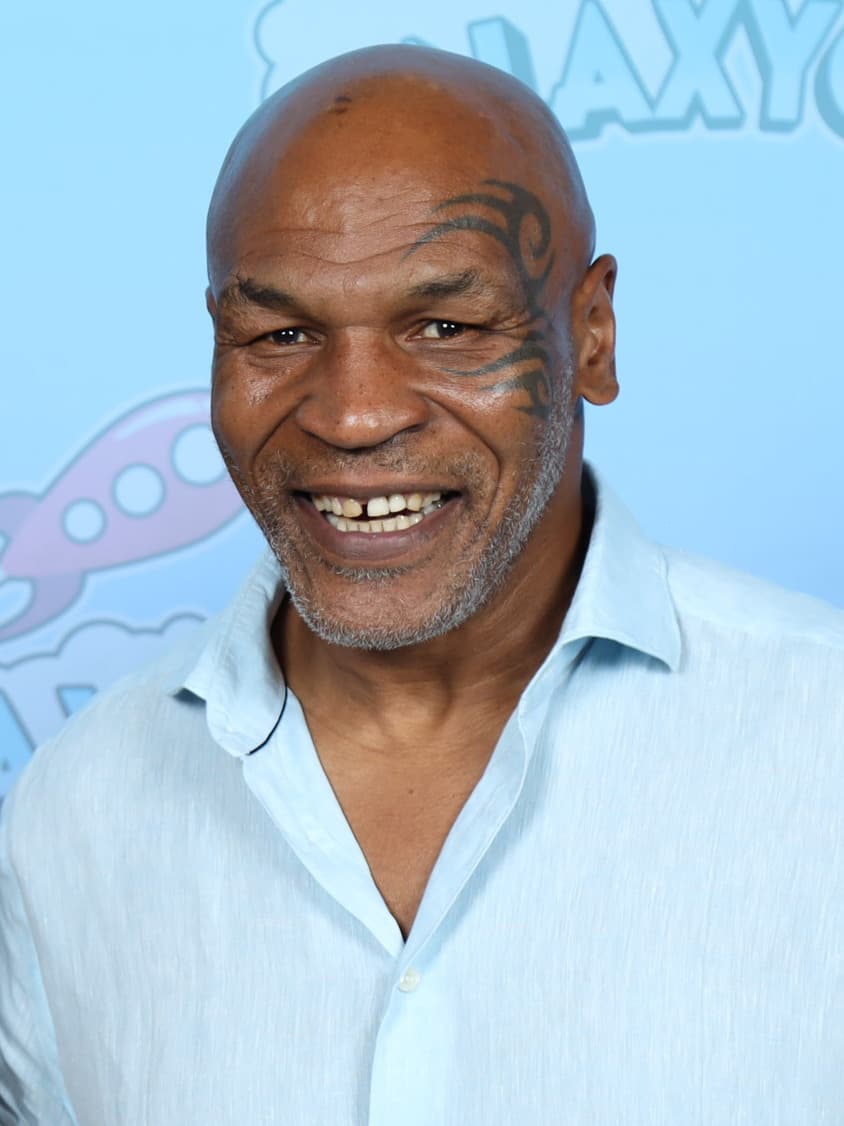
Mike Tyson declared bankruptcy in 2003 with roughly $23M in debt. That figure, cited across multiple outlets including Celebrity Net Worth, captures the depth of a financial collapse that matched anything the sport had ever seen. The man who had earned more than any active heavyweight of his era left the ring nearly empty-handed.
The $30M our analysis arrives at for June 2026 is a different kind of fortune. It isn't the residue of ring earnings, almost all of that was spent or seized. It's a reconstructed asset base, assembled post-bankruptcy through cannabis branding, media deals, and a Netflix fight that delivered a reported $20M purse. Celebrity Net Worth, Times of India, and Medium analyst Rashid Hussain all converged on $30M as the working estimate entering 2026.
That figure sits at the modest end of the celebrity-athlete wealth spectrum. But context is everything. The arc, from bankruptcy at 37 to a stable eight-figure portfolio at 59—is the story. This is where the money came from, where it went, and why the number holds.
Where Tyson Ranks Among Former Heavyweight Champions
Tyson's estimated $30M net worth trails most elite boxing peers, but his rebuild from bankruptcy makes the figure notable. Many fighters who earned far less never recovered financially at all.
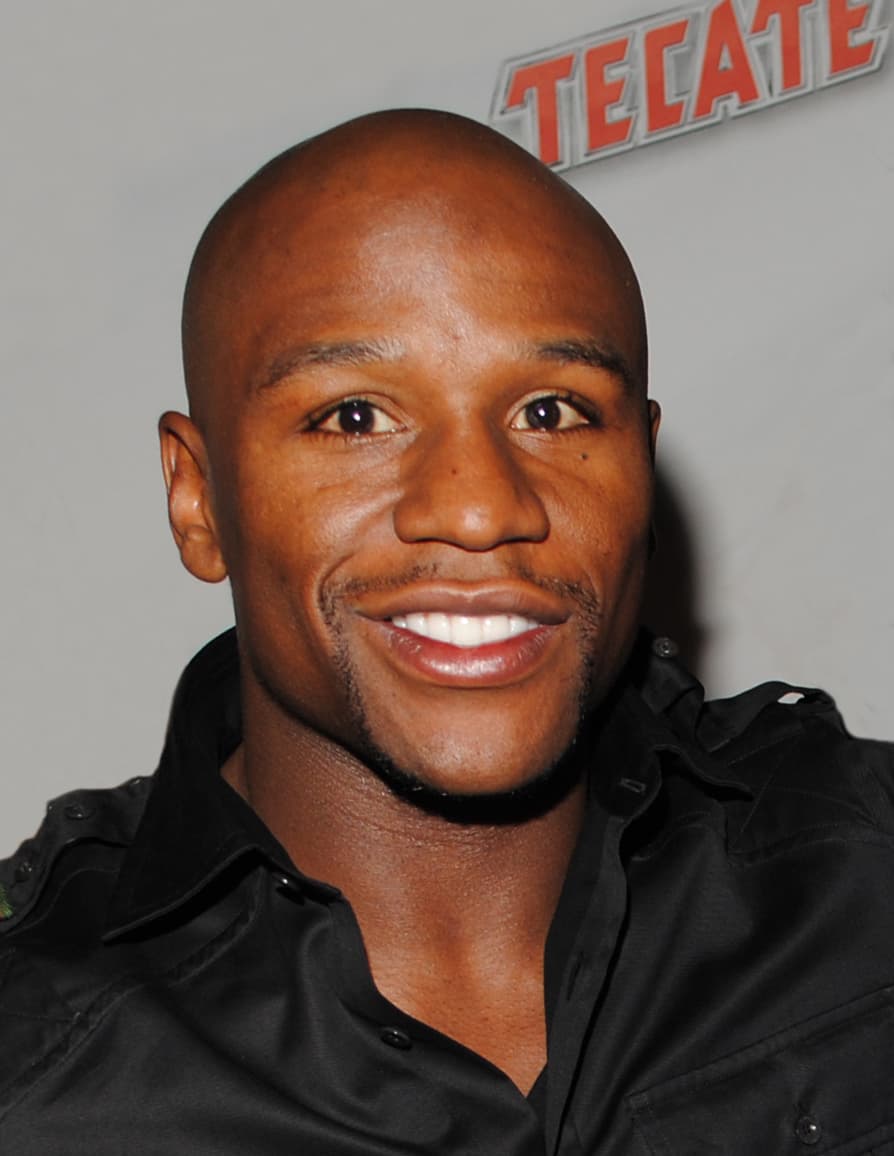
Floyd Mayweather's fortune is routinely placed north of $300M, a full order of magnitude above Tyson's current estimate. Lennox Lewis and Evander Holyfield occupy middle ground. Tyson, by contrast, sits at roughly $30M despite having generated career ring earnings that sources consistently place in the $400M range at peak. The gap between what he earned and what he holds is the defining feature of his financial biography.
That gap shouldn't obscure the achievement. Many fighters who earned $10M or less over a career ended up with nothing. Tyson blew through what Yahoo Finance UK estimates was closer to $430M in career-era earnings, a figure Medium's Rashid Hussain inflates to $700M when adjusted to present-day purchasing power. Neither translation survived contact with reality. What did survive is the $30M our analysis places on the current ledger.
Peer benchmarking also matters for what comes next. Tyson's ongoing income streams, cannabis, content, personal appearances, are smaller than Mayweather's but more diversified than most fighters his age manage. He isn't coasting on a catalog or a passive real estate empire. The $30M is active, not inherited.
Career Boxing Purses: $400M Earned, Almost None Kept
Tyson's ring earnings across his ~20-year career are cited at $400M or more, but bankruptcy in 2003 wiped out nearly everything. Only a fraction of that historical total survives in his current net worth.
Sports Illustrated, CBS News, and Celebrity Net Worth all place Tyson's career boxing income at or above $400M. That makes him one of the highest-earning fighters in the sport's history, not in inflation-adjusted terms, but in raw dollars collected during a single career. The Lennox Lewis rematch, the Evander Holyfield bouts, and the long string of pay-per-view-era title defenses drove the bulk of it.
Tyson turned professional in 1985. By 1986, at 20, he held the WBC heavyweight title. Peak purses arrived in the late 1980s and early 1990s, when his fights commanded fees that dwarfed anything the sport had previously seen. The money came fast and left faster, management fees, legal costs, extravagant personal spending, and a 2003 bankruptcy filing that formalized the collapse.
We estimate that ring purses account for about 45% of the historical wealth base that feeds into his current $30M figure, not because a large share of fight money was preserved, but because the Paul fight alone added $20M. That single 2024 Netflix bout, streamed to a global audience at AT&T Stadium, is the single largest cash event in Tyson's post-bankruptcy life. FundsForNGOs and CBS News both reported his Paul-fight earnings at $20M. It reset the floor.
“Tyson's $30M isn't what remained from a great career, it's what he built after losing everything from one.”
Tyson 2.0: How Cannabis Became His Most Valuable Business
Tyson's cannabis brand, Tyson 2.0 (formerly Tyson Holistic), is now his primary active business and the biggest contributor to his rebuilt $30M net worth.
Launched around 2016 as Tyson Holistic and later rebranded as Tyson 2.0, the cannabis operation is where post-bankruptcy Tyson made his most important capital allocation decision. The brand has expanded into multiple US states. It sells flower, edibles, and branded accessories. The 'Mike Bites' ear-shaped gummies, a self-deprecating reference to the 1997 Holyfield bout, became a cultural moment that drove press coverage money couldn't buy.
We weight the cannabis business at roughly 25% of his current net worth. That's about $7M in attributable value, using our $30M baseline. Times of India's 2026 timeline piece treated the brand as the central pillar of his financial rebuilding phase, and Medium's Hussain flagged it as the primary engine of post-2016 income growth. Neither attached a precise valuation, so we work from proportional attribution.
The risk is real. Cannabis remains federally illegal in the United States, which limits banking access and interstate commerce. Regulatory shifts in key state markets could compress revenue quickly. Still, as a brand, not just a grower, Tyson 2.0 has licensing optionality that a pure cultivator wouldn't. That structural flexibility is worth something in any honest valuation.
Media, Podcast, and Entertainment Income: Steady and Underrated
Tyson's podcast, film and TV appearances, and speaking fees generate consistent recurring income. Together, they account for about 15% of his estimated $30M net worth.
Hotboxin' with Mike Tyson launched in 2019 and carved out a real audience. The format, long-form conversation, often cannabis-adjacent, pulled guests from sport, entertainment, and politics. Podcast ad revenue at that scale isn't transformational, but it's steady. Combined with speaking fees and cameo income, it forms a reliable middle layer of his income stack.
His entertainment credits extend well beyond the podcast. The Hangover franchise gave him a pop-culture moment that introduced him to an entirely new demographic. Voice work, documentary appearances, and his own Hulu biographical series added licensing income. We put this entire media-and-entertainment category at about $4M in current net worth contribution, not large, but durable.
Durability matters here. Boxing purses are episodic. Brand deals cycle in and out. Media income, once a catalog is established, tends to compound quietly. Every streaming rerun of The Hangover or episode of Hotboxin' that finds a new listener adds marginal value without requiring Tyson to step back into a ring.
Endorsements Past and Present: A Shrinking But Real Line Item
Peak-era deals with Pepsi, Nintendo, and others were central to Tyson's $400M+ career earnings. Current endorsement activity is smaller but contributes about 10% of his $30M net worth.
Tyson's 1980s and 1990s endorsement roster read like a Fortune 500 roll call. Pepsi, Nintendo's Mike Tyson's Punch-Out!!, and a string of apparel and equipment deals made him one of the most commercially potent athletes of his era. Those contracts are long gone. What remains is a smaller, personality-driven endorsement business built on his post-rehabilitation public image.
The current deal flow is opportunistic rather than strategic. Brands looking for cultural edge, particularly in the spirits, wellness, and combat sports categories, still see value in the Tyson name. We estimate about $3M in current net worth is traceable to endorsement and licensing activity. That's about 10% of the total, meaningful, but not the engine.
The contrast with peak-era deal flow is worth sitting with. At his commercial height, Tyson's endorsement income likely exceeded what his entire current net worth amounts to, in a single year. That context is what makes the $400M career figure, cited by Sports Illustrated and CBS News, feel simultaneously accurate and irrelevant to understanding the man's finances right now.
Real Estate and Personal Appearances: The Thinnest Slice
Real estate and appearance fees together make up about 5% of Tyson's current $30M net worth. Historical property holdings, a Connecticut mansion, Las Vegas, Florida, were largely liquidated during and after bankruptcy.
Tyson's real estate history is a study in excess. At peak, he owned a Connecticut mansion with a pool, entertainment complex, and a menagerie that famously included Bengal tigers. Las Vegas and Florida properties followed. Most were sold, in some cases at loss, during and after the bankruptcy proceedings that concluded in the mid-2000s.
Whatever real estate remains in the portfolio is a secondary asset, we estimate roughly $1M in current net worth attribution from property and appearance fees combined. Personal appearance income is real but irregular: autograph signings, boxing exhibitions, branded events. None of it moves the headline number. It's rounding, not strategy.
The lesson from the real estate chapter is structural. Tyson didn't lose his properties to bad market timing. He lost them because the spending rate, staff, maintenance, legal fees, personal consumption, exceeded what any endorsement or fight purse could sustainably cover. Recognizing that pattern is part of why the cannabis business model, which requires less fixed-cost infrastructure, is better suited to his current situation.
How Tyson Allocates Capital Now: The Logic of the Rebuild
Tyson's post-bankruptcy capital strategy centers on brand licensing and media, lower overhead than real estate or training infrastructure, and more scalable than personal appearances alone.
The shift from athlete to brand operator is a common post-career transition. Tyson executed it later and less smoothly than most. But the Tyson 2.0 structure, licensing the name and persona to a cannabis company rather than owning cultivation assets outright, reflects a more disciplined capital approach than his 1990s spending suggested he was capable of.
Medium's Hussain noted that Tyson's 2016-to-present rebuilding phase prioritized business income over fight income. That's significant. Most retired fighters chase one more payday in the ring. Tyson pursued brand equity first, then returned to the ring when the conditions, Netflix money, a built-in cultural narrative, justified the physical risk.
The Paul fight was capital allocation, not nostalgia. A $20M purse at 58, against a younger opponent with a massive social media footprint, on the world's largest streaming platform, that's a rational business decision. The fight delivered what it needed to deliver financially, even if the scorecards didn't go his way.
What Could Disrupt the $30M Figure, Up or Down
Federal cannabis legalization could meaningfully boost Tyson 2.0's value. A major legal liability or health setback would likely compress the figure. The range sits between $22M and $35M depending on scenario.
The upside case is cannabis. Federal rescheduling or legalization in the United States would expand the addressable market for Tyson 2.0 overnight. Banking restrictions would ease. Interstate commerce would open. A brand with national recognition and existing retail relationships would be positioned to scale quickly. Medium's Hussain floated a $35M figure as an optimistic near-term estimate, and that number starts to look conservative in a full-legalization scenario.
The downside case is legal or health risk. Tyson has disclosed health issues that would make any return to the ring unlikely. A serious medical event would reduce his media presence and, with it, the endorsement and podcast income streams. FundsForNGOs and IMDb-sourced estimates from late 2024 placed the floor closer to $20M, a figure that still requires active income to maintain.
Our baseline of $30M, matching the Celebrity Net Worth and Times of India figures, assumes no major disruption in either direction. It assumes Tyson 2.0 holds its current market position, media income stays roughly flat, and no new fight purse arrives. That's a reasonable central case for a 59-year-old who has already spent more of his financial life rebuilding than he did accumulating.
The Trajectory: Can Tyson Reach $35M by 2028?
A $35M net worth by 2028 is achievable if Tyson 2.0 expands into new state markets and media income holds. Another fight at Netflix scale is unlikely but would be decisive if it happened.
Medium's Hussain cited $35M as a plausible near-term ceiling. We think that's reachable by 2028 without requiring anything dramatic. Tyson 2.0 has room to expand geographically. The podcast audience is established. Licensing and appearance fees are consistent. Modest stacking across all three channels gets the figure to $35M without needing a ring return.
A second major fight would be a different story. The Paul bout showed that a single high-profile Netflix event can move the net worth needle by $20M or more in a single night. At 59 and beyond, the health calculus becomes harder to justify. But Tyson has surprised observers before, and the streaming platforms are still hungry for live sports events that generate cultural conversation.
What the trajectory won't do is return him to the $400M range that Sports Illustrated and CBS News associate with his career peak. That number belongs to a different era, a different tax environment, and a different Tyson. The $30M he holds now was built by a man who understood, finally, that the point wasn't to get back to the top, it was to stay off the bottom.
How the $30M adds up
- Boxing purses (career)Fight purses across a ~20-year career are consistently cited at $400M+, making ring earnings the dominant historical source of wealth, though most was spent or lost.$13.5M45%
- Cannabis business (Tyson 2.0 / Tyson Holistic)Tyson's cannabis brand became a key income pillar post-2016 and is a primary contributor to his current ~$30M net worth.$7.5M25%
- Media, entertainment & podcast (Hotboxin' with Mike Tyson)Revenue from his podcast, film/TV appearances (e.g., The Hangover), speaking fees, and pop-culture cameos provide steady recurring income.$4.5M15%
- Endorsements & brand partnershipsPeak-era deals with Pepsi, Nintendo, and others contributed heavily to career earnings; modern endorsement activity is smaller but ongoing.$3M10%
- Real estate & personal appearancesTyson has historically held real estate assets (Connecticut mansion, Las Vegas, Florida) and earns from personal appearance fees, though these are a minor share of current net worth.$1.5M5%
Ezra Linwood — Ezra Linwood covers athlete wealth, sports business, and the financial afterlives of professional careers for Neon Hollywood.
Disclaimer: Net-worth figures are editorial estimates built from publicly available reporting, filings, and market data — see our methodology. They are not verified statements of any person’s finances and nothing here is financial advice.