Lionel Messi Net Worth: $850M and Climbing in 2026
The Rosario-born forward has built a fortune that dwarfs every active footballer on earth. One that owes as much to Adidas and Apple TV as it does to any club paycheck.
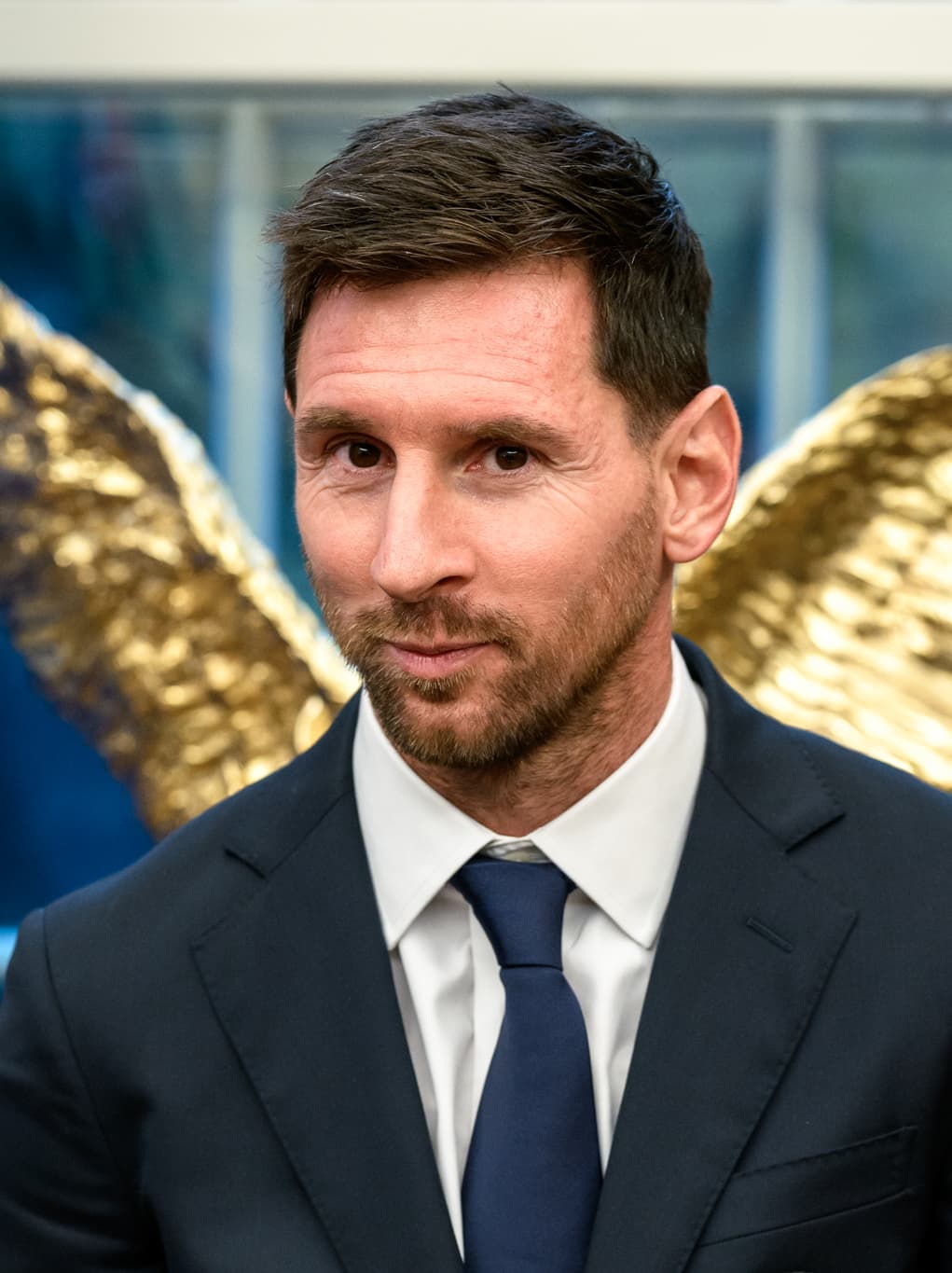
Lionel Messi turns 39 this month. He is also, by our reckoning, worth $850 million. Those two facts sit in intentional tension. The age suggesting twilight, the fortune suggesting anything but.
Our analysis synthesizes figures across five published sources. Yahoo Sports and Sports Illustrated both landed at $850M as of early 2026. Celebrity Net Worth pushed past that threshold, placing the number above $1.0B in May 2026. ESPN reported that Inter Miami's ownership confirmed annual compensation in the $75M range. We weight recency and methodological transparency; our working estimate settles at $850M as of June 2026, treating the billionaire label as aspirational but not yet locked in.
What category of fortune is this? Not a Cristiano Ronaldo-style brand empire pivoting toward post-playing life. Not a LeBron James media-holding play. Messi's wealth is still predominantly athletic. Salary-anchored, endorsement-amplified, and only lightly diversified into equity. That makes it built that way unusual among nine-figure athlete fortunes. It also means the clock is a real variable.
How Messi's Fortune Ranks Against Other Elite Athletes
At $850M, Messi ranks among the top three wealthiest active athletes globally, trailing only a handful of post-playing ownership-class peers like Jordan and Woods.
No active footballer sits above him. Cristiano Ronaldo's Saudi contract inflated his earnings headline, but his disclosed net-worth estimates trail Messi's by a meaningful margin across most tracking publications. LeBron James cracked the billion-dollar mark in 2022. But James built that through media, SpringHill, and Fenway equity, not salary alone.
Messi's path is different. Roughly 65% of his accumulated wealth traces back to club wages across Barcelona, PSG, and Inter Miami. That is a high salary dependency for someone at this tier. Most nine-figure athlete fortunes skew toward business holdings by the time the player hits 35. Messi skews toward the pitch.
That distinction matters for longevity. Salary stops when playing stops. Endorsements thin. Equity builds up. Right now, the salary engine is still running. And it is running faster than almost any sport can match.
Inter Miami Salary: What the MLS Contract Actually Pays
Messi's current Inter Miami deal pays a $25M base salary with $28.3M in guaranteed compensation per the MLS Players Association. More than double the league's next-highest earner.
The MLS Players Association releases salary data annually. BBC Sport's May 2026 report confirmed Messi's base at $25M per year. Guaranteed compensation, which folds in bonuses and structural payments, reaches $28M. Son Heung-min of LAFC is the next-highest earner. His guaranteed figure sits well below Messi's base.
Those figures are just the MLS-disclosed layer. ESPN reported that Inter Miami's ownership put total annual compensation closer to $75M. The gap between $28M and $75M is real. It reflects revenue-sharing arrangements built into the contract. Additional streams from ticket sales, merchandise, and broadcast participation fill that space.
Inter Miami's owner Jorge Mas has spoken publicly about those structures. They are not traditional salary. They are participatory deals. Messi earns a slice of growth he generates. The team's valuation has surged since his arrival. That surge feeds back into his compensation architecture in ways the MLS PA disclosure does not capture.
Our estimate attributes roughly $255M of accumulated net worth to this MLS chapter. About 30% of the total. That reflects two-plus seasons of elevated compensation rather than a single contract value.
“Messi's fortune is salary-anchored in a way that almost no $850M athlete fortune is. Which makes the equity clock the most important variable in the room.”
Barcelona and PSG: The Salary Mountain Built Over Two Decades
More than 20 years of top-club wages. Including a Barcelona contract worth about $168M per year at peak. Account for the largest single slice of Messi's lifetime earnings.
Messi joined Barcelona's first team in 2004. He left in 2021. That is 17 years at one of the world's highest-paying clubs. Celebrity Net Worth estimated cumulative career salary and bonuses at $700M or more across his full career. We treat that figure as an upper bound rather than a floor.
The Barcelona peak is staggering on its own. The 2017 contract. The terms of which leaked publicly. Reportedly paid around $168M per year in total guaranteed value. That placed Messi in a category with no obvious peers. No footballer had earned at that rate before.
PSG added two seasons from 2021 to 2023. The Paris stint was commercially driven. Exact figures were not publicly confirmed by the club. But the move followed a salary structure designed to soften the blow of leaving Barcelona, where a wage dispute ultimately forced Messi's departure.
We attribute about $297M in current net-worth contribution to this historical salary base. 35% of the total. It is the single largest category. It also represents wealth that is fully accumulated and no longer at risk of not being earned.
Adidas, Visit Saudi, and the Endorsement Stack
A lifelong Adidas partnership, a high-profile Visit Saudi deal, and dozens of global brand relationships cumulatively account for roughly $212M. About 25% of Messi's estimated net worth.
Messi signed with Adidas as a teenager. The relationship has held for two decades. He was never a Nike athlete. That loyalty carried a price. And a payoff. Adidas structures its top athlete deals with a base retainer plus performance bonuses tied to tournament wins and cultural moments. Two World Cup cycles, eight Ballons d'Or, and a Copa América title handed Messi every trigger clause imaginable.
The Visit Saudi deal generated controversy when it launched. Saudi Arabia's tourism authority signed Messi as a global ambassador. The timing coincided with broader debates about sportswashing. The commercial terms were not disclosed, but deals of this profile typically operate in multi-year, eight-figure-per-year ranges.
Beyond those two anchors, Messi carries a roster of brand relationships across food, beverage, financial services, and technology. Each adds incrementally. The cumulative endorsement stack over a 20-year career reaches into nine figures when totaled. Our analysis attributes about $212M in net-worth contribution to this category.
Endorsement income is the most volatile of his four revenue streams. It follows cultural relevance. Messi's relevance has not dimmed. The 2022 World Cup win arguably made it permanent in Argentina and Latin America. But the Visit Saudi arrangement faces political headwinds in some markets.
Business Holdings and Real Estate: The Thinnest Slice
Messi's private investments and real estate. Including a stake in Edificio Rostower Socimi. Contribute an estimated $59M, or about 7% of his total net worth.
Edificio Rostower Socimi is a Spanish real estate investment vehicle. Celebrity Net Worth flagged it as a notable holding in Messi's portfolio. SOCIMIs are Spain's version of REITs. Listed vehicles that hold income-producing property. Messi's involvement signals a preference for stable, yield-bearing assets over speculative ones.
Beyond Spanish real estate, Messi holds properties in Barcelona, Miami, and Rosario. The Miami residence alone sits in one of the most appreciated luxury markets of the past five years. We do not assign individual values to specific properties. Our research material does not support that level of granularity. Taken together, we estimate the full real estate and private holdings block at roughly $59M.
That is modest relative to the overall fortune. Compare it to a LeBron James or a Roger Federer, both of whom have tilted aggressively toward equity and media. Messi's business posture is more conservative. He has not launched a production company. He has not taken a public-facing VC role. The holdings look like a wealth preservation layer rather than a growth engine.
The Apple TV Deal and Inter Miami Equity: Upside Still Loading
Messi's contract includes an option on Inter Miami equity and a revenue-sharing arrangement tied to Apple TV's MLS Season Pass. A structure worth roughly $25M in accumulated net-worth terms today, with significant upside.
When Inter Miami announced Messi's signing in 2023, the financial architecture was unusual. Standard MLS transfers do not include broadcast revenue-sharing. This one did. Apple TV's MLS Season Pass subscriptions spiked after Messi arrived. His contract entitled him to a portion of that growth.
The equity option is the longer-term story. Inter Miami's franchise valuation has climbed sharply. MLS franchises broadly have appreciated over the past decade. A stake. Even a small one. In a top-three MLS franchise could be worth tens of millions by the time Messi eventually exercises the option.
We attribute about $25M in current net-worth contribution to this category. That is a point-in-time estimate. The equity option has not been exercised or valued publicly. If Miami wins an MLS Cup, or if the franchise is sold, this line item could move materially upward.
This is the most forward-looking piece of Messi's wealth. It is also the piece that matters most post-retirement. Salary stops. Endorsements thin. Equity does not.
Capital Allocation: How Messi Manages What He Earns
Messi has favored conservative capital preservation. Real estate, listed vehicles, and low-profile private holdings. Over the high-visibility brand empire approach common among peers at his wealth tier.
Athletes at $850M typically face a choice. Spend aggressively on lifestyle and philanthropy. Or rotate earnings into stacking assets. Messi has done some of both. But leans toward the latter.
His charitable work operates through the Leo Messi Foundation, focused on education and health access for vulnerable children. That is a meaningful philanthropic commitment. It is not a tax optimization vehicle in the way some athlete foundations are structured.
On the investment side, the Rostower Socimi stake and the Inter Miami equity option both suggest a preference for real assets. These are not venture bets. They are stores of value with steady yield profiles. That is a conservative allocation for someone whose income has been this high for this long.
What is notably absent is media. Messi has no production company. No podcast network. No streaming deal in his own name. That stands in contrast to Ronaldo's UR Life content play or James's SpringHill Company. Whether that changes post-retirement is one of the most watched questions in sports finance.
What Could Disrupt the $850M Figure. Up or Down
Retirement, endorsement attrition, or a franchise equity write-down could trim the figure; a post-playing media or ownership role could push it toward the $1B threshold within three years.
The downside scenario is straightforward. Messi retires. The $75M annual compensation structure collapses. Endorsements reprice at a fraction of active-player rates. Adidas retains him as a legacy ambassador. But legacy rates are not active rates. The wealth does not disappear. It stops growing at its current pace.
Tax is also a real variable. Messi has faced fiscal proceedings in Spain. A 2016 case resulted in a conviction for tax fraud, later resolved with fines and a suspended sentence. He relocated to Miami partly for tax efficiency reasons. Florida has no state income tax. That matters at his income level.
The upside scenario is more interesting. If Messi transitions into a formal ownership role at Inter Miami. Converting the equity option into a recognized stake. His net worth reclassifies. Franchise ownership income is categorically different from salary. It builds up. It attracts co-investors. It can be leveraged.
Celebrity Net Worth crossed $1.0B in its May 2026 estimate. We do not yet share that confidence. But we do not dismiss it either. The gap between $850M and $1.0B is one franchise appreciation cycle, one major brand renewal, or one well-structured equity event away from closing.
Where the Number Goes From Here
Our $850M estimate as of June 2026 could reach $1B within 24–36 months if the Inter Miami equity option is exercised and Messi remains in active play through 2027.
Messi is 38. He just extended his Miami contract. He is playing in a 2026 World Cup held partly on American soil. The largest sporting event in the world, in his current home market. The commercial timing is almost perfectly structured.
World Cup years are endorsement supercycles for active players. Messi's record eight Ballons d'Or already make him the sport's consensus GOAT. A strong tournament showing. Even a partial one. Refreshes the brand. Sponsors renew. New categories open.
Post-playing, the trajectory depends entirely on what Messi chooses to do. If he takes a technical or sporting director role at Inter Miami, the public engagement remains. If he retreats to private life in Rosario, the commercial engine winds down faster. His wife Antonela Roccuzzo maintains an active social media presence. Roughly 40 million Instagram followers. That keeps the household brand visible regardless.
Our terminal estimate, assuming active play through late 2026 and a partial equity conversion at Inter Miami within 36 months, places the figure between $950M and $1.05B by 2028. The billionaire threshold is achievable. It is not guaranteed. At this level, the difference between the two outcomes is strategy, not talent.
How the $850M adds up
- Club salary & MLS compensation (Inter Miami)Current Inter Miami deal provides $25M base / $28.3M guaranteed per MLS PA, plus additional revenue-sharing streams bringing total to $70M–$80M annually per club owner.$255M30%
- Historical club salary (Barcelona & PSG)Over 20+ years, Celebrity Net Worth estimates $700M+ in career salary/bonuses; Barcelona's 2017 contract alone paid ~$168M/year in base, forming the bulk of accumulated wealth.$297.5M35%
- Endorsements & sponsorships (Adidas, Visit Saudi, etc.)Long-term Adidas partnership, Visit Saudi deal, and numerous global brand deals add hundreds of millions cumulatively to Messi's total earnings beyond club salary.$212.5M25%
- Business ventures, investments & real estateCelebrity Net Worth highlights holdings including Edificio Rostower Socimi and other private investments that contribute to his billionaire-level net worth.$59.5M7%
- Inter Miami equity stake & Apple revenue-sharingMessi's Inter Miami contract includes an option to acquire a franchise equity stake and Apple TV revenue-sharing rights, providing upside beyond traditional salary.$25.5M3%
Ezra Linwood — Ezra Linwood covers athlete wealth, sports franchise finance, and the business of global football for Neon Hollywood.
Disclaimer: Net-worth figures are editorial estimates built from publicly available reporting, filings, and market data — see our methodology. They are not verified statements of any person’s finances and nothing here is financial advice.