Lewis Hamilton's Net Worth in 2026: A $550M Fortune Built Beyond the Grid
At 41, the seven-time champion's financial architecture has outgrown the sport that built it. Ferrari's $70M annual base salary is just the engine; the real complexity lies underneath.
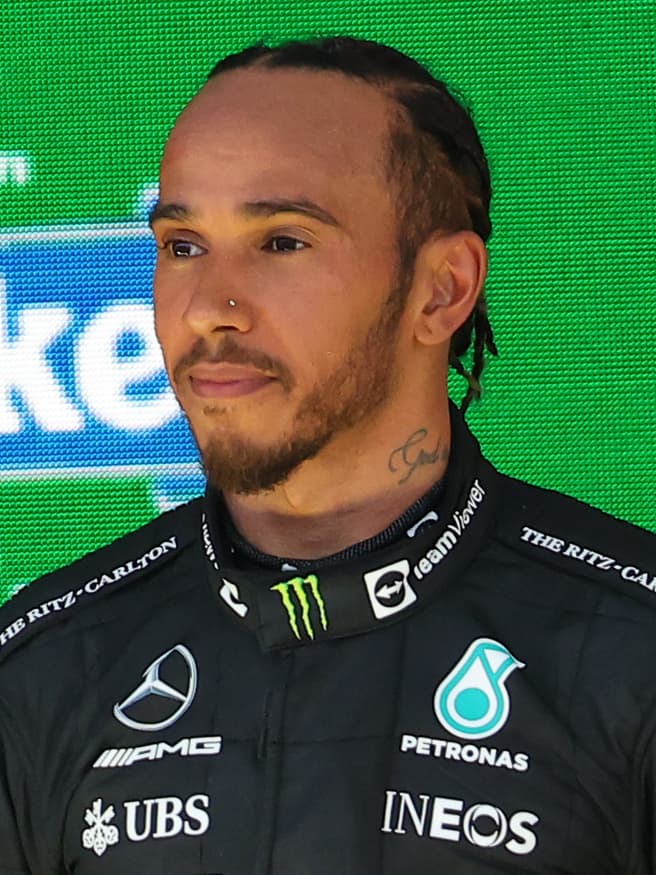
Lewis Hamilton's wealth is not a motorsport story. It is, at this point, a capital-allocation story. One in which a kid from Stevenage who raced karts on a council-funded scholarship has assembled a fortune that rivals those of hedge-fund principals and tech-adjacent entrepreneurs. Our analysis, synthesizing estimates from Sportico, Celebrity Net Worth, Wales Online, and The Mirror. Weighted by recency and methodological transparency. Arrives at a figure of $549,562,500 as of June 2026. Call it $550 million.
That number sits at the convergence of a Ferrari contract worth $70 million per year in base salary, roughly $30 million annually in brand endorsements, and nearly two decades of stacking earnings from McLaren and Mercedes that were, by any standard, exceptional even before the Ferrari era began. The breakdown matters: it tells you which levers are structural and which are contingent on performance. A distinction that became acutely relevant after Hamilton's debut Ferrari season in 2025 produced zero podiums and a sixth-place championship finish.
The fortune is best understood as three distinct layers. First, the contractual income stream. Large, predictable, and currently anchored at Ferrari. Second, the commercial layer. Endorsements and brand equity that function largely independent of race results. Third, the compounded base. Accumulated wealth from 18 prior seasons that now sits in real estate, business ventures, and diversified investments. Each layer has its own risk profile. Each deserves its own analysis.
How Hamilton's Fortune Ranks Against the Wealthiest Athletes Alive
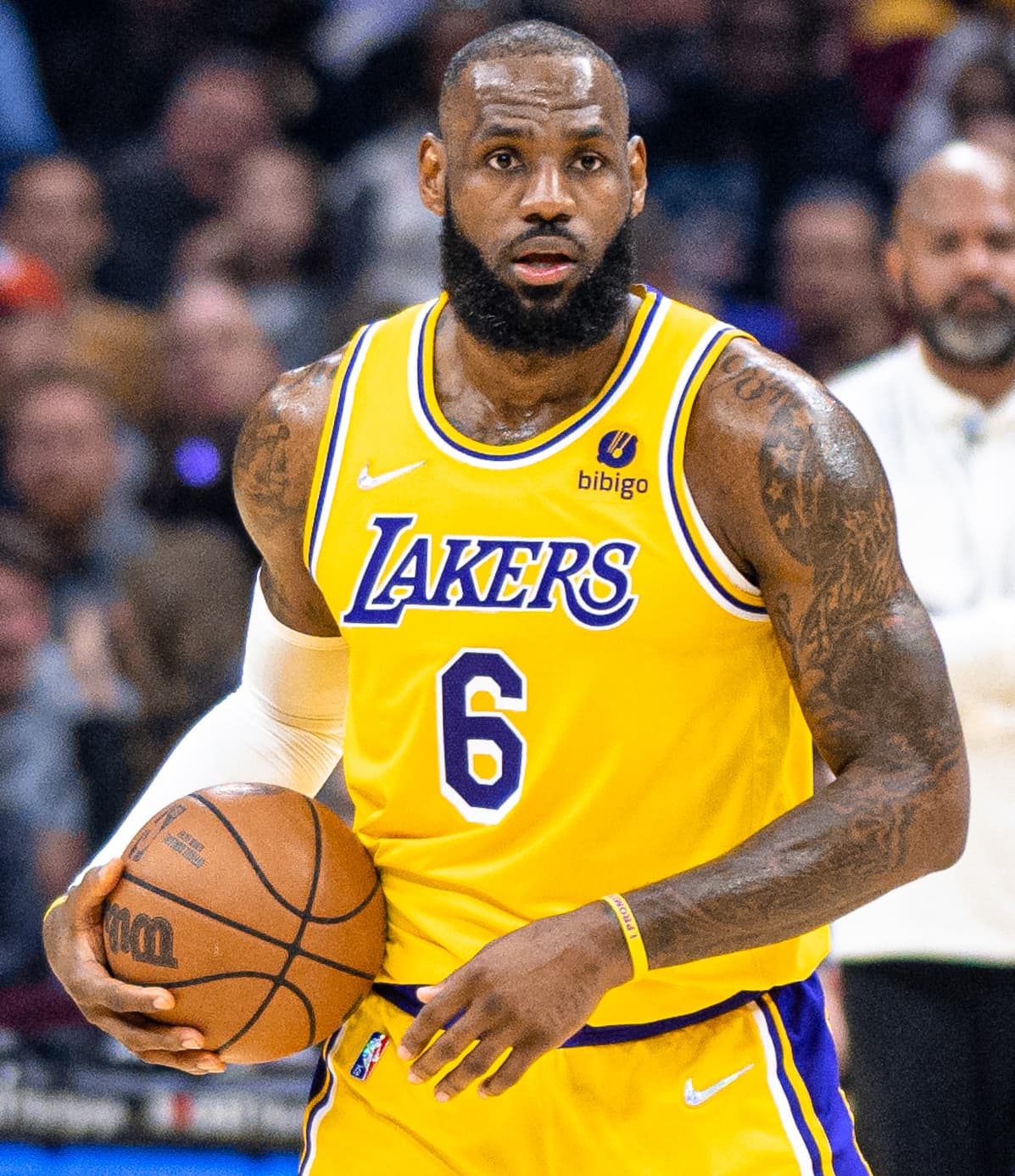
Hamilton's estimated $550M net worth places him among the wealthiest active athletes globally, ahead of most F1 peers but below the centibillionaire tier of LeBron James and Tiger Woods.
Sportico's career-earnings tracker put Hamilton's cumulative F1 income at approximately $880 million through the end of 2025. A staggering gross figure that reflects 19 seasons of top-tier salaries, bonuses, and prize-money allocations. That $880M career-gross number does not, of course, translate directly into net worth: taxes across British, Monegasque, and eventually Swiss domiciles, agent fees, spending, and reinvestment all reshape the retained figure substantially. Our $549M estimate reflects those adjustments.
RacingNews365, writing in 2025, pegged Hamilton's net worth at roughly $285 million. A figure our analysis considers materially understated, likely because it was assembled before the full Ferrari contract structure was publicly understood. Celebrity Net Worth, whose methodology skews toward observable assets, landed at $550 million in a May 2026 update. Wales Online and The Mirror both cited the same $549,562,500 figure derived from detailed salary and endorsement modeling. We treat that precision as methodologically intentional rather than spurious.
Among active F1 drivers, Hamilton is the clear outlier. The next-richest grid members sit well below his accumulated base. Across professional sport broadly, $550 million puts him in rarefied company. Ahead of most career athletes but still some distance from the ownership-class wealth of figures like LeBron James or Tiger Woods, whose equity stakes in sports franchises push their net worths into different stratospheres. Hamilton has no F1 team equity. Yet.
The Ferrari Contract: What $302M Over a Career Arc Actually Means
Hamilton's Ferrari base salary of $70M per year is the single largest annual income component, constituting roughly 55% of our net worth estimate's underlying earnings structure.
The Ferrari deal. Reportedly structured across multiple years at $70 million per year in base compensation. Is the cornerstone of the current income picture. DIRECTV Insider's 2026 payroll analysis confirmed that Ferrari carries the heaviest driver payroll of any team on the grid, driven by the combined weight of Hamilton and Charles Leclerc's contracts, which together cleared $94 million. Hamilton's share of that figure aligns with our $70M annual base figure.
F1 Salaries, which tracks contract structures across the paddock, has at various points cited Hamilton's annual compensation at $70 million, $100 million (total compensation including commercial income), and historic figures reaching as high as $275 million for peak contract years at Mercedes. Our sources-of-wealth model attributes $302 million. Approximately 55% of the $549M total. To accumulated Ferrari-era base salary earnings, reflecting the multi-year contract structure rather than a single season.
What is unusual about the Ferrari deal, relative to Hamilton's Mercedes years, is the separation between base pay and performance uplift. During the championship-winning seasons in the Silver Arrows era, bonuses and prize-money participation were substantial. At Ferrari in 2025, those performance mechanisms produced nothing: no podiums meant no bonus triggers. That structural distinction is why the base-salary component dominates the current income picture so heavily.
Sportico's reporting, which tracked the 2025 season specifically, noted that Hamilton became the first F1 driver to clear $100 million in combined salary and endorsement income in a single calendar year. A milestone that arrived, with some irony, in the same season he failed to stand on a podium for the first time in his career.
“Hamilton's $550M fortune is less a motorsport trophy than a capital structure. One designed to outlast the racing career that funded it.”
Endorsements: The $137M Engine That Runs on Cultural Relevance, Not Lap Times
Hamilton's endorsement portfolio, estimated at ~$30M per year, generates around $137M of his accumulated net worth and operates largely independent of his on-track results.
The commercial layer of Hamilton's income is built that way decoupled from his race results in a way that few athletes' endorsement books manage to achieve. His partnerships span fashion, luxury goods, technology, and lifestyle. Categories where his cultural presence, not his championship count, is the primary asset. RacingNews365 estimated his annual endorsement income at approximately $60 million in its 2025 analysis; our model applies a more conservative $30 million annual figure, weighted against the longer career arc, producing an accumulated endorsement contribution of roughly $137 million to our $549M estimate.
The $30M-per-year figure aligns with what Sportico characterized as Hamilton's off-track income component in its $100 million single-year total for 2025. Implying roughly $30 million from commercial partners against the $70 million Ferrari base. That breakdown is internally consistent and forms the foundation of our endorsement estimate.
Hamilton's crossover into fashion. Including his involvement with the Met Gala, collaborations with luxury houses, and his widely-documented personal style. Has expanded his brand market beyond motorsport in ways that are commercially durable. He is positioned less as an athlete-endorser and more as a cultural figure who happens to race Formula One. That positioning commands a premium, and it insulates the commercial income from the on-track volatility that defined 2025.
Investments and Business Ventures: The Quietly Growing 12%
Business and real estate investments account for an estimated $65M. Roughly 12%. Of Hamilton's accumulated net worth, a share expected to grow as he diversifies beyond active driving income.
Hamilton's investment activity has been on purpose quiet relative to the volume of his public profile. Real estate holdings across London and international markets represent the most documented component. Business stakes in adjacent industries. Including reported interest in hospitality and media. Add further depth, though specific valuations remain private. Our model assigns approximately $65 million to this combined category, treating it as the most conservatively estimated segment given the opacity of the underlying assets.
The business-venture category is where the trajectory story becomes most interesting. Hamilton has spoken publicly about ambitions in media production, including film projects developed through his production entity. Formula One's surging global audience. Amplified heavily by the Netflix 'Drive to Survive' effect. Has made F1-adjacent media a legitimately valuable category, and Hamilton's position within it is privileged. These ventures are not yet large enough to move our headline figure materially, but they represent the most plausible path to significant net-worth expansion post-racing.
The real estate component is the most stable element of the investment layer. Property holdings, accumulated over two decades of high income, function as an inflation hedge and a long-duration store of value. They are not liquid, but they are not volatile either. Which matters when the rest of the income stack is subject to contract renewal, performance triggers, and the physical risks inherent in motorsport.
Performance Bonuses and Prize Money: Built that way Important, Currently Dormant
Performance bonuses and race prize-money sharing add roughly $27M to Hamilton's career net worth figure, though these mechanisms were not activated during his podium-free 2025 Ferrari season.
Formula One prize money flows through a layered structure: the Concorde Agreement determines team allocations, and individual driver contracts specify what share. If any. Passes through to the driver. Hamilton's contracts, historically, have included performance-linked upside. During his peak Mercedes years, championship bonuses contributed meaningfully to what F1 Salaries estimates were peak-year compensation packages in the $100 million range including all components.
In 2025, those triggers were not pulled. A sixth-place championship finish, zero podiums, and a points deficit of 86 to teammate Leclerc meant that performance clauses sat inert. Our model allocates approximately $27 million. Around 5% of the $549M total. To this category, reflecting its cumulative historical contribution rather than near-term prospects. The 2026 season, which has shown early signs of recovery including a second-place finish at Monaco, could reactivate some of these mechanisms.
The Monaco result is notable precisely because it signals a potential inflection. A second-place finish. Hamilton's best Ferrari result to date. Suggests the car-driver combination may be finding cohesion. If that trajectory continues into the second half of 2026, performance bonus income becomes a live variable again rather than a dormant line item.
The Mercedes and McLaren Era: 18 Seasons of Stacking That Built the Base
Nearly two decades at McLaren and Mercedes, spanning multiple world championships and peak-salary years, contributed an estimated $16M in retained compounded wealth to Hamilton's current base.
Hamilton's pre-Ferrari career stretches from his 2007 McLaren debut through the 2024 season finale. 18 years that included six of his seven world championships and the most dominant sustained period in the sport's history. Sportico's career-earnings figure of $880 million reflects the gross accumulation across that entire arc. F1 Salaries cited peak-year contracts at Mercedes in the $275 million range for multi-year deals, with individual season compensation climbing as high as figures in the $100 million annual range in his final Silver Arrows years.
The retained wealth from that era. After taxes, living costs, and reinvestment. Is what our model captures as a $16 million line item in the current net-worth architecture. That figure represents the residual financial base that compounded earnings from the McLaren and Mercedes years have contributed to the present-day estate, net of everything spent or reinvested elsewhere. It is the smallest percentage component (3%) but arguably the most consequential historically, because it provided the financial runway for the investment diversification that followed.
The transition from Mercedes to Ferrari, announced in 2024 and executed for the 2025 season, was not primarily a financial decision. Hamilton's Mercedes deal was reportedly competitive. But a legacy one. The gamble on Ferrari, even through a difficult debut campaign, represents the kind of late-career strategic bet that defines whether drivers are remembered as champions or legends. The financial architecture was already secure enough to absorb a bad on-track year without disruption.
Capital Strategy: How Hamilton Allocates Across Assets and Identity
Hamilton's wealth strategy prioritizes brand durability and business diversification over liquid financial instruments, with real estate and media ventures serving as the primary long-term capital vehicles.
The internal logic of Hamilton's financial strategy reflects a intentional shift from income-maximization to wealth-preservation and brand extension. In his peak Mercedes years, when annual compensation was at its highest, the focus was on accumulating capital. Now, with the Ferrari base salary providing a substantial annual income floor, the strategy has evolved toward deployment. Into media, real estate, and the cultural projects that extend his relevance beyond the racing calendar.
His fashion engagement is not merely personal expression; it is brand-equity management. Each Met Gala appearance, each luxury collaboration, and each fashion-week front row extends the commercial addressable market for his endorsement portfolio into demographics that Formula One's core audience does not reach. That cross-demographic reach is what justifies the $30 million annual endorsement figure. And what makes it renewable in a way that pure-motorsport endorsement deals are not.
The production company and film interests represent the capital allocation bet with the longest horizon. If Formula One's global cultural moment sustains. And there is no structural reason to expect it to reverse quickly. Hamilton's position as both a participant and a storyteller within the sport gives him an asymmetric advantage. The financial upside on media ventures, if they scale, could move his net worth materially. The downside is constrained by the relatively modest capital deployed so far.
Risk Factors: What Could Move the $550M Figure in Either Direction
Hamilton's net worth faces upside from sustained Ferrari competitiveness and media venture scaling, and downside from contract non-renewal, endorsement attrition, or a forced early retirement.
The single largest downside risk is contract structure. Hamilton is 41. Ferrari's multi-year deal has a finite horizon, and the paddock consensus is that 2026 and 2027 represent the realistic outer edge of his racing career at a top team. When that base salary of $70 million per year disappears, it removes the dominant income component without an obvious replacement at equivalent scale. Endorsement income would compress. Historically, athlete endorsement value declines significantly post-retirement, though Hamilton's cultural positioning may buffer that effect more than most.
The upside scenario is more compelling than it appears at first glance. A competitive second half of 2026. Monaco was a data point, not a trend. Could reactivate performance bonuses and restore Hamilton's on-track narrative heading into contract negotiations. More significantly, if the media and production ventures hit inflection points, the net worth trajectory could accelerate sharply. Sportico's $880 million career-gross figure already makes him the highest-earning F1 driver in history; the question is how much of that gross is ultimately retained and grown.
Currency exposure is a real but manageable risk. Hamilton's income is denominated primarily in dollars, while his real estate holdings include sterling-denominated assets in the United Kingdom. Post-Brexit currency dynamics and shifting UK tax residency rules create modest complexity in the overall financial picture. Not enough to threaten the headline figure, but enough to require active management.
Where the Number Goes From Here: The Path to $700M or a Plateau
If Hamilton completes his Ferrari contract, scales media ventures, and retains endorsement income post-retirement, our trajectory model suggests a realistic path to $700M within five years. But only if the business bets land.
The base case, holding current variables constant, sees Hamilton's net worth growing modestly through the remaining Ferrari contract years. Perhaps $30 to $40 million annually in net accretion after taxes and lifestyle costs, assuming no material performance-bonus activation. That pace would bring the figure to roughly $600 million by the time his racing career concludes, assuming a 2027 or 2028 retirement.
The upside case requires the business and media layer to mature. If the production company generates meaningful IP revenue, if an equity stake in a sporting franchise materializes. Hamilton has expressed interest in ownership structures in various formats. Or if the endorsement portfolio holds its value through the transition out of racing, the $700 million threshold becomes achievable within a five-year window. It is not the base case, but it is plausible.
The plateau scenario. Where net worth stagnates or compresses post-retirement as endorsement income declines and no business venture achieves scale. Produces a steady-state figure in the $450 to $500 million range. It is the least likely outcome for a figure of Hamilton's cultural durability, but it is the honest lower bound. For now, the June 2026 figure of $549,562,500 represents our best estimate of where the architecture stands. A number that will move, in one direction or another, before the decade is out.
How the $549.6M adds up
- F1 Base Salary (Ferrari)Hamilton's $70M annual Ferrari base salary is the single largest component of his income, representing the bulk of his annual cash flow.$302.3M55%
- Endorsements & SponsorshipsOff-track endorsement income estimated at ~$30M per year from brand partnerships, driven by his crossover cultural relevance beyond motorsport.$137.4M25%
- Investments & Business VenturesHamilton has diversified into real estate and business investments that contribute meaningfully to his accumulated net worth over his long career.$65.9M12%
- F1 Performance Bonuses & Prize MoneyContract includes performance bonuses and a share of race prize money, though these were not triggered during his 2025 Ferrari season due to poor on-track results.$27.5M5%
- Prior Career Earnings (Mercedes/McLaren era)Compounded wealth from 18 prior seasons with McLaren and Mercedes, including peak-year salaries and bonuses from his championship-winning era.$16.5M3%
Ezra Linwood — Ezra Linwood covers athlete wealth, sports-industry capital flows, and the business of elite performance for Neon Hollywood.
Disclaimer: Net-worth figures are editorial estimates built from publicly available reporting, filings, and market data — see our methodology. They are not verified statements of any person’s finances and nothing here is financial advice.