Leonardo DiCaprio Net Worth: $300M and Counting in 2026
Three decades of commanding Hollywood's highest paychecks. Combined with a quietly aggressive investment posture. Have built a fortune that few actors of any generation can match.
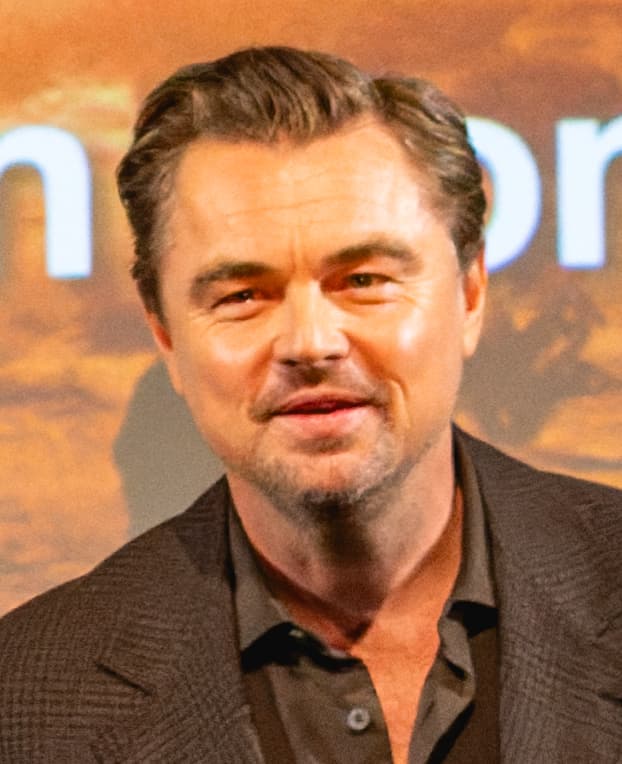
Leonardo DiCaprio's wealth is not a celebrity story. It is an industrial one. Since the mid-1990s, he has operated at the apex of film economics. Extracting not just salaries but backend points, producer fees, and brand partnerships that compound across decades. Our analysis, drawing on synthesized data across published sources, arrives at an estimate of $300M as of June 2026.
That figure places him in a narrow tier of actors who have converted star power into durable capital. The architecture of the fortune matters as much as the headline number. Acting fees and backend arrangements account for roughly 60 percent of our estimate. Real estate and endorsements each contribute about 15 percent. Green-tech and venture investments add another 7 percent. Producer credits round out the rest.
What makes DiCaprio's case analytically interesting is the discipline behind it. He has worked selectively. Fewer than thirty major studio roles in thirty-plus years. While negotiating deals that keep paying long after a film leaves theaters. Couple that with a real estate strategy built around appreciating coastal and urban markets, and a climate-investment portfolio that aligns with his public profile, and the $300M figure reads less like luck than like intentional capital accumulation.
How DiCaprio's $300M Ranks Against Hollywood's Wealthiest
DiCaprio's estimated $300M net worth places him among the five wealthiest working actors globally, trailing only those who made early equity bets in tech or built production empires at scale.
Hollywood's richest actors generally fall into two camps: those who earned their way there through sheer volume of work, and those who engineered use. Backend deals, ownership stakes, production credits. That multiplied each dollar earned on set. DiCaprio belongs firmly to the second camp. His output is on purpose sparse. The use is not.
Peers like Tom Hanks and Denzel Washington built comparable fortunes through similar backend-heavy structures. Dwayne Johnson and George Clooney pushed past $300M through franchise fees and equity plays in spirits and production companies. DiCaprio's $300M, by contrast, rests on a purer acting-and-investment base. No spirits brand, no mass-market franchise. That makes the figure more built that way fragile in one sense, and more impressive in another.
The comparison also clarifies what is missing. DiCaprio has not yet monetized his climate platform through a consumer brand or public vehicle. His green investments are real but modest as a share of total wealth. If that changes. And there are signals it might. The ceiling shifts meaningfully upward.
Acting Salaries and Backend Points: The $180M Engine
Acting fees and backend profit participation account for roughly $180M of DiCaprio's estimated net worth. Built over three decades of top-of-market deals on films that became global franchises.
Backend participation is the mechanism that separates working actors from wealthy ones. A straight salary ends when filming wraps. A backend deal. Where the actor takes a percentage of profits above a defined threshold. Keeps generating income as long as a film sells tickets, streaming licenses, and home-video units. DiCaprio secured these arrangements on his highest-profile projects, and two films alone demonstrate the scale possible.
His earnings from Titanic's global run and from Inception's long commercial tail each contributed outsized sums to the $180M we attribute to this category. These were not just paychecks. They were royalty streams. Titanic kept earning for years across re-releases and formats; Inception became a perennial prestige-streaming anchor. Per-film fees in the $20M–$30M range on top of those participations compound quickly across a thirty-year career.
The selectivity is intentional and financially rational. Fewer films means more use per negotiation. Studios competing for DiCaprio's commitment. Knowing he might say no. Tend to offer better backend terms than they would for an actor who needs the work. Scarcity has a dollar value, and DiCaprio has spent his career proving it.
This income stream is now largely historical. He is unlikely to repeat the backend windfalls of his peak commercial period. But the capital is already converted and working. The $180M is not a projection. It is accumulated and (mostly) deployed.
“DiCaprio's fortune is built on scarcity. Fewer roles, tighter deals, and backend points that keep paying long after the credits roll.”
Endorsement Income: A $45M Pillar Built Over 30 Years
Endorsement and brand-partnership earnings contribute an estimated $45M to DiCaprio's current net worth, built through selective luxury and consumer deals accumulated across three decades.
DiCaprio has never been a ubiquitous pitchman. He is not in fast-food commercials or budget airline spots. His brand relationships have tracked his positioning: premium, global, image-conscious. Japanese and European luxury advertisers in particular have historically paid Hollywood's elite at rates that rarely surface in U.S. Press coverage.
Over a thirty-plus-year career, those deals accumulate into a material line item. We attribute approximately $45M of his current net worth to this category. Representing career endorsement earnings that have been invested and compounded rather than spent. The key distinction is that endorsement cash, for someone at DiCaprio's wealth level, does not finance lifestyle. It finances asset purchases.
The $45M figure reflects a conservative read. Some analysts have cited higher lifetime totals. We weight toward the lower end because a portion of those earnings is already folded into other asset categories. Real estate purchases partly funded by endorsement income, for instance. Separating streams at this wealth level is inherently approximate.
Real Estate Portfolio: Coastal and Urban Holdings Worth ~$45M
DiCaprio's real estate holdings. Spanning Malibu, TriBeCa, the Riverhouse in Manhattan, and a Belizean island. Contribute an estimated $45M to his overall net worth.
The portfolio spans four distinct asset types. The Malibu property anchors the coastal side. A high-value residential asset in one of California's most supply-constrained markets. Two Manhattan addresses, including a TriBeCa apartment and a Riverhouse unit, represent urban density bets that have appreciated sharply over the past decade.
The Belize island is the most unusual holding. It is not purely residential. DiCaprio has earmarked it for an eco-resort development. A project that aligns his climate brand with a potential income-generating asset. If the resort moves forward, the island transitions from a held investment to an operating business. That would change its contribution to the wealth picture materially.
Real estate at this price point rarely moves fast in either direction. DiCaprio's holdings are illiquid by nature. You cannot sell a Malibu compound in a week. But illiquidity cuts both ways. These assets have historically resisted the kind of sharp drawdowns that hit equity portfolios. For a celebrity fortune built on income streams that are inherently unpredictable, stable real estate provides ballast.
Green and Venture Investments: A $21M Climate-Aligned Bet
DiCaprio's sustainable-company investments. Spanning plant-based food and vegan leather. Total an estimated $21M and reflect a climate-investment thesis consistent with his two-decade environmental advocacy.
The portfolio is small relative to his total wealth. At roughly 7 percent of the $300M figure, it is meaningful but not dominant. What makes it analytically notable is the coherence. DiCaprio is not a celebrity who endorses clean energy and then invests in oil futures. His capital allocation tracks his advocacy. Plant-based food companies and vegan leather producers share a logical throughline with his work at the Leonardo DiCaprio Foundation.
The risk profile differs sharply from his real estate holdings. Early-stage sustainable consumer brands can zero out. They can also return multiples. At his wealth level, a $21M exposure to this category represents a intentional risk-on allocation. Venture capital logic applied to a climate thesis. If even one holding scales to a meaningful exit, the category's contribution to his net worth grows fast.
There is also a reputational component. DiCaprio's investments are themselves a form of brand management. Backing plant-based food companies reinforces his environmental positioning. That positioning, in turn, commands premium rates from luxury endorsers who want to associate with his climate credibility. The capital and the brand strategy are not separate decisions.
Film Production Credits: The $9M Long Tail
Producer credits on films including The Aviator and other projects contribute an estimated $9M to DiCaprio's net worth. A smaller share, but one that reflects strategic creative control rather than passive income.
Producing is not where DiCaprio makes his serious money. The $9M we attribute to this category is the smallest line item in our breakdown. But the economic logic of taking producer credits goes beyond the fee. Producers control development. They decide which stories get made. For DiCaprio, production credits are partly about creative use. Shaping projects he also stars in. And partly about building a longer-term content business.
The Aviator is the clearest example. DiCaprio produced and starred, giving him both the acting backend and a producer's share of the film's performance. That structure. Actor-producer on the same title. Maximizes extraction from a single project. It is the Hollywood equivalent of owning equity in a company you also run.
The category is unlikely to grow dramatically unless DiCaprio scales Appian Way, his production company, into a volume business. Right now it operates selectively, mirroring his acting strategy. Volume would require a different organizational model. More development staff, broader deal flow, more risk. There is no indication he is moving in that direction.
Capital Allocation Strategy: How DiCaprio Deploys His Earnings
DiCaprio allocates across real estate, climate-aligned venture bets, and selective reinvestment in his own production company. A structure designed for preservation as much as growth.
At $300M, the primary financial objective shifts. It is no longer about wealth accumulation. It is about not losing what is already there. DiCaprio's allocation reflects this. Real estate. Stable, appreciating, tax-advantaged. Anchors the portfolio. Venture bets in sustainable companies represent the growth allocation. Production credits are a creative hedge, not a financial one.
What is absent is as telling as what is present. No reported equity stake in a streaming platform. No sports franchise. No spirits or fragrance brand. DiCaprio has avoided the celebrity-brand playbook that George Clooney (tequila) or Ryan Reynolds (gin and aviation) have used to push past the $300M mark quickly. Whether that reflects personal preference or strategic patience is unclear from the outside.
His environmental foundation also functions as a capital vehicle of a different kind. Philanthropic commitments reduce taxable income. They build reputational equity that commands premium brand partnerships. The foundation is not just altruism. It is part of a coherent wealth-management posture.
What Could Disrupt the $300M Figure. Upward or Down
The Belize eco-resort, a scaled production deal, or a climate-tech exit could push the figure past $300M; a prolonged acting hiatus or venture losses would compress it.
The upside scenarios are specific. The Belize island. If it converts to an operating eco-resort. Adds both an income stream and a brand asset. A streaming platform equity deal, if DiCaprio chose to replicate what some peers have done, could be transformative. And a major exit in one of his sustainable-brand holdings would immediately revalue the venture category.
The downside risks are different in character. DiCaprio's fortune is not fragile in the way that debt-financed celebrity wealth can be. He does not appear to carry significant use. The risk is more about stagnation than collapse. If he stops working. Or works only in low-commercial projects. The acting income line goes to zero. Backend streams from older films thin out over time. The portfolio needs new inputs.
The real estate market is the wildcard. Coastal California and Manhattan have been resilient, but both face structural pressures: climate risk on the coast, office-market spillover in Manhattan. A sharp correction in either would dent the $45M real estate figure without necessarily signaling broader portfolio trouble. It is a manageable exposure, not an existential one.
Trajectory: Where DiCaprio's Net Worth Goes From Here
Our analysis projects DiCaprio's net worth will hold near $300M through 2027, with meaningful upside if his eco-resort or climate-tech investments mature. And modest downside if acting income continues to slow.
The base case is stability. Acting income is episodic rather than annualized at this stage of his career. Real estate appreciates slowly. The venture portfolio is illiquid. None of those dynamics produce fast movement in either direction. $300M is likely the floor as much as the current figure.
The bull case requires a catalyst. An eco-resort opening in Belize would be the most visible one. A high-commercial acting return. A franchise role or a streaming platform payday. Would be the most financially significant. DiCaprio has shown little interest in franchise filmmaking. Streaming is a different question. The platform economics are compelling, and several streamers have the budget to make the conversation interesting.
The bear case is slow erosion. No new income, aging backend streams, and a venture portfolio that does not produce exits would gradually thin the number. That scenario requires a level of inactivity that seems unlikely given his track record. But it is worth naming. Fortunes at $300M do not grow on their own. They require tending. And DiCaprio has always tended his.
How the $300M adds up
- Acting salaries & backend pointsDecades of starring roles at $20–$30M per film plus lucrative backend arrangements (e.g., $40M from Titanic, $50M+ from Inception) form the largest component of his fortune.$180M60%
- Endorsements & brand partnershipsCareer endorsement earnings estimated at over $100 million, covering luxury and consumer brands accumulated over 30+ years.$45M15%
- Real estate portfolioDiCaprio holds multiple high-value properties including a Malibu home (~$10.95M listed value), a TriBeCa apartment, a Riverhouse apartment, and an island in Belize earmarked for an eco-resort.$45M15%
- Green & venture capital investmentsDiCaprio has invested in sustainable companies across plant-based food and vegan leather, consistent with his climate activism profile, as noted by Investopedia.$21M7%
- Film production (producer credits)Producer credits on films like The Aviator and other projects contribute a smaller but material share of overall wealth.$9M3%
Ezra Linwood — Ezra Linwood covers celebrity wealth, entertainment industry economics, and the capital strategies of Hollywood's highest earners for Neon Hollywood.
Disclaimer: Net-worth figures are editorial estimates built from publicly available reporting, filings, and market data — see our methodology. They are not verified statements of any person’s finances and nothing here is financial advice.