LeBron James Net Worth: The $450M Empire Behind the King in 2026
Four decades into a life built in Akron, LeBron James has constructed a fortune that makes his basketball contract look like a rounding error.
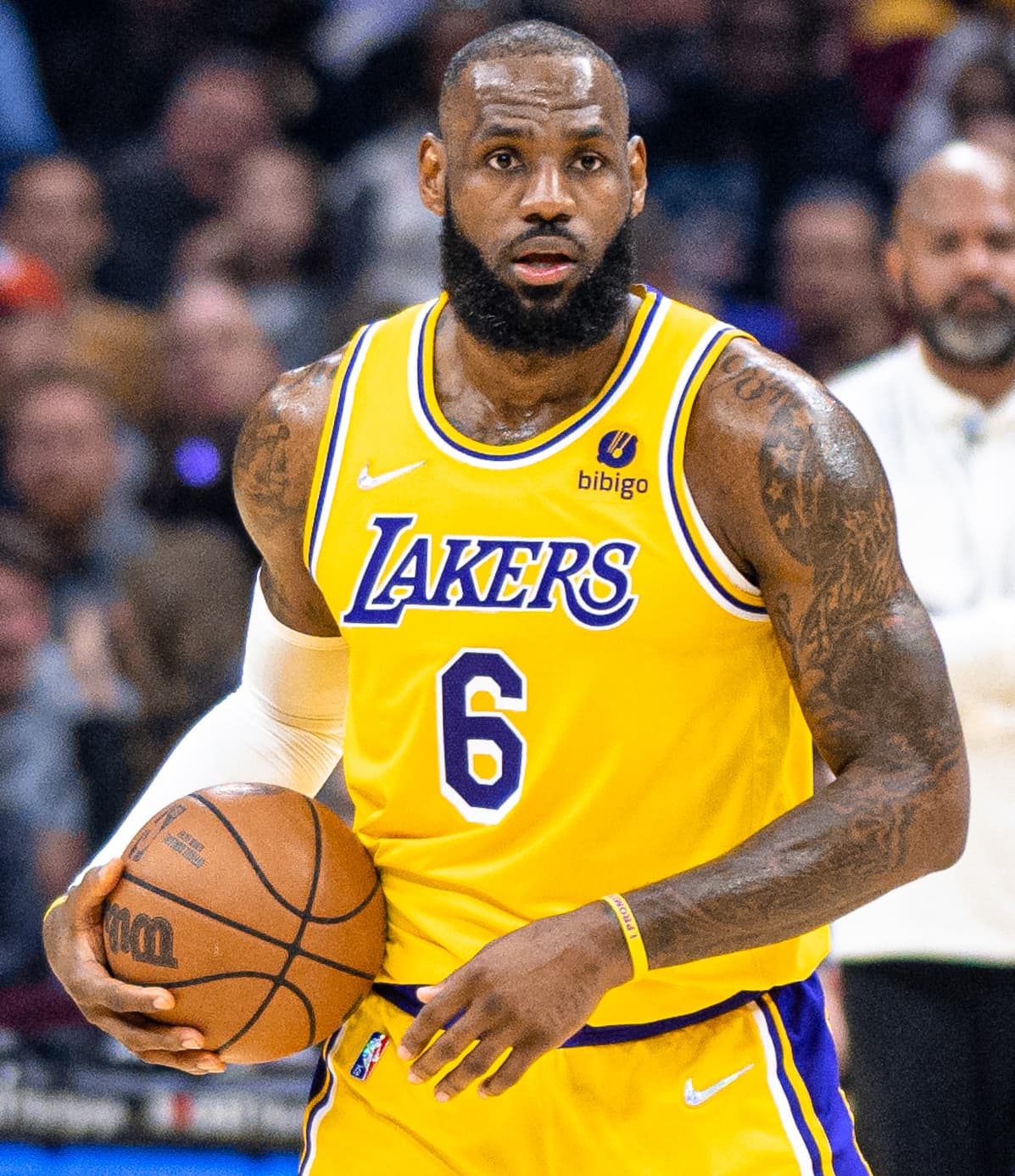
The number that matters most in understanding LeBron James's wealth is not the one on his Lakers contract. His 2025-26 salary. Roughly $52 million, a figure confirmed independently by ESPN and HoopsHype. Places him thirteenth on the NBA's current pay scale, behind Stephen Curry, Joel Embiid, and a half-dozen others. It is a large number. It is not the point.
The point is what sits beneath the court-level income: a layered structure of endorsement equity, media production ownership, franchise stakes, and consumer-brand investments that has been two decades in the making. Celebrity Net Worth has floated an eight-hundred-million-dollar headline figure; Bloomberg's reporting, anchored in a 2020 investment event, has offered a narrower lens. Our analysis, weighing recency, asset liquidity, and the realistic after-tax, post-spending residual from a career of on-court earnings, arrives at an estimate of $450 million as of June 2026. Substantial, but more conservatively grounded than the most bullish published claims.
That figure breaks across five distinct wealth engines, each with its own risk profile and growth trajectory. Understanding LeBron's net worth means understanding how those engines interact. And why the basketball salary, for all its size, funds only about thirty cents of every dollar in his financial picture.
How LeBron's Fortune Ranks Against the Wealthiest Athletes Alive
Our analysis puts LeBron James at roughly $450M as of June 2026. Well above most active athletes, though below the nine-figure territory of retired moguls like Michael Jordan and Tiger Woods at peak valuation.
Among active professional athletes, LeBron occupies a tier almost entirely his own. Most NBA players. Even All-Stars with max contracts. Exit the league with liquid wealth in the low tens of millions after taxes, agents, lifestyle, and the slow attrition of poor early investments. LeBron has spent twenty-three professional seasons doing the opposite: step by step converting on-court visibility into off-court equity.
The comparison to Michael Jordan is instructive. Jordan's wealth was built primarily on Nike royalties and, eventually, majority ownership of the Charlotte Hornets. Assets accumulated over decades after his playing days. LeBron has compressed that timeline aggressively, building a diversified ownership portfolio while still logging thirty-plus minutes a night. The result is a fortune our analysis places at $450 million, split across salary residuals, endorsement equity, media assets, sports franchise stakes, and a tail of consumer-brand investments.
Celebrity Net Worth has published a figure closer to $800 million. A number that likely reflects gross career earnings and asset valuations at peak, without netting taxes, spending, and the discount applied to illiquid minority stakes. Bloomberg's 2020 reporting, pegged to the SpringHill fundraise, offered a more asset-specific but narrower snapshot. Our figure sits between those poles, weighted toward current liquidity and realistic asset recovery values.
NBA Salary: $531M Career Earned, But How Much Wealth Does It Actually Build?
LeBron has earned over $531M in NBA salaries since 2003 per HoopsHype, with his 2025-26 deal worth $52M. Yet after taxes and spending, on-court pay accounts for roughly 30% of his estimated net worth.
HoopsHype's career salary ledger is unambiguous: across twenty-three seasons and four franchises, LeBron has pulled in north of $531 million in contractual NBA pay. His current deal with the Lakers. $52 million for 2025-26, per ESPN's salary database. Makes him one of the highest-paid players in the league even in what may be the twilight of his playing career. That contract alone, annualized, eclipses the lifetime earnings of most professional athletes in any sport.
The brutality of taxation complicates the picture fast. California's state income tax, federal brackets, and the NBA's escrow system mean LeBron sees something closer to half his gross salary in take-home pay. Apply typical spending patterns for a principal residence in Los Angeles, a second home portfolio, family expenses, and charitable commitments, and the residual wealth-building contribution from salary alone is meaningful but not dominant.
We weight NBA salary at approximately $135 million of the total $450 million figure. Roughly thirty percent. Reflecting accumulated savings and reinvested salary income net of taxes and consumption over a career that began when he was eighteen years old. It is the foundation on which everything else was built, but the structure long ago outgrew its base.
“The basketball contract is the smallest part of the story. LeBron James built a $450 million fortune by treating visibility as the raw material for permanent equity.”
Nike and the Endorsement Machine: The Largest Single Wealth Driver
LeBron's lifetime Nike partnership, alongside a broader endorsement portfolio, represents the single largest category in his wealth. We estimate roughly $157M in net wealth attributable to endorsement income and equity.
The lifetime Nike deal is the agreement that reshaped what athlete endorsements could be. Signed when LeBron was still a teenager before his first NBA game, it has been renegotiated and extended into a structure that reports have placed at over one billion dollars in total guaranteed value. Making it, by most accounts, the largest shoe deal in the history of professional sports. Celebrity Net Worth, in its more expansive reporting, has cited combined career endorsement and salary income exceeding a billion dollars gross across his career.
Beyond Nike, LeBron has built a portfolio of brand partnerships. From beverage companies to financial services. That generate annual income at a scale few active athletes can match. The snowball over two decades is significant: early endorsement dollars, reinvested, have had time to appreciate inside his business and investment vehicles rather than sitting in low-yield accounts.
Our analysis attributes approximately $157 million. Thirty-five percent of total estimated wealth. To the net contribution of endorsement income across his career, with Nike representing the overwhelming majority of that figure. It is the single largest wealth category in our breakdown, a reflection of how completely he has monetized brand identity over two-plus decades.
SpringHill Company: How a $100M Investment Reshaped His Balance Sheet
SpringHill Company, the media and production firm LeBron built with Maverick Carter, received a $100M investment in 2020 at a reported $725M valuation. LeBron's equity stake in that entity is now his most significant single illiquid asset.
Bloomberg's June 2020 reporting captured the moment SpringHill crossed from interesting side project to genuine media asset: a $100 million external investment, drawn from institutional backers, that valued the company at roughly $725 million. That fundraise was not a sale. It was a signal. It told the market that LeBron and Maverick Carter had built something with a standalone equity story, separate from its founder's fame.
SpringHill operates across production, content licensing, and talent management, with projects spanning film, television, and branded content. Its value is tied partly to LeBron's celebrity. The awareness engine that opens doors. And partly to the independent creative and commercial infrastructure the company has assembled. The risk in that model is concentration: a significant portion of the asset's value is inseparable from LeBron's continued cultural relevance.
We place SpringHill and associated media and entertainment assets at approximately $90 million of net wealth. Twenty percent of our total estimate. That figure reflects a discount to the headline $725 million valuation, accounting for the minority stake structure, illiquidity, and the practical difficulty of converting a celebrity-anchored media company to cash at peak paper value. It remains, however, the fastest-appreciating category in his portfolio.
Fenway Sports Group and Franchise Equity: Slow Money, Smart Money
LeBron's minority stake in Fenway Sports Group. Owners of the Boston Red Sox and Liverpool FC. Gives him exposure to appreciating sports franchise assets that have historically outpaced most equity categories.
Sports franchises have been among the most reliably appreciating assets of the past two decades. The Boston Red Sox, Liverpool FC, and the other properties inside Fenway Sports Group have each seen their market valuations climb sharply in that period, driven by media rights escalation, global fan base expansion, and the structural scarcity of major-league ownership slots. LeBron's minority position in FSG means he participates in that appreciation without operational responsibility.
The position was acquired not through a cash purchase at market rate but as part of a broader relationship. A structure that gave LeBron exposure to franchise equity on terms unavailable to conventional investors. Minority stakes in private sports franchises are illiquid by nature: they cannot be easily sold, and their value is realized only at a full franchise transaction or a structured secondary sale.
We attribute roughly $45 million to this category. Ten percent of the total estimate. A figure that is conservative relative to the theoretical value of the FSG portfolio but reflects the illiquidity discount and minority position dynamics. If either the Red Sox or Liverpool were to change hands at current market valuations, the realized figure could be meaningfully higher.
Blaze Pizza, Ladder, and the Consumer Portfolio: Diversification at the Edges
LeBron's consumer-brand investments. Including Blaze Pizza and the Ladder supplement line. Add diversified income streams but collectively represent the smallest slice of his wealth picture at roughly 5% of total estimated net worth.
The consumer-brand tier of LeBron's portfolio reads like a intentional attempt to put money into categories he understands through daily life: fast-casual dining, nutritional supplements, wellness products. Blaze Pizza, in which he held a meaningful equity stake from its early days, became a case study in athlete-investor upside: he converted an endorsement opportunity into ownership, then watched the brand scale nationally.
Ladder, the supplement company he co-founded with Arnold Schwarzenegger, operates in the increasingly crowded performance-nutrition market. These investments are smaller in absolute dollar terms and more operationally intensive than a passive franchise stake. They require active brand involvement to sustain.
Collectively, we place this category and associated real estate holdings at approximately $22 million. Five percent of total estimated wealth. That is not a dismissal of these assets; it is a reflection of their size relative to the Nike and SpringHill categories. They matter as diversification and as proof of concept for LeBron's long-term strategy of translating visibility into equity at every available price point.
The Capital Allocation Logic: Why LeBron Chose Equity Over Cash
LeBron's business strategy has consistently prioritized equity ownership over endorsement fees. A decision that separates his wealth-building model from nearly every athlete who preceded him.
The pattern across every major LeBron investment is the same: take the deal, then find a way to own part of it. The Nike negotiation in 2003 set the template. Where most athletes accepted cash and royalties, LeBron's team pushed for structures that gave him equity-adjacent upside. The ability to participate in the brand's value growth, not just its revenue. That orientation has shaped every subsequent business decision.
SpringHill is the most sophisticated expression of this logic. Rather than licensing his name to a production company, LeBron and Carter built the entity from scratch, retained majority influence, and brought in external capital only when the business had enough independent value to command a premium valuation. The FSG stake follows a similar logic: franchise equity, held long-term, tends to appreciate faster than any operating business LeBron could run himself.
The consumer-brand investments. Blaze, Ladder. Represent the most hands-on tier of this strategy, requiring ongoing brand involvement. They are the smallest category, which is likely not a coincidence. LeBron's capital allocation philosophy appears to weight passive, appreciating equity highest, operating businesses second, and cash endorsement income as the necessary fuel that makes the rest possible.
Risks and Discounts: What Could Move the Number Down
Illiquidity, concentration in a single brand personality, and the difficulty of converting minority stakes to cash are the three structural risks that make the real, walk-away number lower than any headline valuation.
The honest accounting of LeBron's wealth requires sitting with its limitations. A significant fraction of the $450 million estimate sits in illiquid minority stakes. SpringHill, FSG. Where market value is a function of what a buyer would pay at a specific moment, not what a spreadsheet says today. Minority stake discounts in private markets can run twenty to forty percent below headline valuation. We have applied those discounts in arriving at our figure; the raw asset-value sum without them is higher.
Concentration risk is real. SpringHill's valuation is tethered to LeBron's cultural relevance. The Nike deal's ongoing terms depend on his continued visibility as an active or recently active athlete. A rapid post-retirement fade in public profile. Unlikely given his media ambitions, but not impossible. Would compress the value of several assets simultaneously.
The post-playing-career trajectory is the biggest variable. If LeBron transitions smoothly into media, ownership, and production. The path he has spent a decade preparing. The wealth figure grows. If he steps back from public life or SpringHill's independent content slate underperforms without the NBA platform as a backdrop, some of that paper value deflates. Our $450 million estimate assumes the former, with a margin of caution built in.
Where the Number Goes From Here: The Case for $500M+ by 2028
If SpringHill matures as an independent media asset and FSG holdings appreciate at historical sports-franchise rates, our model suggests LeBron's net worth could approach $500M or beyond within two years of retirement.
Sports franchise values have appreciated at rates that outpace most traditional equity categories over the past fifteen years, driven by escalating media rights and the global expansion of premium live sports content. LeBron's FSG position, held long enough, participates in that tailwind. If Liverpool FC or the Red Sox trade at the valuations current market comps suggest, even a small minority stake generates a material step-change in realized wealth.
SpringHill's trajectory depends on execution. The company has the infrastructure, the distribution relationships, and the creative ambition to become a genuinely independent content business. One whose value is not wholly dependent on LeBron's name above the title. If it achieves that independence, its valuation becomes more defensible and more liquid. A secondary sale or public-market event, structured correctly, could unlock the largest single wealth event of LeBron's post-playing career.
Our analysis holds the current figure at $450 million as of June 2026. The ceiling, under a favorable set of asset realizations, sits meaningfully higher. Perhaps approaching the $800 million that Celebrity Net Worth has cited as a gross-value figure. The floor, under a scenario of poor SpringHill performance and a depressed sports-franchise market, is lower. The most likely path is a gradual appreciation: a man who has spent twenty-three years building does not typically stop building the moment he stops playing.
How the $450M adds up
- NBA Salary (current & career)LeBron has earned over $531M in NBA salaries since 2003, with his 2025-26 contract alone worth $52.6M; on-court pay is foundational but only a portion of total wealth after taxes and spending.$135M30%
- Nike & Endorsement DealsCelebrity Net Worth references over $1.3B in gross endorsement and salary income over his career; his lifetime Nike deal (reportedly worth over $1B) is the single largest endorsement component.$157.5M35%
- SpringHill / Media & EntertainmentSpringHill Company (formed with Maverick Carter) received a $100M investment in 2020 at a reported $725M valuation, representing a major equity asset for LeBron in media production and content.$90M20%
- Sports Franchise & Equity Stakes (Fenway Sports Group, etc.)LeBron holds a minority equity stake in Fenway Sports Group (owners of the Boston Red Sox and Liverpool FC), among other sports-related investments, providing long-term appreciating assets.$45M10%
- Real Estate & Other Investments (Blaze Pizza, Ladder, etc.)LeBron has a portfolio of consumer-brand and real estate investments including Blaze Pizza and Ladder supplements, contributing diversified but smaller income streams.$22.5M5%
Ezra Linwood — Ezra Linwood covers athlete wealth, sports franchise economics, and celebrity capital allocation for Neon Hollywood.
Disclaimer: Net-worth figures are editorial estimates built from publicly available reporting, filings, and market data — see our methodology. They are not verified statements of any person’s finances and nothing here is financial advice.