Kevin Durant Net Worth: How KD Built a $400M Fortune by 2026
Thirty-seven years old and still commanding a max contract, Durant has assembled a fortune that transcends basketball. Anchored by Nike, sharpened by venture capital, and likely to keep stacking long after the final buzzer.
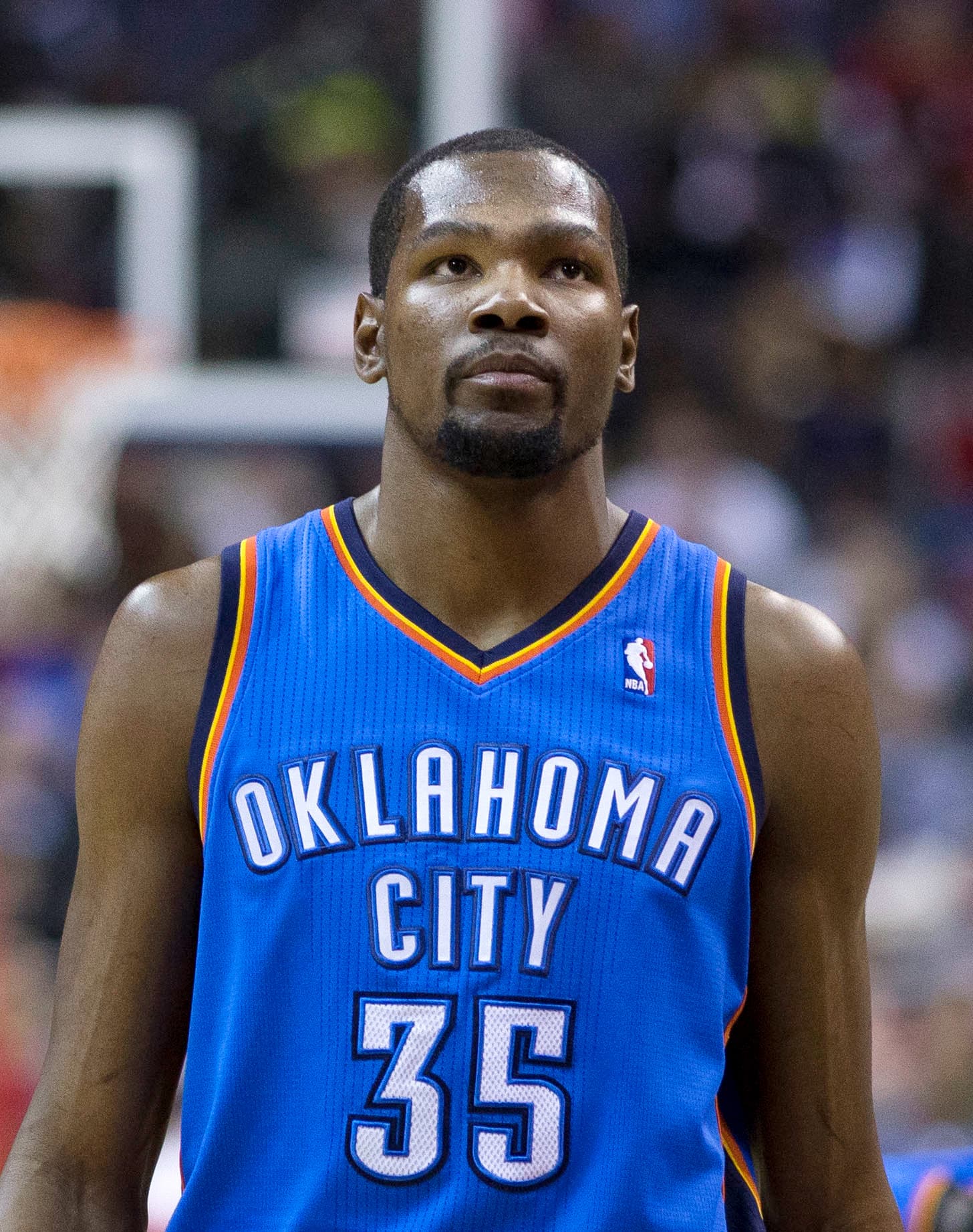
Kevin Durant's $400 million fortune. Our figure, derived by weighting career salary data, endorsement disclosures, and venture-capital performance estimates. Is not an athlete's nest egg. It is a diversified holding company that happens to employ one of the best scorers in NBA history as its public face.
The architecture matters. A single Nike relationship accounts for roughly a quarter of the total. Career salary. Accumulated across Oklahoma City, Golden State, Brooklyn, Phoenix, and now Houston. Supplies the bedrock. A venture fund co-managed with his longtime business partner Rich Kleiman converts celebrity access into startup equity. Each pillar reinforces the others in ways that make the fortune more durable than any single contract.
Suitland, Maryland produced a 6-foot-10 forward who turned a scholarship to Texas into the No. 2 pick in the 2007 draft. What followed. Two championships, four scoring titles, two Finals MVPs, and a playing career that has already generated over $220 million in verified salary alone. Is the foundation on which everything else was built. The $400 million figure our analysis arrives at as of June 2026 reflects all of it.
Where Durant Ranks Among Active-Player Fortunes in 2026
At $400M, Durant ranks among the five wealthiest active NBA players, trailing only LeBron James but ahead of most peers who haven't yet converted court earnings into scaled off-court businesses.
The NBA's financial elite has stratified sharply in the past decade. A handful of players. LeBron James being the obvious outlier. Have crossed the threshold from athlete to enterprise. Durant sits firmly in that second tier: past the point where basketball salary alone explains the number, but not yet in the territory where a single business investment dominates the balance sheet.
What separates Durant from peers with comparable on-court earnings is timing and discipline. His Nike deal, inked in 2014 when he was at the absolute apex of his market value, locked in a revenue stream that most players never secure at that scale. His venture fund, launched in 2017, caught the tail end of a startup supercycle that produced outsized returns. The combination. Salary, endorsement, and equity. Is precisely the three-part structure financial advisors prescribe and almost no athletes actually execute.
Our analysis of $400 million places Durant in a category defined less by peak earning and more by capital retention. Many players earn comparable salaries; few convert them into permanent wealth at this rate.
NBA Salary: The $220M Bedrock That Made Everything Possible
Durant's verified career NBA salary exceeds $220M, with his current Houston Rockets contract paying roughly $54M per year. The largest single annual income line in his financial portfolio.
Salary is the origin story. Drafted second overall in 2007, Durant spent nine seasons building his game and his contract in Oklahoma City before a free-agency move to Golden State reset his market value. Two championships later, a max deal in Brooklyn pushed his annual figures into territory that only a handful of players have occupied. The Houston Rockets contract. At roughly $54 million per season. Represents the latest iteration of that trajectory.
Salary functions differently for a player at Durant's career stage than it did a decade ago. Early earnings financed lifestyle and early investments. Current earnings, arriving when his cost structure is essentially fixed and his investment income is stacking independently, have a much higher conversion rate into net worth. The $54 million annual figure from Houston lands largely intact.
Career total salary exceeding $220 million, per salary-tracking data, is not the entirety of his basketball-related income. Playoff bonuses, award incentives, and All-Star appearances add incremental amounts. But it is the verifiable core. We treat it as the structural floor of the fortune, not a ceiling.
“Durant's real competitive advantage isn't the scoring title or the shoe deal. It's the institutional infrastructure that keeps stacking when he's not on the court.”
The Nike Deal: A $100M Relationship That Redefined Athlete Endorsements
Durant's 2014 Nike deal, valued at up to $100M in our weighted estimate of its realized contribution, includes a lifetime partnership structure and a substantial retirement package that extends its value well beyond his playing days.
In 2014, with Durant fresh off an MVP season and Adidas bidding aggressively, Nike locked him into a decade-long partnership with terms that included potential total value well into the hundreds of millions and a retirement package reported at $50 million. The structure was designed to function like a lifetime deal: Nike keeps Durant as a signature athlete, Durant keeps his KD line active, and both sides benefit from a relationship that outlasts any single contract cycle.
The contribution we assign to this relationship. $100 million. Reflects realized and accrued value through June 2026: annual payments, royalty structures on KD-branded footwear, and the portion of the retirement package that has effectively vested in present-value terms. It is the single largest off-court income source in his portfolio and the one most clearly attributable to a single decision made at the right moment.
Footwear deals of this scale are rare. Fewer than ten active NBA players hold signature shoe agreements; fewer still have contracts with the kind of structural longevity that Nike built into Durant's arrangement. The KD line has remained commercially active through his injuries, his team changes, and his public controversies. A resilience that speaks to the brand equity Nike has invested in maintaining.
The risk embedded here is also clear. Nike's relationship is not unconditional. Reputational events have caused the company to sever far larger partnerships. Durant's relative stability on that front. Compared to some peers. Has allowed the deal to mature without interruption, which is itself a form of wealth preservation.
Thirty Five Ventures: How a $48M VC Stake Became a Recurring Edge
Thirty Five Ventures, the firm Durant co-founded with Rich Kleiman in 2017, has deployed capital into 50+ startups with some positions delivering 400%+ returns. Contributing an estimated $48M to Durant's net worth.
Most athlete investment vehicles are passive: a check written, a press release issued, a return that roughly tracks the market. Thirty Five Ventures was designed differently. Co-founded with Rich Kleiman. Who functions as both manager and strategic partner. The fund has operated with an actual investment thesis rather than a celebrity-access pass. Early bets on Robinhood, Coinbase, and Postmates placed capital in companies that subsequently went public or were acquired at significant premiums.
The $48 million we attribute to the venture portfolio reflects estimated current value of those positions, net of early exits and accounting for the volatility that has accompanied crypto-adjacent holdings like Coinbase since their peak valuations. Some individual positions have reportedly delivered returns exceeding 400 percent; others have compressed. The aggregate, in our reading, contributes meaningfully but not dominantly to the total.
What Thirty Five Ventures has done built that way is more important than any single exit. It has given Durant a mechanism for deploying annual cash flows. From salary and endorsements. Into illiquid but potentially high-returning assets. For a player of his profile, that is the correct capital allocation choice: liquid assets from salary and endorsements, illiquid growth exposure from venture. The firm has also provided intellectual infrastructure: relationships, deal flow, and financial discipline that will outlast his playing career by decades.
The fund's 50-plus portfolio companies span consumer finance, logistics, and media. That breadth is both a feature. Diversification against any single sector downturn. And a function of the period in which the fund launched. The 2017-2021 startup environment rewarded early-stage bets at a rate that is unlikely to repeat. The question for Thirty Five's next decade is whether it can sustain returns in a more disciplined funding climate.
Endorsements Beyond Nike: The $20M Layer of Sponsorship Income
Beyond Nike, Durant holds additional brand partnerships and equity stakes. Including a reported interest in the Philadelphia Union MLS franchise. That collectively contribute an estimated $20M to his overall wealth.
The non-Nike sponsorship layer is smaller by design. Durant's agreement with Nike is exclusive enough in the apparel and footwear category that other brands operate in adjacent spaces: technology, food and beverage, media, and sports ownership. The Philadelphia Union stake is the most built that way interesting of these. Professional sports franchise equity tends to appreciate faster than inflation over long holding periods, and MLS valuations have risen sharply in the past decade.
We aggregate this category at $20 million, which reflects the estimated realized and mark-to-market value of these relationships rather than their gross contract totals. Sponsorship payments arrive over time; equity stakes carry both upside and illiquidity discount. The $20 million figure is conservative, intentionally. Without detailed disclosure, we apply a haircut to any claimed valuation.
The business interests in this tier also represent optionality. A sports franchise stake, held long enough, can become the most valuable asset in an athlete's portfolio. Durant is not the first player to understand this. And his entry into MLS at a moment when the league's valuations were still ascending suggests he or his advisors made the timing calculation correctly.
Real Estate: A $12M Portfolio That Anchors Rather Than Drives
Real estate contributes an estimated $12M to Durant's net worth. A modest share by athlete standards, suggesting his capital allocation prioritizes liquid and venture assets over property.
Athletes of Durant's earning tier often concentrate heavily in real estate, treating it as a default store of value. Durant's portfolio, at roughly $12 million in our estimate, is relatively restrained. A signal that Thirty Five Ventures and the broader investment strategy have provided an alternative capital sink that competes with property for available cash flows.
Specific holdings have not been comprehensively disclosed. What is clear from available sourcing is that real estate is a component rather than a cornerstone. Meaningful enough to count, modest enough that it doesn't change the shape of the fortune. For context, $12 million represents 3 percent of our $400 million total, which is below the real-estate-to-net-worth ratio typical for high earners in the same bracket.
That underweighting is not necessarily a flaw. Real estate carries carrying costs, illiquidity, and geographic concentration risk. A player who has played for franchises in Oklahoma City, the Bay Area, Brooklyn, Phoenix, and Houston has had little incentive to sink capital into any single market. The portfolio's modesty may reflect rational portfolio construction as much as any preference.
Capital Allocation Strategy: How Durant Converts Earnings Into Lasting Wealth
Durant's wealth strategy. Directing salary and endorsement cash flows into venture equity and maintaining lean real estate exposure. Reflects a capital allocation model more common to institutional investors than professional athletes.
The architecture of a $400 million fortune built by age 37 requires more than high earnings; it requires a theory of where each dollar goes next. Durant's approach, as reconstructed from public disclosures and the structure of Thirty Five Ventures, prioritizes equity over fixed assets. Salary and endorsement payments. Which arrive in cash. Get recycled into startup positions that carry higher expected returns than treasury bonds or rental income.
The firm structure around Thirty Five Ventures is key to this. By housing investments in an institutional vehicle rather than managing them personally, Durant has created a system that operates on its own logic. Deal flow, diligence, portfolio management. Rather than depending on his personal attention during an active playing career. Kleiman's operational role allows Durant to remain the strategic face without becoming the operational manager.
The risk in this model is concentration in the startup asset class at a time when the funding environment has tightened materially since 2021. Companies that raised at peak valuations have marked down; exits have slowed. The $48 million we attribute to the venture portfolio may be the figure most likely to move. In either direction. Over the next 24 months.
Controversies and Disruption Risks to the $400M Figure
Durant's fortune faces meaningful risk from Nike contract renewal uncertainty, venture-portfolio mark-downs, and the reputational volatility that has periodically surrounded his public persona.
The Nike relationship is the single variable that could most sharply alter the $400 million figure. Its structure. Long-term, lifetime-adjacent, with a retirement package. Insulates it from year-to-year renegotiation, but it is not immune to termination. Reputational events that violate contract conduct clauses have ended similar arrangements for other athletes. Durant's track record here is mixed: he has survived public controversies that would have ended smaller endorsement deals, but that track record does not guarantee future outcomes.
The venture portfolio carries its own disruption risk. Crypto-adjacent holdings. Coinbase is the most prominent. Have experienced severe valuation swings. Robinhood's post-IPO performance compressed gains that looked extraordinary at the time of the private investment. These are not catastrophic losses relative to the portfolio's total, but they are a reminder that the 400-percent-return narrative applies selectively to specific positions and not to the fund as a whole.
Injury risk remains real. Durant has missed significant playing time over his career. An Achilles rupture in 2019 cost him an entire season. And Houston's $54 million annual commitment reflects a bet that he remains healthy. A career-ending injury before contract completion would not eliminate his wealth but would reshape the trajectory, removing the salary line that currently anchors annual cash flow.
Trajectory: Where the $400M Figure Goes From Here
Barring a major Nike disruption or sharp venture markdown, Durant's net worth is on pace to cross $450M within 24 months, driven by continued salary, stacking VC returns, and the structural permanence of his Nike arrangement.
The path forward depends most heavily on two variables: the continuation of the Houston contract and the performance of the Thirty Five Ventures portfolio in an environment where startup exits have slowed. If both hold, the $400 million figure has clear momentum. Annual salary of roughly $54 million, even after taxes and operating costs, adds meaningfully to the base each year. Venture exits. When they do arrive. Tend to arrive in clusters, and several Thirty Five portfolio companies are mature enough to represent near-term liquidity events.
The Nike retirement package, which was structured as part of the 2014 deal, functions as a form of annuity wealth: less dependent on current performance, more dependent on the longevity of the relationship. If that package vests fully, it represents a substantial one-time addition to the net worth figure at or near retirement. Which, at 37, Durant can see clearly from where he stands.
Beyond the playing career, the business infrastructure is the story. Thirty Five Ventures gives Durant a post-basketball identity that is institutional rather than personal-brand dependent. The firm can raise new funds, hire analysts, and make investments with or without Durant's physical presence in an NBA arena. That structural permanence is what separates a generational athlete fortune from a temporary one. And it is the reason our $400 million estimate is likely a floor, not a ceiling.
How the $400M adds up
- NBA Salary (career + current)Over $511M in verified career NBA salary per HoopsHype, with a current Rockets salary of ~$54.7M/year representing his single largest annual income stream.$220M55%
- Nike Endorsement DealA landmark 10-year Nike deal signed in 2014 with potential value up to $300M plus a $50M retirement package represents the cornerstone of his off-court earnings.$100M25%
- Venture Capital (Thirty Five Ventures)Co-founded with manager Rich Kleiman in 2017, the firm has deployed capital into 50+ startups including Robinhood, Coinbase, and Postmates, with reported 400%+ returns on some investments.$48M12%
- Other Brand Endorsements & Business InterestsAdditional sponsorship and endorsement deals beyond Nike, as well as equity stakes in businesses like the Philadelphia Union, contribute meaningfully to total wealth.$20M5%
- Real EstateCelebrity Net Worth references real estate holdings as a component of Durant's wealth, though specific transaction figures were not surfaced in the available sources.$12M3%
Ezra Linwood — Ezra Linwood covers athlete wealth, sports business, and the financial architectures behind professional sports careers for Neon Hollywood.
Disclaimer: Net-worth figures are editorial estimates built from publicly available reporting, filings, and market data — see our methodology. They are not verified statements of any person’s finances and nothing here is financial advice.