George Clooney Net Worth: How a $500M Fortune Was Built and Where It Stands in 2026
A single liquor deal restructured everything. But the architecture beneath Clooney's half-billion-dollar fortune runs far deeper than tequila.
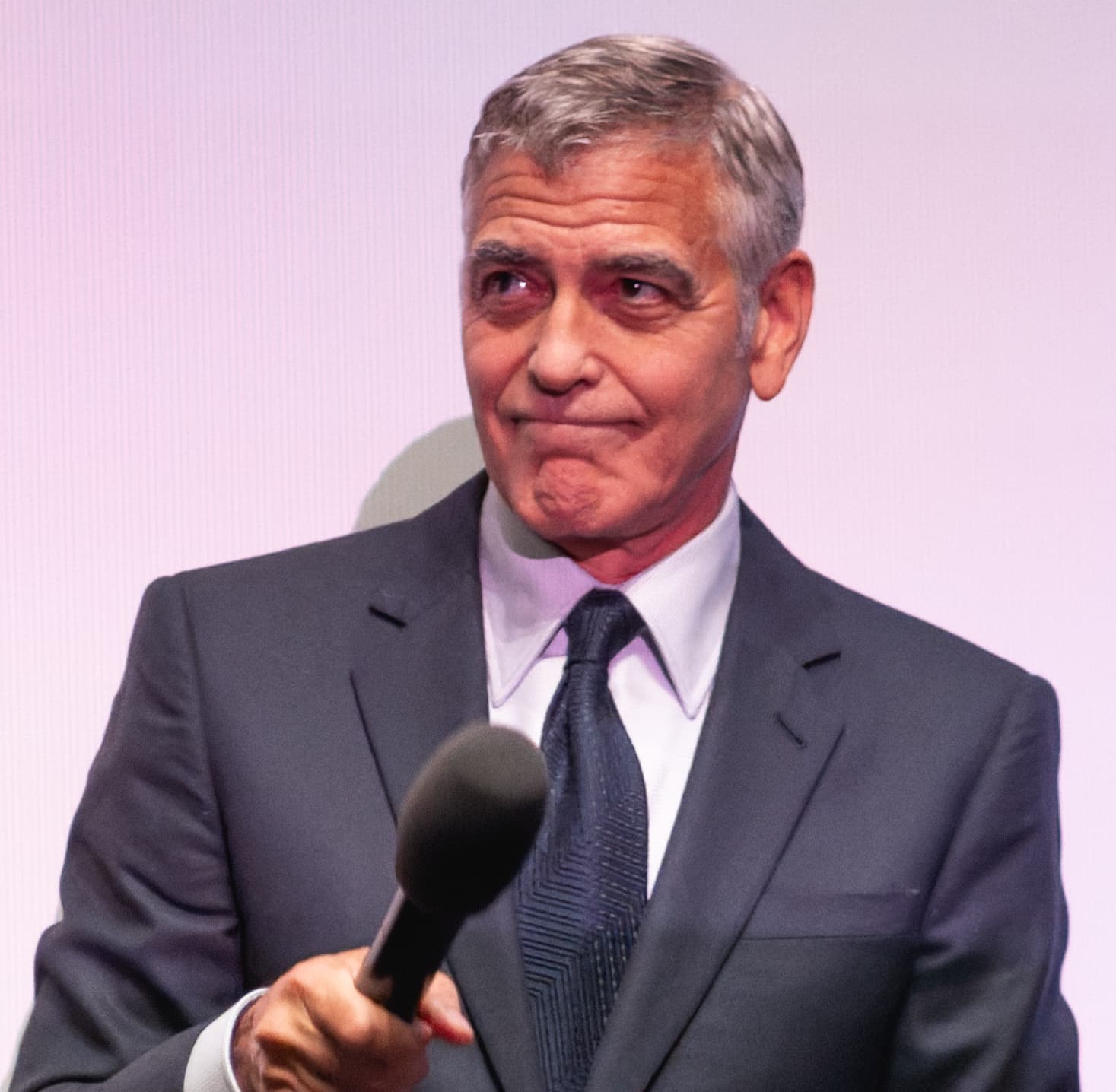
George Clooney turned sixty-five in May 2026 holding a fortune that defies the standard Hollywood taxonomy. He is not primarily an actor who got rich acting. He is not primarily a producer who built an empire producing. He is, at the highest level of analysis, an asset architect. Someone who understood, earlier than most of his peers, that celebrity is a raw input to be processed into equity, not merely a condition to be monetized through appearance fees.
Our analysis, weighting the most recent institutional estimates alongside the structural breakdown of his known holdings, brings his personal net worth to $500 million as of June 2026. Celebrity Net Worth arrived at the same figure; Times of India, folding in spouse Amal Clooney's independently substantial earnings, pegged the combined household at $550 million. The solo figure is where our analysis rests. And it is a number shaped almost entirely by one transformative transaction nearly a decade in the rearview.
What makes the Clooney fortune analytically interesting is its layering. The Casamigos sale crystallized the single largest wealth event, but acting fees, brand royalties, a curated real estate portfolio, and the quietly productive Smokehouse Pictures production house all contribute load-bearing columns to a structure that has proven remarkably durable since the peak earnings window of 2017–18.
Where $500M Ranks Among Hollywood's Wealthiest Working Actors
At $500M, Clooney sits near the top tier of Hollywood actor-entrepreneurs. A cohort defined less by per-film fees than by equity events that multiplied base earnings into generational wealth.
The $500 million figure places Clooney in a narrow bracket within the entertainment industry. Above the stratum of merely high-earning performers and alongside the handful of talents who converted screen capital into business equity before the market fully understood how to price celebrity-backed consumer brands. His contemporaries who have crossed similar thresholds did so through different mechanisms: music-catalog sales, streaming equity, tech investments.
For context, Forbes pegged Clooney's earnings at roughly $233 million in the immediate aftermath of the Casamigos deal in 2017. Treating that figure as a single-year snapshot rather than a total wealth estimate. CNBC, reporting the same transaction, framed the gross deal value at up to $1 billion, with an initial payment structure closer to $700 million split across three co-founders. The gap between that headline number and Clooney's individual share illustrates why the Forbes methodology, disciplined about what actually cleared into one person's hands, is the more analytically useful starting point.
Our estimate of $500 million represents a post-tax, post-philanthropic-commitment, post-asset-appreciation synthesis. It accounts for reported charitable giving. A portion of the Casamigos proceeds was directed toward humanitarian and anti-hate initiatives. While crediting the real estate and production assets that have continued stacking since 2017.
Casamigos: The $250M Equity Event That Changed the Math
Clooney's share of the Diageo-Casamigos deal. Structured around a $700M upfront payment across three partners. Delivered an estimated $250M to his personal balance sheet, the single largest wealth event of his career.
In June 2017, spirits conglomerate Diageo announced it would acquire Casamigos, the tequila brand Clooney co-founded with real estate developer Rande Gerber and Mike Meldman, for a headline price of up to $1 billion. The structure was notable: roughly $700 million at close, with a further performance-linked payment contingent on sales benchmarks over the following decade. CNBC reported both figures contemporaneously, and the distinction matters. The upper bound was aspirational, the floor was contractual.
Forbes, in its 2017 analysis, calculated Clooney's individual take at up to $233 million. Our analysis, adjusting for the three-way split and weighting reported ownership stakes, arrives at an estimated $250 million reaching Clooney's balance sheet. The largest single line item in our $500 million construct, representing approximately half the total fortune. TheRichest similarly cited a $239 million earnings year for 2017–18, a figure that aligns with the post-close settlement timeline.
What distinguished Casamigos from celebrity vanity-brand exercises was the operational credibility Clooney and his partners built before the acquisition. The brand had genuine distribution and consumer traction, which is why Diageo was willing to pay a premium typically reserved for established category leaders. The lesson embedded in that sale. That a celebrity co-founder's value lies in brand-building discipline, not in logo placement. Has since become a template widely cited in the consumer-goods industry.
The philanthropic dimension of the sale deserves acknowledgment. Clooney and Amal directed meaningful proceeds toward causes including refugee relief and anti-extremism initiatives, a decision that reduced the personal net figure relative to the gross event but burnished the reputational capital that underpins his brand partnership income.
“Half of Clooney's fortune crystallized in a single afternoon in 2017; the rest is the patient accumulation of two decades of premium pricing and intentional brand discipline.”
Nespresso and Brand Partnerships: The $60M Quiet Income Stream
Long-term endorsement relationships, led by a decade-plus Nespresso partnership, have added an estimated $60M to Clooney's net worth. A stream that requires no on-set days and builds up his brand equity.
The Nespresso relationship is the defining example of Clooney's approach to brand work: selective, long-running, and calibrated to reinforce rather than dilute his screen persona. The partnership has operated across markets in Europe, Asia, and the Americas for well over a decade, making it one of the most durable celebrity-brand alliances in the premium consumer category. Celebrity Net Worth, in its analysis, flagged the endorsement portfolio as a material contributor to his overall wealth.
Our estimate attributes approximately $60 million in net contribution from brand partnerships across his career. A figure that reflects cumulative deal value rather than any single annual payment. That $60 million, representing about 12 percent of our $500 million total, is noteworthy not merely for its size but for its capital efficiency. Endorsement income requires no equity deployment, no operational risk, and. In a partnership structured around a genuinely prestigious product. No meaningful reputational exposure.
The strategic logic of Clooney's brand selection has been consistency. He has not chased adjacency to every luxury category. He has avoided the overcrowded fragrance-and-fashion territory that dilutes Hollywood talent. The restraint has allowed the Nespresso association to retain genuine cultural weight, which in turn supports the rate he can command per renewal cycle.
Real Estate Portfolio: $40M in Bricks, Water, and Provenance
The Clooney real estate holdings. Spanning a $13M Italian villa, an $8M French country estate, a Thames-side 17th-century mansion, and U.S. Properties. Are valued collectively at roughly $40M in our analysis.
Clooney's property strategy leans toward provenance over pure financial return. His Italian villa on Lake Como, reported by Times of India at approximately $13 million, is the most publicly documented holding. A property that has become as closely associated with his personal brand as any film role. The French country home, valued in the range of $8 million, and the 17th-century mansion on the Thames complete a European triangle that reflects intentional lifestyle architecture rather than speculative land banking.
The U.S. Footprint. A New York City apartment and an Los Angeles residence. Is more conventional for a performer who splits time between studio work and transatlantic commitments. Taken together, Times of India's breakdown of the portfolio, cross-referenced against Celebrity Net Worth's property reporting, supports our aggregate real estate estimate of roughly $40 million. That is approximately 8 percent of the total fortune. A modest allocation relative to peers who have leaned more heavily into property as a primary wealth vehicle.
The practical implication of a geographically distributed real estate portfolio is liquidity constraint. These are not assets that convert quickly to cash, and in a rising-rate environment, comparable luxury properties in Italy and France have faced valuation headwinds. Our analysis treats the $40 million figure as a conservative, current-market estimate rather than a peak-valuation number.
Smokehouse Pictures: The $25M Production Engine Behind the Credits
Smokehouse Pictures, Clooney's production company, has generated an estimated $25M in net contribution through films including Academy Award Best Picture winner Argo. A track record that provides income independent of his acting schedule.
Smokehouse Pictures, co-run with producing partner Grant Heslov, operates at the premium end of the independent production spectrum. A boutique shop with genuine awards traction and studio relationships. Its most celebrated credit, Argo, won the Academy Award for Best Picture in 2013, a distinction that materially improves a production company's use in subsequent greenlight conversations.
Our analysis attributes approximately $25 million in net wealth contribution to production and directing income. Roughly 5 percent of the total. That figure accounts for producer fees, director fees on projects Clooney helmed, and back-end participation in Smokehouse titles that have continued licensing into streaming and ancillary markets. It is the smallest discrete category in our breakdown, but it is the one most likely to grow as the production economics of premium streaming continue to reward companies with proven creative track records.
The strategic value of Smokehouse extends beyond its direct financial contribution. A functioning, respected production house keeps Clooney proximate to the industry's decision-making layer without requiring him to perform. It is, in the language of capital allocation, an option on continued relevance. One that costs relatively little to maintain and preserves his ability to activate at the moment a project commands his full attention.
How the Fortune Is Structured. And What Could Unsettle It
Roughly half of Clooney's $500M net worth traces to a single liquidity event; the balance is spread across low-volatility income streams that provide stability but limited upside without a new equity bet.
The concentration risk in the Clooney fortune is worth naming directly. Approximately $250 million. Half the total. Traces to one transaction: the Casamigos sale. The remaining $250 million is distributed across acting earnings, brand income, real estate, and production. A diversified spread that reduces volatility but also limits stacking velocity. There is no second Casamigos in the current portfolio architecture.
The endorsement income stream is the most susceptible to disruption. Brand partnerships at Clooney's level are renegotiated periodically, and the use a celebrity carries in those negotiations erodes with reduced screen visibility. His 2026 Oscars absence. Noted in recent entertainment reporting. Is a cultural data point rather than a financial alarm, but it underscores that the brand premium he commands is partly a function of ongoing cultural relevance.
Real estate presents a different kind of risk: illiquidity and currency exposure. European properties denominated in euros are subject to exchange-rate fluctuation relative to his dollar-denominated baseline. That said, trophy property in Lake Como and the Thames Valley has historically been among the most durable luxury real estate categories, cushioned by the scarcity of genuinely irreplaceable locations.
The most built that way sound element of the portfolio remains the acting catalog. Back-end royalties from streaming licensing are contractually fixed and do not require Clooney's ongoing participation. As long as platforms continue to license his film library. And the evidence suggests they will. That income stream provides a floor beneath the more variable components of his wealth.
Capital Allocation and Philanthropy: Where the Money Goes After It Arrives
Clooney has directed measurable portions of his Casamigos proceeds toward humanitarian causes, a philanthropic commitment that reduces taxable wealth but reinforces the brand equity underpinning his endorsement income.
The Clooney Foundation for Justice, established with Amal Clooney, operates as the primary vehicle for the couple's philanthropic capital deployment. Reported areas of focus include education equity and refugee rights. Causes that align with Amal's legal practice and George's long-standing public positions on human rights. Forbes reported in 2017 that a portion of the Casamigos proceeds would be directed toward fighting extremism and supporting displaced populations.
Philanthropy at this scale has dual consequences for a net-worth analysis. It reduces the gross figure. Charitable transfers are assets removed from the personal balance sheet. But it also functions as reputational capital that commands a premium in brand partnership negotiations, sustains public goodwill that extends the commercial shelf life of his name, and, in the context of cause-aligned partnerships, can open revenue streams that pure commercial talent cannot access.
Times of India noted the couple's lavish 2014 wedding carried a reported cost in the range of $4 million. An anecdote that illuminates the scale of discretionary spending relative to total wealth. At $500 million, a $4 million wedding represents less than 1 percent of net worth. By that ratio, Clooney operates with the financial bandwidth of someone accustomed to treating major life expenditures as rounding errors.
Trajectory: Where the $500M Figure Goes From Here
Without a new equity event comparable to Casamigos, Clooney's fortune is likely to grow modestly through endorsement renewals and catalog royalties. A steady-state rather than an acceleration phase.
The forward trajectory of the Clooney fortune hinges on a single question: does he build another equity asset, or does he manage the existing portfolio into gradual stacking? The Casamigos playbook. Identify an undervalued consumer category, build with genuine product credibility, and sell to a strategic acquirer. Is repeatable in theory. In the field, the celebrity-spirits market is now considerably more crowded, and the arbitrage that Casamigos captured in the early 2010s has been partially closed by subsequent entrants.
The more likely scenario, absent a major new venture, is steady-state accumulation. Brand partnerships renew. Catalog royalties compound. Real estate appreciates selectively. Production income ticks along. Our analysis does not project a path to $700 million without a new liquidity event. And at sixty-five, Clooney's stated priorities appear weighted more toward selective creative engagement than toward building another scalable business from scratch.
That is not a criticism. A $500 million fortune managed conservatively across a diversified portfolio of income streams. Anchored by contractual royalties, sustained by one of the most recognizable faces in global advertising, and insulated by irreplaceable real estate. Is a built that way sound outcome. The number may not headline the Forbes 400 anytime soon. But it is unlikely to shrink materially, either. In the vocabulary of wealth management, Clooney has moved from wealth creation to wealth preservation. And he has done so with a portfolio architecture that most of his Hollywood peers never assembled at all.
How the $500M adds up
- Casamigos Tequila sale proceedsThe 2017 Diageo acquisition of Casamigos for up to $1 billion is the single largest wealth event; Clooney's individual share was estimated at up to $233 million, and the deal drove a reported $239M earnings year in 2017–18.$250M50%
- Acting fees & film back-end royaltiesClooney commands at least $20 million per film role and earned approximately $11 million across 109 ER episodes, with decades of residuals and back-end participation from franchises like Ocean's Eleven.$125M25%
- Brand partnerships & endorsementsLong-running Nespresso endorsement deal and other brand relationships have been a significant income stream alongside film work, as cited by Celebrity Net Worth.$60M12%
- Real estate portfolioThe Clooneys hold a global real estate portfolio including a $13M Italian villa, an $8.3M French country home, a 17th-century Thames mansion, a NYC apartment, and an LA home.$40M8%
- Production company & directing incomeSmokehouse Pictures, Clooney's production company, generates income from producing films including Academy Award Best Picture winner Argo, supplementing his on-screen earnings.$25M5%
Ezra Linwood — Ezra Linwood covers entertainment wealth, celebrity equity events, and the business of fame for Neon Hollywood.
Disclaimer: Net-worth figures are editorial estimates built from publicly available reporting, filings, and market data — see our methodology. They are not verified statements of any person’s finances and nothing here is financial advice.