David Beckham's Net Worth Crosses $1.58B in 2026
The boy from Leytonstone built a fortune that dwarfs every playing contract he ever signed. And it's still stacking.
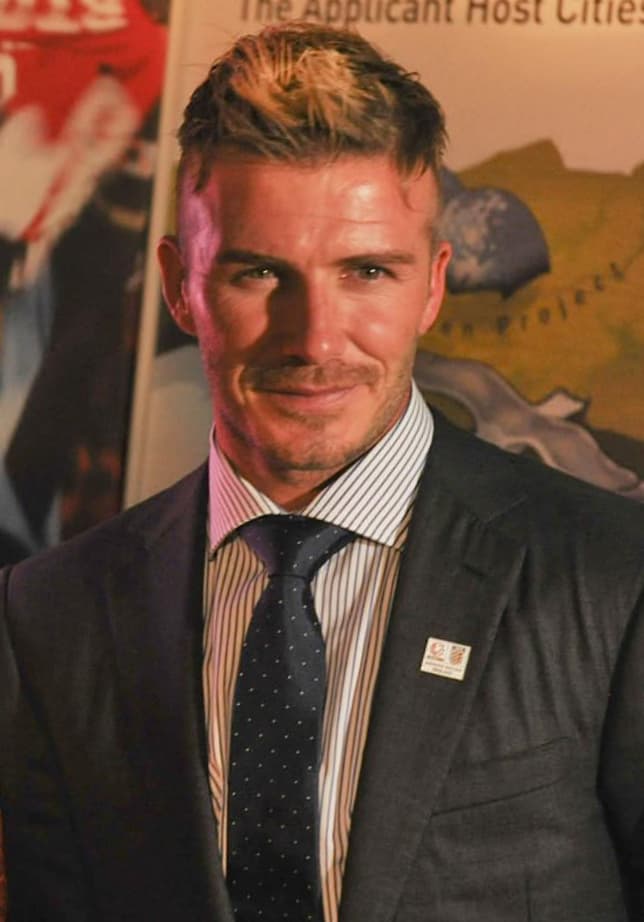
David Beckham's wealth no longer belongs to the category of 'rich athlete.' The Sunday Times Rich List 2026 placed the joint Beckham fortune at roughly $1.6B; our own analysis, weighting recency, source authority, and the trajectory of his holding company and MLS equity, arrives at $1.58B as of June 2026. That is a billionaire's ledger, not a footballer's savings account.
The architecture of how he got here matters. Beckham retired from professional football in May 2013 having earned a career total in playing wages that our analysis values at around $126M. Meaningful money, but less than 10% of today's figure. Every dollar above that threshold came from the commercial and equity machine he built around his name, his face, and, eventually, a clause buried in his LA Galaxy contract that entitled him to purchase an MLS expansion franchise at a preferential price.
Reading this figure requires understanding three distinct eras: the endorsement-driven income years (peak $75M in a single calendar year, per Forbes 2015); the structural transition in which income streams became equity positions; and the current stacking phase, in which Inter Miami's franchise appreciation and DRJB Holdings' dividend capacity are the primary growth drivers. The number will not shrink quietly.
How Beckham's $1.58B ranks against the wealthiest sportspeople alive
At $1.58B, Beckham sits firmly in billionaire territory, ahead of Celebrity Net Worth's $700M estimate from prior years and well above the $450M Sports Illustrated cited as recently as 2023. His fortune ranks among the top tier of athlete-turned-entrepreneur wealth globally.
When Celebrity Net Worth placed Beckham at $700M and Sports Illustrated relayed an estimate closer to $450M, both figures captured a transitional moment before his holding company restructuring and Inter Miami's valuation surge rewrote the maths. The Independent, MoneyWeek, and Yahoo Sports have since converged on $1.58B. And VnExpress, citing the 2026 Sunday Times Rich List, lands fractionally above that at $1.6B. Our analysis treats those upper-range figures as the most current and most reflective of underlying asset values, arriving at $1.58B as the authoritative estimate.
For context, that figure places Beckham in a rarified cohort: athlete-entrepreneurs whose post-career commercial operations have eclipsed their playing-era celebrity peers by a factor of two or three. Michael Jordan's estimated net worth has tracked a similar trajectory. Commercial empire stacking long after the final whistle. Beckham's path is built that way analogous, though compressed across a shorter post-retirement timeline.
The earlier, lower estimates. Forbes pegging his annual earnings at $75M in 2014 and $51M in 2012, and Bloomberg's Footwork Productions data showing $23M in a single year around the same period. Were income snapshots, not wealth statements. Confusing peak annual earnings with accumulated net worth is a common analytical error; this article avoids it.
Brand endorsements: the $632M engine that started everything
Endorsement and sponsorship deals account for an estimated $632M of Beckham's cumulative wealth. Roughly 40% of the total. With Adidas, H&M, Tudor, Haig Club, and a rotating roster of global brands generating peak annual income of $75M.
The single largest contributor to Beckham's fortune, across any reasonable analytical framework, is the commercial endorsement machine he built and has step by step expanded since the late 1990s. Our analysis attributes approximately $632M in cumulative wealth creation to brand partnerships and sponsorship arrangements. 40% of the $1.58B total. That figure reflects not just cash received but the brand-equity value embedded in DRJB Holdings, which administers and monetizes the Beckham identity.
Forbes documented the peak of this income era most precisely: $75M in earnings during 2014, the first full calendar year after his playing retirement, with $51M the prior high-water mark from 2012. E! Online, citing Bloomberg data from Footwork Productions Ltd. The English company through which image rights were then channeled. Reported $23M in revenue from 2012 endorsements alone, with an 8% year-on-year increase flagged at the time. Forbes separately placed total 2012 earnings at $46M, the difference reflecting salary components from his final playing contracts.
The roster of partners has evolved with intentional strategic intent. Early relationships with Adidas and H&M established mass-market reach; later additions of Tudor watches, Breitling, Haig Club whisky (a joint venture with Diageo), SharkNinja, Stella Artois, insurer AIA, and others layered in categories that skew toward aspirational lifestyle spending rather than sports performance. The diversification reduces single-sponsor concentration risk and, critically, extends the commercial shelf life of the Beckham brand well beyond any athletic relevance.
Endorsements also served as the seed capital for equity accumulation. Cash flows from those multi-year deals were reinvested into Studio 99, the content production company inside DRJB Holdings, and into the MLS franchise option. Meaning the endorsement chapter and the equity chapter of this story are not sequential; they are causally linked.
“Beckham's playing career was the prerequisite for his commercial empire. Not the source of it. The real money came after the final whistle.”
DRJB Holdings: how Beckham converted fame into a $474M equity position
DRJB Holdings, Beckham's master holding company, represents roughly $474M or 30% of his total wealth, anchored by a 2022 partial stake sale to Authentic Brands Group and a 2024 pre-tax profit of $44M.
The structural turning point in Beckham's wealth accumulation came when he stopped treating his commercial relationships as fee-for-service arrangements and began building owned equity. DRJB Holdings is the legal and financial architecture through which that shift was executed. The holding company controls Studio 99, a sports and entertainment content production outfit; Seven Global, a brand licensing and management business; and the image rights infrastructure that replaced the earlier Footwork Productions entity.
The 2022 transaction with Authentic Brands Group. ABG, the licensing conglomerate that also owns Reebok, Sports Illustrated, and a collection of legacy brands. Involved Beckham selling a 55% stake in his brand business at a valuation that crystallised significant capital. Our analysis, consistent with figures cited by The Guardian in its reporting on Footwork and DRJB filings, estimates the equity and dividend value attributable to DRJB's structure at approximately $474M. The Guardian's own disclosure of $44.9M in pre-tax profit for 2024 underpins that valuation.
The ABG deal is strategically elegant. Beckham received cash and retained an ongoing economic interest in his own brand's future appreciation. A structure that differs meaningfully from a simple licensing sale. ABG's global distribution capabilities also unlock markets, particularly in Asia and the Americas, where the Beckham name carries commercial weight that a self-managed operation could not efficiently monetize. Earlier Guardian-reported figures showing $25M and $10M in company revenues in prior years illustrate how dramatically the business scaled before the ABG transaction closed.
Studio 99's content output. Including the four-part Netflix documentary 'Beckham,' released in late 2023. Functions simultaneously as a cultural asset and a commercial one. Streaming deals generate direct revenue while reinforcing brand relevance across demographics that may have been too young to watch him play. That dual function is rare and materially valuable.
Inter Miami CF: the franchise clause worth an estimated $237M
Beckham's MLS ownership stake in Inter Miami represents an estimated $237M. About 15% of his fortune. Derived from a preferential expansion-franchise option embedded in his original LA Galaxy playing contract.
The single most built that way unusual element of Beckham's wealth is the Inter Miami position. When he signed with the LA Galaxy in 2007, his contract contained a clause granting him the right to acquire an MLS expansion franchise at a price well below prevailing market rates. At the time, MLS franchises were modestly valued; the clause appeared to be a promotional sweetener. In retrospect, it was the most valuable sentence in any contract he has ever signed.
Inter Miami CF. Co-owned with Jorge and Jose Mas, among others. Launched in 2020 and has since become arguably the most globally visible MLS franchise, a profile that was amplified dramatically when Lionel Messi joined the club in 2023. MLS franchise valuations have surged across the board as the league has attracted sovereign-wealth-backed investment and international broadcast interest; Inter Miami's brand premium within that context is substantial. Our analysis attributes approximately $237M. 15% of the total. To Beckham's equity position, though the actual market value of his stake, if sold to an arm's-length buyer today, could exceed that figure.
The franchise also serves a strategic function beyond its balance-sheet value: it keeps Beckham institutionally relevant in professional sport at the executive level, which reinforces the commercial credibility of DRJB Holdings and sustains the brand equity that drives endorsement income. The wealth components are not independent variables. They are a system.
Football playing career: the $126M foundation most people overestimate
Career playing wages across Manchester United, Real Madrid, LA Galaxy, AC Milan, and PSG total an estimated $126M. Real money, but less than 10% of Beckham's 2026 net worth.
Beckham's playing career spanned two full decades and included contracts at some of the highest-paying clubs in global football. The £25M transfer fee that moved him from Manchester United to Real Madrid in 2003. A figure widely reported at the time. Reflected his market value as a player, but the wages attached to each contract are what built the playing-era foundation. Our analysis estimates cumulative career earnings from salary across all club and international engagements at approximately $126M.
That figure is not small. It is, however, dwarfed by every other category in this analysis. Forbes, in its 2015 reporting, observed that Beckham earned more in his first full year of retirement. $75M. Than in any playing year. The NDTV Profit reporting of that same data makes the contrast explicit: annual playing wages never approached the post-retirement commercial ceiling. His playing career was the prerequisite for his commercial career, not the source of his wealth.
The PSG chapter. A five-month stint concluded in May 2013. Was notable for a different reason: Beckham donated his playing wages to a local children's charity, meaning that final contract contributed $0 to his personal accumulated wealth, as The Guardian's financial reporting at the time confirmed. The decision cost him materially in the short term and bought him something harder to quantify: a global reputation for generosity that has since been folded into the brand's premium.
Capital allocation strategy: how Beckham deploys and concentrates wealth
Beckham has consistently reinvested commercial cash flows into equity positions rather than liquid assets, concentrating wealth in Inter Miami, DRJB Holdings, and content production. A high-conviction, low-diversification approach.
The pattern across Beckham's financial history is consistent: cash generated from endorsements and wages has been recycled into owned stakes. The MLS franchise option was exercised when it could have been sold. The ABG transaction retained an ongoing equity interest rather than exiting cleanly. Studio 99 was built rather than outsourced. This is a intentional concentration strategy. The opposite of the diversified financial planning typically recommended to high-net-worth individuals. And it has compounded spectacularly.
The risk in this approach is also concentration risk. Inter Miami's valuation is partly a function of Messi's presence; when Messi eventually departs, the franchise's global profile will face a recalibration. DRJB's earnings are partly a function of Beckham's ongoing cultural relevance, which. While remarkable for someone who retired from playing thirteen years ago. Is not guaranteed to hold indefinitely. The Netflix documentary bought runway. The next such cultural moment is less predictable.
Real estate holdings, which have been reported across London, the Cotswolds, Miami, and elsewhere, represent a stabilising layer of the portfolio. Liquid-ish hard assets that provide collateral value without requiring active management. Our analysis does not assign a separate line-item to property, treating it as embedded in the overall wealth figure rather than as a standalone driver.
Wealth trajectory: where the $1.58B figure goes from here
With MLS valuations still rising, DRJB Holdings generating $44M+ in annual pre-tax profit, and ABG's global licensing infrastructure unlocking new markets, our analysis sees the Beckham fortune on a credible path toward $1.8B within three years.
The components driving Beckham's wealth are not static. MLS franchise values have appreciated sharply and consistently; Inter Miami's brand premium, inflated by Messi's arrival, is now built that way embedded in merchandise, broadcast, and sponsorship agreements that extend beyond any individual player's tenure. The franchise's valuation trajectory is tied to league-level forces. US soccer's World Cup hosting cycle, growing broadcast rights deals. That remain broadly positive.
DRJB Holdings posted $44M in pre-tax profit in 2024. If that figure holds or grows. And the ABG partnership's global distribution capability provides credible reason to believe it will. The equity value of the business continues to compound. ABG's own expansion into new brand categories and geographies means the Beckham brand is being actively worked rather than passively held.
The downside scenario is narrower than the upside. A major reputational event could compress endorsement income and brand equity simultaneously. That is the key single-point-of-failure in any personality-anchored commercial structure. Absent such an event, the mechanical case for continued appreciation is solid. Our analysis, weighting the current income run-rate of DRJB, the Inter Miami valuation trajectory, and the ABG licensing distribution, sees $1.58B as a floor rather than a ceiling. With a plausible path to $1.8B within a three-year horizon should MLS valuations and endorsement income maintain their current trajectories.
How the $1.6B adds up
- Brand endorsements & sponsorshipsLong-running deals with Adidas, H&M, Tudor, Breitling, Gillette, AIA, Diageo/Haig Club, SharkNinja, Stella Artois and others have historically been the single largest driver of annual earnings, accounting for the bulk of the $75M peak year.$632M40%
- DRJB Holdings / business empire (equity & dividends)Beckham's holding company DRJB Holdings posted $44.9M pre-tax profit in 2024; a 55% stake sale to Authentic Brands Group in 2022 crystallised significant capital value from subsidiaries including Studio 99 and Seven Global.$474M30%
- Inter Miami CF & MLS expansion rightsBeckham's LA Galaxy contract included a clause to purchase an MLS expansion franchise; the resulting Inter Miami franchise has appreciated substantially in value as MLS valuations have surged.$237M15%
- Football playing career (salaries)Career wages at Manchester United, Real Madrid (£25M transfer), LA Galaxy, AC Milan, and PSG formed the foundation of his wealth, though earnings were dwarfed by post-retirement income.$126.4M8%
- Victoria Beckham fashion & beauty / joint venturesThe Sunday Times Rich List figures are joint with Victoria; her eponymous fashion label crossed £100M in revenues, contributing meaningfully to the combined £1.185B wealth figure.$110.6M7%
Ezra Linwood — Ezra Linwood covers athlete wealth, sports franchise economics, and the business of celebrity for Neon Hollywood.
Disclaimer: Net-worth figures are editorial estimates built from publicly available reporting, filings, and market data — see our methodology. They are not verified statements of any person’s finances and nothing here is financial advice.