Scott Peterson, New Science, and the Second Life of a Conviction
The Los Angeles Innocence Project has spent six months dismantling the evidentiary pillars of the 2004 Peterson verdict. What they found. About tidal-flow testimony, fetal gestational age, and a destroyed burglary file. Raises questions that go far beyond one man's guilt.
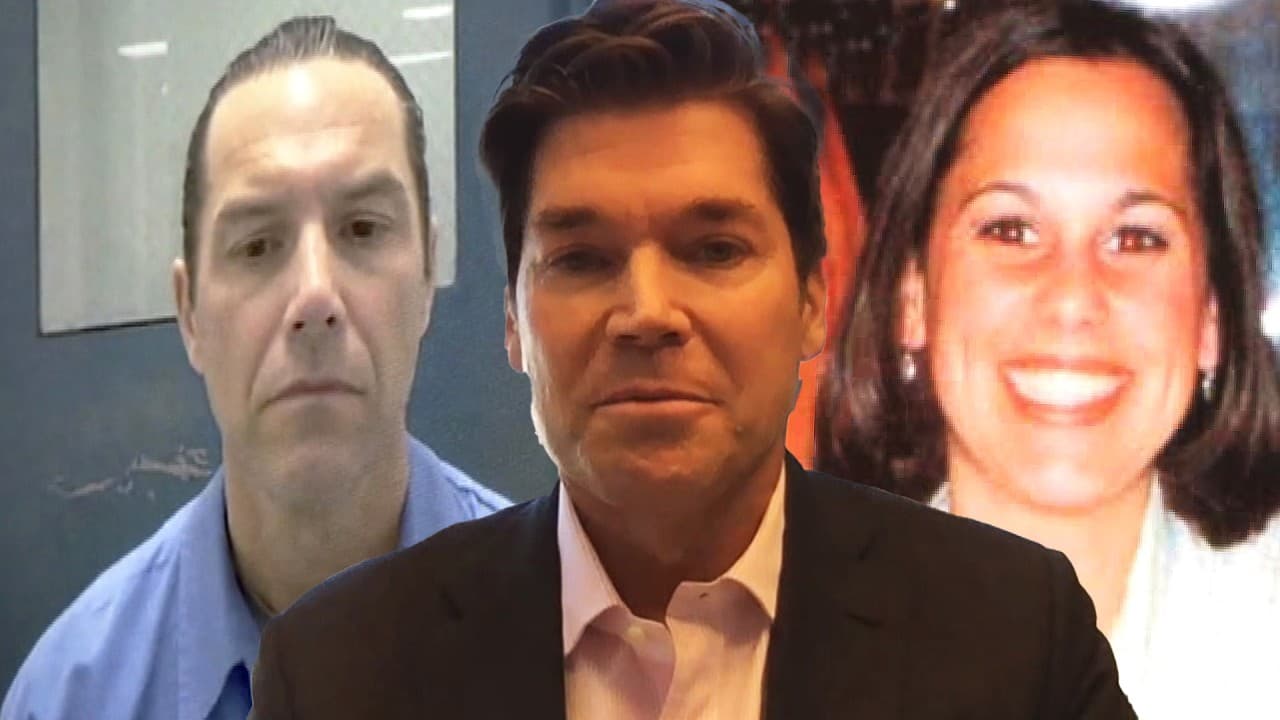
The Scott Peterson case never really ended. It paused. The verdict came down in 2004, the sentence followed, and the media apparatus that had made a circus of the Modesto, California disappearance of Laci Peterson packed up its satellite trucks and moved on to the next consuming story. For twenty-plus years, Peterson has sat on death row. Later converted to life without parole after California's capital punishment landscape shifted. A figure the public had already tried, convicted, and filed away.
This week, that filing cabinet got yanked open. In an exclusive sit-down with Entertainment Tonight, attorney and former ABC News legal analyst Chris Pixley laid out the findings of a six-month investigation conducted alongside the Los Angeles Innocence Project. Findings that, in Pixley's framing, make the case 'ripe for retrial.' The phrase is precise, not hyperbolic. It is a legal threshold, not a talk-show flourish, and the evidence Pixley describes is specific enough to warrant taking seriously on those terms.
What the investigation surfaces is not a new confession, not a jailhouse witness, not the kind of tabloid revelation that periodically resurfaces a cold case for a news cycle before dissolving. It is, instead, a methodical challenge to the scientific testimony that anchored the prosecution's theory. Testimony that, the Innocence Project argues, was never as solid as the jury was led to believe. That distinction matters. It is the difference between re-litigating Scott Peterson's character and re-examining the reliability of the verdict itself.
What the Los Angeles Innocence Project actually found
The Los Angeles Innocence Project spent roughly six months reviewing all physical evidence in the Peterson case, retaining independent experts. Including a tenured Harvard radiologist. And visiting the locations central to the prosecution's theory.
The scope of the investigation, as Pixley told Entertainment Tonight, is not casual. Six months of work, independent experts drawn from across the country, physical site visits to the San Francisco Bay and the Modesto locations central to the prosecution's reconstruction. The Innocence Project. Which has chapters at law schools nationwide and a track record of DNA exonerations stretching back decades. Is not an organization that attaches its name to long-shot celebrity causes without institutional confidence in what it has found.
The argument they are making is constitutional in nature, not merely evidentiary. The Sixth and Fourteenth Amendments guarantee a defendant the right to a fair trial predicated on reliable information. If the jury that convicted Peterson received expert testimony later shown to be fabricated or speculative. Rather than grounded in genuine expertise. The verdict itself becomes constitutionally suspect. This is a higher bar to clear than simply arguing the jury got it wrong. It is arguing the process that produced the verdict was broken.
The Innocence Project's next move, per Pixley, is to take its findings to the California Supreme Court. They have 120 days to do so. The court is not obligated to act, but the framing of the petition. Built on new science, not simply new argument. Gives it a distinct legal posture from the appeals Peterson's legal team has filed over the years.
The tidal-flow testimony: when 'expert' means 'guess'
A prosecution expert testified at trial that Laci Peterson's body would have been deposited in San Francisco Bay at a location consistent with where Scott Peterson said he was fishing. But the Innocence Project's review found that testimony was based on conjecture rather than genuine tidal-flow expertise.
One of the two pillars of new evidence Pixley outlines concerns the expert who testified, on behalf of the prosecution, about tidal currents in San Francisco Bay. The witness was presented to the jury as a qualified professional with specific knowledge of how the bay moves. And the testimony placed Laci Peterson's body at a disposal point consistent with where Scott Peterson claimed to have been fishing on Christmas Eve. The circular neatness of that alignment was damning, and the jury heard it framed as science.
What the Innocence Project's review reportedly found is that the expert's conclusions were not actually derived from expertise. They were, in Pixley's precise phrasing, 'really a guess'. An inference dressed in the credibility of a professional title. Expert testimony operates in courtrooms on a simple premise: the jury cannot be expected to understand complex technical domains, so a qualified specialist narrows the gap. When that specialist is speculating rather than applying a recognized methodology, the premise collapses. But the credibility does not. The jury has no way of knowing the difference.
This category of false expert testimony has driven some of the most significant wrongful conviction reversals in American legal history. Arson forensics, bite-mark analysis, hair-fiber comparison. Field after field that once delivered confident testimony in courtrooms has subsequently been re-examined and found wanting by modern scientific standards. The tidal-flow claim in the Peterson case sits in this tradition: testimony that sounded authoritative in 2004 and that now, under independent scrutiny, may not survive the methodological test.
"The case against Peterson was never purely about evidence. It was about the story the media told first. And the jury that absorbed it."
The Harvard radiologist and what fetal age evidence changes
A tenured Harvard radiologist retained by the Innocence Project concluded that Conner Peterson most likely died between December 28, 2002, and early January 2003. Four or more days after Laci Peterson went missing on Christmas Eve.
The second and more explosive piece of new evidence concerns the gestational age of Conner Peterson, the unborn child Laci was carrying. At trial in 2004, this question was addressed but not resolved with the precision that modern imaging science now allows. The technology simply was not available. What the Innocence Project has done is bring a Harvard radiologist. Tenured, credentialed at the level that makes for compelling appellate filings. To bear on the same question using analytic tools that did not exist when Peterson was convicted.
The radiologist's conclusion, as Pixley presents it, is that Conner Peterson in all likelihood died between December 28, 2002, and early January 2003. Laci disappeared on December 24. If a qualified expert can establish, to a reasonable scientific probability, that Conner survived for four or more days after his mother was reported missing, then Laci was alive during those days. And the prosecution's timeline, which placed her death at Scott Peterson's hands on or around Christmas Eve, cannot be correct.
This is not an argument at the margins. It is not quibbling with fiber evidence or challenging a witness's memory. If the gestational-age finding holds up under peer scrutiny, it is a structural dismantling of the prosecution's chronology. It does not merely introduce doubt; it introduces an alternative timeline that makes the state's theory of the crime factually impossible.
The Innocence Project's decision to lead with this finding is strategically intelligent. Juries and courts alike are more comfortable with the concrete than the inferential. A radiological measurement of bone development is harder to dismiss than an argument about investigative tunnel vision. It is science, and it is new, and courts have shown willingness to treat newly available forensic technology as grounds for revisiting convictions. Particularly when the original testimony was presented to the jury as definitive.
The eyewitness sightings the Modesto police did not pursue
More than a dozen witnesses contacted Modesto police in the days following Laci Peterson's disappearance to report seeing a pregnant woman with short dark hair struggling to control a golden retriever. Sightings consistent with Laci Peterson being alive after Christmas Eve.
Individual eyewitness accounts are notoriously unreliable. Courts and forensic psychologists have known this for decades, and the innocence movement has used that knowledge to challenge identifications made under stress, poor lighting, or cross-racial conditions. But the Peterson case presents something different: not a single shaky identification, but a cluster of more than a dozen independent callers to both the tip line and the Modesto Police Department, each describing a pregnant woman with short dark hair who was having difficulty controlling a golden retriever. The Petersons owned a golden retriever named McKenzie.
What gives this cluster weight is the convergence of specific, unsolicited detail across unconnected people. No single caller knew what others had reported. The commonalities. The pregnancy, the hair, the dog behavior. Emerged organically. That pattern, as Pixley argues, is precisely what makes a body of eyewitness testimony reliable rather than contaminated. And yet, Modesto investigators dismissed these accounts wholesale once Scott Peterson became their primary focus.
The failure to follow up is not, on its own, prosecutorial misconduct. Investigators make triage decisions constantly in missing-person cases. But the pattern of non-pursuit. When laid alongside the tidal-flow testimony and the gestational-age question. Begins to describe not random error but a specific kind of tunnel vision: a theory of the case adopted early, and evidence that complicated it quietly set aside.
The Medina burglary: destroyed evidence and a timeline problem
A burglary occurred at the home directly across the street from the Petersons' on or around the time Laci disappeared. Modesto investigators working that burglary subsequently met with investigators on the Laci Peterson case and, several months later, destroyed all evidence related to the Medina burglary.
The Medina burglary is the piece of the Peterson investigation that most readily suggests coordination rather than incompetence. A home directly across the street from the Petersons' was burglarized around the time of Laci's disappearance. The burglary's date matters because it could place unknown individuals in the immediate vicinity of the Peterson home on Christmas Eve. Individuals who, if connected to Laci's disappearance, would complicate or destroy the prosecution's case against Scott.
What the Innocence Project found, and what Pixley laid out in his ET sit-down, is that investigators handling the Medina burglary and investigators handling the Laci Peterson case held a joint meeting months after the disappearance. Sometime after that meeting, all evidence related to the Medina burglary was destroyed. Pixley's framing is direct: the date of the burglary was likely altered or suppressed because it 'would have undercut their theory on Scott.'
Evidence destruction in an active investigation is not an oversight. It is a decision. That decision, if the Innocence Project can establish it before the California Supreme Court, elevates the Peterson case from a story about bad science to a story about active misconduct. And the legal remedies available in the latter scenario are considerably more solid. It also shifts the moral weight of the narrative in ways that will matter enormously to public opinion, which in a case this culturally embedded has always run parallel to the legal process, influencing it even when courts prefer to pretend otherwise.
Why Peterson's own behavior made the jury's job easier
Scott Peterson's affair with Amber Frey, his altered appearance at the time of his arrest, and the cash and camping gear found in his vehicle when he was taken into custody created a portrait of consciousness of guilt that overwhelmed the absence of physical forensic evidence.
There is an uncomfortable truth at the center of the Innocence Project's argument, and Pixley. A former defense attorney who once challenged Nancy Grace live on Larry King. Does not flinch from it. Scott Peterson, he says plainly, 'absolutely brought about his own conviction.' Not because he killed his wife, but because he was cheating on her. The affair with Amber Frey gave the jury a motive they could feel. The flight behavior. The cash, the altered appearance, his brother's ID. Gave them a story. The absence of physical evidence in the home, the truck, and the boat, which should have been exculpatory, was swallowed by the larger narrative.
This is how bias operates in a courtroom. Not always through prejudice about race or class, but through story. Jurors are human, and humans are pattern-matchers. When the prosecution offers a coherent narrative and the defense offers primarily a negative case (no blood, no fiber, no weapon), the coherent narrative wins even when the negative case is legally the stronger argument. The burden of proof is supposed to prevent this. It often does not.
Pixley's read is that had Peterson been a faithful husband, the same physical evidence. Or the same lack of it. Would have produced a very different verdict. The media would have been more skeptical, the public less primed, and the jury better positioned to weigh absence-of-evidence arguments on their merits. This is not a defense of Peterson's character. It is a precise diagnosis of how character evidence, even when legally peripheral, can determine the outcome of a criminal trial. For anyone who tracks the mechanics of high-profile criminal cases. And there are parallels scattered across our latest reporting. It is a pattern worth understanding.
What the media's role in 2002–2004 tells us about high-profile trials
The nightly cable-news coverage of Laci Peterson's disappearance. Particularly the adversarial format that pitted legal analysts against each other on programs like Larry King Live. Created a public verdict before the criminal trial began.
Pixley's framing of his own history with the case is worth sitting with. He was, by his account, one of a small number of analysts willing to argue for restraint during the initial media frenzy. A position that put him in nightly conflict with Nancy Grace on Larry King's program. That context is not self-promotion. It is a credential: he is a person who looked at the 2002–2004 coverage and found it wanting even when holding a contrarian position was professionally costly.
What the Peterson case represented, in its media dimension, was the full maturation of a format that Court TV had pioneered in the O.J. Simpson era: the missing-or-murdered white woman as long-running primetime serialization. The coverage was not neutral. It adopted a theory, tracked the theory, and rewarded certainty over caution. By the time twelve jurors were seated in Redwood City, the cultural verdict was already in, and the legal verdict was always going to be measured against it. Either confirming what the public believed or requiring an explanation of why the public had been wrong.
The media machinery around high-profile cases has not gotten subtler since 2004. It has gotten faster. The dynamics Pixley describes. A single suspect, early fixation, alternative leads deprioritized. Are recognizable in virtually every major true-crime story of the past two decades. Understanding how that machinery operated in the Peterson case is not just retrospective justice work. It is a guide to how these stories get built, and why the building of them has consequences that outlast the verdict. The business of celebrity justice, like the business of celebrity itself, is ultimately about narrative control. And in the Peterson case, the narrative ran away from the facts very early.
What a California Supreme Court petition could realistically achieve
The Innocence Project has 120 days to file a petition with the California Supreme Court presenting its new scientific findings. The court could order an evidentiary hearing, compel the review of new expert testimony, or. In an unlikely but not impossible outcome. Order a retrial.
The California Supreme Court is not an appeals court in the conventional sense. It does not simply re-weigh the evidence that the trial jury heard. What it evaluates, in a case like this, is whether the constitutional guarantee of a fair trial was honored. And whether new scientific evidence, unavailable at the time of conviction, is material enough to alter the verdict if a new jury were to hear it. The Innocence Project's petition will need to clear both bars.
The tidal-flow testimony and the gestational-age findings are well-suited to that test. Both involve scientific domains that have changed materially since 2004. Both are capable of being peer-reviewed and quantified. And both, if credited by the court, speak directly to the reliability of the conviction rather than merely to sympathy for the defendant. Courts are institutionally reluctant to retry cases that produced confident guilty verdicts. New science. Especially new science vetted by credentialed experts at institutions like Harvard. Is one of the few things capable of overcoming that reluctance.
A retrial is not an acquittal, and Pixley does not oversell the outcome. But a retrial, in the current evidentiary landscape, would be fought on very different terrain than the 2004 proceeding. No Amber Frey revelation, no fresh media frenzy, no jury pool that has spent eighteen months absorbing a cultural verdict on cable news. Just the evidence. And according to the Innocence Project, the evidence, stripped of the testimony they challenge, is considerably thinner than the public was ever led to believe.
Whether that is enough to free Scott Peterson is genuinely open. What it is enough for, at minimum, is a serious legal reckoning. One that forces the California courts to look at a conviction built in part on science that did not deserve the authority it was given. For anyone who cares about the machinery of American criminal justice, and not just its outcomes, that reckoning is worth watching.
Who profits from the Peterson story's second life. And who is accountable
True-crime media, legal advocacy organizations, and the broader innocence-movement ecosystem all benefit from the renewed attention to the Peterson case.
It would be naive to ignore the media economy around this story. Entertainment Tonight's exclusive sit-down with Pixley is not a public service announcement; it is a premium piece of content for an outlet that lives in the high-traffic space where celebrity and crime intersect. True crime has been one of the most durable content categories of the streaming and podcast era, and the Peterson case. With its telegenic victim, its morally compromised defendant, its cable-news origin story. Sits near the top of the genre's canon. The Innocence Project's findings will generate a documentary, probably a podcast, possibly a scripted series. That is not a criticism. It is the economic reality of how serious investigative work gets funded and distributed in the current media environment.
The Los Angeles Innocence Project, for its part, is wagering institutional credibility on these findings. Pixley makes the point explicitly: whatever one believes about Scott Peterson's guilt, the Innocence Project does not take cases without confidence in the work. Organizations of this kind. And their counterparts tracked in our broader coverage of professional institutions. Live and die by the quality of their exonerations. A high-profile failure here would be costly. Their willingness to proceed is itself a data point.
The harder accountability question is not about who profits but about who answers. If the tidal-flow testimony was speculation dressed as expertise, the expert who offered it answers first. But the prosecutors who retained and presented that expert, and the investigators who built a case around a theory while ignoring alternative leads, are not insulated. And if the evidence destruction at Modesto PD was intentional, the accountability question stops being professional and starts being criminal. That is the territory the California Supreme Court would be entering if it orders an evidentiary hearing, and it is why the petition, when it is filed, will be more than a procedural document. It will be an accusation.