The Lindsay Clancy Holdout Juror and the Race Narrative Nobody Wanted to Name
A Black man declined to acquit a white defendant. The internet decided that meant something. TMZ's Mark Geragos and Harvey Levin broke down why that reaction is the real story, and what it reveals about how American media frames criminal justice.
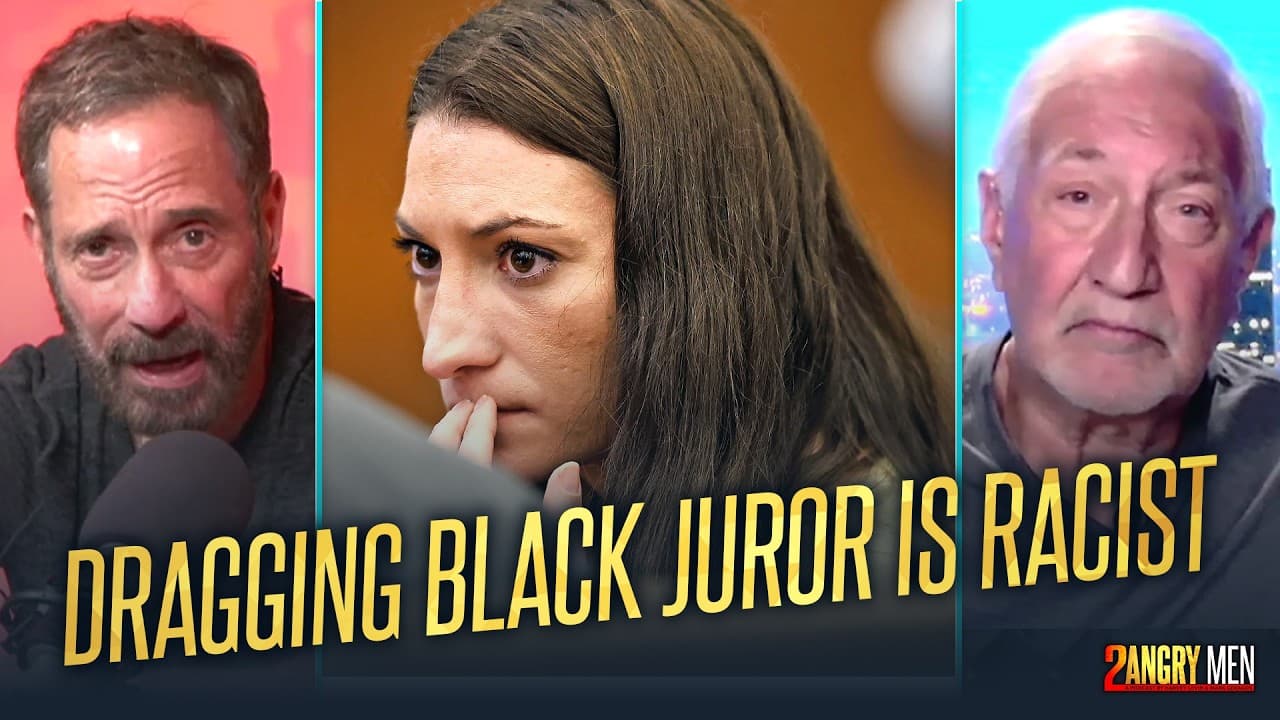
The holdout juror in the Lindsay Clancy mistrial was a Black man. That fact became public on a Friday morning, surfaced during a Gayle King interview on CBS This Morning. By the weekend, it was everywhere, not as courtroom news, but as a cultural accelerant. Memes spread. Social media accounts assigned motive. People who had spent weeks rallying outside the Plymouth County courthouse began reading race into a single juror's conscience.
Harvey Levin raised it plainly on TMZ this week: some of the online reaction, he said, amounted to racist reasoning. The logic being applied, that a Black juror's refusal to acquit a white defendant must carry racial animus, inverts the very framework that civil rights advocates have spent decades building around jury selection. It assumes race explains a vote. It punishes a man for the pigment of his skin rather than the content of his deliberation.
What happened in the days after the mistrial is not a footnote. It is the story. The Lindsay Clancy case has never been just about postpartum psychosis or pharmaceutical liability. It has always carried a subtext about which women get sympathy, which defendants get crowds outside courthouses, and which victims command national grief. The holdout juror's identity forced that subtext into the open. The way media figures and the public handled the moment tells you more about the machinery of American outrage than anything argued inside that courtroom.
How Gayle King's Reaction Became the Story
During a CBS This Morning interview, Gayle King learned on air that the Lindsay Clancy holdout juror was a Black man and paused visibly, saying she needed a moment to sit with that information. That hesitation, not any explicit claim, ignited a weekend of racial speculation online.
The sequence matters. A juror from the trial appeared on CBS This Morning. Gayle King, conducting the interview, asked about the jury's demographic makeup. When told the sole holdout was the one person of color, a Black man, King said she needed a second to process it. She did not elaborate. She did not accuse. She paused.
That pause was enough. Levin's read on the moment was charitable but precise: King was likely processing whether the information carried legal or social implications, not assigning motive to the juror himself. He floated a second possibility too, that King, who has publicly sympathized with Clancy's case, may have experienced a personal flash of disappointment when she learned the identity of the holdout. Neither reading is damning. Both are human.
What followed online was neither charitable nor precise. The juror's race became the explanation for his vote. The argument, stripped to its core, went like this: a Black juror, statistically more likely to distrust the criminal justice system, voted against a white woman. Therefore race drove the outcome. The flaw in that chain is obvious. It assumes the juror was voting against Clancy. He wasn't. He was declining to find her not guilty by reason of insanity. That is a different legal and moral position, and one he apparently reached through active deliberation, not disengagement.
What the Juror Actually Did in That Deliberation Room
The holdout juror in the Clancy trial watched the defendant's video interview during deliberations, shifted his position away from first-degree murder toward a lesser charge, and physically demonstrated his reasoning using an exercise band, none of which supports the claim that he refused to intentional.
Before the racial narrative took hold, there was actual evidence of how this juror behaved. A fellow juror described him watching a video of Lindsay Clancy's own interview. After seeing it, he moved. He had been prepared to find her guilty of murder in the first degree. He was not, by the end, in that position. He was willing to consider something less.
What he could not reach was not guilty by reason of insanity. That is a high legal bar, deliberately so. It requires a finding that a defendant did not understand the nature of her acts or did not understand that they were wrong. The juror, according to the accounts filtering out, could not get there, partly because he struggled with the question of how someone could carry out a methodical act while in a genuine psychotic state.
The exercise band episode has been misread almost universally. A juror who takes a physical prop and tries to reconstruct an act is not mocking a victim. He is doing exactly what jury instructions ask: finding facts. Geragos made this point on TMZ and it deserves to land. If the prosecution's theory was that the killings were methodical and premeditated, then a juror demonstrating the mechanics of that method is engaging with the prosecution's own argument. He is deliberating. The foreman's version of events, that the holdout was ignoring the reasonable doubt standard, looks harder to sustain once you add these details.
That tension matters legally, and we will return to it. But it matters culturally first. The portrait of a man ignoring his oath and digging in out of stubbornness does not fit the portrait of a man who watched a video, changed his position on the degree of the charge, and used physical demonstration to work through his reasoning. Those are two different people. The internet chose the first portrait.
"Using a structural inequity to delegitimize one man's conscience is not critique, it is misdirection wearing critique's clothes."
The 'Pretty White Woman' Problem in American Crime Coverage
American cable news has long allocated disproportionate resources to cases involving white female victims or defendants, a pattern so established it has its own informal name.
Levin said something on TMZ that is worth holding still for a moment. He recalled being on CNN in the 1990s and being put on speed dial whenever a 'pretty white woman' went missing. He named Chandra Levy. He named JonBenét Ramsey. He named Scott Peterson's wife, Laci. He was not editorializing. He was describing institutional behavior that shaped the information environment for an entire generation of viewers.
The Clancy case is a direct heir to that tradition. A young white mother, a supportive husband, no history of violence, a pharmaceutical cocktail that her defense team argued scrambled her neurochemistry. The story is genuinely sympathetic. It also received the kind of sustained national coverage, the crowds outside the courthouse, the influencer tributes, the round-the-clock legal commentary, that cases involving Black defendants or Black victims almost never receive at equivalent scale.
The question Levin and his co-host posed was a fair one: would a Black woman who killed her three Black children have generated this level of public support? The honest answer, as both acknowledged, is almost certainly not. That is a real inequity. It is a structural problem baked into how newsrooms assign resources, how social media algorithms amplify sympathy, and how prosecutors decide which cases to push hardest.
But here is where the argument went sideways. That structural inequity, real, documented, worth confronting, does not transfer onto the holdout juror as personal culpability. He did not create the coverage disparity. He did not set the editorial agenda at CBS or CNN. He sat in a room for weeks, heard the evidence, and concluded he could not find Lindsay Clancy not guilty by reason of insanity. Blaming him for the coverage ecosystem that surrounded the case is precisely the kind of misdirected outrage that makes systemic critique less effective, not more.
Why the Racial Framing Backfires on Its Own Logic
The argument that a Black juror's holdout vote must be racially motivated contradicts the core principle that jurors should be evaluated on their reasoning, not their identity, the same principle civil rights advocates invoke when prosecutors strike Black jurors from panels involving Black defendants.
Levin invoked a pointed historical reference. He recalled a case, he named Wells, where the prosecution struck three people of color from a jury, generating widespread protest. The principle animating those protests was clear: you cannot use race as a proxy for how a juror will vote. The Batson challenge, built on exactly that principle, exists to prevent prosecutors from engineering juries by race.
Now apply that logic consistently. If it is wrong to assume a Black juror will vote to acquit a Black defendant, it is equally wrong to assume a Black juror will vote to convict, or refuse to acquit, a white defendant for racial reasons. The principle does not have a political direction. It runs both ways, or it runs nowhere.
The people assigning racial motive to this holdout are doing the thing they claim to oppose. They are saying: we know why he voted the way he did, and it is because of his race. That is the definition of the reasoning civil rights law was built to dismantle. The irony is not subtle. It is just uncomfortable, which may be why so few of the people pushing the narrative have stopped to name it directly.
For more context on what the mistrial itself reveals about the system's design, our earlier analysis at The Lindsay Clancy Mistrial Was Not an Accident, It Was a System Working Exactly as Designed walks through the structural mechanics before the racial dimension entered the public conversation.
The Manifest Necessity Question and What the Juror Interviews Changed
Defense attorney Kevin Reddington had been building a strong appellate argument that the judge declared a mistrial without manifest necessity, meaning jeopardy could attach and bar a retrial.
The legal architecture here is worth understanding. When a judge declares a mistrial over a defense objection, the defense can argue at the appellate level that there was no manifest necessity for the mistrial. If the court agrees, jeopardy attaches. The prosecution cannot retry the case. It is a rare outcome, but not a fantasy.
Geragos said he had genuinely believed that argument had legs, until the juror interviews emerged. The foreman's account had painted the holdout as someone actively defying the reasonable doubt standard, ignoring instructions, and refusing to engage. That portrait would support manifest necessity. A juror who simply won't intentional is a juror the judge might properly be excused for replacing, and the failure to do so could constitute the error the defense needed.
But the holdout's own behavior, as described by the fellow juror on CBS, told a different story. He watched evidence. He changed his position on the degree of the charge. He used a physical demonstration to make a point. These are the acts of a deliberating juror. An appellate court looking at those facts will find it much harder to conclude the judge had no other option. The argument still exists. It is now harder to win.
Separately, Reddington also filed a Rule 25 motion, a Massachusetts procedural vehicle that gives the judge inherent authority to essentially act as a 13th juror and set aside a verdict in the interests of justice. Geragos noted it had happened twice in 43 years of practice. The odds are long. But the filing serves a second function: it applies pressure on the prosecution to consider a negotiated resolution, which may be the real play.
Whether a Retrial Happens or a Deal Gets Done
Geragos predicted on TMZ that the Lindsay Clancy case is more likely to resolve through a negotiated plea than a full retrial, but any deal faces a hard constraint: Reddington has stated publicly that he will not accept any agreement that puts his client behind bars.
Plea negotiations in high-profile cases operate differently from what plays out in public. The motions, the appeals, the press conferences, they create use. Reddington is pressing on every legal lever available not only because he has a duty to his client, but because each motion increases the cost and risk for the prosecution of going to trial again.
The prosecution has its own calculus. A retrial means another months-long proceeding, another round of expert witnesses, another jury. The first jury ended 11-to-1 in favor of acquittal. That is not a comfortable starting point for a district attorney who has to weigh the probability of conviction against the political and financial cost of the process.
Reddington has been explicit: no prison. A mental health facility, under agreed terms, is a different matter. Geragos sketched out one structure on TMZ, a commitment to a psychiatric facility for a defined minimum period, with terms that address prosecutorial concern about future legal challenges to the agreement's validity. Clancy is currently held in a psychiatric facility. The distance between that status and a formal resolution may be smaller than the public posturing suggests.
The judge, too, has tools. A judge can set an evidentiary hearing and suggest, before that hearing, that the parties meet and try to resolve the matter. That is not unusual. It is, in fact, how many high-profile cases end, not with a verdict, but with a quiet conference in a courthouse corridor.
What the Public Reaction Reveals About the Tribal Nature of True Crime
The post-mistrial Lindsay Clancy coverage split almost immediately into ideological camps, those who see the case as evidence of a broken mental health system and those who see any sympathy for Clancy as soft on child murder. The holdout juror's race became a proxy battle in a war neither side is fighting honestly.
Ted Cruz called for the death penalty. Reddington's PR operation, or someone claiming to represent it, reportedly challenged Cruz to a debate. These are not legal events. They are performances for an audience that has already chosen sides and wants confirmation of its position.
This is the environment in which the holdout juror's race was weaponized. On one side, people who believe Clancy should have been acquitted found in the juror's identity a way to delegitimize his vote without engaging his reasoning. On the other side, people who believe she committed premeditated murder found in the racial narrative a convenient way to paint the 11 as naive and the one as clear-eyed.
Neither side is grappling with what actually happened in that room. Eleven jurors, most of them parents, heard weeks of testimony about postpartum depression, pharmaceutical polypharmacy, and the clinical literature on altruistic filicide. They found the concept credible. One juror could not cross the line to not guilty by reason of insanity. That is not a scandal. That is a jury doing what juries do: disagreeing.
The mental health dimension of the case, which Geragos called a spotlight on the failings of the system, has been almost entirely displaced by the tribal argument. The question of how a young mother ended up on a dangerous cocktail of medications with inadequate monitoring has not generated anything close to the heat generated by one man's race. That displacement is itself a kind of verdict on what American media finds more useful: a systemic problem to fix, or a scapegoat to assign.
The Media Machinery That Made This Case What It Is
The Lindsay Clancy case became a national phenomenon in part because it conformed to the established template of sympathetic white female defendants that cable news has historically over-covered.
Levin's CNN anecdote was not nostalgia. It was a structural description of how editorial attention gets allocated. Chandra Levy, JonBenét Ramsey, Laci Peterson, these names became household words because newsrooms decided, implicitly and sometimes explicitly, that their cases had the visual and demographic elements audiences respond to. That decision builds up over time. Audiences learn what kinds of victims and defendants will receive sustained coverage. Advocates learn which cases to bring to national attention. The system reinforces itself.
Clancy's case had every element. A photogenic young mother. A supportive, visible husband. A defense built on sympathy rather than alibi. A pharmaceutical subtext that implicates systems most viewers have some familiarity with. The crowds outside the courthouse were not spontaneous. They were the product of a media environment that had already decided this case mattered.
None of that makes the underlying story less real or less important. Postpartum psychosis is real. The failures of mental health monitoring are real. The question of how juries evaluate sanity defenses is worth sustained public attention. But the coverage was not primarily driven by those questions. It was driven by the same machinery Levin described from the 1990s, updated for the algorithmic age.
Recognizing that machinery is healthy. Using it to delegitimize a single juror's conscience is not. The holdout juror sat through the same weeks of testimony as everyone else. He processed it differently. That is his right, and it is the foundation of the entire system. If you believe in jury deliberation when the outcome pleases you, you have to believe in it when it does not. That is not a complicated principle. It just requires consistency, which, in the current media environment, is the scarcest commodity of all.
For a broader look at how celebrity-adjacent legal spectacles get packaged and sold, the latest reporting on Neon Hollywood tracks the business of public attention as it moves across industries, from courtrooms to red carpets to the film and business worlds where image and narrative collide with similar force.