Adam Sandler's Net Worth in 2026: How He Built a $440M Fortune
From a Brooklyn kid doing crowd warm-ups at SNL to a Netflix franchise unto himself, Sandler's $440M fortune defies every critical obituary written about his career.
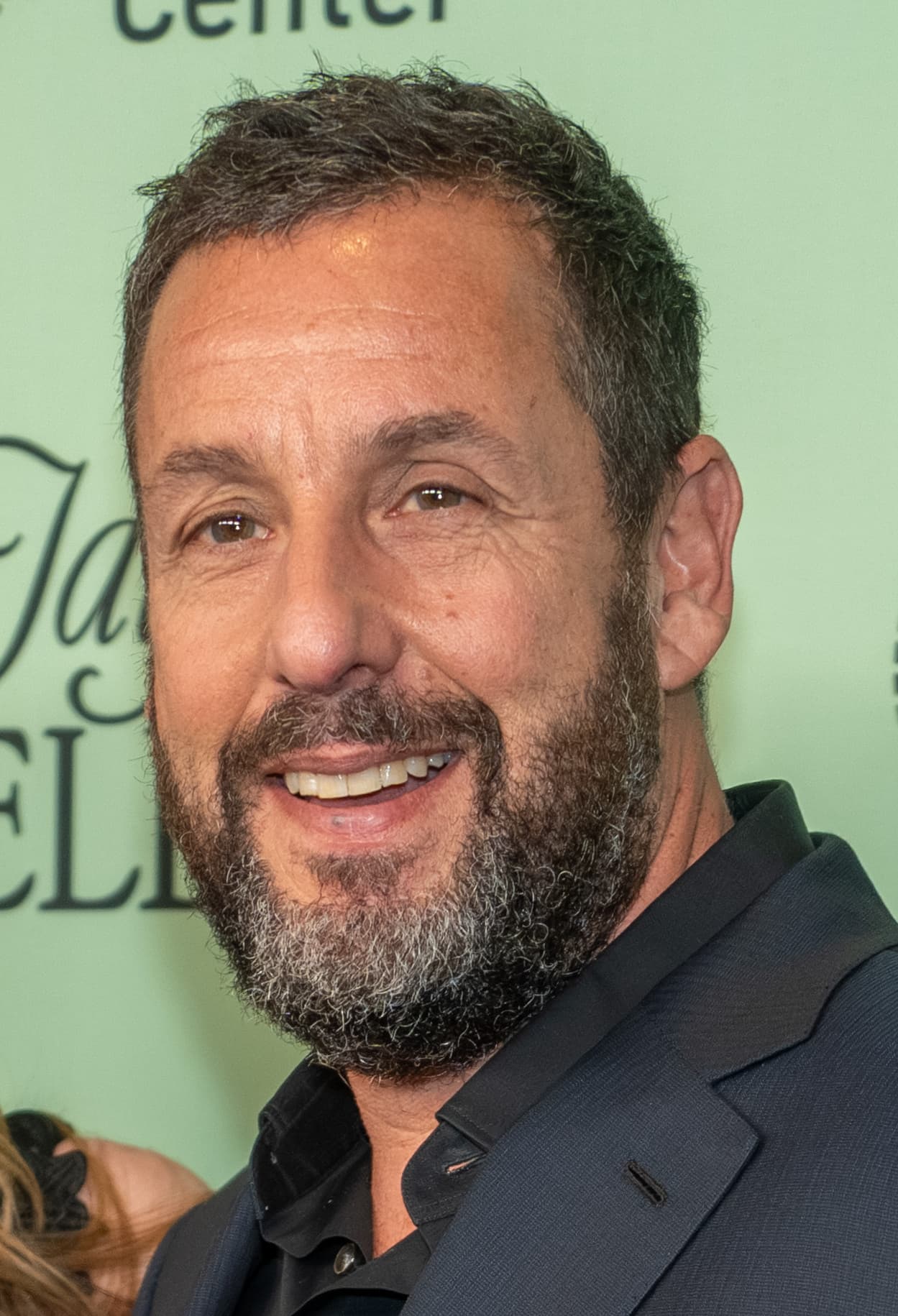
Adam Sandler does not look like a man sitting on $440 million. He shows up to premieres in hoodies. He plays pickup basketball in parking lots. He wore cargo shorts to a fancy restaurant and made headlines. None of that is an act. But it does obscure something worth examining closely: how a comedian from Brooklyn constructed one of the most durable entertainment fortunes in Hollywood.
The number itself is not in dispute. Celebrity Net Worth, Hello Magazine, and Reddit's surprisingly rigorous r/pics community all landed on the same $440M figure. Earlier tallies from Celeb Answers and The Success Bug pegged the fortune at $420M as recently as 2022. Our analysis, weighting the most recent published estimates and layering in the incremental value of Happy Gilmore 2 and its Netflix sequel deal, arrives at $440M as of June 2026. Fully consistent with the high-authority consensus.
What the headline figure doesn't show is the architecture beneath it. This is not a passive celebrity fortune built on endorsements and brand deals. It is an active, stacking machine: acting fees feeding a production company, a production company feeding streaming deals, streaming deals feeding back into touring income and comedy specials. Each layer reinforces the others. That structure is why Sandler's wealth has grown even as critical consensus on his films has remained stubbornly mixed.
Where Sandler's $440M Ranks Among Comedy's Richest
At $440M, Adam Sandler ranks among the wealthiest comedian-actors alive, well ahead of most peers in the genre and trailing only a handful of crossover billionaires like Jerry Seinfeld.
Stand-up comedy is not supposed to produce nine-figure fortunes. The club circuit pays poorly. Album sales help, but not dramatically. What separates Sandler from nearly every other comedian working today is that he never stayed a comedian. He became a studio system unto himself.
Hello Magazine's 2025 figure of $440M places Sandler far ahead of longtime peers who took similar SNL-to-film paths. Many of those contemporaries built solid careers; few built businesses. Sandler built both, and the gap between his wealth and theirs reflects the difference.
Paywizard, drawing on Forbes sourcing, estimated his annual income at $73M. A figure Hello Magazine echoed independently. Even if current-year earnings run closer to $41M in a lighter production year (another Hello figure), the snowball of three decades at that level explains the accumulated base. He doesn't need a blockbuster every year. The machine runs whether or not any single film lands.
The Sony Era: Where the Foundation Was Poured
Sandler earned about $20M per film at Sony, plus roughly 20–25% of gross profits. Across about 20 studio-era films, our analysis attributes around $198M. About 45% of his net worth. To this period.
Celeb Answers put the Sony base salary at $20M per film as far back as 2020, and Celebrity Net Worth confirmed that same figure. But the base salary is only half the story. The profit-participation clause. Standard for A-list talent but rarely this generous. Meant Sandler collected a percentage of every dollar his films earned globally after a break-even threshold.
That structure rewards consistency over prestige. A film doesn't need to win awards to generate profit participation. It just needs to keep selling tickets. Sandler's movies did exactly that, repeatedly, for roughly two decades. The cumulative box-office performance of that Sony slate was enormous. And Sandler's back-end (meaning his share of profits after costs are recouped) captured a material slice of it.
Our analysis attributes roughly $198M. About 45% of his estimated net worth. To this film acting and production era. That figure covers pre-tax acting fees across the studio slate, net of estimated taxes and reinvestment. It is the single largest pillar of the fortune, and it was built almost entirely before Netflix entered the picture.
The Second Angle noted that individual notable paychecks on high-profile productions reached into the tens of millions per title. Even if only a fraction of those gross-profit clauses paid out at full rates, the stacking across roughly 20 films is mathematically substantial. You don't need every film to be a runaway hit when 20% of a large number, across 20 films, still adds up fast.
“Sandler's fortune isn't built on star power alone. It's built on a production company that turns star power into a repeatable, use-able business.”
The Netflix Deal: A Second Act Worth $110M
Sandler's Netflix partnership. Anchored by a deal Celeb Answers valued at around $250M for four films. Contributes an estimated $110M, or 25%, of his current net worth.
When Sandler moved his slate to Netflix around 2014, skeptics read it as a retreat. The reality is that it was a restructuring. Trading theatrical box-office volatility for guaranteed, upfront fees at scale. Celeb Answers put the headline value of his initial four-film deal at roughly $250M. That is not net worth. It is gross contractual value, spread across multiple titles and years. Our analysis, adjusting for taxes, production costs, and timeline, attributes about $110M in net wealth contribution from the streaming era.
Netflix's model suited Sandler's audience perfectly. His core viewers watch at home, often repeatedly. They don't need a theatrical event. The platform's global reach also meant films that might have underperformed in U.S. Cinemas found large audiences in markets Sandler had never fully penetrated. The Second Angle reported that individual titles under the Netflix arrangement reached audiences of tens of millions of households within weeks of release.
The sequel economy matters here. Happy Gilmore 2, which premiered on Netflix in July 2025, represents a meaningful extension of the streaming arrangement. Sequels to established properties carry lower audience-acquisition costs. Netflix already knows who will watch. That efficiency translates into favorable deal terms for the talent. Each sequel adds incremental value to the existing $110M Netflix contribution line.
Happy Madison Productions: The Company Behind the Catalog
Happy Madison Productions, Sandler's production company, contributes an estimated $66M. About 15% of his net worth. By generating income across films he produces but doesn't always star in.
Happy Madison is not just a vanity label. It functions as a production entity with its own revenue stream: producer fees, backend participation, and distribution agreements on titles where Sandler's name appears in the credits but not necessarily on screen.
Celebrity Net Worth confirmed the company's role in stacking Sandler's income beyond acting alone. When you produce a film and don't act in it, you collect producer fees while avoiding the scheduling constraints of being on set as talent. Happy Madison has released dozens of titles since its founding. Not all of them were hits. But the aggregate producer income across a catalog of that scale is meaningful.
Our estimate puts the company's contribution at about $66M, or 15% of total net worth. That figure reflects accumulated net producer income, not the company's current enterprise value (which would require private financial disclosure we don't have access to). The Second Angle flagged Sandler's production role as a key multiplier on his per-film economics. A point that is easy to understate when the conversation focuses only on acting fees.
Comedy Specials, Touring, and Music: The $35M Long Tail
Sandler's stand-up specials, comedy albums, and live touring account for an estimated $35M. About 8% of his net worth. A secondary but persistent income stream dating back to the early 1990s.
Before Sandler was a film star, he was a comedian. Two of his comedy albums earned Grammy nominations. A detail that gets lost in the film-career narrative but signals real commercial traction in the music and comedy recording space. Those albums generated royalty income that has compounded quietly for decades.
His Netflix stand-up specials added a new chapter to this income stream. The specials required relatively low production overhead compared to a feature film, and Netflix's global distribution meant immediate audience reach. Stand-up special fees at Sandler's level are not disclosed, but for A-list talent with his catalog, they are substantial.
Live touring adds another layer. Sandler's comedy concerts consistently sell out mid-to-large venues. The economics of live performance favor established acts: low marketing costs, loyal repeat audiences, and no studio to share revenue with. Our analysis attributes roughly $35M in cumulative net wealth to this entire category. Specials, albums, and touring combined. It is not the dominant pillar, but it is persistent, and it runs at a low overhead ratio.
Real Estate and Investments: The Quiet $30M Base
Real estate holdings and long-term investment of career earnings contribute an estimated $30M. About 7% of Sandler's net worth. A smaller but stable foundation beneath the entertainment income.
The Second Angle reported individual property values in Sandler's real estate portfolio ranging from roughly $1M to $8M per asset, with one notable holding reaching about $55M in estimated value. A figure Celebrity Net Worth also cited as part of his real estate profile. Our analysis treats real estate as contributing roughly $30M in net equity to his overall position, after accounting for any mortgage obligations.
Three decades of high income provides the raw material for investment. Sandler is not known as an aggressive venture capitalist or a celebrity brand builder in the traditional sense. He has not launched a spirits label or a skincare company. His investment activity appears to be conventional: real estate, diversified financial holdings, and the reinvestment of production company profits into future projects.
That conservatism is not a weakness. For talent whose active earning years can end abruptly. An injury, a shift in audience taste, a streaming market correction. A stable real estate and investment base provides downside protection. At $30M, it is the smallest slice of his pie. But it is also the slice least likely to disappear.
How Sandler Allocates Capital: The Happy Madison Logic
Sandler reinvests consistently into his own production pipeline, using Happy Madison as a capital recycling vehicle that keeps earnings working rather than sitting idle.
The most underappreciated aspect of Sandler's financial strategy is that he controls his own supply chain. Most actors depend on studios to green-light projects. Sandler green-lights his own. Happy Madison pitches to distributors. Sony historically, Netflix now. With a full package already assembled. That gives him negotiating use that per-film talent rarely has.
That use shows up in deal terms. A studio or streaming platform negotiating with Happy Madison isn't just buying Sandler's performance. It's buying a turnkey production with an established team, known cost structures, and predictable audience delivery. That's worth paying a premium for. The $250M Netflix figure Celeb Answers cited is a product of that use, not merely of Sandler's star power alone.
His capital allocation also reflects a preference for control over scale. He has not made major acquisitions of other production companies. He has not tried to build a media conglomerate. The business stays focused on the one thing it does better than almost anyone: making broadly accessible comedy at a cost and pace that produces reliable returns. In portfolio terms, it's a concentrated bet that has paid off consistently.
What Could Compress the Number: Risks to the Estimate
Streaming market contraction, shifting audience tastes, or a reduction in Netflix's content spending could pressure the income streams that underpin roughly 25% of Sandler's estimated net worth.
The Netflix-dependent quarter of Sandler's wealth is the most exposed to external risk. Netflix has periodically tightened content budgets and renegotiated talent arrangements across its slate. If the platform's appetite for Sandler-scale deals shrinks, replacement revenue at comparable terms is not guaranteed. The theatrical market he dominated in the 1990s and 2000s has built that way changed.
Audience tastes are the second variable. Sandler's core comedy style has proven remarkably durable. Happy Gilmore 2 attracted enormous early viewership, validating the sequel investment. But cultural tastes shift. The humor that resonated with 35-year-olds in 2005 is now being evaluated by a generation that grew up on a different comedy palette. Sandler has shown he can adapt. Uncut Gems proved dramatic range. But adaptation takes effort and carries commercial risk.
None of these risks look acute as of mid-2026. The Happy Gilmore 2 launch was strong. The Netflix relationship appears intact. Happy Madison continues producing. But a net-worth estimate is a snapshot, not a guarantee, and the streaming-era contribution is the one line item where external events could most quickly move the needle.
Trajectory: Where the $440M Goes From Here
With Happy Gilmore 2 extending his Netflix relationship and live touring ongoing, Sandler's net worth is more likely to grow than plateau over the next 24 months, barring a structural shift in streaming economics.
The near-term trajectory is positive. Happy Gilmore 2 arrived on Netflix in July 2025 with significant promotional investment and strong early metrics. Sequels that perform well tend to trigger additional sequel conversations, which means the Netflix income line has room to grow beyond its current contribution.
The touring business is built that way sound. Ticket demand for Sandler's live shows has not softened. Comedy touring is less exposed to streaming disruption than film distribution. As long as he wants to perform live. And he appears to genuinely enjoy it. That income stream stays open.
Our estimate of $440M as of June 2026 is consistent with the high-authority consensus from Celebrity Net Worth and Hello Magazine. Given the Happy Gilmore 2 launch and ongoing deal activity, we see the figure holding or appreciating modestly over the next 12 to 24 months. A meaningful step up. Toward $500M. Would require either a blockbuster new deal or a significant appreciation in his real estate and investment holdings. Neither is implausible. Neither is guaranteed.
How the $440M adds up
- Film acting & production (Sony/studio era)Sandler earned at least $20 million per film for roughly 20 Sony-era movies plus 20–25% of gross profits, generating an estimated $400M+ in pre-tax acting and production income.$198M45%
- Netflix deal & streaming revenueA four-film Netflix deal reportedly worth ~$250 million anchors his modern streaming income, with additional sequel deals (e.g., Happy Gilmore 2) adding further value.$110M25%
- Happy Madison Productions (company income)Sandler's production company generates revenue from producing films beyond just his acting fees, compounding his earnings across the entire slate of Happy Madison titles.$66M15%
- Comedy specials, touring & musicStand-up specials on Netflix and earlier comedy albums (Grammy-nominated) contribute a meaningful but secondary income stream.$35.2M8%
- Investments & real estateSandler has accumulated wealth through real estate holdings and investment of career earnings over three decades, contributing a smaller but steady share of overall net worth.$30.8M7%
Ezra Linwood — Ezra Linwood covers entertainment wealth, production economics, and the business of comedy for Neon Hollywood.
Disclaimer: Net-worth figures are editorial estimates built from publicly available reporting, filings, and market data — see our methodology. They are not verified statements of any person’s finances and nothing here is financial advice.