Taylor Swift Net Worth: $2 Billion and Climbing in 2026
The West Reading-born songwriter who built a ten-figure fortune without a tech company, an inheritance, or a single corporate equity stake. Only songs, stages, and an iron grip on her own masters.
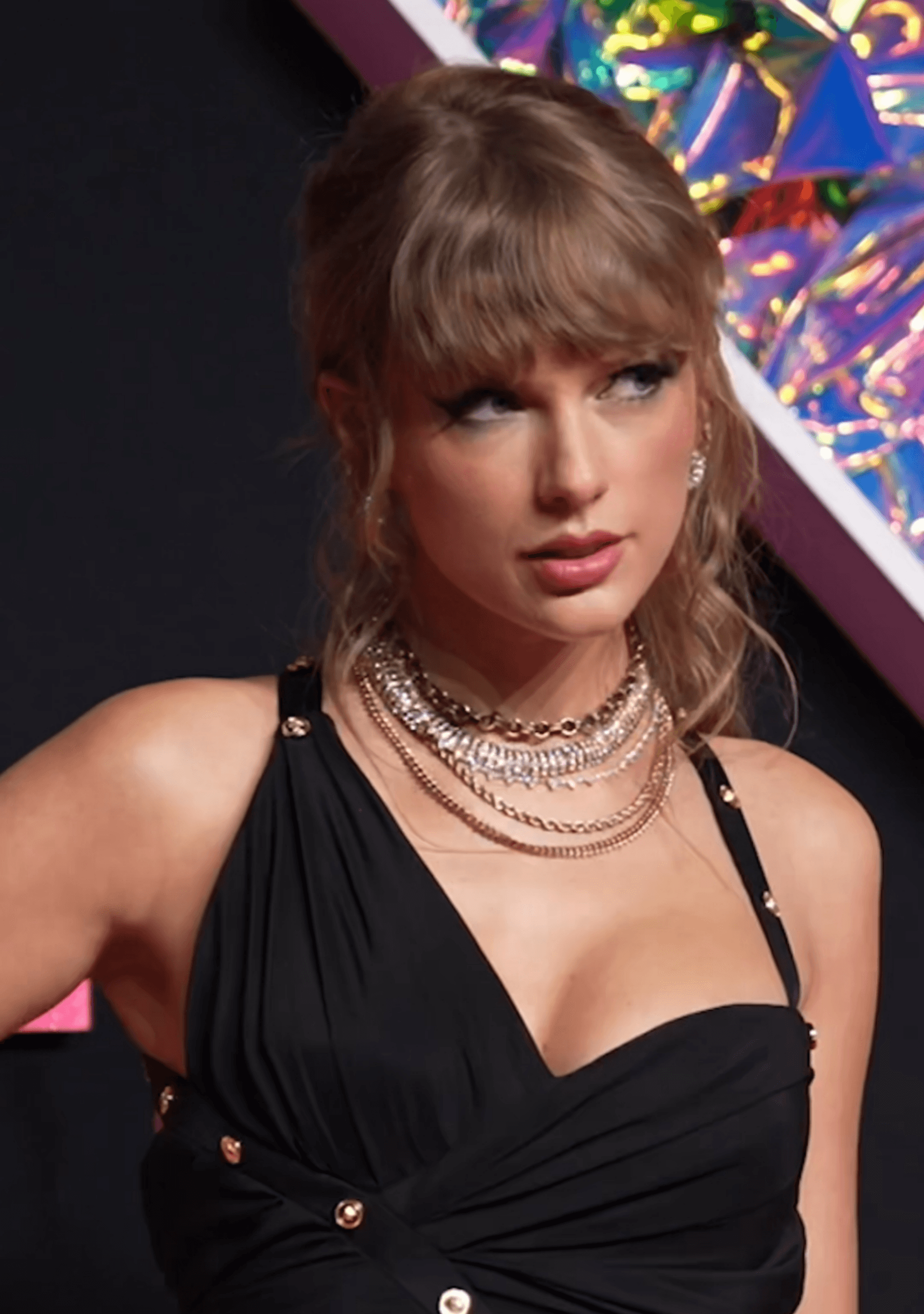
Two billion dollars is a number that demands a framework. In the world of celebrity wealth, it separates the merely rich from those whose fortunes operate at the scale of mid-sized corporations. Taylor Swift crossed that threshold with a currency that almost no one else has used to get there: lyrics, live performance, and a intentional, years-long campaign to reclaim the intellectual property sitting at the center of everything she earns.
Our analysis, drawing on recent figures from Forbes, Bloomberg, Business Insider, Variety, and People. All of which have converged on the $2.0B mark. Places Swift's net worth at $2.0 billion as of June 2026. The consensus is unusually tight for celebrity wealth estimation, which is typically a sport of wide variance. When Variety, Bloomberg, and People independently land on the same comma, it is less a coincidence than a confirmation. Earlier tallies were far lower: Forbes and Wikipedia data captured figures in the $170M–$185M range at points during her pre-Eras career, and WageIndicator's annualized-income model arrived at a figure closer to $202M. Reflecting a moment-in-time earnings snapshot rather than accumulated wealth. The distance between those numbers and today's $2.0B is the story of the last four years.
What makes Swift's fortune built that way distinctive is the source mix. Forbes has specifically flagged that she is the first musician to reach ten-figure status through songwriting and live performance alone. No tech equity, no spirits brand built for acquisition, no family capital as a launch pad. The wealth is earned, catalogued, and performed into existence. Understanding it means understanding five distinct economic engines, each with its own growth trajectory and risk profile.
How Swift's $2B ranks against every peer in music
At $2.0B, Taylor Swift stands as the wealthiest female musician in recorded history and one of only a handful of artists across any genre to reach billionaire status through music alone.
The billionaire musician club is extraordinarily small, and Swift's entry is distinguished by how she got there. Jay-Z built his fortune across a portfolio that spans spirits, streaming, sports management, and real estate. Live performance was a component, not the engine. Rihanna's billion-plus wealth is anchored by Fenty Beauty's cosmetics sales. Paul McCartney's estate reflects six decades of catalog accumulation and legacy licensing. Swift's route is narrower and, by that measure, more impressive: stage, studio, and legal strategy.
Bloomberg updated its estimate to $2.0B in October 2025, noting that the figure had roughly doubled in two years. A compression of wealth creation that mirrors the economic footprint of the Eras Tour. Variety confirmed the same figure in June 2026, citing Forbes. Business Insider's most recent accounting, also at $2.0B, frames the wealth in terms of both accumulation and deployment. People, typically conservative in its celebrity financial coverage, matched that number in its own reporting. Our analysis, weighting recency and the breadth of source agreement, holds the figure at $2.0B as of June 2026. With meaningful upside risk if touring resumes at comparable scale.
The nearest female-musician comparisons. Artists with nine-figure fortunes built primarily through performance and recording. Sit well below the $2.0B waterline. That gap is not accidental. It reflects a set of business decisions, beginning around 2021, that at root restructured where Swift's revenue flows.
Live touring: the single biggest line item in any musician's ledger
Touring accounts for an estimated $800M of Swift's $2.0B net worth. Roughly 40% of the total. With the Eras Tour serving as the dominant single catalyst for her billionaire crossing.
Our breakdown assigns approximately $800M, or 40% of total wealth, to live touring accumulated across Swift's career. With the Eras Tour generating by far the largest single contribution. The tour's gross revenue reached $2.2 billion, making it the highest-grossing concert tour ever recorded by any artist. The share of that revenue that flows to the artist, after promoter splits, venue fees, production costs, and crew, is built that way large for a headliner of Swift's negotiating use. The result is a touring income figure that dwarfs what any previous run had produced.
Swift's touring economics benefit from a snowball that is easy to underestimate. The Eras Tour was not just a concert. It was a media event that drove streaming spikes, catalog sales, merchandise purchases, and real estate demand in host cities. That secondary economic activity fed back into other wealth categories. Streaming royalties climbed. Merchandise sell-through accelerated. The tour was, in effect, a multi-channel marketing campaign that happened to sell tickets as its primary product.
The risk inherent in touring-heavy wealth is its episodic nature. Tours end. The question for any artist whose fortune is so deeply tied to live performance is whether the catalog and ancillary engines are strong enough to sustain and grow the base between cycles. In Swift's case, the re-recording campaign provides a structural answer to that question.
“A fortune built without equity stakes or inherited capital. Only catalog control, stage dominance, and a legal campaign that rewired where the royalties flow.”
Catalog, streaming, and royalties: the engine that never goes dark
Music catalog and royalty income. Spanning streaming, synchronization, and sales. Contributes an estimated $600M to Swift's fortune, representing 30% of her total wealth.
Catalog royalties are the annuity of the music business. They pay out regardless of whether an artist is actively recording, touring, or generating headlines. Our analysis assigns roughly $600M. 30% of the total. To the accumulated and ongoing value of Swift's songwriting catalog, streaming royalties, and physical and digital sales. That figure reflects both historical earnings and the current market value of future royalty streams from a catalog that includes 14 studio albums and one of the most-streamed back catalogs in the history of Spotify and Apple Music.
Forbes specifically noted that Swift is the first artist to cross the billionaire threshold having built that wealth purely through songwriting and performance. A distinction that places catalog income at the philosophical center of her fortune. Her output spans pop, country, indie-folk, and alternative registers, which means her music reaches audiences that do not overlap, and royalty streams that come from demographics with entirely different listening habits and platforms.
The catalog's commercial durability is unusual. Most artists experience a sharp streaming decline in the years after a major release cycle. Swift's back catalog has shown remarkable resilience, partly because each new album or tour drives listeners into the archives. The Eras Tour, structured as a chronological walk through her discography, was explicitly designed to activate older material. A business decision that also happened to be a compelling live show.
The re-recording campaign: how Taylor's Versions rewired the royalty machine
The Taylor's Versions re-recording project contributes an estimated $300M to Swift's net worth by redirecting royalty income from her original masters. Which she does not own. Toward recordings she controls entirely.
The re-recording project that began in 2021 was presented publicly as a moral and creative act. It was also a precise piece of financial engineering. By producing new master recordings of her first six albums, Swift created competing products that she owns outright, and then used her fan base and commercial use to displace the originals in streaming, sync licensing, and retail markets. Our analysis credits this campaign with approximately $300M in wealth contribution. 15% of the total. Reflecting the royalty flows it has redirected and the ownership premium it has established.
The mechanics are worth understanding. When a song is streamed, two royalty pools are triggered: one for the composition (which Swift has largely always controlled as the songwriter) and one for the master recording (which, for her early work, she did not). By replacing the original masters commercially, the Taylor's Versions project captures the master royalty that previously flowed to third parties. Multiply that delta across hundreds of millions of monthly streams on six albums, sustained over years, and the cumulative income shift is substantial.
There is a strategic dimension that goes beyond the direct royalty gain. The re-recording campaign signaled to the industry. And to other artists in similar ownership disputes. That catalog control is worth fighting for. It also deepened Swift's brand as an artist who is also a business operator, which has arguably increased her use in every subsequent commercial negotiation. The $300M figure in our analysis is likely conservative if the re-recordings continue to outperform the originals on sync licensing, which tends to be where the highest per-use rates reside.
Concert films, merchandise, and ancillary revenue: the ecosystem around the tour
Concert film releases, merchandise, and licensing deals collectively account for an estimated $200M. 10% of Swift's total wealth. Amplifying the economic footprint of her core touring and recording activity.
When the Eras Tour concert film was released theatrically, it bypassed the traditional studio-distribution model. Swift negotiated directly with AMC Theatres, keeping an unusually high share of box office revenue. The film became one of the highest-grossing concert films ever released. Our analysis bundles this with merchandise and broader licensing income into a category we value at roughly $200M, or 10% of total wealth.
Merchandise is a category that the industry has historically undervalued in artist-wealth calculations. Swift's merchandise operation is sophisticated: tiered pricing, limited-edition drops, album-specific product lines, and a direct-to-consumer infrastructure that captures margin that would otherwise go to third-party retailers. The Eras Tour merchandise alone set records for per-show and total-tour retail volume.
Ancillary revenue. Sync licenses for film and television, brand partnerships that meet her standards (she has been selective), and digital content licensing. Rounds out this category. These income lines are smaller individually but are high-margin and require no production cost once the underlying asset exists. They are also the category most likely to grow in percentage terms as her catalog ages and becomes available to a wider range of sync buyers.
Real estate and investment holdings: the wealth preservation layer
Swift's documented multi-property U.S. Real estate portfolio, combined with investment assets, contributes an estimated $100M to her net worth. A modest 5% share, but one that reflects intentional wealth preservation rather than aggressive speculation.
At $100M. Approximately 5% of our $2.0B estimate. Real estate and investment assets are the smallest discrete category in Swift's wealth breakdown. That proportion is not a sign of neglect; it reflects the fact that her earning power from performance and catalog is so high that capital preservation instruments are not required to carry the fortune. The real estate portfolio spans multiple properties across New York, Tennessee, Rhode Island, Los Angeles, and elsewhere, and is well-documented in public records.
The investment layer is harder to assess from public data. Swift has not made the kind of high-profile venture or equity investments that generate headlines. There is no publicly known stake in a tech startup, no celebrity-fronted fund, no SPACs. What exists is almost certainly a professionally managed portfolio of conventional assets: equities, fixed income, and the real estate itself. For an artist whose brand is tightly curated, that opacity is presumably intentional.
The relative smallness of this category is also a function of timing. Swift's wealth acceleration has been concentrated in the last four years. Large-scale capital deployment. The kind that produces meaningful investment returns. Typically follows a period of accumulation. As her fortune matures, the investment layer's share of total wealth is likely to grow, both in absolute terms and as a percentage.
Capital strategy: how Swift allocates and protects what she earns
Swift's wealth strategy centers on ownership. Of masters, of her touring infrastructure, and of her business relationships. Rather than diversification into unrelated asset classes.
The through-line in Swift's financial architecture is control. The re-recording campaign was about ownership. The direct theatrical distribution deal for the concert film was about ownership. Her careful management of merchandise rights and licensing approvals is about ownership. This is not a fortune built by putting earnings into someone else's asset. It is built by ensuring that as many of the productive assets as possible sit on her side of the ledger.
That philosophy has a cost. It requires more legal, managerial, and operational infrastructure than a passive wealth strategy. It means saying no to certain commercial arrangements that might generate short-term income but dilute long-term control. It also means that the valuation of her wealth is harder to pin down than, say, a publicly traded equity stake. There is no ticker, no quarterly filing, no mark-to-market price.
The practical effect of this approach is a fortune that is highly resilient to single points of failure. No one licensing deal, no one streaming platform, and no one revenue category represents an existential portion of total income. The five categories in our analysis. Touring, catalog, re-recorded masters, ancillary, and real estate. Are distinct enough that a disruption in any one of them does not cascade into the others. That structural diversification, achieved through intentional ownership strategy rather than passive asset allocation, is arguably Swift's most sophisticated financial achievement.
What could move the number. Up or down. From here
A return to stadium-scale touring would be the single largest upside catalyst; the primary downside risk is the inherently episodic nature of touring income and any disruption to re-recorded master commercial dominance.
The upside case for Swift's net worth is straightforward: another major touring cycle. The Eras Tour demonstrated that her live economics operate at a scale no other artist has matched. If a comparable tour follows. Whether tied to new material or a fresh concept. The $2.0B figure could move materially within two to three years. Catalog income, meanwhile, is a stacking base that grows with each new generation of listeners and each new sync opportunity.
The downside risks are more structural than operational. The re-recording campaign's commercial effectiveness depends on fans and licensors consistently choosing Taylor's Versions over the originals. If that preference erodes. Due to algorithmic shifts on streaming platforms, changes in how sync buyers approach older material, or simply the passage of time. The royalty premium narrows. That risk is real but appears manageable given the degree to which the Taylor's Versions catalog has already displaced the originals in commercial metrics.
A subtler risk is inflation of expectations. At $2.0B, Swift's wealth is now measured against a different set of comparisons. Sovereign wealth funds, tech founders, inherited fortunes. By those standards, $2.0B is a beginning, not a ceiling. Whether her fortune continues stacking at the pace of the last four years depends on decisions she has not yet made: about touring frequency, catalog monetization strategy, and whether she eventually moves capital into assets beyond the music business. Our analysis holds the current figure at $2.0B, with the trajectory pointing upward absent a significant and unforeseen disruption to her commercial position.
How the $2B adds up
- Live touring (Eras Tour & prior tours)The Eras Tour alone grossed $2.2 billion in revenue and was the single largest catalyst for Swift reaching billionaire status; touring has historically been her highest-earning activity.$800M40%
- Music catalog, streaming & sales royaltiesForbes specifically noted Swift is the first musician to reach 10-figure status purely through songwriting and performances; her vast catalog—including re-recorded Taylor's Versions—generates substantial ongoing royalty income.$600M30%
- Re-recorded masters (Taylor's Versions)The re-recording campaign shifted royalty flows directly to Swift by displacing the original masters commercially, materially increasing her ownership-based income since 2021.$300M15%
- Concert film, merchandise & ancillary revenueThe Eras Tour concert film and associated merchandise and licensing deals contributed meaningfully alongside core touring and music income.$200M10%
- Real estate & investment assetsSwift holds a well-documented multi-property real estate portfolio across the U.S., representing a smaller but non-trivial component of total wealth.$100M5%
Ezra Linwood — Ezra Linwood covers celebrity wealth, music-industry economics, and the business of intellectual property for Neon Hollywood.
Disclaimer: Net-worth figures are editorial estimates built from publicly available reporting, filings, and market data — see our methodology. They are not verified statements of any person’s finances and nothing here is financial advice.