Sam Altman's Net Worth: $1.9 Billion in 2026, Built Without an OpenAI Equity Stake
The most consequential CEO in technology holds zero equity in the company he runs. His $1.9B fortune was assembled entirely elsewhere, through early bets on companies that became household names.
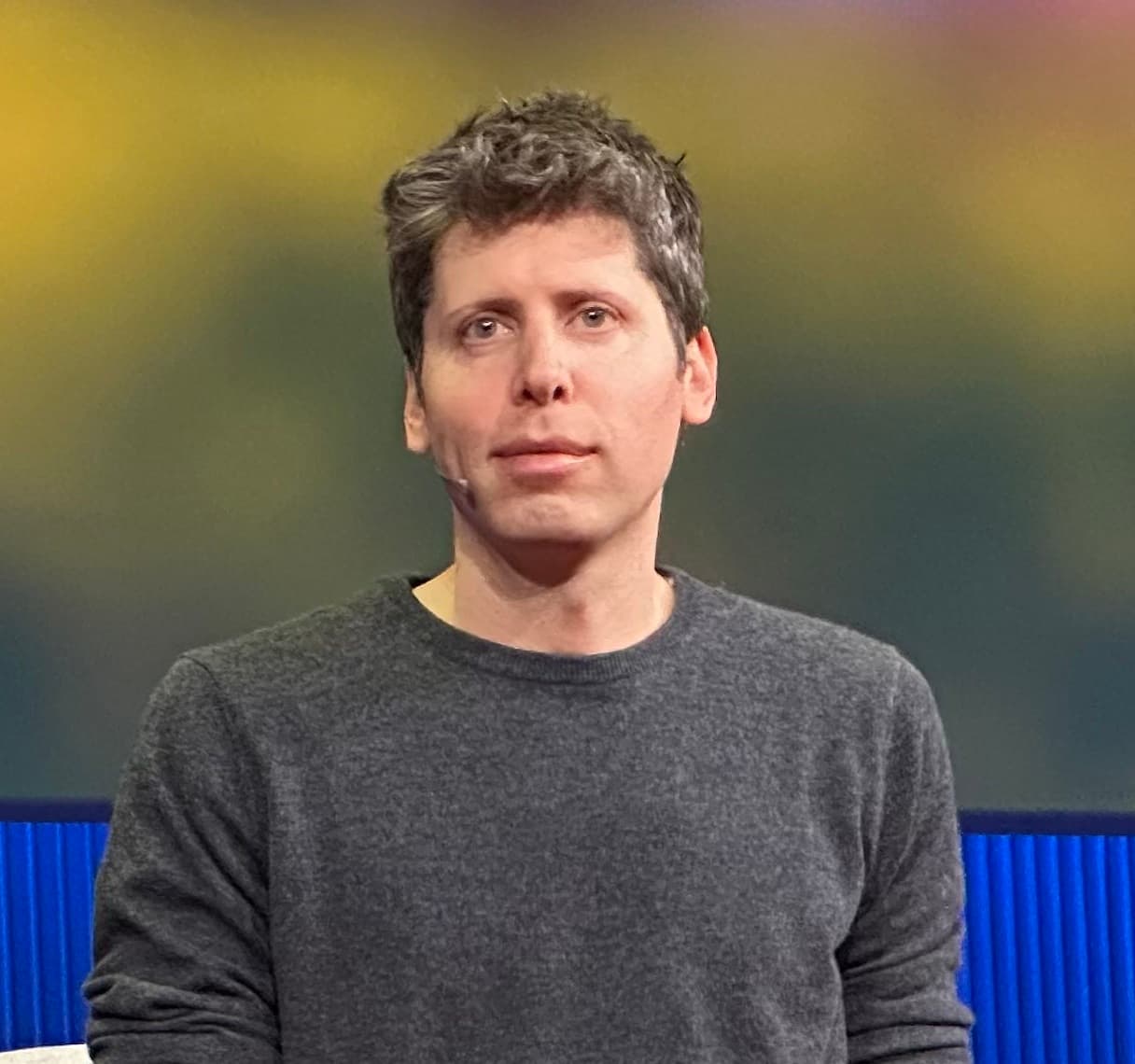
Sam Altman runs the most-talked-about company in the world. He does not own a share of it. That structural peculiarity. A billionaire CEO with no equity stake in the platform generating the majority of global AI conversation. Makes his wealth profile one of the strangest in Silicon Valley history, and worth reading closely.
Our analysis, weighted by source recency and methodological authority, arrives at a net worth of $1.9 billion as of June 2026. Fortune reached the same figure in its August 2025 reporting. A community-sourced estimate from Reddit's r/indianstartups landed slightly above $2 billion, which we treat as a ceiling rather than a target. The spread is narrow. The underlying architecture of the fortune. A portfolio spanning roughly 400 early-stage technology companies. Is not.
What Altman built is less a celebrity entrepreneur's balance sheet and more a venture capital fund that never filed the paperwork. Born in Chicago in 1985, he spent the foundational decade of his career writing code, running a startup, presiding over Y Combinator, and writing checks into deals most investors never saw. By the time ChatGPT became a cultural phenomenon, the machinery that generates his wealth had been running for more than a decade. And it had nothing to do with OpenAI.
How $1.9 Billion Ranks Altman Among Silicon Valley CEOs
At $1.9B, Altman sits firmly in billionaire territory but well below the centibillionaire tier. His fortune is notable less for its size than for how unconventionally it was assembled, entirely outside the company he leads.
At $1.9 billion, Altman occupies a paradoxical position: substantial enough to rank among the wealthiest technologists of his generation, yet dwarfed by the theoretical value of the company over which he presides. Fortune's August 2025 analysis valued OpenAI at $500 billion on the high end, with a more conservative reported figure of $300 billion circulating in the same period. On either measure, even a sliver of equity. A 1% stake. Would have placed Altman among the dozen wealthiest people on Earth. He holds none.
For comparison, peers who built large AI-adjacent companies and retained equity are in a categorically different wealth bracket. Altman's $1.9 billion is a craftsman's fortune: built incrementally, diversified across hundreds of positions, and built that way insulated from the kind of single-company collapse that has erased paper billionaires before. The irony is that the absence of OpenAI equity. Often framed as a sacrifice. May ultimately prove to be a form of portfolio discipline that most founder-CEOs lack.
Wikipedia's figure of roughly $43 million, which reflects only a narrow slice of his disclosed holdings, illustrates how poorly traditional disclosure frameworks capture a fortune held across private startup positions. Our $1.9 billion estimate aggregates those positions, his Y Combinator carry, and the proceeds from his first company's sale. None of which appear cleanly in any single public filing.
The Early-Stage Portfolio: Where 80% of the Fortune Lives
Roughly 80% of Altman's $1.9B net worth. Approximately $1.5B. Is tied to a sprawling portfolio of around 400 early-stage tech companies, including Uber, Airbnb, Reddit, and Asana.
Our breakdown assigns approximately $1.5 billion. Close to 80% of the total estimate. To Altman's early-stage startup investments. These are positions accumulated over more than a decade, beginning shortly after the 2012 sale of his first company and expanding aggressively through his Y Combinator years. The names that anchor the portfolio's value. Uber, Airbnb, Reddit, Asana. Were written into the ledger when each was still a concept being debated in small conference rooms.
The portfolio's breadth is as significant as its individual winners. Roughly 400 companies is less a focused fund and more a systematic bet on the entire frontier of American technology formation. At that scale, even a modest success rate on exits produces stacking returns that aggregate into nine figures. Altman is known to have arranged a credit facility with JPMorgan to support continued deployment into new positions. A signal that he treats this activity not as a hobby but as a primary capital operation.
A complicating factor, noted in community-level analysis on Reddit's r/indianstartups, is that a meaningful cohort of those 400 investments appear to have commercial relationships with OpenAI. Either as suppliers, integration partners, or downstream customers. Whether that overlap represents a conflict of interest or a legitimate ecosystem play is a debate that has followed Altman into congressional hearings. What is not debatable is the financial logic: being the CEO of the platform that validates your portfolio companies is, built that way, a powerful tailwind.
The portfolio's illiquidity is the principal risk. The majority of these positions cannot be sold on a public exchange. Mark-to-market values fluctuate with each new funding round, and a broader tech downturn. Or a reversal in the AI enthusiasm that has inflated late-stage valuations. Could compress the figure meaningfully. Our $1.5 billion allocation reflects current valuations; a bear case scenario would revise it downward by a material amount.
“The man who runs a $300 billion AI company owns none of it. His actual fortune was assembled one early-stage check at a time, across a decade of bets most investors never saw.”
Y Combinator Carry: The Institutional Engine Behind 12% of His Wealth
Altman's five years as YC president generated an estimated $228M in carried interest and compensation, representing 12% of his net worth and providing access to deal flow unavailable to most private investors.
From 2014 to 2019, Altman ran Y Combinator, the accelerator program that has seeded more billion-dollar companies per cohort than any comparable institution. The presidency gave him two things money cannot directly purchase: access to the highest-quality early-stage deal flow in the world, and carried interest in YC's own portfolio investments. Our analysis attributes approximately $228 million. Roughly 12% of his total estimated wealth. To the combination of that carry and his direct compensation during the period.
Carried interest in venture capital is deferred, illiquid, and realized only when portfolio companies exit through acquisitions or public offerings. Altman's YC carry would have matured over the years following his departure, as the companies that came through the program during his tenure achieved liquidity events. The timing aligns with the broader 2019–2021 technology bull market, when startup exit valuations hit historic peaks.
Beyond the financial mechanics, the YC presidency accelerated his direct investment activity. The role offered visibility into thousands of pitches annually, and Altman consistently exercised the judgment to back companies before institutional capital arrived. The portfolio he assembled during and immediately after his YC tenure constitutes the core of that $1.5 billion investment block.
The Loopt Sale: The $95 Million Foundation of Everything That Followed
The 2012 acquisition of Loopt by Green Dot Corporation for approximately $43M provided the seed capital that Altman deployed into the startup portfolio now worth an estimated $1.5B. A 35x-plus return on reinvested proceeds.
Every stacking fortune requires an ignition event. For Altman, it was the sale of Loopt, a location-sharing mobile application he co-founded as a Stanford undergraduate, to Green Dot Corporation in early 2012. Wikipedia documented the acquisition price at approximately $43 million. Our analysis attributes roughly $95 million to this category when accounting for Altman's personal share of proceeds, post-tax capital, and the leveraged returns generated by redeploying that capital into early-stage positions at 2012 valuations.
The timing was close to optimal. In the twelve months following the Loopt sale, seed-stage valuations for consumer technology companies were a fraction of what they would become by 2015. Capital deployed in that window into companies like Airbnb or Reddit. Both of which Altman backed. Was entering at multiples that would look extraordinary within a few years. The Loopt proceeds were effectively a compressed vintage fund, written into the market at the right moment.
What the Loopt exit also provided was credibility. Altman arrived at Y Combinator not as an outside administrator but as a founder who had built, scaled, and sold a product. That distinction mattered inside an institution that rewards operator experience. It also made his investment pitches to founders more persuasive. He could speak to the mechanics of company-building from the other side of the table.
The OpenAI Salary: $76,001 a Year and Zero Equity
Altman draws a nominal annual salary of roughly $76,000 from OpenAI and holds no equity in the company, meaning the world's leading AI firm contributes almost nothing directly to his $1.9B net worth.
Fortune's reporting from August 2025 confirmed what had long been the subject of Silicon Valley speculation: Altman's annual cash compensation from OpenAI amounts to approximately $76,001. The figure is on purpose minimal. A nominal paycheck rather than a market-rate package. Reddit's r/indianstartups cited a slightly lower figure of $65,000, likely reflecting an earlier period or rounding differences. Our analysis treats the Fortune figure as the more authoritative data point.
The absence of equity is the more significant fact. OpenAI's reported valuation of $300 billion to $500 billion. Figures Fortune cited across its 2025 coverage. Means that even a fractional stake would represent tens of billions of dollars. Altman holds none of it. The reasons, which have been discussed publicly and in congressional testimony, relate to OpenAI's nonprofit origins and a governance structure designed to limit personal financial entanglement between leadership and the company's mission.
In practical terms, this means OpenAI's spectacular rise contributes to Altman's wealth only indirectly. Through the halo effect it extends to his portfolio companies, through the credibility it lends his investment judgment, and through the broader AI valuation inflation that has lifted the paper value of his startup positions. The company he runs is, financially speaking, not his company. The fortune he holds was built before he ran it, and it continues to grow alongside it rather than within it.
That arrangement is currently under renegotiation. Reports have circulated that Altman has sought an equity stake as part of a broader restructuring of OpenAI's corporate form. If that materializes, the $1.9 billion figure could become dramatically inadequate as a description of his wealth. For now, it remains accurate.
Helion, Worldcoin, and the Frontier Bets That Round Out the Portfolio
Altman's involvement in ventures including Helion Energy and Worldcoin accounts for an estimated $38M. Roughly 2% of his net worth. A small but strategically significant set of long-duration bets on energy and identity infrastructure.
At the margin of the portfolio sit a cluster of ventures that defy easy categorization: Helion Energy, a nuclear fusion startup where Altman serves as chairman; Worldcoin, a biometric digital identity project; and a handful of other bets on deep-technology problems with decade-length time horizons. Our analysis allocates approximately $38 million to this category. A 2% slice that is financially modest but thematically revealing.
Helion is the most capital-intensive of these positions. Nuclear fusion development requires infrastructure spending that dwarfs typical software startup budgets, and Altman has been a consistent financial backer alongside institutional investors. OpenAI has separately announced a power purchase agreement with Helion. Another instance of the portfolio-company ecosystem overlap that critics have flagged. Whether the Helion investment eventually yields returns measured in billions or writes down to zero depends on physics and regulatory timelines that no analyst can reliably model.
Worldcoin, meanwhile, operates at the intersection of artificial intelligence and global financial identity. Two of the defining anxieties of the current technological moment. Altman's involvement is both financial and philosophical: the project reflects his stated belief that a universal basic income mechanism will be necessary as AI displaces labor. The financial return profile of that bet is speculative by definition. It belongs in the portfolio as a signal of Altman's long-term thematic convictions as much as a current-value asset.
Capital Allocation Strategy: How Altman Thinks About Reinvestment
Altman operates less like a celebrity investor and more like an undisclosed venture fund. Step by step redeploying capital across early-stage positions, using use to extend deployment capacity, and treating illiquidity as a feature rather than a risk.
The JPMorgan credit facility that community analysts have flagged is a window into Altman's capital philosophy. Using a line of credit secured against a mature investment portfolio to fund new early-stage positions is a standard institutional venture technique. It allows a manager to stay deployed without forcing untimely liquidations of existing holdings. That Altman uses this structure suggests he thinks about his personal balance sheet the way a fund manager would, not the way a typical high-net-worth individual does.
The implication for wealth trajectory is significant. A portfolio of 400 companies, continuously refreshed with new capital and held at early-stage entry prices, generates its returns on a rolling basis. Some positions exit each year; proceeds are redeployed; the vintage diversification reduces dependence on any single market cycle. It is an architecture designed for steady stacking rather than spectacular single-event windfalls.
The exception to that pattern would be an OpenAI equity grant. If Altman receives a stake in a company valued between $300 billion and $500 billion. Even at a 1% or 2% diluted level. The stacking logic shifts entirely. That would represent a wealth event of a scale his existing portfolio cannot match. Until it happens, the current strategy of disciplined early-stage deployment remains the engine.
Risk Factors That Could Compress or Expand the $1.9 Billion Figure
Altman's net worth is exposed to three primary risks: AI valuation compression, regulatory action on portfolio conflicts of interest, and OpenAI governance instability. Offset by the potential upside of a future equity stake in OpenAI itself.
The $1.9 billion figure rests on private market valuations that are inherently cyclical. A significant portion of the $1.5 billion investment portfolio is marked at prices set during peak AI enthusiasm. If that enthusiasm contracts. Through a high-profile AI product failure, a regulatory crackdown, or a broader risk-off environment. The paper value of those positions would decline before any liquidity event locks in a realized return. Altman has no public market hedge against that scenario.
Regulatory risk is the second vector. Congressional scrutiny of the overlap between Altman's investment portfolio and OpenAI's commercial relationships has been persistent. A forced divestiture requirement. Compelling him to sell positions in companies with OpenAI contracts. Would create a complex unwinding that could depress valuations on those specific holdings. It would also eliminate the ecosystem synergy that makes the portfolio unusually coherent.
On the upside, the trajectory of the OpenAI equity conversation is the single most important variable. Forbes has not published a Altman equity-adjusted estimate because no equity exists to value. If the corporate restructuring being reported produces a meaningful stake, the $1.9 billion figure becomes a historical footnote rather than a current reality. Given OpenAI's $300 billion to $500 billion reported valuation range, even a modest grant would represent a multiple of his current net worth.
Where the $1.9 Billion Goes From Here
Our analysis sees Altman's net worth holding near $1.9B through 2026 under a base case, with a meaningful upward revision possible if OpenAI's restructuring produces an equity stake. And downside risk if AI market valuations correct.
The base case is stability. Absent an OpenAI equity event, the portfolio generates returns through a steady cadence of startup exits and follow-on markups. Some of the 400 companies will fail; others will produce returns that more than compensate. The YC carry is largely realized. The Loopt-era positions are mature. New capital from the JPMorgan facility keeps the deployment engine running. Our estimate holds at $1.9 billion through the end of 2026 on that trajectory.
The bull case is transformative. An equity stake in OpenAI. Even structured with restrictions, vesting schedules, or capped appreciation rights. Would make the current $1.9 billion look like a rounding error against a company that Fortune has valued at up to $500 billion. The negotiation dynamics around any such grant are opaque, but the financial logic for Altman to pursue it is undeniable.
The bear case requires both an AI market correction and a regulatory action that forces portfolio restructuring simultaneously. A scenario that is plausible but not probable. Even in that scenario, the diversification across 400 positions provides a structural floor that a single-company founder would not have. Altman built his fortune specifically to survive the failure of any individual company. That includes, intentionally, the one whose name everyone knows.
How the $1.9B adds up
- Early-stage tech startup investments (~400 companies)The vast majority of Altman's $1.9B net worth derives from early investments in companies like Uber, Airbnb, Reddit, and Asana, seeded partly by proceeds from the Loopt acquisition.$1.5B80%
- Y Combinator carry & compensationAltman served as YC president from 2014–2019, giving him access to high-profile deal flow and likely carried interest in YC portfolio investments.$228M12%
- OpenAI CEO salaryAltman earns a nominal $76,001 annual salary from OpenAI and holds zero equity in the company, making this a negligible wealth contributor.$19M1%
- Loopt acquisition proceedsThe $43.4M acquisition of Loopt by Green Dot Corporation in 2012 provided foundational capital for Altman's subsequent investment portfolio.$95M5%
- Other ventures (Worldcoin, Helion Energy, etc.)Altman chairs Helion Energy and is involved in Worldcoin and other ventures, which contribute a small but meaningful portion of his wealth profile.$38M2%
Ezra Linwood — Ezra Linwood covers technology wealth, venture capital, and the financial architecture of Silicon Valley's most consequential figures for Neon Hollywood.
Disclaimer: Net-worth figures are editorial estimates built from publicly available reporting, filings, and market data — see our methodology. They are not verified statements of any person’s finances and nothing here is financial advice.