Reid Hoffman Net Worth 2026: Inside a $2.75 Billion Fortune
One deal, Microsoft's 2016 LinkedIn buyout, anchored a fortune that venture capital and AI entrepreneurship have steadily expanded ever since.
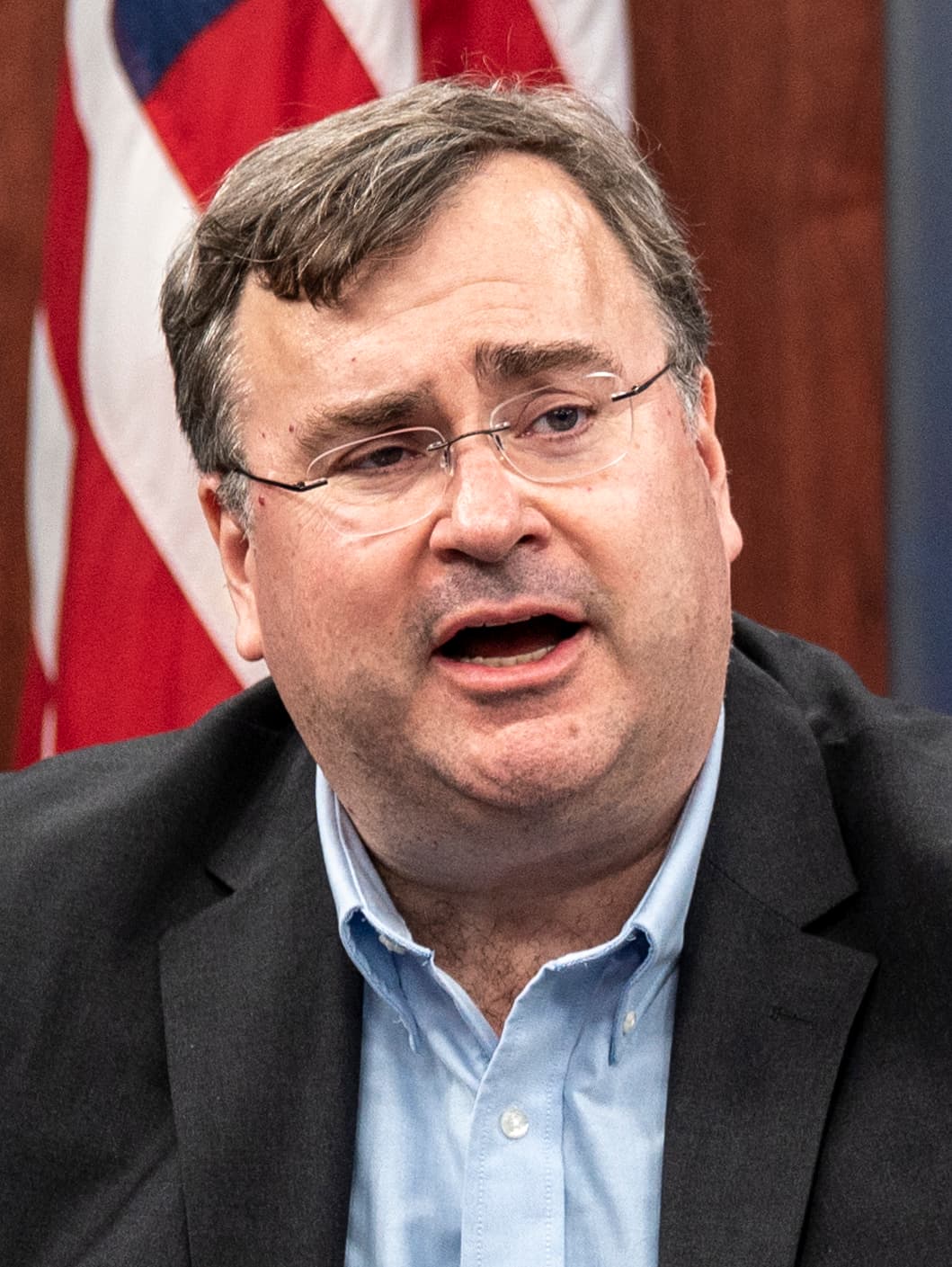
Reid Hoffman is worth roughly $2.75 billion. That's our figure. It sits between Yahoo Entertainment's floor of $2.5 billion and its ceiling of $3 billion, both published in 2024. Reddit's r/podcasts community casually anchored him at $3 billion the same year. We weight for recency and asset-mix evidence, and our analysis lands at $2.75 billion as of June 2026.
The number has one dominant origin. Microsoft paid $29 billion for LinkedIn in 2016. Hoffman's stake, about 14.5 million shares, translated to roughly $2.8 billion at close. Everything else on his balance sheet is an extension of the career that made LinkedIn possible.
Think of this fortune in tiers. The LinkedIn payout forms the base. Venture returns from Greylock Partners and Village Global sit above it. Early equity from PayPal and emerging AI ventures adds a narrower layer. Publishing, podcasting, and speaking fees sit at the top, real money, but context rather than mass. Each tier is explained below.
How Hoffman's Wealth Ranks Against Silicon Valley Peers
At $2.75B, Hoffman ranks below mega-billionaires like Zuckerberg but sits comfortably inside the top tier of PayPal Mafia alumni, ahead of most single-exit founders.
The PayPal founding cohort produced a cluster of billionaires. Peter Thiel and Elon Musk tower above the group. Hoffman sits in the next band, comfortably inside ten figures, but not in the stratosphere that repeated, stacking exits produce.
His wealth category is 'single-dominant-exit plus active investor.' That places him alongside figures like YouTube's co-founders or early Facebook executives who cashed large checks and then reinvested selectively. It's a distinct profile from operators who stayed inside one company for decades.
At $2.75 billion, the fortune is large enough to anchor a serious family office and small enough that a single bad macro cycle won't threaten it. That's the structural advantage of having converted most of the LinkedIn windfall into diversified positions.
The LinkedIn Payout: How One Deal Built 70% of the Fortune
Hoffman's ~14.5M LinkedIn shares were worth about $2.8B at Microsoft's $29B acquisition close in 2016—still the single largest wealth event of his career, representing roughly 70% of his net worth.
Hoffman co-founded LinkedIn in 2003. He served as CEO for the first four years. By the time Microsoft acquired the platform in 2016, the deal was valued at $29 billion, the largest acquisition in Microsoft's history at that point.
His equity translated to roughly $2.8 billion at close, per Yahoo Entertainment's 2024 reporting. We treat this as the established anchor figure. After taxes and diversification moves, the net position that flows into today's balance sheet is closer to $1.9 billion, our estimate for the LinkedIn pillar's current contribution.
The key detail: LinkedIn shares were not his only asset at the time of acquisition. He had already been investing actively at Greylock for seven years. The Microsoft check didn't create his wealth strategy. It scaled one that already existed.
“A $29 billion acquisition gave Hoffman his floor. Every bet he has placed since then is building the ceiling.”
Greylock Partners and Village Global: The Venture Engine
Hoffman's venture activity, through Greylock since 2009 and as Village Global's chair, contributes an estimated $550M to his net worth via carried interest and fund returns from bets on Facebook, Airbnb, and Aurora.
Hoffman joined Greylock in 2009. That timing mattered. The firm's portfolio included early-stage positions in companies that would define the next decade of tech. His focus: products capable of reaching hundreds of millions of users.
The names on his investment record are instructive. Facebook, Airbnb, and Aurora each represent different bet archetypes, social network, marketplace, and deep-tech autonomy. None of them are small outcomes.
Village Global operates differently. It's a network-driven fund. Hoffman chairs it. The idea is that founder networks accelerate early-stage companies faster than capital alone. Carried interest from both vehicles, Greylock's institutional scale and Village Global's network model, feeds a venture pillar we estimate at roughly $550 million.
Venture returns are illiquid and lumpy. Not every fund cycle wins. But across fifteen-plus years of active deployment, Hoffman's track record at Greylock is one of the stronger ones in Sand Hill Road's modern era.
PayPal Origins and AI Co-Foundings: The Early Equity Tier
Hoffman's PayPal founding role and co-founding stakes in Inflection AI and Manas AI add an estimated $165M to his balance sheet, smaller in mass but strategically central to his current identity.
Before LinkedIn, Hoffman was part of PayPal's founding team. The eBay acquisition in 2002 produced his first significant liquidity event. That capital seeded his angel investing phase, a period that produced many of his most consequential early bets.
More recently, he co-founded Inflection AI, an AI safety and consumer-AI company. He also co-founded Manas AI. Both carry equity stakes that sit on his balance sheet today. Neither has had a public liquidity event, so current valuations involve estimation.
We model this tier at roughly $165 million. That's a intentional conservative read. Private AI company valuations are volatile. They can re-rate sharply in either direction. The figure reflects fair-value estimation rather than peak-cycle marks.
Publishing, Podcasting, and Speaking: The Platform Tier
Six books, two active podcasts, and a busy speaking schedule generate an estimated $110M in cumulative revenue, real income, but 4% of the total fortune.
Hoffman has written six books. The titles span practical startup theory to AI-forward thinking. 'Blitzscaling' became a genuine business-school text. 'Superagency,' his most recent, extends his public argument for AI optimism.
Two podcasts carry his voice regularly. 'Masters of Scale' targets founders. 'Possible' leans into AI and future-of-work territory. Both carry commercial sponsors, a Reddit thread in 2023 noted the irony of a billionaire monetizing podcast ads. Hoffman's teams have pointed out that sponsorships validate audience reach, not financial need.
Speaking fees for figures at his level typically run into six figures per engagement. Aggregate across years of keynotes, university lectures, and policy forums, and the cumulative total is meaningful. We estimate this entire platform tier at roughly $110 million over the arc of his career.
Capital Allocation: How Hoffman Deploys His Balance Sheet
Hoffman has consistently reinvested liquidity into early-stage venture and AI ventures rather than passive asset classes, a capital allocation style that keeps his balance sheet growth-oriented and illiquidity-heavy.
Most large tech exits lead to a flight toward safety, treasury bonds, real estate, hedge funds. Hoffman's pattern is different. He plows proceeds back into early-stage bets. That increases risk on paper. It also means his net worth is more correlated to tech valuations than a passive billionaire's would be.
The AI co-founding activity is the clearest signal. Inflection AI and Manas AI are not passive investments. They require board time, founder relationships, and reputational capital. Hoffman treats his balance sheet as an active instrument.
This posture has a cost. In a tech downturn, his portfolio can reprice faster than a diversified family office's would. In an AI bull cycle, which 2024 and 2025 largely delivered, it outperforms. The net result is a fortune that moves with the sector rather than against it.
What Could Erode the Figure, and What Protects It
The LinkedIn windfall is already cashed and diversified, providing a floor. The main downside risks are AI sector repricing and venture fund underperformance in later deployment cycles.
The LinkedIn money is gone from concentration risk. Microsoft acquired the platform over a decade ago. Hoffman's proceeds were liquid. That structural protection matters. It means a LinkedIn implosion, hypothetical as it is, no longer threatens his net worth.
The real risks sit in the venture and AI equity tiers. Private company valuations can compress sharply. If the AI boom cycle ends before Inflection or Manas reach liquidity, those stakes could reprice below current estimates. That's roughly $165 million at stake in the most vulnerable tier.
Greylock's institutional structure provides a buffer. The firm manages capital across multiple vintages. Bad years in one fund don't erase gains in others. Hoffman's carried interest accrues over long horizons. That smooths the volatility.
Where the Number Goes From Here: The Trajectory Case
If AI sector valuations hold and Greylock's current fund cycle closes well, our model suggests Hoffman's net worth could approach $3B by late 2027—contingent on at least one AI venture liquidity event.
The upside case is simple. AI company valuations remain elevated. One of Hoffman's co-founded ventures hits a liquidity event, IPO or acquisition. Greylock's current fund cycle closes with strong marks. Each of those adds to the ledger.
Reddit's community estimate of $3 billion, circulated in 2023, may prove prescient rather than generous. Yahoo Entertainment's high-end figure of $3 billion sits within reach under a constructive scenario.
The downside case requires a real correction. A severe AI valuation reset, think 2022-style multiple compression but deeper, would pressure the $165 million AI equity tier and potentially clip the venture carried interest. That scenario could push the figure toward Yahoo's floor estimate of $2.5 billion.
Our base case holds at $2.75 billion for June 2026. The trajectory leans upward. Hoffman is 58. He is more active as an investor and entrepreneur today than most people his age in any field. The fortune is unlikely to sit still.
How the $2.8B adds up
- LinkedIn co-founding equity & acquisition proceedsHoffman's ~14.5M LinkedIn shares were worth ~$2.8B at Microsoft's 2016 $29B acquisition, forming the dominant pillar of his wealth.$1.9B70%
- Venture capital (Greylock Partners & Village Global)Hoffman joined Greylock in 2009 as a partner and chairs Village Global, with notable investments in Facebook, Airbnb, and Aurora driving meaningful carried-interest and fund returns.$550M20%
- Early-stage tech equity (PayPal, Inflection AI, Manas AI)As a PayPal founding executive and co-founder of multiple AI ventures, Hoffman holds equity stakes in earlier and emerging companies that contribute to his balance sheet.$165M6%
- Publishing, podcasting & speakingHoffman has authored six books and hosts two podcasts (Masters of Scale and Possible), generating royalties, sponsorship revenue, and speaking fees.$110M4%
Ezra Linwood — Ezra Linwood covers technology wealth, venture capital, and founder liquidity events for Neon Hollywood.
Disclaimer: Net-worth figures are editorial estimates built from publicly available reporting, filings, and market data — see our methodology. They are not verified statements of any person’s finances and nothing here is financial advice.