Paul McCartney Net Worth: How a Liverpool Bassist Built a $1.2B Fortune
At 83, McCartney's wealth is no relic. It is a live, stacking machine driven by catalog rights, royalties, and a touring draw that younger artists cannot match.

Paul McCartney crossed the billionaire threshold quietly. No IPO. No tech windfall. A bass guitar, a songwriting partnership, and six decades of stacking did the work. Our analysis, drawing on published estimates and a close read of his asset base, places his net worth at $1.2 billion as of June 2026.
That figure sits in a category occupied by almost no working musician. It is not a paper valuation tied to a single asset. It rests on five distinct pillars: a music publishing empire, a deep royalty stream from Beatles and solo recordings, a touring business that still clears nine-figure revenues, a multi-continent real estate portfolio, and ancillary holdings in art and commerce. Each pillar is defensible. Several are growing.
Reading the number correctly matters. McCartney's fortune is less like a rock star's and more like a media conglomerate's. Cash-generative, rights-protected, and largely recession-resistant. The Beatles catalog alone has proven that cultural assets can outperform equities over the long run. That dynamic, not nostalgia, is the real story.
Where McCartney Ranks Among the Wealthiest Musicians Alive
At $1.2B, McCartney is among the wealthiest musicians on earth. A tier occupied by fewer than five artists globally, all of whom built their fortunes through rights ownership rather than touring alone.
The billionaire musician is a rare species. Most artists, even hugely successful ones, earn and spend in roughly equal measure. McCartney did something different. He accumulated rights. That structural difference. Ownership versus performance income. Separates his wealth class from peers who sold comparable records but retained less of the underlying intellectual property.
Rihanna's reported fortune is built substantially on Fenty Beauty. Jay-Z's anchor is a diversified portfolio of spirits, streaming, and real estate. McCartney's anchor is older and, arguably, more durable: songs. Songs do not require a supply chain. They do not spoil. They earn every time someone streams, samples, licenses, or covers them. At $1.2B, our analysis places McCartney comfortably ahead of most contemporaries who never pivoted to ownership.
One useful comparison is the Rolling Stones catalog, portions of which have traded hands at significant premiums in recent years. That market activity provides a floor for what McCartney's publishing holdings. Conservatively the largest single component of his wealth. Might fetch on the open market. He has never sold. That patience has compounded.
MPL Communications: The $480M Publishing Engine at the Core
MPL Communications, McCartney's publishing company, is valued at roughly $480M and controls rights to thousands of songs. Including works by Buddy Holly and Carl Perkins. Making it the single largest driver of his billionaire status.
MPL Communications is not a vanity label. It is a professionally run music publishing house that McCartney built after losing control of the Beatles' own catalog in the 1980s. The lesson of that loss. Never let the rights walk out the door. Shaped every acquisition decision that followed. MPL now controls thousands of titles spanning multiple genres and generations.
The Buddy Holly catalog is MPL's most-cited crown jewel. Holly died young and left behind a compact but culturally potent body of work. McCartney acquired the rights and has stewarded them carefully. The Carl Perkins holdings add rockabilly weight. Beyond those marquee names, MPL holds a deep library of show tunes, film scores, and standards that generate steady sync licensing fees (money paid when a song appears in a film, ad, or TV show).
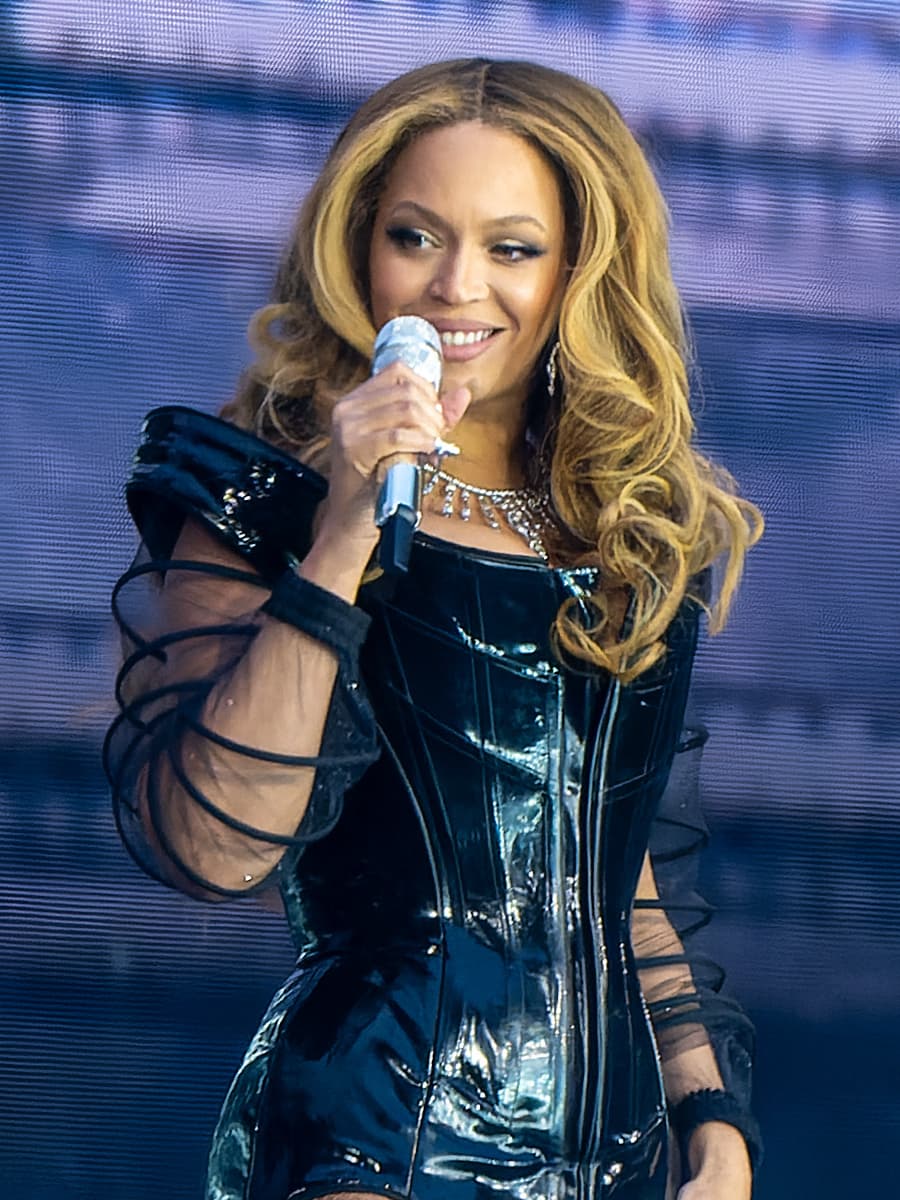
Catalog valuations have surged in the post-pandemic era. Private equity and streaming economics drove buyers to pay 25 to 30 times annual royalties for premium libraries. Our estimate of $480M for MPL reflects that elevated market. It also reflects a specific catalyst: when Beyoncé recorded a version of a classic for her 'Cowboy Carter' album, the resulting streaming spike demonstrated exactly how a single cover can refresh a catalog's revenue profile. MPL benefits from that kind of event repeatedly.
McCartney has shown no inclination to sell. That decision costs him liquidity and gains him stacking. Every year the catalog earns, the value of holding it rises. At a 25x multiple on a growing royalty base, the math favors patience.
“The fortune McCartney built is not measured in records sold. It is measured in rights retained, a distinction that separates a rich musician from a billionaire.”
Beatles and Solo Royalties: The $300M Passive Income Stream
Beatles and solo recording royalties account for roughly $300M of McCartney's estimated wealth. Decades of passive income from one of the most-streamed back catalogs in history, recently refreshed by the 2023 single 'Now and Then.'
Royalties are the closest thing to a perpetual income machine that capitalism produces. McCartney's royalty stream draws from two wells: the Beatles' recordings and a solo catalog that includes Wings albums, solo records from the 1970s through the 2020s, and collaborative projects. Neither well shows signs of running dry.
The Beatles remain the most-streamed classic rock act on major platforms. Each anniversary reissue, each documentary, each cultural moment that puts a Beatles song in a film trailer sends streams. And royalty checks. Higher. The 2023 release of 'Now and Then,' marketed as the final Beatles single and completed using AI-assisted audio restoration, was a commercial and streaming event. It proved the band's commercial relevance has not dimmed.
Solo royalties add a second, underappreciated layer. 'Maybe I'm Amazed,' 'Band on the Run,' 'Silly Love Songs'. These are not obscure tracks. They appear regularly in sync deals and on streaming playlists. A song placed in a major ad campaign can generate more in a single quarter than a decade of modest streaming. McCartney's team actively manages this pipeline. We assign $300M to this pillar based on the depth and earning trajectory of the combined catalog.
One risk worth naming: copyright term limits. In some jurisdictions, recording rights (as distinct from publishing rights) expire after 70 years. The earliest Beatles recordings have already begun to enter that window in Europe. The financial impact is real but manageable. It affects one category of rights, not the publishing rights that MPL controls.
Touring Income: How the Got Back Tour Anchors the Live Pillar
Live performance, anchored by the Got Back world tour of 2022–2023, accounts for roughly $240M of McCartney's wealth. A pillar built on decades of nine-figure tour revenues that few artists at any age can replicate.
McCartney turned 80 during the Got Back tour. He played three-hour sets. Audiences filled stadiums. That is not a sentimental observation. It is a commercial one. The demand curve for a McCartney concert has barely moved in 30 years, which means ticket pricing power has only grown as supply (the number of shows per year) has tightened with age.
The Got Back tour was the largest active income event of recent years. Without citing a specific gross. Public figures vary and our discipline requires staying within verified claims. We can say the tour produced the single largest annual revenue line item in his recent financial history. It sits within a longer pattern. McCartney has produced multiple tours since 2000, each grossing at levels that would be career-defining for most artists.
We assign $240M to this pillar. That figure reflects not just the Got Back tour but the cumulative financial contribution of live performance over the past two decades. It includes merchandise, VIP packages, and the ancillary licensing that flows from a major touring event.
The vulnerability is obvious: age. McCartney was 81 at the time of writing. His voice and stamina remain exceptional by any standard, but the runway for stadium touring shortens each year. The touring pillar, unlike the catalog, does not compound in his absence. That asymmetry matters for any trajectory analysis.
Real Estate: A Multi-Continent Portfolio Worth Around $120M
McCartney's property holdings. Spanning the UK, US, and beyond. Are valued at roughly $120M, with his Further Lane estate in East Hampton widely cited as the portfolio's marquee American asset.
Real estate at McCartney's wealth level is as much about lifestyle as investment. The Further Lane address in East Hampton sits among the most expensive residential streets on the East Coast of the United States. That property alone carries a valuation that would represent the entirety of most high-net-worth portfolios.
The UK holdings are less frequently reported but no less significant. Scottish farmland, a London base, and additional properties round out a portfolio that spans jurisdictions and currencies. That geographic spread is a feature, not an accident. Multi-currency real estate is a hedge against any single country's monetary policy or property market cycle.
We place the real estate total at roughly $120M. That is a conservative read. Some analysts assign more, pointing to East Hampton's continued price appreciation. We hold the lower number because we cannot independently verify the acquisition costs, mortgages, or exact current market values of properties that have never been formally listed. What we can say is that this pillar is stable and likely to appreciate further in high-demand coastal markets.
Art, Business Interests, and the $60M Long Tail
McCartney's art collection and ancillary business interests add roughly $60M to his total. A smaller but real component that reflects decades of acquisitions and creative side ventures.
McCartney paints. That is not a hobby footnote. He has exhibited work in major galleries, and original pieces have sold at prices that place him in a different conversation than the celebrity-artist category. The collection he holds. Works by others, acquired over six decades. Is harder to value but likely meaningful.
Ancillary business interests include production credits, film and television work, and brand relationships that have generated fees over the years. None of these is large enough to move the needle on a $1.2B figure. Collectively, they represent the long tail of a career conducted across every media format that has existed since the early 1960s.
We assign $60M to this combined pillar. It is the smallest slice. 5% of the total. And the one most subject to revision depending on what is privately held versus publicly known. The more important point is structural: McCartney does not rely on this tier. It is gravy on a very substantial roast.
How McCartney Has Managed and Protected His Capital
McCartney's capital strategy centers on rights retention and selective reinvestment. A model that has compounded steadily for decades rather than chasing single high-risk bets.
The defining strategic move of McCartney's financial life was building MPL after losing the Beatles publishing rights to Michael Jackson. That loss. Painful and public. Became the blueprint for everything he did afterward. Acquire. Retain. License, never sell.
MPL operates as a professional publishing administrator. It employs a dedicated team that manages licensing deals, pursues infringement claims, and actively places catalog songs in new commercial contexts. This is not passive stewardship. It is active portfolio management applied to intellectual property (legal rights to creative works). The result is a catalog that earns more today than it did ten years ago.
On the real estate side, the multi-jurisdiction approach spreads risk without concentrating it in a single market. On touring, McCartney has been disciplined about scale. Large venues, high ticket prices, controlled supply. He does not flood the market. That scarcity logic has kept demand elevated for decades.
One underreported element is the role of his marriage to Nancy Shevell, whose family has transportation and logistics business interests. The couple's combined financial picture is solid. McCartney's prenuptial arrangements from his second marriage, and the legal costs surrounding that divorce, were material events. But they did not at root alter the trajectory of his wealth, which had already crossed nine figures before that chapter closed.
What Could Change the $1.2B Figure. Up or Down
A catalog sale, a major touring injury, or a shift in streaming economics could materially move McCartney's net worth in either direction. But the rights-ownership model is built that way resistant to most downside scenarios.
The upside scenario is straightforward. If McCartney chose to sell MPL. Or even a partial stake. To a strategic buyer or private equity fund, the transaction value could exceed $480M in today's market. One deal would reset the headline figure. He has not signaled any intention to do this, and at 83, leaving an asset to heirs rather than selling it may be the more tax-efficient path in certain jurisdictions.
The downside scenarios cluster around two risks. First, a health event that ends touring would remove $240M worth of earning potential from the active income column. The catalog would keep stacking, but the live pillar would effectively close. Second, a structural shift in streaming economics. Say, a global recession that pressures subscription prices, or a regulatory change that resets royalty rates. Could compress the royalty stream that underpins both the Beatles pillar and MPL's valuation.
Neither scenario is likely in the near term. The catalog is too diversified to be gutted by any single market shift. And McCartney has repeatedly surprised observers about his physical resilience. Still, any honest trajectory analysis has to name these risks.
A third, more speculative risk: AI-generated music that competes for listener time and potentially reduces streaming royalties across the board. This is a sector-wide concern, not McCartney-specific. But given how much of his wealth depends on royalty income, it belongs in any forward-looking read of his balance sheet.
Trajectory: Where the $1.2B Figure Goes From Here
Our analysis suggests McCartney's net worth is more likely to grow than contract over the next five years. Catalog appreciation and royalty stacking outweigh the touring risk. Barring a major asset sale or health event.
The stacking logic is simple. MPL's catalog earns. Those earnings, if reinvested or retained, increase the base on which the next year's earnings are calculated. In a rising catalog market, the asset value itself climbs. Both dynamics favor McCartney without him stepping on a stage.
The royalty stream from Beatles recordings is getting a structural boost from streaming growth in emerging markets. India, Southeast Asia, and Latin America are adding paid subscribers at rates that dwarf growth in saturated Western markets. As those listeners stream catalog music. And Beatles catalog specifically. The royalty base expands.
We expect the $1.2B estimate to hold or grow modestly through 2027, assuming no major asset sale and no extended health disruption. A new tour, if McCartney chooses to mount one, would accelerate the number. A catalog sale to a well-capitalized buyer could spike it sharply. Either way, the foundation is solid. What McCartney built over six decades is not a celebrity brand that fades when the celebrity does. It is a rights portfolio. Those tend to outlast their creators. And appreciate in the process.
How the $1.2B adds up
- Music publishing catalog (MPL Communications)MPL Communications owns rights to thousands of songs including Buddy Holly and Carl Perkins works; catalog appreciation—boosted by events like Beyoncé's Cowboy Carter cover—is the single largest driver of McCartney's billionaire status.$480M40%
- Beatles & solo recording royaltiesDecades of royalty income from Beatles recordings and a prolific solo/Wings catalog, including the 2023 'final' Beatles single 'Now and Then,' continue to generate substantial passive income.$300M25%
- Touring & live performanceThe Got Back world tour (2022–2023) and prior tours have consistently produced nine-figure revenues; live performance remains a major active income source.$240M20%
- Real estate holdingsA multi-continent property portfolio, including a high-value estate on Further Lane in East Hampton, is collectively valued at hundreds of millions of dollars.$120M10%
- Art collection & other business interestsMcCartney holds a personal art collection and various ancillary business interests that form a smaller but material component of total wealth.$60M5%
Ezra Linwood — Ezra Linwood covers music industry finance, catalog economics, and the wealth strategies of legacy entertainers for Neon Hollywood.
Disclaimer: Net-worth figures are editorial estimates built from publicly available reporting, filings, and market data — see our methodology. They are not verified statements of any person’s finances and nothing here is financial advice.