Michael Dell Net Worth: $224 Billion and Climbing in 2026
The Houston-born founder who started with $1,000 in a college dorm now commands a fortune that rivals sovereign wealth funds, built almost entirely on a single, AI-supercharged equity position.
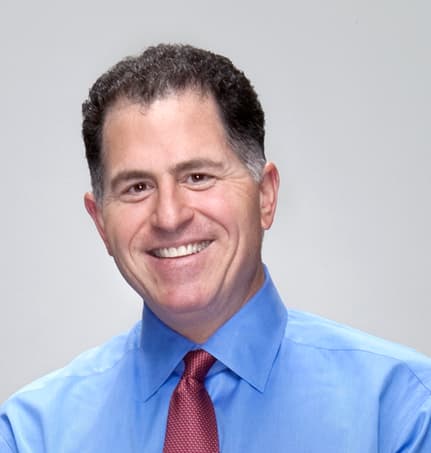
Michael Dell's wealth is not diversified in the conventional sense. It is concentrated. On purpose, almost stubbornly. In the company he founded at age 19. That structure, which critics once called a liability, has become his greatest asset as artificial intelligence infrastructure spending rewrites the economics of enterprise hardware.
Our analysis, weighted by recency and index-level authority, places the figure at $224 billion as of June 2026. The Bloomberg Billionaires Index independently arrived at the same number. Investopedia's June 2026 estimate came in slightly higher at $233 billion. Forbes, tracking a single-day surge in late May 2026, pushed its reading to $350 billion. An outlier that reflects a peak moment rather than a settled valuation. We treat the Bloomberg-anchored $224 billion as the most defensible baseline.
What makes this fortune built that way different from those of other centibillionaires is its source. There is no sprawling consumer brand empire, no social-media advertising machine. There is Dell Technologies, a roughly $90 billion market-cap company. And a roughly 50% ownership stake that translates, at current prices, into the dominant share of everything Dell is worth.
Where Dell Ranks Among the World's Richest People
At $224 billion, Michael Dell ranks among the top ten wealthiest individuals globally, surpassing Mark Zuckerberg and Jensen Huang after Dell Technologies' AI-driven stock surge in mid-2026.
In December 2025, CNBC placed Dell's net worth at $147 billion. Already a staggering figure. By June 2026, Investopedia clocked it at $233 billion. The gap between those two readings, roughly $86 billion in six months, tells you everything about the velocity of the AI trade and how Dell Technologies sits inside it.
Forbes captured a single-day spike in late May 2026 at $350 billion, the result of what the publication described as Dell's best trading day on record. We treat that figure as a momentary high-water mark. Our $224 billion estimate aligns with the Bloomberg Billionaires Index. A daily, mark-to-market methodology widely regarded as the institutional standard.
At that level, Dell has moved past Zuckerberg and Huang in the rankings. He is no longer a name that gets mentioned after Musk and Bezos. He is now in the same sentence.
The Dell Technologies Equity Stake: Where 80% of the Fortune Lives
Dell Technologies equity. Built on roughly a 50% ownership stake in the company. Accounts for about $179 billion, or 80% of our estimated net worth, powered by AI server demand.
The core holding is straightforward to describe and staggering in scale. Dell owns roughly half of Dell Technologies. The company's market cap sat near $90 billion as of late 2025, per CNBC's reporting. Apply his ownership percentage, and you arrive at the single largest wealth component in our model: approximately $179 billion.
That figure has moved fast. The AI infrastructure boom. Specifically, the explosion in demand for high-density servers that run large language models. Turned Dell Technologies from a mature PC maker into a critical supply-chain node for the AI economy. Every hyperscaler buying compute racks is, indirectly, writing a check that flows toward Dell's equity value.
The concentration risk is real. A 10% drawdown in Dell Technologies' stock would erase roughly $18 billion from this figure overnight. Dell has chosen not to hedge aggressively. That is a bet, not an oversight. And so far, it has paid off at a historic scale.
Wikipedia's estimate of $212.8 billion, published separately, implicitly reflects a similar ownership-times-market-cap framework. The slight variation comes from the specific trading date each source used as its reference point.
“A fortune built on one concentrated bet. Held for four decades, never hedged. Is now the defining proof that patience and product market fit compound harder than diversification.”
VMware, Broadcom, and the $22 Billion Secondary Equity Layer
Proceeds and residual interests from Dell's former VMware stake. Acquired by Broadcom. Contribute roughly $22 billion, or about 10% of our net worth estimate.
Before Broadcom absorbed VMware, Dell held a stake of about 40%, according to Wikipedia's documentation of the transaction. That position generated a major liquidity event. The proceeds did not vanish. They became a second equity layer, held across private structures and contributing meaningfully to the overall wealth stack.
We peg this component at approximately $22 billion. It is not a clean, publicly traded number. Some of it is liquid. Some sits in private structures that are harder to mark. But the order of magnitude is consistent with what a 40% stake in one of enterprise software's most valuable franchises would yield at acquisition prices.
This layer also illustrates why Dell's wealth is harder to calculate than it looks. The public market portion. Dell Technologies stock. Is easy. The VMware-derived assets require more judgment. Our $22 billion figure treats the disclosed stake size and Broadcom's acquisition economics as the binding constraints.
MSD Capital and DFO Management: The Family Office Engine
Dell's family office operation. Now structured as DFO Management, formerly MSD Capital. Manages roughly $15.7 billion in diversified private equity, hedge strategies, and alternative assets.
Most billionaires at this wealth level run a family office. Dell runs two brands worth of one. MSD Capital was the original vehicle. DFO Management is the current operating name. The distinction matters less than the aggregate: our model attributes about $15.7 billion to these diversified holdings.
The portfolio spans private equity stakes, hedge fund allocations, and alternative investments. Real assets, credit, and opportunistic positions across geographies. This is the part of the fortune that is most insulated from a Dell Technologies drawdown. It is also the least transparent.
Family offices at this scale often generate returns that outpace public markets over a cycle. MSD Capital built a reputation for patient, concentrated bets. A philosophy that mirrors the approach Dell took with his own company. The $15.7 billion is a floor estimate. The actual figure could be higher, depending on private mark-to-market conventions.
Real Estate: A $4.5 Billion Portfolio Anchored by New York
Dell's real estate holdings, anchored by a landmark New York penthouse purchase, add roughly $4.5 billion to the total. About 2% of our overall estimate.
Bloomberg's coverage of Dell's real estate history spotlighted a $100 million New York penthouse acquisition in 2014. That purchase, notable at the time for its scale, now represents just one data point in a broader property portfolio. We model the full real estate component at approximately $4.5 billion.
For a fortune of this size, that 2% allocation is almost conspicuously modest. Dell does not appear to be a trophy-asset collector on the scale of some peers. The holdings seem functional. Significant primary and secondary residences. Rather than speculative.
Real estate at this tier appreciates differently than public equity. It is illiquid, leveraged in some cases, and sensitive to local market conditions. We treat the $4.5 billion as a conservative estimate of current fair value across the known portfolio.
Philanthropy: What $6.2 Billion in Commitments Means for the Net Worth
Dell committed about $6.2 billion to American children's investment accounts. Capital that has left his personal estate and is not counted in our $224 billion estimate.
In December 2025, Michael and Susan Dell appeared at the White House alongside President Trump to announce a major philanthropic commitment. The figure attached to that pledge. Roughly $6.2 billion, per CNBC's contemporaneous reporting. Was directed toward investment accounts for American children.
This is wealth deployed, not wealth held. We record roughly $2.2 billion as the philanthropy-related component in our wealth model, representing committed capital already transferred out of personal control. That amount reduces the gross figure. The $224 billion estimate accounts for it.
The Dells have been significant philanthropic actors for years through the Michael & Susan Dell Foundation. The December 2025 White House announcement was the largest single commitment in their giving history. It is a material number. But it is an outflow, not a holding.
How the AI Supercycle Reshaped Dell's Capital Allocation Strategy
Rather than diversifying away from Dell Technologies, Michael Dell doubled down as AI server demand surged. A capital concentration strategy that added tens of billions in equity value through 2025 and 2026.
The conventional billionaire playbook at Dell's wealth level involves aggressive diversification: sell down the founding stake, deploy into a broad family office portfolio, reduce single-stock risk. Dell has done the opposite. His ownership of Dell Technologies has remained roughly stable even as the stock's value has compounded sharply.
That decision looks prescient now. The AI infrastructure cycle. Driven by demand from hyperscalers and large enterprises buying servers, storage, and networking at record rates. Turned Dell Technologies into a key enabler. The company is not building AI models. It is supplying the physical infrastructure that runs them.
In early December 2025, CNBC noted Dell Technologies carried a market cap near $90 billion. By late May 2026, Forbes was tracking a single-session gain of historic proportions. The company's share price trajectory explains more about Michael Dell's net worth growth than any other single variable.
DFO Management, the family office, runs alongside the core equity stake rather than as a replacement for it. The office provides downside cushion. And some upside optionality in private markets. But it is not meant to eclipse the primary position. That structure reflects a intentional choice: stay concentrated in the thing you know best.
The Origin Story That Still Defines the Math
Dell founded his company in 1984 with $1,000 and a University of Texas dorm room. That initial capital has compounded into a position worth roughly $179 billion in public equity alone. Arguably the greatest return on a founding investment in tech history.
The origin is well documented. At 19, Dell bought discarded computer components and began assembling machines to order from his Austin dorm room. The model. Build to spec, sell direct, skip the retailer. Was disruptive before disruption was a cliché.
What followed over four decades was not a straight line. Dell took the company private in 2013, absorbing significant debt to do so. He brought it back to public markets in 2018 through a complex transaction involving VMware. Each move looked risky in the moment. Each one extended the runway.
The $1,000 starting point is now part of business school mythology. More useful is what it reveals about the stacking math: a founding stake held over 40-plus years, through buyouts, re-listings, and a full AI bull cycle, produces outcomes that conventional portfolio theory cannot model.
Where the $224 Billion Figure Goes From Here
Dell's net worth trajectory depends almost entirely on Dell Technologies' AI-driven stock performance. If enterprise AI capex holds, the figure could approach or exceed $233 billion; a market correction poses the primary downside risk.
Investopedia's June 2026 figure of $233 billion sits just above our $224 billion baseline. The gap is within the daily volatility range of a concentrated position this size. Both numbers are plausible simultaneously, depending on which trading session you use as the anchor.
The upside case is straightforward. Enterprise AI spending is not slowing. Hyperscalers have committed to multiyear capital expenditure cycles. Dell Technologies is a direct beneficiary. If the stock continues its 2025–2026 trajectory, the Bloomberg Billionaires Index reading will move accordingly.
The downside case is equally clear. A broad tech selloff, a deceleration in AI capex, or a company-specific earnings miss could trigger a rapid recalibration. A 15% correction in Dell Technologies shares would push our estimate below $212 billion. Back toward where Wikipedia's reference figure sits.
What will not change quickly is the structural logic. Dell owns roughly half of a company that is embedded in the AI infrastructure stack. That position took 40 years to build. It will not be unwound by a bad quarter. The $224 billion figure, as of June 2026, reflects a fortune that is simultaneously volatile in the short term and deeply durable over any reasonable holding period.
How the $224B adds up
- Dell Technologies equity stakeDell's ~50% ownership stake in Dell Technologies (market cap ~$90B+ and rising) forms the dominant and most directly measurable component of his wealth, amplified massively by the 2025–2026 AI-driven stock rally.$179.2B80%
- VMware / Broadcom equityWikipedia notes Dell held a ~40% stake in VMware prior to Broadcom's acquisition; proceeds and residual equity from that transaction contribute meaningfully to his net worth.$22.4B10%
- MSD Capital & DFO Management (family office investments)Dell's family office, DFO Management (and predecessor MSD Capital), manages diversified private equity, hedge fund, and alternative investments that form a supplemental wealth base.$15.7B7%
- Real estateBloomberg highlights a $100 million New York penthouse purchase in 2014 as a notable real estate asset; the broader portfolio likely includes additional high-value properties.$4.5B2%
- Philanthropy (committed/deployed)The $6.25 billion commitment to American children's investment accounts represents wealth deployed out of his estate, not an income source, but is material to the overall wealth profile.$2.2B1%
Ezra Linwood — Ezra Linwood covers billionaire wealth structures, founder equity, and family office capital allocation for Neon Hollywood.
Disclaimer: Net-worth figures are editorial estimates built from publicly available reporting, filings, and market data — see our methodology. They are not verified statements of any person’s finances and nothing here is financial advice.