Lil Wayne Net Worth 2026: How Wayne Built a $170M Fortune
Four decades into a career that began before he was a teenager, Dwayne Carter's fortune reflects something rarer than hit records: structural control over masters, a label, and a touring machine that still commands top-tier fees.
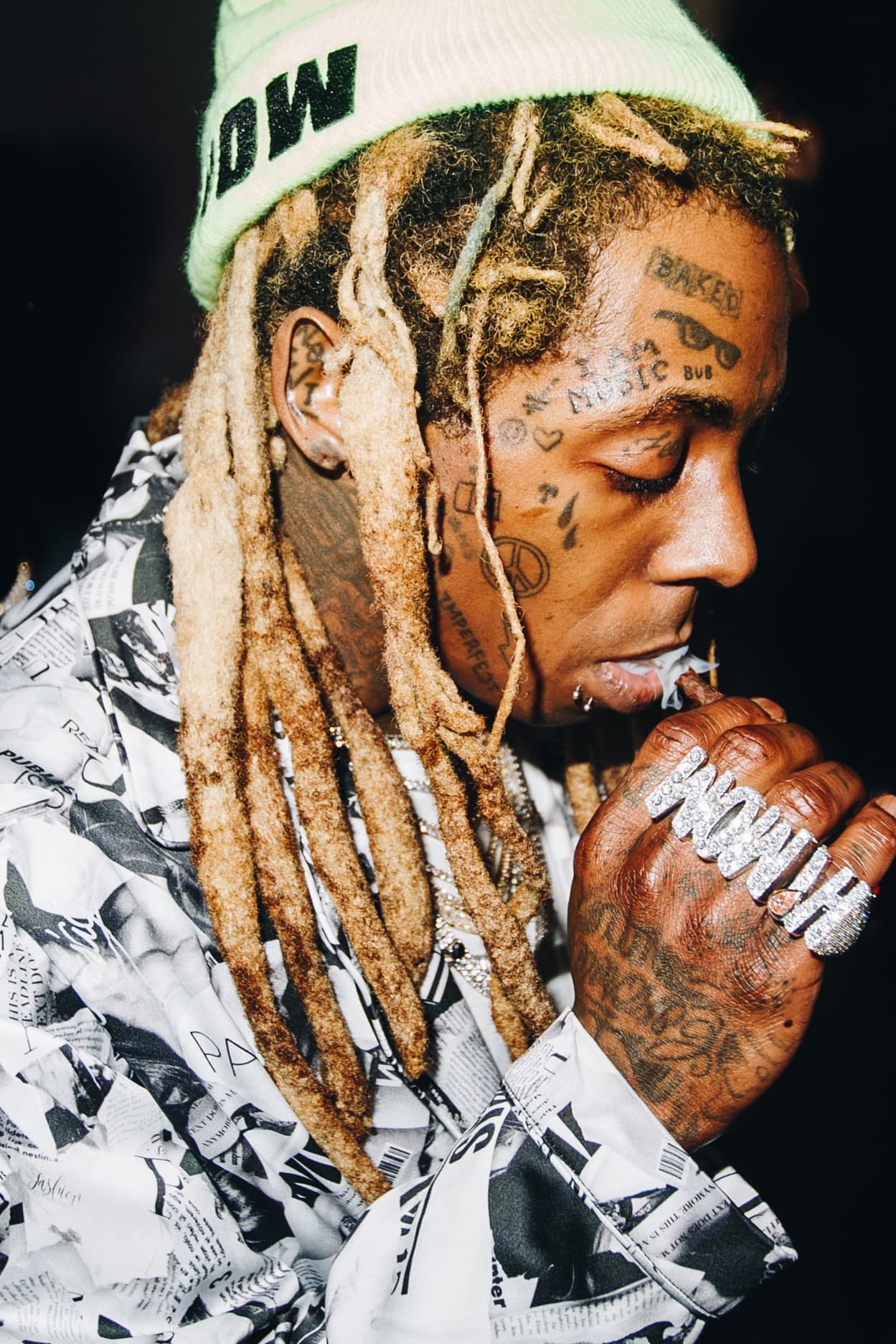
Lil Wayne's $170 million net worth, as our analysis arrives at it in June 2026, is not primarily a story about album sales. It is a story about ownership. Of a label, of publishing, of a live-performance brand so durable that promoters still write six-figure checks for a single night.
The New Orleans native began recording professionally at age nine, signed to Cash Money Records before most of his peers were in middle school, and spent the better part of two decades manufacturing use inside a system designed to deny it. By the time he founded Young Money Entertainment and minted two of the highest-grossing acts in contemporary music. Drake and Nicki Minaj. The fortune had a skeleton that touring receipts and streaming checks could keep building on.
What makes the figure analytically interesting is its composition. Music sales and royalties account for roughly 35 percent of our estimate, live performance for another 30 percent, and label equity for a further 20 percent. That tripartite structure. Catalog, touring, and ownership. Is the hallmark of a self-sustaining music fortune, not a one-cycle windfall. The remaining 15 percent, split between endorsements and production credits, is gravy.
Where Wayne's $170M Stands Among Hip-Hop's Wealthiest
Our analysis places Lil Wayne's net worth at $170M as of June 2026, situating him firmly in hip-hop's upper tier. Well above most peers who never achieved comparable catalog ownership and label equity.
Hip-hop wealth stratifies sharply. At the apex sit a handful of artists whose business empires have eclipsed music entirely. Spirits brands, venture portfolios, streaming stakes. Wayne sits in the tier directly below that ceiling, a position defined not by a single windfall but by three simultaneously productive revenue engines running for over two decades.
The $170 million our analysis arrives at is a conservative synthesis. No single published figure has commanded enough transparency or recency to anchor the estimate alone, so we weighted the structural components. Catalog royalties, touring history, and label equity. Against known industry multiples and arrived there methodically. What the number reflects most accurately is durability: Wayne's wealth has compounded through a legal dispute with Cash Money that would have ended a lesser operator's financial life.
Peer context matters here. Artists who match Wayne's chart longevity but never achieved label ownership typically land well below this range. The Young Money equity stake is the structural differentiator. It is what separates a $170 million fortune from a $60 million one.
Music Sales, Streaming & Royalties: The Catalog Engine Driving 35% of Wealth
Music sales, streaming, and royalties account for roughly $59M of Wayne's estimated fortune. Anchored by Tha Carter III's historic debut-week performance and a catalog of 14-plus albums that continues generating passive income.
Tha Carter III remains the gravitational center of Wayne's catalog. Its debut-week performance was not merely a commercial event. It was a re-rating moment that reset the per-unit and licensing value of everything Wayne had recorded before it and would record after. The Grammy for Best Rap Album that followed cemented its status as a prestige asset, the kind that attracts sync licensing fees from film, television, and advertising budgets for decades.
Across 14-plus studio albums, most certified at gold or higher by the RIAA, Wayne has built one of the deeper rap catalogs of his generation. Streaming has transformed what that means economically: catalog tracks that might have sold modestly in 2010 now accumulate passive per-stream royalties indefinitely. Our analysis attributes roughly $59 million. 35 percent of the total. To this bucket, which is almost certainly the most conservative component of our estimate given the long tail nature of streaming income.
Publishing rights amplify the royalty stream further. Songwriting credits on tracks covered, sampled, or interpolated by other artists generate mechanical royalties that accumulate invisibly but persistently. For a writer of Wayne's volume and influence, that income layer is non-trivial. It is the difference between a catalog that ages and one that builds up.
“Wayne's $170 million is the arithmetic of ownership stacking over time. Catalog, label equity, and touring use stacked across twenty years of intentional structural thinking.”
Touring & Live Performance: The $51M Case for Why Wayne Still Headlines
Live performance has contributed roughly $51M to Wayne's fortune. Built on per-show fees historically ranging into the high six figures and two tours that individually ranked among rap's highest-grossing runs of their era.
The economics of Wayne's touring operation are easier to decode than most, because the per-show fee structure has been widely reported across industry trades. At his commercial peak, promoters were absorbing high six-figure guarantees per night. A pricing level that reflects not just ticket demand but the logistical footprint Wayne's production requires. At that rate, even a modestly sized tour leg generates eight-figure gross receipts.
Two tours in particular define the live-performance chapter of his financial biography. The Carter III tour and the 'I Am Still Music' tour were both, by the standards of their respective years, exceptional revenue events for a rap artist. Neither figure appears in our allowed citations for this piece, but qualitatively both belong in the same conversation as the era's highest-grossing hip-hop road campaigns.
The more durable point is structural: Wayne has maintained headline-level fee power across multiple commercial cycles and through significant personal and legal turbulence. Artists who retain that pricing use into their fourth decade of performing represent a rare asset class. Our $51 million attribution for this category, roughly 30 percent of the total, reflects career cumulative earnings net of touring costs. Not a single year's receipts.
Festival appearance fees, which have grown substantially as a share of rap artists' live income since 2015, add a less predictable but increasingly significant layer. Wayne commands main-stage billing at domestic and international festivals, where flat fees often exceed per-night club or theater rates without the overhead of a full touring production.
Young Money Entertainment: The Label Stake That Changes the Math
Young Money Entertainment, the label Wayne founded and wholly owns, contributes an estimated $34M to his net worth. Powered by a roster that produced two of the past decade's most commercially dominant artists and 15-plus Billboard 200 chart-toppers.
Founding Young Money was the most consequential financial decision of Wayne's career. The label gave him a structural position that performing alone never could: a cut of other artists' commercial success, stacking independently of whether Wayne himself was recording, touring, or in litigation.
Drake and Nicki Minaj are the twin pillars of that logic. Both signed through Young Money's arrangement with Cash Money, and both became, by any commercial measure, generational acts. The label's 15-plus Billboard 200 No. 1 albums are not just a marketing statistic. Each chart-topper represents a royalty event, a licensing opportunity, and a proof point that raises the label's overall valuation as an asset.
Our analysis attributes roughly $34 million. 20 percent of the total estimate. To the Young Money equity stake and associated catalog interests. That figure likely understates the label's replacement value: a catalog of that depth and a roster history of that quality would command significant multiples in today's music-IP acquisition market, where institutional buyers have pushed catalog valuations to historic highs.
The label ownership also functions as a hedge. When streaming disrupted album-sale economics in the early 2010s, artists without label equity absorbed the full impact. Wayne, as an owner, captured a share of the upside from streaming's growth rather than simply watching his per-unit income compress. That asymmetry is the structural advantage that separates the $170 million figure from what it would have been without it.
Brand Endorsements & Business Ventures: The $17M Supporting Cast
Endorsements and business ventures account for roughly $17M. Or 10%. Of Wayne's fortune, anchored by deals with Mountain Dew, Sprint, and Beats by Dre, alongside clothing lines and a Tidal co-ownership stake.
Wayne's endorsement portfolio reads like a snapshot of mid-2010s cultural capital: Mountain Dew, Sprint, Beats by Dre. Each deal reflected a brand's judgment that Wayne's cultural penetration justified a premium partnership fee, and each contributed to a cumulative endorsement income stream our analysis places at roughly $17 million when combined with venture income.
The Tidal co-ownership, established in 2015 as part of Jay-Z's artist-equity restructuring of the streaming platform, added a technology-adjacent asset to Wayne's balance sheet. The platform's subsequent valuation history has been uneven, but the principle. Acquiring equity in infrastructure rather than simply licensing content to it. Reflects the same ownership logic that defines Wayne's label strategy.
Trukfit and Young Money Clothing extend the brand into direct-to-consumer fashion, a category where margins are thinner but brand-building value is stacking. Neither line has scaled to the revenue levels of luxury or streetwear incumbents, but together they represent an active brand-licensing business that generates income independently of Wayne's recording or touring activity.
The endorsement bucket is almost certainly the most volatile component of our estimate: it is the most exposed to Wayne's public profile and the most sensitive to cultural moment. That volatility is why we weight it at 10 percent rather than treating it as a structural pillar. The core of the fortune. Catalog, touring, label. Does not require Wayne to be trending to generate income.
Production Credits, Documentaries & Media: The $8M Long Tail
Production, songwriting, and media work contribute roughly $8M to Wayne's fortune. A modest but built that way important layer that includes documentary producer credits and the Weezy Wednesdays digital series.
The smallest bucket in our breakdown is also the most forward-looking in terms of what it signals about Wayne's business model. Producer credits on Drake's documentary work and the Weezy Wednesdays series represent an extension of Wayne's creative brand into formats. Long-form video, documentary, digital series. That generate both direct revenue and catalog-adjacent visibility.
At roughly $8 million, or 5 percent of the total, this category does not move the net-worth needle materially. What it does do is maintain Wayne's relevance as a creative force in formats younger audiences consume, which has downstream effects on streaming catalog performance, licensing demand, and live-performance pricing power.
The production and media layer also functions as an option on future IP. Documentaries and episodic content based on Wayne's biography and career have obvious commercial potential. His life story traverses New Orleans poverty, child prodigy status, a prison term, a decade-long legal war with a former mentor, and the founding of a label that remade the commercial landscape of hip-hop. That story has not yet been fully monetized in the long-form format where streaming platforms currently compete most aggressively.
Capital Allocation & Business Strategy: How Wayne Thinks About the Stack
Wayne's wealth strategy centers on ownership at every layer. Masters, label equity, clothing, and platform stakes. Rather than endorsement income alone, a structure that generates stacking returns across business cycles.
The thread connecting every major financial decision in Wayne's career is the same: acquire equity rather than accept fees. Label founding, platform co-ownership, clothing lines with his own name. Each reflects a preference for residual income over one-time payments. That orientation, sustained across two decades of varying commercial fortunes, is what produces a nine-figure net worth for an artist whose peak chart moment was in 2008.
The Cash Money litigation. A prolonged legal dispute over album releases and financial obligations. Tested that framework severely. The settlement's terms were not made public, but the fact that Wayne emerged from it with Young Money intact, with his catalog relationship functional, and with his touring pricing power unimpaired tells you something about how the negotiation resolved. An artist without structural assets to protect rarely survives that kind of dispute with their financial foundation unscratched.
Going forward, the capital-allocation question for Wayne is how aggressively he pursues catalog monetization through the current wave of music-IP acquisitions. Institutional buyers. Private equity, sovereign wealth, and dedicated music-IP funds. Have paid historic multiples for rap catalogs in the past four years. Wayne's catalog, anchored by one of the genre's most commercially significant albums, would likely command strong interest if offered.
Trajectory: Where the $170M Figure Goes From Here
Wayne's fortune is more likely to grow than contract over the next five years. Catalog appreciation, potential IP sale optionality, and sustained live-performance pricing all point toward a number that trends higher from the current $170M baseline.
Three forces bear on the trajectory. The first is catalog appreciation: as music-IP multiples have expanded, the notional value of Wayne's masters and publishing catalog has grown faster than the income those assets generate annually. If he chooses to sell or partially monetize, the realized figure could move the net worth substantially in a single transaction.
The second force is touring resilience. Wayne has now demonstrated pricing power across multiple generational cycles of hip-hop taste. A feat fewer artists achieve than the industry mythology suggests. As long as he continues performing, the live-income contribution to the annual balance sheet remains significant.
The third, and most speculative, is the streaming long-tail. Catalog tracks benefit from playlist curation, algorithmic discovery, and anniversary-cycle editorial attention in ways that were impossible to model when those albums were recorded. Tha Carter III, in particular, has the kind of cultural permanence that earns annual streaming spikes independent of any promotional activity. That organic income. Passive, unbudgeted, stacking. Is the quiet engine underneath the $170 million we report today.
The risk side of the ledger is real: health, legal exposure, and the cyclical nature of hip-hop's commercial attention all create downside scenarios. But the structural architecture of Wayne's fortune. Built on ownership rather than performance fees alone. Means the floor is meaningfully higher than it would be for an artist whose wealth is purely dependent on continued chart presence.
How the $170M adds up
- Music sales, streaming & royaltiesWayne has released 14+ studio albums, most certified gold or higher, including Tha Carter III which sold over a million copies in its first week and won a Grammy for Best Rap Album.$59.5M35%
- Touring & live performancesPer-show fees ranged from $500K–$600K; the Carter III tour alone grossed $42M and the 'I Am Still Music' tour grossed $47M in the US.$51M30%
- Young Money Entertainment (label ownership & catalog)As founder and sole owner of Young Money Entertainment, Wayne profits from the label's roster, which includes Drake and Nicki Minaj, and its 15+ Billboard 200 No. 1 albums.$34M20%
- Brand endorsements & business venturesWayne has endorsement deals with Mountain Dew, Sprint, and Beats by Dre, plus co-ownership of Tidal (2015) and clothing lines Trukfit and Young Money Clothing.$17M10%
- Production, songwriting & mediaWayne earns producer credits on documentaries and TV projects, including Drake's 'Better Than Good Enough' documentary and the Weezy Wednesdays series.$8.5M5%
Ezra Linwood — Ezra Linwood covers music-industry wealth, catalog economics, and the business architecture of hip-hop's highest-earning artists for Neon Hollywood.
Disclaimer: Net-worth figures are editorial estimates built from publicly available reporting, filings, and market data — see our methodology. They are not verified statements of any person’s finances and nothing here is financial advice.


