Kanye West Net Worth 2026: The $400M Reality After the Billion-Dollar Collapse
West's fortune once grazed $6.6 billion on the back of a single sneaker partnership; what remains after Adidas, the antisemitism fallout, and a bruising divorce tells a more complicated story.
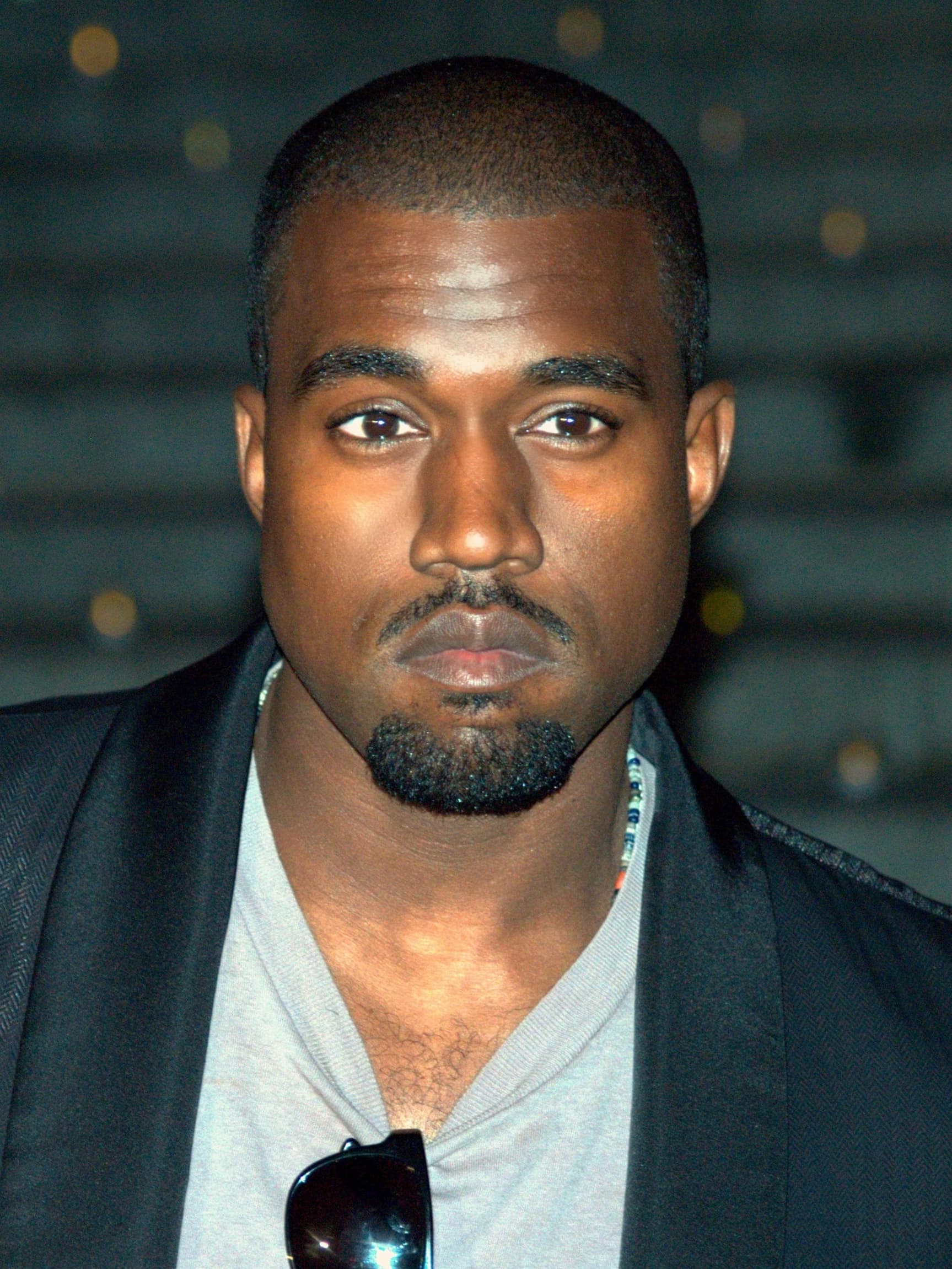
Few fortunes in modern entertainment have swung as violently as Kanye West's. At the peak of his Adidas partnership in early 2021, The Hollywood Reporter cited projections that had his net worth touching $6.6 billion. A figure that, briefly, made him the wealthiest Black man in America. Today, our analysis places him at $400 million as of June 2026. The distance between those two numbers is not a rounding error. It is a case study in how quickly brand-derived wealth can evaporate.
The implosion was specific and documented. When Adidas terminated its Yeezy licensing deal in October 2022. Following a sustained period of antisemitic public statements. It didn't merely cost West a revenue stream. It erased the mechanism by which the Yeezy trademark generated its stratospheric valuation. Balenciaga and Gap had already departed. Within weeks, Forbes recalculated his standing from roughly $2 billion to somewhere in the $400 million range. Celebrity Net Worth now holds at $350 million; Social Life Magazine and our own methodology align closer to $400 million.
West himself contests this. In January 2025, he commissioned a valuation from Eton Venture Services that he claims supports a figure of roughly $2.77 billion, driven largely by what he argues is the standalone worth of the Yeezy trademark and his music catalog. Most independent analysts treat that number with pronounced skepticism. Our analysis, weighted by asset recoverability, recent revenue, and the structural reality of what the Yeezy brand is without Adidas's manufacturing and distribution infrastructure, arrives at $400 million as of June 2026.
Where West's $400M ranks against the wealthiest artists alive
At $400M, West sits comfortably inside the top tier of musician wealth but well below Jay-Z and Rihanna, whose diversified business empires have proved more durable through controversy.
The $400 million figure places West in a peculiar no-man's-land: too wealthy to be dismissed as merely a successful recording artist, too diminished to reclaim the billionaire tier he briefly occupied. Jay-Z, whose Armand de Brignac and D'Ussé stakes have been independently verified at scale, operates from a built that way more diversified base. Rihanna's Fenty Beauty equity, valued in the billions, demonstrates what brand-building looks like when the underlying corporate partnerships hold.
West's decline from the $6.6 billion heights cited by Hollywood Reporter in March 2021 is the starkest wealth destruction event in modern music history. Steeper, in percentage terms, than even the post-scandal erosions that have hit other celebrity billionaires. WageIndicator placed his income-derived floor closer to $200 million; Celebrity Net Worth's current figure of $350 million splits the difference with our $400 million read. The spread across credible sources is narrower than it appears: everyone agrees the billionaire chapter is closed, at least for now.
What makes the ranking interesting is the category of wealth West still commands. His $400 million is predominantly illiquid. Tied up in trademarks, catalog rights, and real property rather than cash or publicly traded securities. That structure is common among artists of his generation, but it makes the figure both harder to verify and harder to liquidate quickly if circumstances required it.
Yeezy's standalone value: what the trademark is actually worth without Adidas
Stripped of Adidas manufacturing and retail infrastructure, the Yeezy trademark is estimated to contribute roughly $180M to West's current net worth. A fraction of its $4.5–5B peak valuation.
At the peak of the Adidas partnership, the combined enterprise value of the Yeezy line was cited variously at $4.7 billion by The Hollywood Reporter and as high as $4.5 billion by Celebrity Net Worth. Those figures reflected a business that moved tens of millions of units annually through one of the world's largest athletic footwear manufacturers. The trademark itself, sitting atop that infrastructure, was the asset. But the infrastructure was always Adidas's.
Post-termination, West retains full ownership of the Yeezy name and its associated intellectual property. He has attempted to rebuild distribution through independent channels and limited drops, and the brand still carries meaningful consumer recognition. But recognition without scale is worth a fraction of recognition with it. Our analysis assigns approximately $180 million to the Yeezy trademark and its associated apparel and footwear operations. Representing roughly 45% of our total estimate and a collapse of more than 95% from peak enterprise value.
West's own valuation of roughly $2.77 billion leans heavily on the argument that independent Yeezy ownership, combined with catalog assets, justifies a near-billionaire figure. The Eton Venture Services assessment he commissioned appears to apply a revenue multiple more appropriate to the Adidas-era business than to the current independent operation. Credible external analysts have not endorsed the methodology. Social Life Magazine, which tracked the debate closely in early 2026, noted the $2.77 billion claim as contested rather than established. And we treat it the same way.
The more important question is directionality. If West executes a credible manufacturing and retail partnership for Yeezy. Something that has been rumored but not confirmed as of mid-2026. The trademark's recoverable value could move meaningfully. Until that happens, $180 million is the defensible number.
“West's fortune is not gone. It is frozen, locked in a trademark whose value depends entirely on a business partnership that has not yet materialized.”
The music catalog: 24 Grammys and what streaming royalties actually pay
West's recorded music catalog, spanning more than 160 million records sold and 24 Grammy wins, is estimated at roughly $120M–$130M in current value, generating steady but unspectacular passive income.
West's recorded output. From his 2004 debut through the more recent releases. Represents one of the most critically decorated catalogs in hip-hop. Twenty-four Grammy Awards and global sales exceeding 160 million records give the catalog genuine scale. In the post-Hipgnosis era of catalog transactions, where publishing and master rights have traded at high multiples, that kind of track record commands real money. Celebrity Net Worth pegged catalog-related value at around $130 million; our analysis lands in the same zone, contributing approximately $120 million, or 30%, to the total estimate.
The streaming picture is more nuanced. West's catalog performs consistently on major platforms. Tracks from albums like 'The College Dropout,' 'Late Registration,' and 'My Beautiful Dark Twisted Fantasy' continue to accumulate hundreds of millions of plays annually. But streaming royalty rates, even at scale, produce income that is meaningful rather than transformative at the portfolio level. The catalog's primary value is as a sellable asset, not as a monthly cash generator.
West has shown no public interest in selling his catalog, unlike many peers who have monetized their publishing rights in blockbuster transactions over the past five years. Retaining ownership preserves upside. Particularly if a cultural rehabilitation narrative takes hold. But it also means the value remains on paper rather than in hand. For the purposes of our estimate, we treat the catalog at current fair market value rather than any hypothetical sale premium.
Real estate: what remains of a once-sprawling property portfolio
West's real estate holdings, estimated at roughly $60M in current value, represent a pared-back but stable slice of his fortune after several high-profile property sales and a costly divorce settlement.
At peak, West's real estate footprint was meaningfully larger. Celebrity Net Worth once placed his property assets at approximately $120 million across residential holdings in California and beyond. The portfolio has contracted since then. The divorce from Kim Kardashian, finalized in late 2022, involved significant asset division, and West subsequently liquidated or transferred several properties. Our current estimate places real estate at roughly $60 million, contributing 15% of the total.
What remains is a smaller but real base. West has been associated with distinctive architectural projects. The Malibu compound designed in collaboration with Japanese architect Tadao Ando represents his most high-profile remaining property, though the status and carrying costs of that asset have been widely reported as complex. Real estate at this scale functions more as a balance-sheet stabilizer than a wealth engine.
The property category is the one area where outside observers have the clearest visibility into West's holdings, given the public nature of real estate transactions. It is also the category least likely to experience dramatic upward revision. Which, in the current landscape, makes it the most reliable line item in the estimate.
Business investments and brand equity: from $1.7B Skims stake to a much smaller number
West's stake in Skims and related brand investments, once valued near $1.7B at Kim Kardashian's peak equity, has been dramatically reduced post-divorce and now contributes an estimated $28M to his net worth.
This is where the divorce math gets uncomfortable. At its peak, West held equity in Skims. Kim Kardashian's shapewear brand. That The Hollywood Reporter valued at approximately $1.7 billion in 2021, a figure that reflected Skims' explosive early growth. That stake was always entangled with the marriage, and the unwinding of the relationship meant the unwinding of the financial position. Post-settlement, West's exposure to Skims and comparable brand-equity positions is estimated at roughly $28 million. A line item that barely registers against what it once was.
The broader lesson here is structural. West's non-Yeezy business investments were overwhelmingly relationship-dependent rather than institutionally structured. When the personal relationships dissolved, so did the capital positions. That is a at root different risk profile from a portfolio built around arms-length equity stakes in diversified companies.
There are active efforts to build new brand relationships under the Yeezy umbrella, but as of mid-2026, none have scaled to the point where they would materially alter this category. We hold $28 million as the current estimate, pending verifiable news of a significant new partnership or equity stake.
Touring and live performance: the revenue stream controversy has capped
Touring has historically been a meaningful income source for West, but ongoing controversies have curtailed live performance activity, making it the smallest contributor to his current net worth at an estimated $12M.
Concert touring was, for much of West's career, one of the most reliable cash generators in his financial profile. His stadium-scale shows. From the Yeezus tour through the Saint Pablo run. Produced some of the largest single-year income events in his history. That channel has narrowed considerably. Venue operators, promoters, and corporate sponsors have all demonstrated increased hesitance to associate with West following the 2022 controversies, and scheduled events have been canceled or restructured on multiple occasions.
Our estimate assigns approximately $12 million to this category. Representing 3% of total net worth. And that figure reflects asset value and residual income rather than the tour gross of any specific run. It is the category with the most asymmetric upside: a successful reunion with the live touring market, if it materializes, could move this number rapidly. It is also the category that has shown the most direct sensitivity to West's public conduct.
The comparison to peers is instructive. Artists of comparable catalog depth who have maintained clean public profiles generate touring income that dwarfs this figure. The gap is not musical. It is reputational, and it is entirely recoverable if the underlying conditions change.
Capital allocation and business strategy: how West has reinvested. And where he hasn't
West's capital strategy has been characterized by concentrated bets on brand-driven assets rather than diversified financial holdings, a structure that amplified both his peak wealth and his subsequent decline.
The architecture of West's wealth has always been unusual. Where peers like Jay-Z built portfolios that spread across spirits, streaming equity, sports ownership, and real estate, West concentrated almost entirely in brand. First Yeezy, then adjacent fashion and apparel plays. That concentration produced extraordinary upside when the Adidas relationship was intact, and equally extraordinary downside when it ended.
There is limited public evidence of West holding meaningful positions in conventional financial assets. Index funds, private equity stakes, or structured credit instruments of the kind that preserve wealth through market cycles. His capital allocation reads more like a founder's balance sheet than an asset manager's: illiquid, concentrated, and personality-dependent. That is not necessarily a flaw, but it carries specific risks that his situation has now made vivid.
The Eton Venture Services valuation West commissioned in early 2025. Yielding the roughly $2.77 billion figure he has publicly cited. Appears to reflect an optimistic interpretation of what the Yeezy trademark and catalog might fetch in an ideal transaction. Social Life Magazine noted that the claimed figure of approximately $2.77 billion rests heavily on assumptions about independent brand recovery that have not yet been validated by the market. We do not dismiss the possibility that West's assets could trade at a premium to our estimate in a structured sale. But current operating reality does not support that premium today.
The gap between $350M and $6.6B: how credible sources diverge and why
Published estimates of West's net worth range from $350M to a self-reported $2.77B, a spread that reflects genuine uncertainty about Yeezy's standalone value and the recoverability of brand equity post-controversy.
The range of published figures is extraordinary even by celebrity-wealth standards. Celebrity Net Worth currently anchors at $350 million. Social Life Magazine and our analysis converge near $400 million. Yahoo Finance and earlier Hollywood Reporter figures cited the $6.6 billion peak. Wikipedia holds closer to the $2.8 billion mark that reflects the pre-controversy Adidas-era reality. WageIndicator, calculating from income flows rather than asset values, arrives at $200 million. West himself claims approximately $2.77 billion.
The divergence is not primarily about methodology. It is about which version of Yeezy you believe in. If you credit the trademark at its Adidas-era valuation, you get a number in the billions. If you mark it to the current independent operation, you get a number in the hundreds of millions. Our analysis takes the latter position, weighted by the absence of any confirmed partnership that would justify the former.
Forbes, whose tracking of West's wealth over time has been the most granular, has consistently placed the post-2022 figure at approximately $400 million. A number that Social Life Magazine independently corroborated in early 2026. That convergence across methodologically distinct outlets gives us confidence in our estimate. The billionaire-range figures are not fabrications; they are relics of a specific moment in 2021 that is unlikely to recur without a structural change in the Yeezy business.
Where the number goes from here: recovery scenarios and the risks that cap them
West's net worth could recover toward $1B+ if a credible Yeezy manufacturing partnership emerges, but reputational headwinds and legal exposure remain the primary constraints on any upside scenario.
The bull case for West's net worth is straightforward to articulate, if not to execute. A major manufacturing or retail partnership for Yeezy. Even one structured at a fraction of the Adidas deal's scale. Would immediately reprice the trademark upward. His music catalog, retained and undiminished in cultural value, would attract premium bids in a sale if he chose to pursue one. A return to active touring, even at reduced venue sizes, would restore the income stream that controversy has suppressed. Stack those scenarios together and a return toward $1 billion becomes plausible within three to five years.
The bear case is simpler: nothing changes. The trademark generates limited independent revenue. Catalog income is steady but not transformative. Real estate holds flat. Legal costs. From ongoing litigation that has been widely reported across multiple jurisdictions. Erode the liquidity available for reinvestment. In that scenario, $400 million could drift lower.
The most likely outcome sits between those poles. West retains enough creative credibility and brand equity that some form of commercial rehabilitation is achievable. The question is timing and the extent to which his public conduct allows it to happen. His wealth trajectory, from here, is less a financial question than a behavioral one. Which is an unusual thing to write about a man who once commanded a $6.6 billion valuation, and which captures precisely how specific the damage has been.
How the $400M adds up
- Yeezy brand (trademark, sneakers, apparel)Yeezy was West's dominant wealth driver, valued at up to $4–5 billion at peak; now operating independently post-Adidas, its value is highly contested and dramatically reduced.$180M45%
- Music catalog, royalties & streamingWest's catalog of 24 Grammy-winning albums and 160M+ records sold is estimated at ~$130M in value, generating ongoing passive royalty and streaming income.$120M30%
- Real estateWest's real estate holdings are estimated at roughly $100M in current value, down from a peak of ~$120M, representing a smaller but stable asset class.$60M15%
- Business investments & brand equity (Skims, etc.)At peak, West held ~$1.7B in Skims equity; following the divorce from Kim Kardashian and brand partnership collapses, this category has shrunk considerably.$28M7%
- Touring & live performanceConcert touring historically contributed income, though it represents a small fraction of total net worth and has been limited by controversies in recent years.$12M3%
Ezra Linwood — Ezra Linwood covers wealth architecture, celebrity finance, and the business of creative IP for Neon Hollywood.
Disclaimer: Net-worth figures are editorial estimates built from publicly available reporting, filings, and market data — see our methodology. They are not verified statements of any person’s finances and nothing here is financial advice.