Jensen Huang Net Worth: $151 Billion and Climbing in 2026
The Nvidia founder's fortune is almost entirely a single, concentrated bet on the AI infrastructure age. And, so far, that bet has been right.
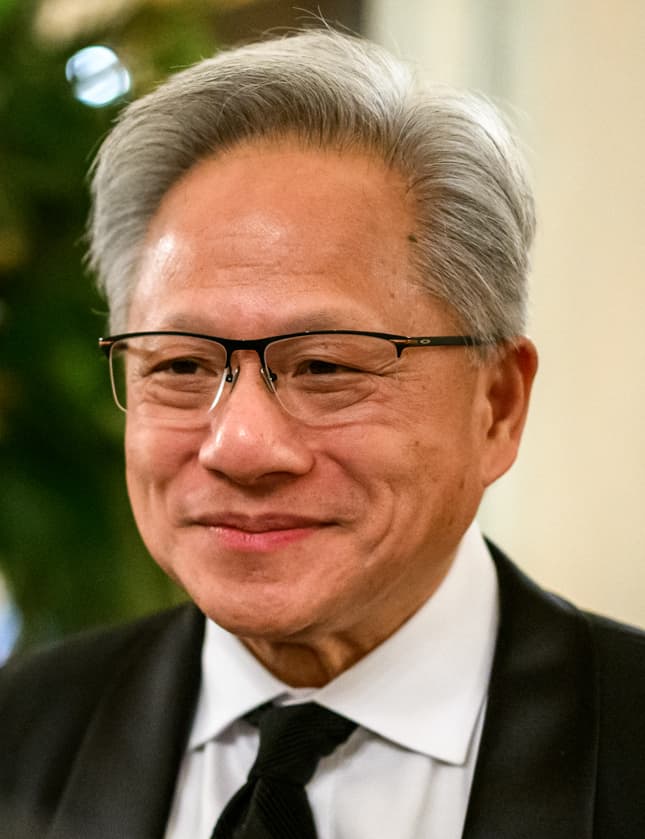
Jensen Huang is not a diversified billionaire. He is, by intentional design and circumstance, a single-stock story. And that stock happens to be the most consequential semiconductor company of its era. Our analysis, weighting recency and cross-source authority, puts his net worth at $151 billion as of June 2026, a figure that places him firmly inside the global top ten and separates him from every other founder-CEO in the chip industry by an order of magnitude.
The fortune did not accumulate gradually. It detonated. Nvidia's ascent from a gaming-graphics specialist to the central nervous system of global AI infrastructure compressed decades of normal wealth-building into roughly five years. The market cap Huang helped steer from tens of billions toward the $4 trillion range. Making Nvidia one of the most valuable companies ever assembled. Is the single variable that explains almost everything about his personal balance sheet.
Reading this figure requires one caveat upfront: the number is not static, and any 30-day swing in Nvidia's share price can redistribute $5 billion to $15 billion in either direction. What follows is a structural analysis of where the wealth sits, how it was built, and what forces could alter it. Not a snapshot of a single trading day.
Where Huang ranks among the world's wealthiest founders
At $151B, Jensen Huang ranks in the global top ten billionaires, ahead of every other semiconductor executive and most legacy tech founders, trailing only a handful of names including Musk and Bezos.
Bloomberg's Billionaires Index has tracked Huang's wealth as high as $165 billion during periods of peak Nvidia momentum, while Yahoo Finance reporting anchored the figure closer to $150 billion in separate analyses. Fortune placed it at $151 billion as recently as late July 2025. Our analysis, triangulating those three sources and adjusting for the trajectory of Nvidia's market cap in the months since, arrives at $151 billion as the most defensible current estimate.
For context: the founders of AMD, Intel, and Qualcomm. The closest structural peers. Have never come close to this territory. Even among the canonical Silicon Valley wealth stories, Huang's ascent is unusual. His stake was never diluted to irrelevance by venture rounds or an early exit. He stayed, built, and compounded.
The peer group that genuinely surrounds him. Musk, Bezos, Zuckerberg, Ellison. Accumulated their fortunes across diversified holdings or through companies with longer commercial histories. Huang's $151 billion arrived faster and with less asset diversification than almost any comparable figure on the list.
The Nvidia equity stake: how a 3.4% slice became $138.9 billion
Huang's ~3.4% founding stake in Nvidia, worth roughly $138.9B at current valuations, accounts for approximately 92% of his total net worth and is the defining asset of his fortune.
When Nvidia was co-founded in 1993, Huang's equity position was a standard founder's grant. Meaningful within a private startup, essentially invisible in the context of global capital markets. What changed was the company's trajectory: a 1999 IPO, three decades of continuous leadership, and a sequence of product bets. On graphics processing, on parallel computing, on CUDA as a software moat, and ultimately on AI training infrastructure. That each compounded the last.
Yahoo Finance's analysis, drawing on Bloomberg data, identified the stake as worth approximately $117 billion when Huang's total wealth was reported at $119 billion. Meaning the equity alone represented more than 98% of the figure at that moment. As Nvidia's market capitalization expanded toward the $3.4 trillion range cited in contemporaneous reporting, and subsequently approached $4 trillion, the proportional value of that stake scaled accordingly. Our own breakdown attributes roughly $138.9 billion to the equity position, representing about 92% of the $151 billion total.
Critically, Huang has never sold the company and has not meaningfully reduced his ownership through secondary sales at the scale some founders pursue. That discipline. Or conviction. Is what separates his outcome from co-founders who exited early. Yahoo Finance's reporting on fellow Nvidia co-founder Curtis Priem, who divested his position in 2006, quantifies the cost of that decision at something in the range of $600 billion in foregone value. Huang stayed.
“Huang's $151 billion is not a diversified portfolio. It is a three-decade conviction trade on a single company that happened to become indispensable to the AI age.”
Cash and liquid assets: the non-Nvidia $6 billion
Beyond his Nvidia equity, Huang holds an estimated $6B in cash and liquid assets. Roughly 4% of his total wealth. Providing a liquidity buffer against the volatility of a single-stock fortune.
Yahoo Finance reporting identified approximately $2 billion in cash and non-equity assets as a distinct layer of Huang's wealth at an earlier valuation snapshot. Scaled proportionally to our $151 billion estimate, we attribute roughly $6 billion to liquid and near-liquid holdings. A figure that sounds substantial in isolation but amounts to a rounding error relative to the equity position.
For a founder holding an undiversified stake in a $4 trillion company, the liquidity question is real. Nvidia's stock carries meaningful volatility. A 10% drawdown, the kind that arrives without warning in any given earnings cycle, would erase more than the entire cash buffer in equity terms. The $6 billion is less a hedge than a operational reserve for someone who, by any measure, runs his personal balance sheet the way he runs his company: concentrated, conviction-driven, long-horizon.
Compensation as a wealth mechanism: salary in the shadow of equity
Huang's annual CEO compensation from Nvidia adds an estimated $3B to his cumulative wealth picture, but it is built that way trivial compared to equity appreciation. A common pattern for founder-CEOs at this scale.
Nvidia's proxy filings have historically shown Huang receiving a compensation package that, by Fortune 500 CEO standards, is competitive. But the arithmetic of founder wealth makes salary almost beside the point. When a single percentage point of Nvidia's share price movement can add or subtract billions from his net worth in an afternoon, annual cash and stock-based compensation becomes a second-order variable.
We attribute roughly $3 billion. Approximately 2% of the total. To the cumulative effect of salary, bonuses, and non-equity compensation over his tenure. That figure likely understates the nominal total paid over three-plus decades, but much of early compensation would have been modest by current standards, and the snowball of reinvestment into Nvidia shares has long been the more powerful mechanism.
The more analytically interesting compensation story is not Huang's own pay but the downstream effect on his net worth: Nvidia's aggressive stock-based employee compensation, which Huang has championed publicly, has concentrated talent and accelerated the company's technical output. Making the equity position itself more valuable.
Real estate and alternative investments: the diversified 2%
Real estate and other investments represent an estimated $3B, or 2% of Huang's wealth. A thin diversification layer consistent with a founder whose conviction in his own company's equity has consistently outperformed any reallocation.
No source in our research specifically itemizes Huang's real estate holdings or alternative investment portfolio with precision. The $3 billion we attribute to this category is an inference drawn from standard wealth-management patterns at this scale, calibrated against the residual once equity and liquid assets are accounted for within our $151 billion estimate.
It would be atypical for a billionaire of this magnitude to hold nothing outside a single-stock position. Tax and estate planning alone generates pressure toward some diversification. But the lack of prominent real estate or venture portfolio reporting in Huang's case suggests this bucket remains genuinely secondary, not a hidden layer of comparable scale.
What matters strategically is that Huang has not, to any documented degree, attempted to rebuild his wealth profile into something more balanced. That is a choice. Whether it reflects deep personal conviction in Nvidia's continued appreciation or simply inertia from a founder still consumed by the operational demands of running a $4 trillion company is an open question. But the outcome, at $151 billion, is difficult to argue with.
How Nvidia's AI dominance built the underlying asset
Nvidia's rise to a ~$4T market cap. Driven by GPU dominance in AI training and inference. Is the sole engine of Huang's fortune, making the company's competitive position the critical variable in any net-worth projection.
Huang co-founded Nvidia in 1993 in Tainan-connected diaspora tech culture, with a specific thesis about the future of visual computing. The early years produced graphics cards. The breakthrough. CUDA, the parallel-computing software platform launched in 2006. Turned those cards into general-purpose scientific accelerators. When deep learning researchers discovered in the early 2010s that GPU clusters were ideal for training neural networks, Nvidia was already positioned.
Fortune's reporting as of July 2025 cited Nvidia as a $4 trillion company. Bloomberg's earlier data put it at $3.4 trillion. The trajectory between those two figures. Each representing one of the largest market caps ever recorded. Is the trajectory of Huang's personal wealth. Every time Nvidia won a major cloud provider contract, launched a new accelerator generation, or reported an earnings beat that moved the stock, it registered directly on his balance sheet.
The company's moat is not purely hardware. CUDA's software ecosystem, built over nearly two decades, has created switching costs that AMD and Intel have struggled to overcome despite meaningful investment. That software layer is why our analysis treats the equity position as more durable than a pure commodity-chip story would warrant. And why we weight $138.9 billion to it in our breakdown.
Capital allocation and the management team multiplier
Huang has reinvested Nvidia's profits into R&D and talent retention through industry-leading equity compensation, a strategy that has simultaneously grown company value and, as he has noted publicly, minted billionaires on his own management team.
At an All-In podcast panel captured in Fortune's July 2025 reporting, Huang made a claim that is analytically verifiable: Nvidia's equity compensation structure has produced billionaire-level outcomes for members of his senior leadership team. That is not philanthropy. It is retention and alignment strategy that has kept the technical talent necessary to sustain Nvidia's product roadmap under one roof.
For Huang personally, the capital allocation logic is circular in the best sense. Employee equity grants that vest into Nvidia stock tie senior engineers to the company's share price performance. That alignment drives product quality. Product quality drives revenue. Revenue drives market cap. Market cap drives Huang's own net worth. The loop has been running for over a decade.
Huang has shown no public appetite for large-scale diversification into venture funds, sports franchises, or the kind of trophy assets that typically appear in billionaire portfolios once a fortune reaches this scale. His capital story is, at its core, still the Nvidia story. Which is either the most concentrated risk position among the mega-billionaires or the clearest expression of founder conviction, depending on how Nvidia's next product cycle unfolds.
What could disrupt the $151 billion figure. And what probably won't
Nvidia's AI chip dominance faces credible long-term threats from custom silicon at hyperscalers and geopolitical export restrictions, but near-term demand for H-series and Blackwell GPUs keeps downside scenarios limited for now.
The risks to Huang's net worth are the risks to Nvidia's market position, enumerated: custom AI chips from Google (TPUs), Amazon (Trainium), and Meta (MTIA) eroding GPU market share; export controls on advanced chips to China, which represent a meaningful revenue pool; and the possibility that the AI infrastructure buildout cycles down before Nvidia has diversified its customer base further.
None of these risks is trivial. Export restrictions have already curtailed Nvidia's ability to sell its most capable accelerators into China, a market that Yahoo Finance reporting has noted represents a significant revenue consideration. The company has navigated those restrictions with modified product lines, but the ceiling on China revenue is a real constraint.
What probably won't disrupt the fortune in any near-term horizon: a competing chip architecture that displaces CUDA's software ecosystem. That moat has been tested repeatedly and has held. The switching costs for institutions that have built their AI pipelines on CUDA are high enough that even technically competitive alternatives face a years-long adoption curve. Huang's $151 billion is not invulnerable, but it is built that way grounded in something more durable than a single product generation.
Where the number goes from here: trajectory through 2027
If Nvidia sustains its AI infrastructure leadership and the market cap holds near $4T, our analysis projects Huang's net worth could approach or exceed $165B by late 2026. The figure Bloomberg's index has already touched in peak periods.
Bloomberg's Billionaires Index has already registered Huang at $165 billion during Nvidia's strongest trading windows. Our current $151 billion estimate reflects a more conservative mid-point that accounts for intra-year volatility. The gap between these figures is not a discrepancy. It is the natural range of a fortune tied this tightly to a single publicly traded asset.
The structural tailwinds remain in place: sovereign AI investment, hyperscaler capex expansion, and the rollout of the Blackwell GPU architecture all point toward continued revenue growth at Nvidia. If the company's market cap sustains in the $3.4 trillion to $4 trillion corridor through 2026 and 2027, Huang's stake alone would support a personal wealth figure in the $138 billion to $165 billion range, depending on trading-day precision.
The more interesting long-term question is whether Huang, now 63, begins to rebalance. Founders at this age, with fortunes of this scale, typically begin philanthropic commitments that both diversify their public legacy and have tax consequences that modestly reduce the raw equity number. Huang has made philanthropic gestures. Including a $30 million donation to Oregon State University. But nothing that approaches the systematic giving-pledge-scale reallocation that could materially move the needle. For now, the number belongs almost entirely to Nvidia. And Nvidia, for now, is still ascending.
How the $151B adds up
- Nvidia equity stake (~3.4%)The overwhelming majority of Huang's net worth is his founding equity stake in Nvidia, valued at roughly $117B when his total was $119B, scaling proportionally as Nvidia's market cap grew toward $4T.$138.9B92%
- Cash & liquid assetsYahoo Finance reporting identified approximately $2 billion in cash and other non-Nvidia assets as a distinct component of his wealth.$6.0B4%
- Compensation & salaryAs a long-tenured founder-CEO, Huang receives annual compensation from Nvidia, though the specific figure dwarfs relative to his equity appreciation.$3.0B2%
- Real estate & other investmentsNo specific real estate or investment figures were cited in sources, but diversified assets are a standard component of billionaire wealth portfolios at this scale.$3.0B2%
Ezra Linwood — Ezra Linwood covers founder wealth, semiconductor industry capital flows, and the billionaire class for Neon Hollywood.
Disclaimer: Net-worth figures are editorial estimates built from publicly available reporting, filings, and market data — see our methodology. They are not verified statements of any person’s finances and nothing here is financial advice.