Jeff Bezos Net Worth: $269.5 Billion in June 2026
The Amazon founder's fortune. Anchored almost entirely by a single equity stake. Has survived divorce, resignation, and a decade of public scrutiny to sit at the edge of a quarter-trillion dollars.
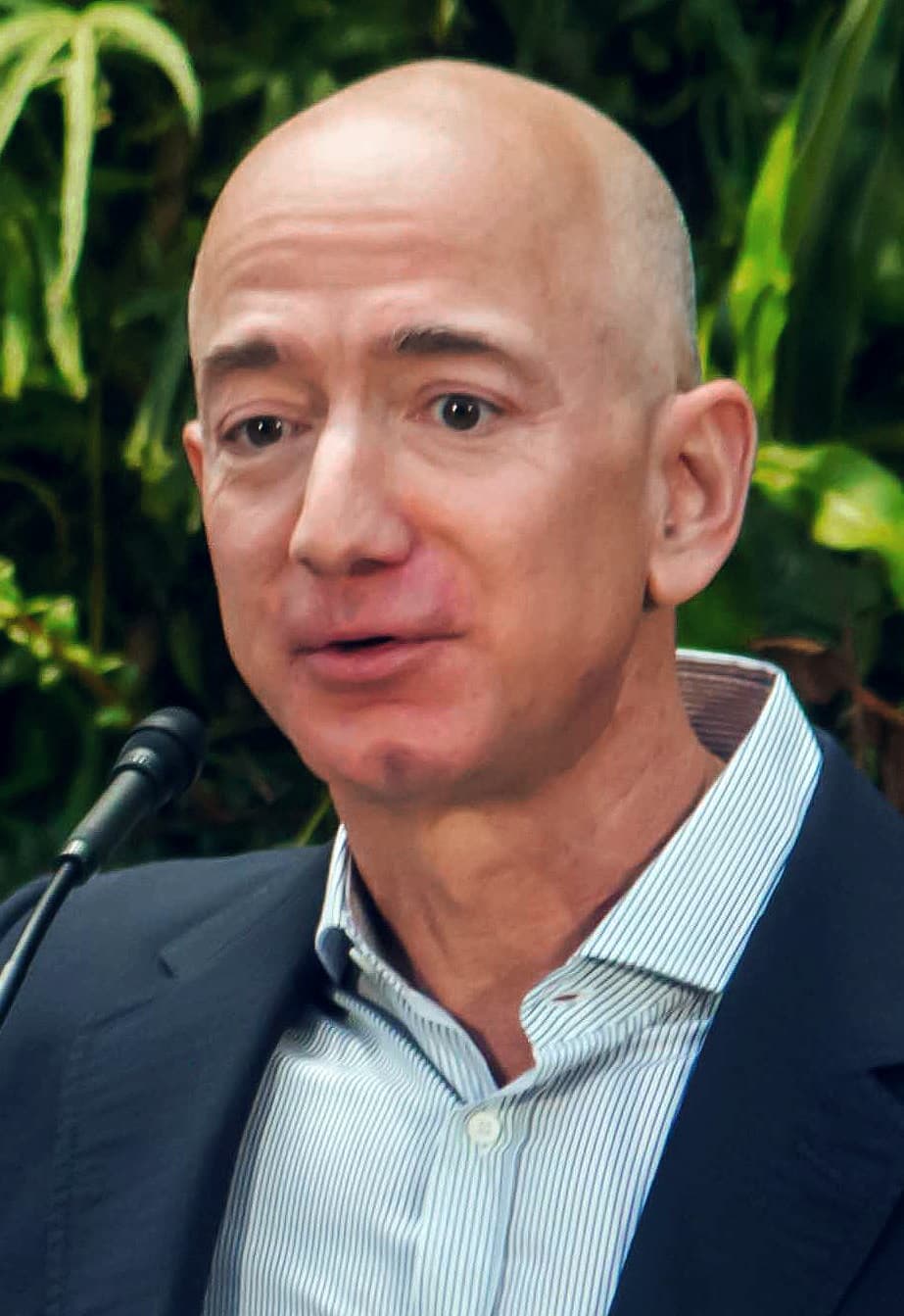
Jeff Bezos built something that most billionaires never manage: a fortune that builds up faster than he can give it away, sell it off, or diversify it into anything resembling a balanced portfolio. As of June 2026, our analysis arrives at an estimated net worth of $269.5 billion. A figure that places him in rarefied air even among centibillionaires, behind only Elon Musk in the contemporary rankings of private wealth.
The headline number requires a framework to be understood properly. This is not a diversified fortune. It is not a portfolio of operating companies, hedge-fund positions, and trophy real estate assembled over decades of capital allocation. It is, overwhelmingly, one bet. Amazon. That happened to become the defining commercial infrastructure of the early twenty-first century. Strip away the rocket company, the newspaper, the personal investments, and the property, and you are left with a fortune that moves when Amazon moves, and stops when Amazon stops.
Published estimates have clustered in a wide band. Celebrity Net Worth placed the figure at $285 billion as of May 2026. Fortune's April 2026 assessment landed closer to $254 billion. Our analysis, weighted for recency, equity-price movement through mid-June, and a conservative haircut on private-company valuations, brings the figure to $269.5 billion. The spread across sources reflects the genuine difficulty of valuing a stake in a company whose market capitalization shifts by tens of billions on any given earnings day.
How $269.5 Billion Ranks Against Peers Right Now
Bezos's estimated $269.5B net worth places him firmly in the top two of global wealth rankings as of June 2026, trailing only Elon Musk among individuals and dwarfing the next tier of tech founders.
Peer context matters here. Bezos crossed $150 billion for the first time during a period that CNET documented extensively, making him, at that moment, arguably the wealthiest private individual in recorded history. He has since been surpassed by Musk, whose Tesla and SpaceX positions compound differently. Through private valuations and public market sentiment both. But Bezos's gap to the next tier remains enormous. The Larry Ellisons and Bill Gateses of the world, themselves worth sums that would be life-defining for any nation-state, trail his figure by a margin that is not narrow.
What makes his standing built that way unusual is that it derives almost entirely from a single public equity. Most fortunes at this scale have been on purpose diversified over time. Family offices, sovereign-style portfolios, real asset holdings. Bezos has diversified at the margin, but not at the core. Amazon still accounts for the overwhelming share of everything he is worth. That concentration is both his greatest risk and, historically, his greatest engine of stacking.
His 2019 divorce from MacKenzie Scott. Which multiple sources including The Guardian and TODAY reported transferred shares then valued in the vicinity of $38 billion to Scott. Did not dislodge him from the top of the global rankings for long. The Amazon stake he retained continued to appreciate at a pace that absorbed that transfer within a relatively short period. Scott's own fortune, which Vanity Fair noted stood near $38.3 billion at the time of her second divorce filing in late 2022, is itself a testament to how much value the original equity position held.
Amazon Equity: The Engine Behind 88% of His Fortune
Amazon equity accounts for roughly 88% of Bezos's net worth. Approximately $237 billion. Making it by far the dominant driver of his wealth and the primary variable in any forward estimate.
Our source breakdown assigns approximately $237.2 billion to Bezos's residual Amazon shareholding. Roughly 88 cents of every dollar of his estimated net worth. That concentration is not an accident of laziness. Bezos made a intentional choice, across decades, to retain a meaningful founder's stake rather than step by step liquidate into diversified vehicles. The result is a fortune that is, in financial terms, essentially a leveraged position on the continued dominance of cloud infrastructure, third-party marketplace logistics, and digital advertising.
Amazon Web Services remains the unit that commands the most analyst attention when valuing his stake. AWS generates operating margins that dwarf the company's retail segment, and institutional investors have periodically argued that the cloud division alone justifies a valuation that would make the rest of Amazon nearly free. When AWS reports a strong quarter, Bezos's net worth moves in ways that are visible on any real-time tracker. When sentiment shifts on cloud spending, the reverse is equally true.
Bezos stepped down as Amazon's chief executive in July 2021, transitioning to executive chairman. A role that preserves his governance influence while freeing him from operational cadence. That transition has not diminished the equity relationship. He has continued to sell shares through pre-arranged trading plans, with Fortune documenting that his stake sales have occasionally raised eyebrows about near-term price signals, though institutional analysts broadly regard systematic founder sales as standard estate and liquidity management rather than a directional bet against the company.
The 2019 divorce settlement is the most significant single transfer of Amazon equity in the company's history outside of Bezos's own sales. The shares transferred to MacKenzie Scott. At the time worth figures that multiple outlets, including The Guardian and TODAY, placed in the $38 billion range. Were absorbed by the market without meaningful price disruption, reflecting the depth of Amazon's institutional ownership base.
“At 88% Amazon concentration, Bezos holds the most consequential single-equity bet in the recorded history of private wealth. And it is still stacking.”
Blue Origin: The $16 Billion Personal Moonshot
Blue Origin, Bezos's privately held space venture, contributes an estimated $16.2 billion to his net worth. Meaningful but secondary, and entirely dependent on private-market valuation methodologies.
Blue Origin is the asset in Bezos's portfolio that is hardest to value with precision. It is a private company, which means there is no public market price, no quarterly earnings disclosure, and no analyst consensus estimate. Our analysis assigns approximately $16.2 billion to the Blue Origin position. Roughly 6% of total net worth. Based on comparable private-market valuations for late-stage aerospace ventures and the scale of capital Bezos has personally committed to the company across two decades.
The funding mechanism itself is notable. Bezos has funded Blue Origin by selling Amazon shares, at various points publicly committing to liquidate roughly $1 billion annually from his equity position to finance the rocket company's operations. That cadence has since accelerated as the company has scaled its workforce, its engine production capability, and its ambitions for the New Glenn orbital launch vehicle and, eventually, the Blue Moon lunar lander program.
Whether the $16.2 billion ascribed to Blue Origin reflects its genuine enterprise value or represents an optimistic private-market premium is a legitimate question. The commercial launch market has become more competitive since SpaceX established reusability as the industry standard. Blue Origin has made progress, but the gap to its primary competitor remains significant. For net-worth accounting purposes, the figure we apply is conservative relative to some third-party assessments, reflecting the inherent illiquidity discount on a privately held aerospace enterprise with no clear near-term IPO timeline.
Bezos Expeditions: The Quiet $10.8 Billion Venture Book
Personal investment vehicles including Bezos Expeditions hold stakes across technology and life sciences at a value our analysis places near $10.8 billion. Roughly 4% of total net worth.
Bezos Expeditions, the personal venture vehicle that predates many of his better-known activities, has quietly assembled a book of technology and life sciences investments that our analysis values at approximately $10.8 billion. That figure represents around 4% of total net worth. Not negligible, but firmly a secondary consideration relative to the Amazon anchor.
The early Google investment, placed before the search company went public, is probably the most historically significant position in the portfolio. A bet made on the judgment that Bezos had earned from building Amazon's own technology infrastructure. The portfolio also spans health care companies, satellite technology firms, and a range of earlier-stage bets that reflect his long-documented interest in applying computational thinking to industries that have historically resisted it.
Unlike his Amazon stake, these positions are not subject to daily mark-to-market visibility. Private rounds provide intermittent data points, and the exits. IPOs, acquisitions. Occasionally produce headlines, but the aggregate value of the Bezos Expeditions book is genuinely difficult to pin down in real time. Our $10.8 billion figure is a synthesis of disclosed funding rounds, comparable exit multiples, and the assumption that the portfolio has been managed with the same return orientation that has characterized his public-market discipline.
Real Estate and Luxury Assets: A Billion-Dollar Rounding Error
Bezos's real estate portfolio and personal luxury assets. Including multiple properties and high-profile vessels. Total an estimated $2.7 billion, representing just 1% of his net worth.
For most ultra-high-net-worth individuals, a $2.7 billion real estate and personal asset portfolio would be the defining headline of a wealth profile. For Bezos, it is a rounding consideration. Approximately 1% of our $269.5 billion estimate. The portfolio is genuinely substantial by any normal measure: a collection of properties spanning Miami, Washington D.C., Los Angeles, and a working ranch in Texas, alongside oceangoing vessels that have attracted considerable press attention for their scale.
The yacht question generated a period of unusual public fascination in 2022, when logistics associated with one of his vessels. Specifically the reported need to temporarily disassemble a historic Dutch bridge to accommodate its passage. Became a brief cultural flashpoint. The episode illustrated something meaningful about the architecture of extreme wealth: assets that would define any other fortune become curiosities, minor footnotes, in a portfolio this size.
Real estate appreciates, but it does not compound at the rate of a dominant technology platform. Bezos appears to understand this implicitly. His property acquisitions have been significant but not obsessive. A collector's portfolio rather than a capital-allocation strategy. The $2.7 billion we assign to this category is best understood as a floor, given that trophy real estate in the markets where he operates has continued to appreciate, but also as a ceiling in terms of its relevance to the overall net-worth calculation.
The Washington Post: A $250 Million Bet That Defies Easy Valuation
Bezos purchased The Washington Post for $250 million in 2013 and holds it personally; its current contribution to his net worth is modest and reflects the structural challenges facing legacy news.
The Washington Post acquisition, completed in August 2013 for $250 million. A figure documented contemporaneously by BBC News, Business Insider, GeekWire, and multiple other outlets. Is among the more analytically interesting assets in Bezos's portfolio. Not because of its financial scale, which is negligible relative to his overall position, but because of what it says about his willingness to own assets that do not conform to a return-maximization logic.
Business Insider's reporting on the acquisition's early years documented genuine operational transformation: digital traffic growth, editorial reinvestment, and a technology philosophy that imported some of Amazon's infrastructure discipline into the newsroom. For a period, the Post appeared to be threading a needle that many legacy print organizations could not. Growing digital subscribers while preserving journalistic ambition.
The intervening years have complicated that narrative. The digital advertising market has been reshaped by platforms that the Post cannot match at scale, and the broader economics of subscription news have proven more difficult than the growth years suggested. Our analysis assigns approximately $2.7 billion to the Washington Post position. A figure that incorporates a meaningful premium above the 2013 acquisition price but reflects the genuine uncertainty about the organization's trajectory. It is held personally rather than through a corporate structure, which means its value fluctuates with private-market sentiment and is not subject to public disclosure requirements.
Capital Allocation Strategy: Why Concentration Persists
Bezos has on purpose maintained heavy Amazon concentration rather than diversifying aggressively, using share sales primarily to fund Blue Origin. A capital allocation logic that has compounded his wealth faster than diversification likely would have.
The most striking feature of Bezos's wealth architecture is not its size but its persistence of structure. After more than three decades of extraordinary Amazon appreciation, he remains overwhelmingly concentrated in a single equity. This is not passivity. It is a revealed preference. At various points, financial analysts and wealth managers have publicly observed that someone in his position would conventionally be expected to diversify more aggressively. He has not done so in any systematic way.
The rationale, to the extent it has been publicly articulated, appears to be that he has not identified better stacking opportunities at scale than retaining Amazon equity. His personal investment vehicles are substantial but relatively modest in aggregate. His real estate holdings are significant but on purpose bounded. Blue Origin is the one category where he has directed meaningful capital outside of Amazon. But that capital has come from Amazon share sales, not from a pivot away from the core position.
Fortune's coverage has periodically noted share sales in the multi-billion-dollar range, typically structured as pre-arranged trading plans that provide some insulation from accusations of market timing. These sales have funded Blue Origin operations and, presumably, some portion of his personal expenditure and philanthropic activity. But they have not at root altered the shape of his wealth. Amazon's appreciation has consistently outpaced the liquidation rate, leaving the concentration ratio approximately where it was a decade ago.
What Could Move the Number. In Either Direction
AWS competitive pressure, Amazon regulatory risk, and Blue Origin's path to commercial scale are the three variables most likely to shift Bezos's net worth materially over the next three to five years.
Three variables dominate any forward scenario analysis for Bezos's net worth. First: the competitive trajectory of Amazon Web Services. AWS has delivered margins that have effectively subsidized Amazon's retail ambitions for years. If Microsoft Azure or Google Cloud begin taking meaningful market share in enterprise workloads. And both have made credible moves in that direction. The premium multiple that investors ascribe to Amazon's stock compresses, and Bezos's net worth follows.
Second: regulatory and antitrust risk. Amazon operates in a regulatory environment that has grown materially more hostile across both U.S. And European jurisdictions over the past several years. A forced structural separation of AWS from Amazon's retail operations, while considered unlikely by most antitrust scholars, would be a significant valuation event. Even short of that outcome, ongoing regulatory friction around marketplace practices, advertising, and logistics creates headline risk that has historically created short-term volatility in the stock.
Third: Blue Origin's commercial trajectory. If New Glenn establishes itself as a credible launch vehicle and the company secures meaningful NASA and commercial contracts at scale, the private valuation. And therefore Bezos's net worth. Could see an upward revision in any subsequent funding round or public disclosure. Conversely, continued technical delays or failures would weigh on third-party assessments of that position's worth. The aerospace industry has an unforgiving relationship with timelines, and the gap to SpaceX's launch cadence remains a persistent point of comparison.
Trajectory: Where $269.5 Billion Goes From Here
If Amazon continues stacking at its trailing five-year rate and Blue Origin reaches commercial scale, Bezos's net worth could approach $285 billion within 12 months. A figure already cited by some analysts for mid-2026.
Celebrity Net Worth's May 2026 estimate of $285 billion and Fortune's more conservative April 2026 figure of $254 billion bracket the realistic near-term range. Our June 2026 synthesis of $269.5 billion sits between them, incorporating equity price movement through mid-month and a maintained discount on private-asset valuations. The upside case. $285 billion within the next twelve months. Requires sustained Amazon multiple expansion and at least one meaningful positive data point from Blue Origin's commercial program.
The downside case is harder to construct without a macro event. Amazon's business model has demonstrated a capacity to grow through recessions, rate cycles, and competitive pressure in ways that more cyclical businesses cannot. The structural demand for cloud infrastructure, e-commerce fulfillment, and digital advertising has not shown signs of secular reversal. That does not make a correction impossible. Market sentiment can move quickly. But it does mean that the base case for Bezos's wealth is continued slow appreciation rather than mean reversion.
What is less likely to change is the fundamental architecture of how his fortune works. Bezos turned sixty-two in January 2026. His post-Amazon chapter. The astronaut certification, the growing public profile of Blue Origin, the engagement with philanthropy that has so far been episodic rather than systematic. Has not produced the diversification event that conventional wealth-management logic would predict. The bet on Amazon, placed in a garage in Albuquerque in 1994, continues to be the defining financial position of his life. At $269.5 billion, it remains, by almost any measure, the most consequential single equity bet in the history of private wealth.
How the $269.5B adds up
- Amazon equity (founder stake)The overwhelming majority of Bezos's net worth derives from his remaining Amazon shareholding, which made him the first person to exceed $200 billion in net worth in 2020 and anchors his current ~$254–285B valuation.$237.2B88%
- Blue Origin (space venture)Bezos has funded Blue Origin with billions of his own capital over two decades; the private company's valuation contributes a meaningful but secondary share of his wealth.$16.2B6%
- Other investments & venture capitalBezos Expeditions and related personal investment vehicles hold stakes in companies including Google (early investor) and various startups, contributing a modest share of his overall wealth.$10.8B4%
- Real estate & personal assetsBezos owns a significant real estate portfolio and luxury assets (yachts, aircraft), though these represent a small fraction of his total net worth relative to his equity holdings.$2.7B1%
- Media (Washington Post)The Washington Post was acquired for $250 million in 2013 and is held personally; as a news organization it likely represents a small and potentially declining share of his total wealth.$2.7B1%
Ezra Linwood — Ezra Linwood covers centibillionaire wealth architecture, founder equity strategies, and the private capital markets for Neon Hollywood.
Disclaimer: Net-worth figures are editorial estimates built from publicly available reporting, filings, and market data — see our methodology. They are not verified statements of any person’s finances and nothing here is financial advice.