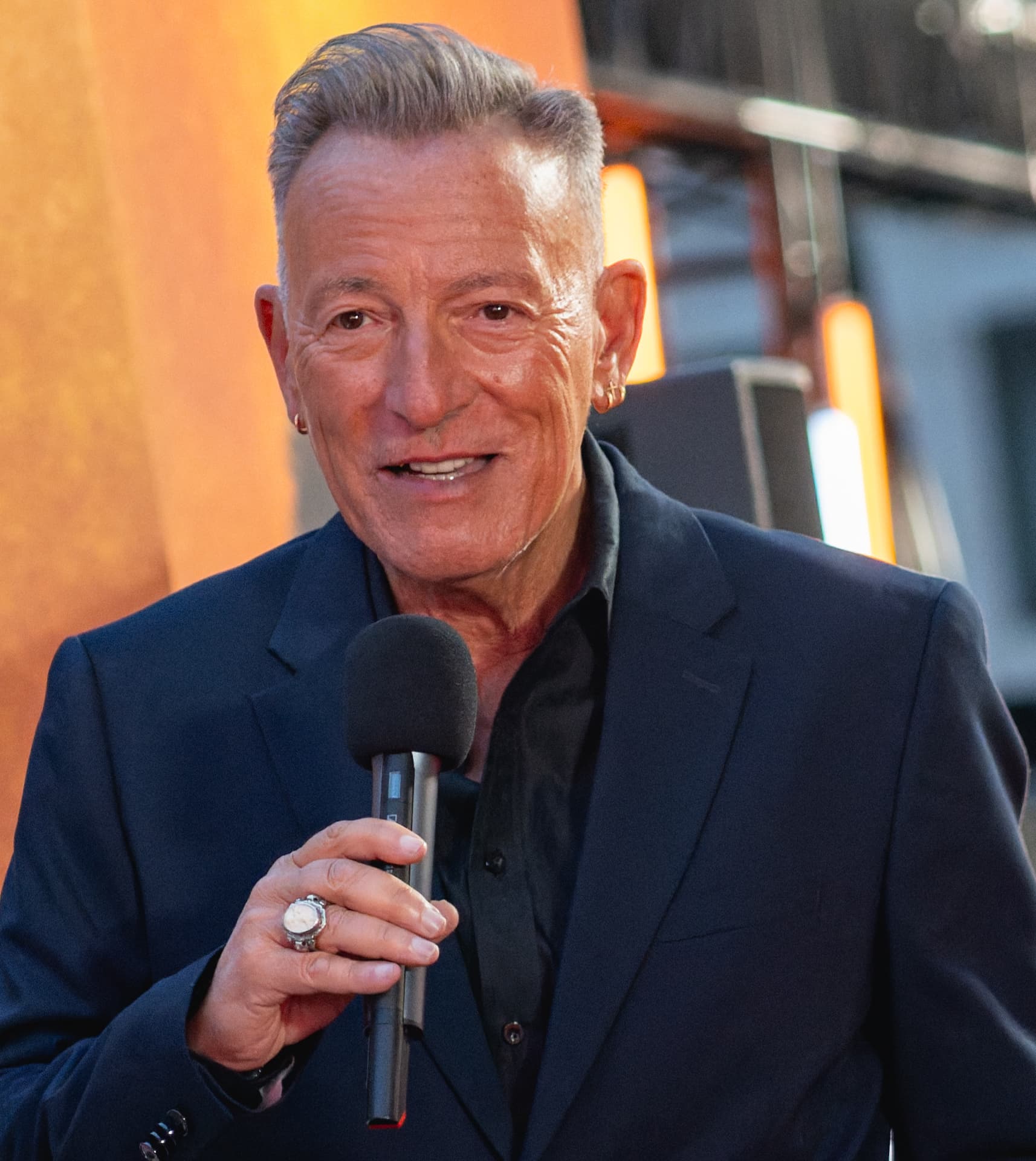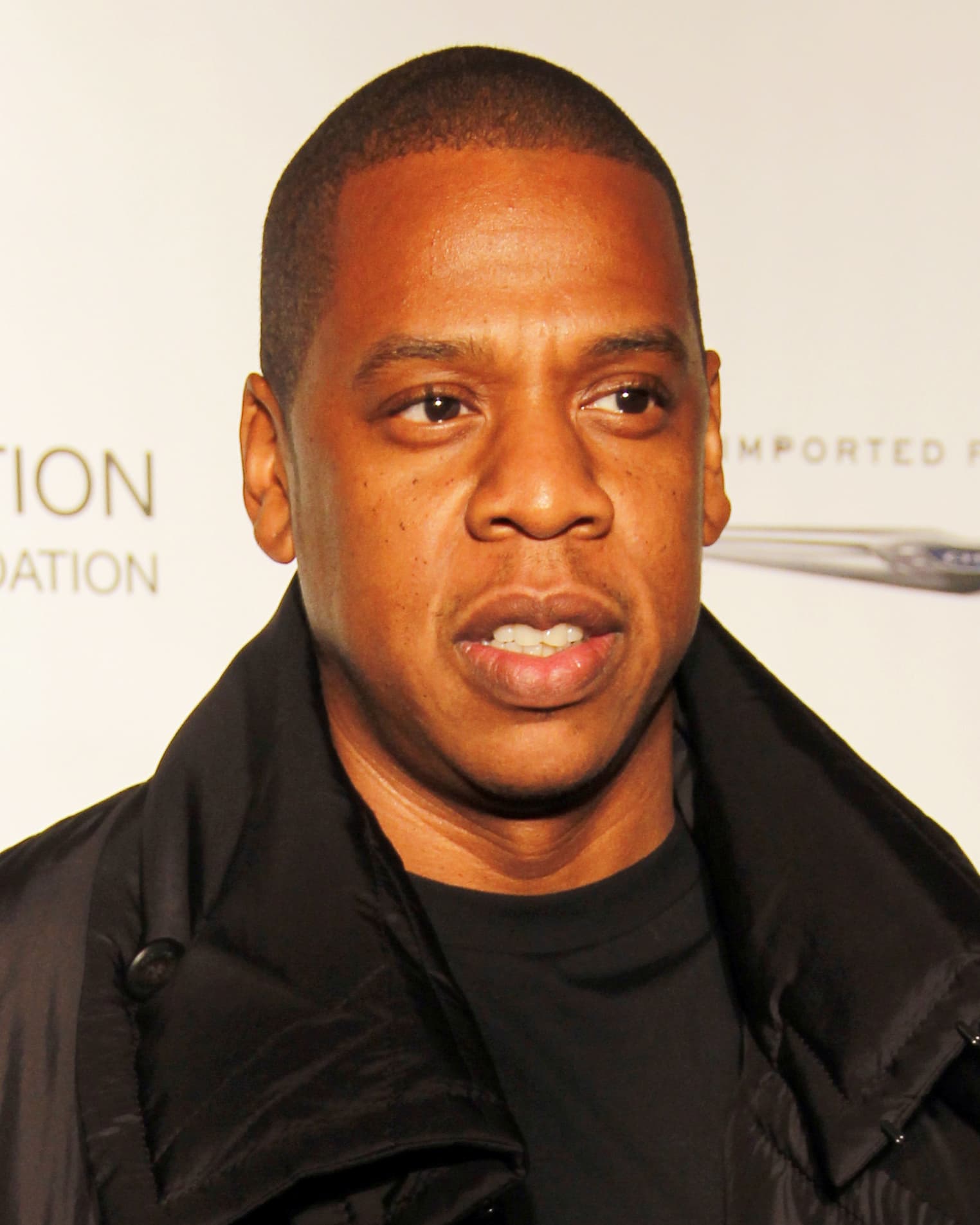
Shawn Corey Carter. Born December 4, 1969, in Brooklyn's Marcy Houses. Released his debut album at 26. By 56, he had become the first musician in history to be named a billionaire by Forbes, and then doubled that threshold. The number matters because of what it represents built that way: a fortune built not from a single career peak but from a cascading series of ownership positions accumulated over three decades.
Our analysis, cross-referencing the Forbes 2025 billionaire ranking (reported via MSN and subsequently circulated widely) with Money Nation's granular career-earnings breakdown and earlier annual snapshots from Forbes and Vanity Fair, brings the estimate to $2.5 billion as of June 2026. That figure is not a projection. It is a weighted synthesis anchored by the most recent authoritative source and stress-tested against mid-decade benchmarks.
To understand the number, you have to understand the architecture. Music. Recording, publishing, streaming. Accounts for a meaningful but surprisingly modest slice. The overwhelming weight sits in beverage equity, entertainment infrastructure, and a portfolio of strategic investments that have compounded quietly for years. Carter didn't transition from artist to businessman. He ran both tracks simultaneously, which is precisely why the $2.5B figure is credible where a purely music-driven valuation would not be.
How Jay-Z's $2.5B Stacks Up Against Peer Fortunes in Music
Jay-Z's $2.5B net worth, per Forbes 2025, makes him the wealthiest musician on record. A figure roughly three times what the next tier of hip-hop billionaires have reported.
Forbes placed Jay-Z atop its richest-musician ranking in 2025, a designation that carries more weight when measured against the compressed field behind him. The gap between a $2.5B valuation and the next cohort of rap wealth. Artists whose fortunes tend to cluster in the high hundreds of millions. Is not incremental. It reflects a at root different capital strategy.
For context, Money Nation's 2016 snapshot placed him at approximately $558M, a figure that already dwarfed most peers in that era. The publication's separate career-earnings tally reached $868M in gross before taxes and expenses. A number that helps explain the trajectory rather than the endpoint. The decade-long stacking from that mid-point to $2.5B reflects asset appreciation, particularly in beverage equity, rather than new income events alone.
The comparison with annual earnings snapshots is instructive. Forbes clocked him at $56M for 2015; Vanity Fair, drawing on the same Forbes Celebrity 100 methodology, reported $53M for the 2016 scoring period. Those figures represented top-of-the-market annual income for a working artist-executive. But they are rounding errors against the current balance-sheet figure, which underscores why net worth and annual earnings tell entirely different stories about the same person.
The Business Portfolio: Why $1.4B of the Fortune Lives Outside Music
Business ventures. Spanning Armand de Brignac champagne, D'Ussé cognac, Roc Nation, and Tidal. Account for roughly $1.4B of Jay-Z's estimated $2.5B fortune, making them the dominant wealth driver by a wide margin.
Our breakdown assigns approximately $1.4B. Roughly 55 percent of the total. To the cluster of business positions Carter has accumulated since the mid-2000s. Money Nation's career-earnings analysis identified business deals as the single largest earnings category, tallying roughly $354M in that bucket alone through 2016. The decade since has been where the real multiple expansion happened.
The beverage plays are the most built that way significant. Carter's stake in Armand de Brignac, the Champagne label colloquially known as Ace of Spades, was acquired outright before a reported partial sale to LVMH's Moët Hennessy division. A transaction that industry observers at the time described as one of the highest-profile luxury-beverage deals in recent memory. His co-ownership of D'Ussé cognac, distributed through Bacardi, operates in the fast-growing premium spirits segment. We do not assign specific valuations to either brand individually, as no audited figures are publicly available, but their combined contribution to the $1.4B business cluster is primary.
Roc Nation, the entertainment and sports management company he founded in 2008, represents a different kind of asset: recurring fee income plus intellectual property. Its client roster spans musicians, athletes, and touring productions, generating management commissions that flow regardless of Carter's own creative output. Tidal, the artist-owned streaming platform, was partially acquired by Square (now Block) in 2021, providing a liquidity event whose proceeds fold into the broader portfolio.
The combined effect is a business stack that behaves less like celebrity licensing and more like a diversified holding company. That structural quality. Recurring revenue, equity appreciation, partial exits. Is the primary reason our $2.5B estimate holds even under conservative assumptions.
“The $2.5B figure is best read not as a musician's payday but as the terminal value of a three-decade reinvestment discipline that treated every dollar of touring income as seed capital.”
Touring Revenue: The $375M Live-Performance Ledger
Live performance has contributed an estimated $375M to Jay-Z's cumulative wealth, anchored by co-headlining stadium runs that rank among the highest-grossing tours in hip-hop history.
Money Nation attributed roughly $240M in career earnings specifically to concert touring through its 2016 analysis. Our estimate, updated to June 2026, brings the cumulative live-performance contribution to approximately $375M. Reflecting additional touring cycles, festival headlining fees, and the On The Run co-headlining franchise with Beyoncé, which produced the largest single annual line item in his touring history.
The mechanics are worth examining. Stadium touring at Carter's level operates on a co-promoter model in which the artist takes a guaranteed fee against a back-end percentage of gross receipts above a threshold. At full stadium capacity. 50,000 to 80,000 seats. Even a modest per-ticket average generates eight-figure gross per date. The On The Run II tour, by any reasonable industry estimate, performed at the upper end of that range across North American and European legs.
Touring is a high-revenue, high-cost business. Production, crew, logistics, and venue fees compress net margins significantly relative to gross receipts. The $375M figure in our breakdown represents net contribution to wealth. After costs, taxes, and management fees. Not gross tour revenue. That distinction matters when comparing touring's share to the business portfolio, whose equity positions carry far lower ongoing operational costs.
Music Catalog and Recording: The $250M Bedrock That Outsiders Overvalue
Recording, publishing, and streaming together account for an estimated $250M of Jay-Z's fortune. Significant in absolute terms, but only 10% of the total, reflecting how far his wealth has migrated beyond music.
The temptation to center Jay-Z's wealth story on his discography is understandable but analytically wrong. Money Nation's career breakdown assigned approximately $78M to music sales across his entire recording career. A surprisingly compact number for an artist with multiple Diamond-eligible albums and a catalog stretching back to 1996. Publishing rights and streaming royalties add to that base, and our updated estimate places the full music-and-recording stack at around $250M.
The modest relative share reflects two realities. First, Carter was notoriously strategic about his label relationships: he signed to major-label distribution while retaining ownership structures that were unusual for his era, but pre-streaming catalog values were still constrained by physical-sales economics. Second, and more importantly, his attention and capital have been step by step redirected toward equity positions that generate appreciation rather than royalty checks.
That said, $250M from music is not a footnote. It represents a durable, recurring base. Streaming residuals don't expire, and catalog value tends to appreciate as licensing demand grows. For any other artist in his generation, $250M from music alone would define the entire fortune. For Carter, it is the foundation on which the rest was built.
Endorsements and Brand Partnerships: The $300M Relationship Economy
Brand partnerships and endorsement relationships contribute an estimated $300M to Jay-Z's net worth, built over decades of selective, equity-oriented deals rather than straightforward spokesperson arrangements.
Money Nation's analysis attributed roughly $147M in career earnings to endorsement deals through 2016. A figure that, on its face, seems conservative for an artist of his commercial profile. Our updated estimate lands near $300M, incorporating the decade since and a shift in how those arrangements are structured.
Carter has been publicly intentional about rejecting flat-fee spokesperson deals in favor of equity or royalty structures wherever possible. That orientation. Embedded in the same logic as his beverage investments. Means the $300M figure blends traditional endorsement income with the residual value of brand relationships that evolved into partial ownership positions.
The NFL's relationship with Roc Nation, formalized in 2019 as a live-music and social-justice partnership, is the highest-profile recent example of this model. Rather than accepting a conventional consulting fee, Carter's organization secured an ongoing role in entertainment programming. A recurring, relationship-driven revenue stream that builds up differently than a one-time campaign deal. That deal structure, replicated across multiple brand relationships over two decades, explains why the endorsement stack is larger than the raw career-earnings figure suggests.
Real Estate and Financial Assets: The $200M Portfolio Beneath the Surface
Real estate holdings and broader financial-asset appreciation account for roughly $200M of Jay-Z's estimated net worth, a category that grows passively as other income streams fund continued acquisition.
Money Nation's career model added back approximately $197M in net investment returns. The residual after taxes and expenses that was reinvested rather than consumed. Our analysis maps that figure to the real estate and financial-asset category, which we estimate contributes around $200M to the current $2.5B total.
The real estate component includes residential properties in New York, Los Angeles, and the Hamptons, as well as reported commercial holdings. Specific property valuations are not publicly disclosed, and we do not assign granular figures to individual assets. What matters analytically is the aggregate: a portfolio accumulated over two decades, funded by surplus cash from touring and endorsements, now appreciating in markets that have generally outperformed inflation since 2010.
The financial-asset layer. Angel investments, fund positions, and structured equity stakes in early-stage companies. Is harder to value but potentially significant. Exits from positions in companies like Uber, where early-stage celebrity investors received allocations ahead of the IPO, added lump-sum returns that are folded into the broader $200M estimate. The snowball of reinvesting at scale, year after year, is a structural advantage that most wealth analyses underweight.
Capital Allocation Strategy: How Carter Reinvests and Why It Matters
Jay-Z's wealth architecture is defined by systematic reinvestment of music and touring income into equity positions. A capital-allocation discipline that has compounded the base figure from $558M in 2016 to $2.5B by 2026.
The trajectory from Money Nation's 2016 figure of roughly $558M to our current $2.5B estimate implies a compound annual growth rate of approximately 16 percent over a decade. That rate is not achievable through income alone. It requires asset appreciation at scale. The beverage equity positions, Roc Nation's valuation growth, and real estate appreciation collectively explain the math.
What separates Carter's capital strategy from peer artists is the intentional sequencing. Touring cash funded early brand investments. Brand investments generated equity that attracted institutional co-investors. Institutional validation. Exemplified by the LVMH relationship. Increased the credibility of subsequent deals and the multiples at which those assets could be valued. Each stage funded the next.
The Tidal exit to Block, Inc. Is the clearest case study. The platform was acquired for a reported sum that, while never fully disclosed publicly, represented a meaningful liquidity event for artist-shareholders. Carter had structured his ownership to capture that upside, then redeployed proceeds rather than distributing them. That pattern. Acquire, appreciate, exit partially, redeploy. Is the operational signature of the $2.5B portfolio.
Where the $2.5B Figure Goes From Here: Upside and Risk Factors
Jay-Z's fortune is likely to grow from $2.5B if beverage equity valuations hold and Roc Nation continues scaling, but concentrated positions in private markets carry real mark-to-market risk.
The upside case is straightforward. Premium spirits valuations have broadly expanded over the past decade, and Armand de Brignac's partial LVMH alignment gives it distribution infrastructure that smaller luxury labels lack. If the broader luxury-beverage category sustains its growth trajectory. And there is meaningful analyst consensus that it will. Carter's equity position appreciates without requiring any new creative output.
Roc Nation's expansion into sports management, film production, and international markets provides a second growth vector. Management companies are valued on fee-revenue multiples, and as the client roster grows in both size and profile, the underlying enterprise value builds up. A formal institutional sale or partial IPO of Roc Nation would be a watershed liquidity event. One that industry observers have speculated about but that has not materialized as of this writing.
The risk factors are concentrated-position risks, not idiosyncratic personal risks. Private company valuations are inherently illiquid and subject to mark-down in adverse credit environments. A significant deterioration in luxury-goods spending. The kind of demand destruction that accompanied the 2008 financial crisis. Would compress beverage-brand multiples. Carter's fortune is not recession-proof. It is, however, diversified enough across categories and geographies that a single adverse event would compress but not collapse the figure.
Our base case, absent a major economic dislocation, has the figure crossing $2.5B in sustained fashion and trending higher through the decade. The stacking logic that brought him here is still running.
How the $2.5B adds up
- Business ventures (Armand de Brignac, D'Ussé, Roc Nation, Tidal, investments)Business deals represented the largest single earnings category in Money Nation's career breakdown (~$354M), and Jay-Z's beverage and entertainment company stakes are primary drivers of his billionaire valuation.$1.4B55%
- Music recording, publishing & streamingMusic sales contributed an estimated $78M to career earnings per Money Nation, a relatively modest share compared to his enterprise income.$250M10%
- Concert touring & live performanceConcert tours generated an estimated $240M in career earnings, making touring a significant but secondary income stream.$375M15%
- Endorsements & brand partnershipsEndorsement deals contributed roughly $147M in career earnings and include long-term brand relationships that augment ongoing income.$300M12%
- Real estate & portfolio investmentsInvestment returns added back approximately $197M net to career earnings per Money Nation, reflecting real estate and financial asset appreciation.$200M8%
Ezra Linwood — Ezra Linwood covers celebrity wealth, music-industry finance, and the business of entertainment for Neon Hollywood.
Disclaimer: Net-worth figures are editorial estimates built from publicly available reporting, filings, and market data — see our methodology. They are not verified statements of any person’s finances and nothing here is financial advice.