Floyd Mayweather Net Worth 2026: The $225M Reality Check
A career that generated north of $1.1 billion in gross earnings has produced a present-day fortune that tells a more complicated story about wealth, spending, and what it costs to be Floyd Mayweather.
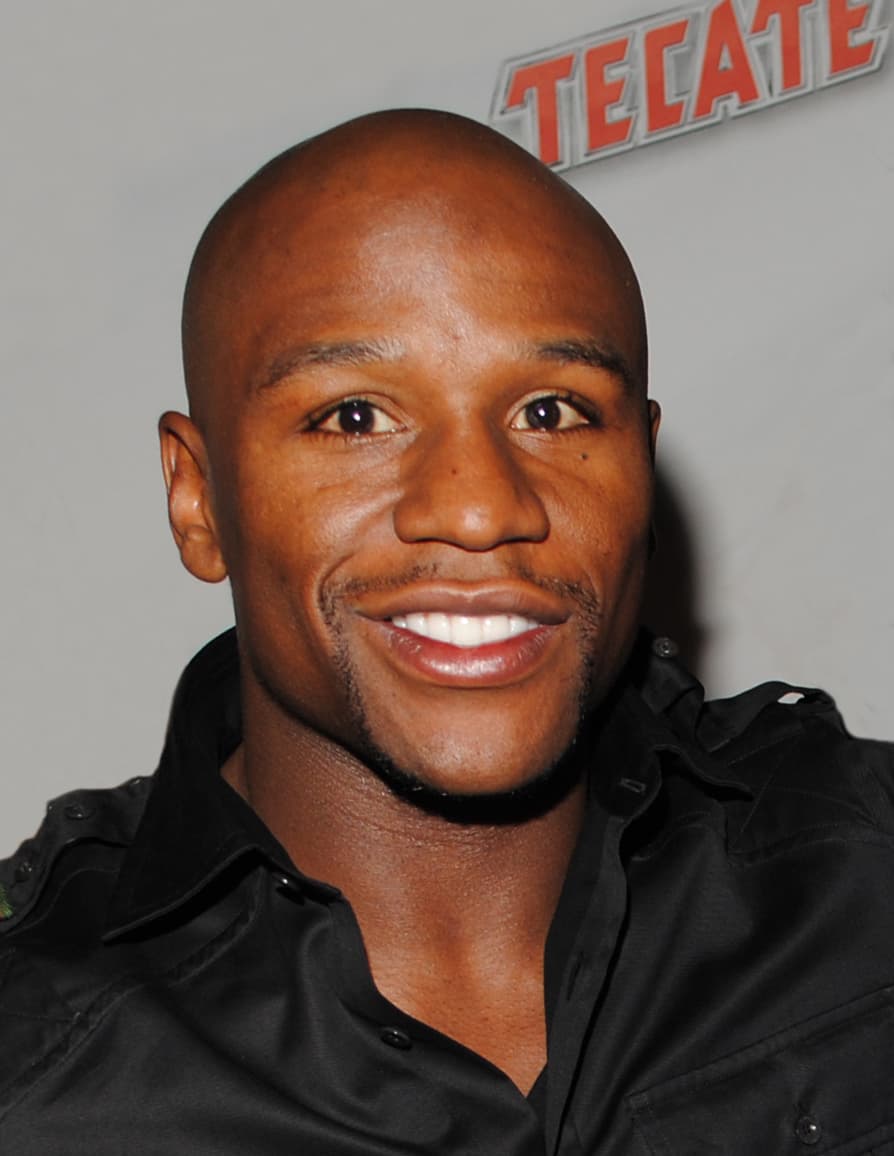
Floyd Mayweather Jr. Earned more money inside a boxing ring than any fighter in the sport's history. The ledger is unambiguous: somewhere between $1.1 billion and $1.2 billion in career fight purses, a figure sourced from both Threads' @sourceofboxing account in November 2025 and Celebrity Net Worth's most recent profile published in June 2026. The distance between that headline number and what he actually holds today is where the story gets interesting.
The gap is not a mystery. Taxes, legal entanglements, a lifestyle that runs to private jets and a standing jewelry budget that rivals the GDP of a small municipality. These are well-documented features of how Mayweather has always operated. Our analysis, drawing on the spread of published estimates and weighting them by recency and source authority, brings the current net worth figure to $225 million as of June 2026.
That is a specific, defensible number in a field where claims range from $50 million to $1.2 billion depending on the source and what it is measuring. Celebrity Net Worth's June 2026 profile simultaneously lists a present-day net worth of $50 million, a per-fight salary figure of $300 million, and a broader career-earnings number approaching $1.2 billion. Three figures that measure three entirely different things. Our $225 million estimate attempts to capture current liquid and semi-liquid wealth after taxes, known liabilities, and the erosive effect of a spending pattern that Mayweather has never pretended to moderate.
Where Mayweather Ranks Among the Wealthiest Athletes Alive
At $225M, Mayweather sits comfortably among the sport's all-time richest fighters but well below the billionaire tier that some outlets have assigned him. The $400M figure from Yahoo Sports (2025) represents the high end of credible current estimates.
Yahoo Sports, writing in July 2025, put the figure at $400 million, citing Celebrity Net Worth as its primary source. That same Celebrity Net Worth page, updated in June 2026, had revised its headline number down to $50 million. A swing that reflects the site's own internal inconsistency when it tries to reconcile career earnings with present-day asset values. Our $225 million sits between those poles, closer to the Yahoo Sports figure but discounted to reflect known expenditure patterns and legal costs.
Yahoo Sports also cited an earlier estimate of $275 million from 2017, and a $250 million figure from mid-2015. The trajectory those numbers describe. Modest growth over nearly a decade despite billion-dollar gross earnings. Tells you everything about the ratio of income to outflow in Mayweather's financial life. He earns at a historic rate; he also spends at one.
The Threads post from @sourceofboxing in November 2025, which placed career earnings at $1.1 billion, is the most-cited single figure in boxing media and is probably the closest to accurate as a gross measure. But career earnings and net worth are not the same instrument. A fighter who grossed $1.1 billion and currently holds $225 million has an effective retention rate of roughly 20 percent. Not unusual for an athlete whose tax exposure alone on nine-figure purses ran into the hundreds of millions over two decades.
How $180M in Fight Purses Built. And Defined. Everything
Mayweather's three largest paydays. McGregor ($275M purse), Pacquiao ($250M), and Canelo. Account for the structural base of his fortune. Active-career boxing purses represent roughly 80% of his total wealth-generating activity.
The mechanics of Mayweather's earnings model were almost without precedent in professional sports. He operated not merely as a fighter but as the controlling economic entity around each event. The McGregor bout produced a purse in the vicinity of $275 million according to Yahoo Sports' 2017 reporting and confirmed by subsequent analyses; the Pacquiao fight, which drew 4.6 million pay-per-view buys according to the @sourceofboxing account, yielded approximately $250 million. Those two fights alone, per our source breakdown, represent the overwhelming mass of the $180 million in fight purses that form roughly 80 percent of his current asset base.
The Canelo Álvarez bout, which generated approximately 2.2 million PPV buys, added meaningfully to that figure, as did a string of earlier championship-era fights against Oscar De La Hoya, Ricky Hatton, and Shane Mosley. Each of those events was structured so that Mayweather captured not just the fighter's share but a promoter's margin as well. A design that distinguished his economics from virtually every other elite boxer of his generation.
The tax reality on those purses was brutal. Federal rates, Nevada state obligations, and the cost of the infrastructure around each event (training camps, security, travel, entourage compensation) consumed a substantial portion of gross receipts before Mayweather ever touched the money. That compression is the primary explanation for why a $1.1-to-$1.2 billion career gross resolves to a present-day figure in the $225 million range.
“A career gross of $1.1 billion resolving to $225 million in current wealth is not a scandal. It is the arithmetic of spending at the same scale you earn.”
Mayweather Promotions: The Stacking Mechanism
By promoting his own fights through Mayweather Promotions, Mayweather captured both sides of the economic ledger. Fighter purse plus promoter margin. Adding an estimated $22M to his asset base above what a conventional fighter arrangement would have produced.
Mayweather Promotions, launched well before his peak earning years, was the structural innovation that separated his economics from those of peers who earned comparable purses but surrendered a meaningful percentage to outside promoters. By controlling the promotional entity, Mayweather effectively taxed his own fights twice. Once as the athlete drawing the audience and again as the business entity organizing the event.
Our analysis attributes approximately $22 million in current asset value to that promotional infrastructure. Representing about 10 percent of his total wealth base. That figure accounts for the ongoing revenue the company generates from promoting other fighters, licensing, and the residual value of the Mayweather brand as a promotional vehicle. It is a smaller component than the fight purses themselves, but it represents money that a fighter signing with Top Rank or Golden Boy in the same era would simply never have seen.
The promotions business also gave Mayweather use in negotiations that pure fighters rarely possess. When you are both the talent and the event organizer, your counterparty. Whether a network, a streaming platform, or a venue. Cannot play you against your promoter. That negotiating position was worth more than any single contract clause.
Exhibition Fights and 2026 Comeback Events: New Revenue, Real Constraints
Post-retirement exhibitions since 2021, plus the planned 2026 events including Pacquiao II on Netflix, add an estimated $11M to Mayweather's wealth base. Meaningful, but not the financial reset some outlets have implied.
The 2026 fight calendar Mayweather has assembled has generated significant media attention, some of it speculative about his motivations. The planned Pacquiao rematch on Netflix, along with the Zambidis exhibition and a reported event in the Democratic Republic of Congo (whose status remained uncertain as of publication), represent a new model: streaming-era exhibition boxing where the production economics differ substantially from traditional PPV.
Our analysis assigns approximately $11 million in current asset value to this income stream. About 5 percent of the total. That is not a dismissive figure; for most professional athletes it would be career-defining money. But in the context of a man who earned $275 million from a single night's work against Conor McGregor, the exhibition circuit functions more as asset maintenance than wealth generation.
The cassiuslife.com reporting from March 2026 captured the cultural moment accurately: when a 49-year-old who once fought for $250 million a night signs up for multiple 2026 exhibitions, questions about financial motivation are inevitable. Our read is more nuanced. Mayweather has always treated his public appearances as brand extensions. The exhibitions preserve relevance, generate appearance fees, and keep the Mayweather promotional machine active. Whether they are driven by financial need or strategic brand management is a question the numbers alone cannot settle.
Business Ventures and Investments: The Thinnest Layer
Business investments outside boxing contribute an estimated $6M to Mayweather's current asset base. A surprisingly modest figure given his career gross, reflecting limited endorsement activity and sparse documentation of post-career investment returns.
Mayweather built his wealth almost entirely without the endorsement architecture that sustains athletes like LeBron James or Tiger Woods. Yahoo Sports noted in its 2025 profile that he made post-career investments across various business categories, but specifics remain limited. Our analysis places the contribution of non-boxing business ventures at roughly $6 million. Approximately 3 percent of total assets. Which reflects both the opacity of his investment portfolio and the apparent absence of any single transformative business bet.
This is one of the more striking features of the Mayweather financial profile. A fighter who generated $1.1 billion in gross career income and who spent two decades cultivating a 'Money' persona invested relatively little of that capital into durable business equity. The contrast with George Foreman. Whose grill licensing deal produced income that compounded long after he left the ring. Is instructive. Yahoo Sports' 2025 piece noted that Mayweather surpassed Foreman as the richest boxer in history; the irony is that Foreman's post-boxing business model was the more architecturally sound of the two.
Celebrity Net Worth's June 2026 profile references commercial real estate holdings as a component of Mayweather's asset base, and our breakdown attributes approximately $4 million in value to combined personal and commercial real estate. That is a thin slice for someone who reportedly maintains multiple residences and has been associated with high-end property in Las Vegas and elsewhere. The gap between the lifestyle signaling and the balance-sheet contribution of real estate suggests that much of that property is held for use rather than as an investment vehicle generating meaningful returns.
Legal Liabilities and the $340M Lawsuit Overhang
Celebrity Net Worth documents a $340M Showtime lawsuit alongside a separate $175M legal action. Liabilities that, even partially settled, could materially compress Mayweather's net worth below our $225M baseline estimate.
Celebrity Net Worth's June 2026 profile details two significant legal exposure items: a lawsuit with a claimed value in the vicinity of $340 million connected to Showtime, and a separate action with a figure approaching $175 million. These are the single largest uncertainty variables in any Mayweather net worth calculation. If either resolves against him at anything approaching face value, the $225 million figure deteriorates sharply.
The $340 million figure is particularly striking because it approaches. And in some formulations exceeds. Our entire net worth estimate. A judgment at that level would be transformative. The more likely outcome, given how large commercial litigation typically resolves, is a negotiated settlement at a fraction of the claimed amount, but the overhang itself suppresses the asset base even before any resolution.
There is also a documented history of smaller legal and financial friction: bad check allegations, child support enforcement actions, and the general administrative cost of maintaining legal teams across multiple ongoing matters. None of these individually move the needle materially, but in aggregate they represent a recurring drain on liquid assets that builds up over years.
Capital Allocation: How Mayweather Has Deployed His Earnings
Mayweather's capital allocation strategy prioritized lifestyle, brand spectacle, and fight-related infrastructure over stacking investment. A choice that preserved his cultural dominance while limiting long-term wealth accumulation.
The spending pattern that most directly explains the gap between $1.1 billion in career earnings and a $225 million present-day estimate is not any single category. It is the cumulative cost of operating as Floyd Mayweather. Private jets, a security apparatus, a jewelry collection of documented scale, an entourage whose compensation ran across decades. These are not incidental expenses but structural features of how he chose to operate.
There is an argument, not entirely without merit, that this spending was itself a form of brand investment. The Mayweather mystique. 'Money' in the nickname, the stacks of cash in the Instagram era, the conspicuous luxury at every turn. Was marketing. It drew audiences. It justified the pay-per-view price points that produced the $250 million and $275 million purses. Spending $50 million a year to look like the richest man in sports is defensible if it enables you to charge accordingly.
What that strategy does not produce, however, is stacking wealth. The celebrity net worth figures that placed Mayweather's fortune at $1.1 billion or $1.2 billion were measuring career earnings, not assets. Our $225 million figure is a balance-sheet estimate, not a career ledger. The distinction matters enormously when assessing where the number goes from here.
Where the $225M Estimate Goes From Here
Without a transformative investment or licensing arrangement, Mayweather's net worth is likely to compress gradually over the next five years. The 2026 exhibition schedule provides cash flow but not the stacking returns that would stabilize or grow the figure.
The trajectory of the Mayweather fortune depends almost entirely on two variables: whether the 2026 fight schedule produces the cash flow its promoters are projecting, and whether the legal overhang resolves without a catastrophic judgment. If both go favorably, the $225 million baseline holds. If the Showtime matter resolves at even a fraction of the $340 million claimed figure, and if the exhibition events underperform on streaming audiences, the number migrates toward the lower end of the published range. Closer to Celebrity Net Worth's $175 million figure, which itself represents one of the site's own internal estimates.
The longer structural question is whether Mayweather will build any business equity that builds up independently of his physical presence in a ring. At 49, the window for active-fight earnings is narrow. Mayweather Promotions has value, but its trajectory is tied to his continued involvement and relevance. Without a George Foreman-style licensing play or an equity stake in a business that scales without him, the asset base will be subject to the same gravitational pull that has already compressed $1.1 billion in gross earnings to $225 million in current wealth.
Our estimate of $225 million as of June 2026 is, in this respect, a snapshot of a fortune in managed decline rather than growth. That is not a moral judgment. Mayweather has lived and spent at a scale that few humans ever contemplate. But wealth reporting demands precision about what a number actually measures. This one measures what remains of history's most lucrative boxing career after every tax bill, legal fee, lifestyle cost, and promotional investment has been applied. It is a remarkable figure. It is also, given where it started, a cautionary data point about the difference between earning money and keeping it.
How the $225M adds up
- Professional boxing pursesThe overwhelming majority of Mayweather's $1.1–$1.2B career earnings came from fight purses, led by $275M (McGregor), $250M (Pacquiao), and other major bouts.$180M80%
- Mayweather Promotions & promotional revenueMayweather Promotions allowed him to capture promoter-side revenue on his own fights, compounding his take beyond the fighter's purse.$22.5M10%
- Exhibition fights & comeback appearancesPost-retirement exhibitions (2021 onward) and upcoming 2026 events (Pacquiao II on Netflix, Zambidis) represent a growing but smaller income stream.$11.3M5%
- Business ventures & investmentsYahoo Sports notes Mayweather made lucrative post-career investments in various business ventures, though details are sparse given his limited endorsement activity.$6.8M3%
- Real estate & commercial real estateCelebrity Net Worth references both personal real estate holdings and commercial real estate investments as components of his asset base.$4.5M2%
Ezra Linwood — Ezra Linwood covers athlete wealth, sports finance, and the business of professional boxing for Neon Hollywood.
Disclaimer: Net-worth figures are editorial estimates built from publicly available reporting, filings, and market data — see our methodology. They are not verified statements of any person’s finances and nothing here is financial advice.