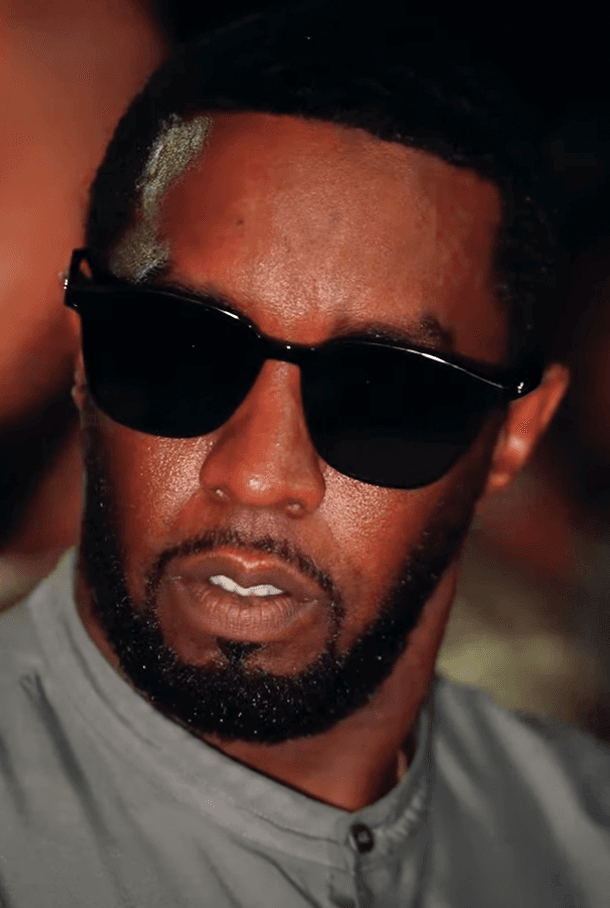
Sean Combs is, by any serious accounting, still worth $400 million. That figure is not a triumph right now. It is a floor. Our analysis, weighting Zack O'Malley Greenburg's February 2025 Fortune-sourced estimate of $300 million against the Forbes 2024 figure of $400 million and adjusting for the residual value of holdings that have not been formally liquidated, arrives at $400 million as the most defensible estimate as of June 2026. The range is wide, the direction is unmistakably downward, and the reasons are structural, not cyclical.
To understand how the number got here, you have to understand what the number once was. Forbes pegged Combs at $750 million in 2019; a Reddit-amplified LADbible report, itself citing Forbes data, placed the peak closer to $740 million in that same window. Radioguide.fm and several fan-facing outlets ran headlines claiming $1 billion. Our read: Combs briefly touched billionaire status in the early 2020s, carried there almost entirely by a single partnership with Diageo. When that arrangement ended, the architecture of the fortune changed permanently.
What remains is still a substantial, multi-pillar estate. Catalog royalties, a fashion brand with a complicated ownership history, a cable media network, and hard assets. But the pillars are narrower than they were, and at least one has been replaced by litigation liability. This is a story about a fortune built with unusual sophistication for the music industry, and what happens when the deal that made it collapses alongside the person who signed it.
How Combs' Fortune Ranks Against Hip-Hop's Wealthiest
At $400M, Diddy's fortune still places him among hip-hop's wealthiest figures, though he has fallen well below the billionaire tier he briefly occupied. And well behind Jay-Z, whose diversified holdings dwarf the current Combs estate.
The hip-hop billionaire class is small and relatively stable: Jay-Z, Rihanna, and a handful of others. Combs was in that conversation as recently as 2022. He is not in it now. At $400 million, our estimate puts him in the same general neighborhood as artists who built substantial but single-channel businesses. A meaningful fortune, but one that no longer commands the peer-group superlative it once did.
The distance between Combs and the current top of the hip-hop wealth table is not just a matter of numbers. It reflects different capital strategies. Jay-Z's Armand de Brignac and D'Ussé deals were structured with equity components that appreciated independently of his personal brand. Combs' Diageo arrangement, however lucrative, was a revenue-share rather than a pure equity stake. Which meant that when the relationship ended, the asset did not remain on his balance sheet at scale.
That structural distinction matters enormously when you are trying to model durability. A catalog or an equity stake builds up. A profit-sharing contract terminates. The $400 million that remains is weighted more heavily toward the former categories than Combs' peak fortune was, which paradoxically makes what survives more stable. Just smaller.
The Diageo Deal: The Single Contract That Made and Unmade a Billionaire
The Diageo profit-sharing arrangement on Cîroc vodka and DeLeón tequila generated an estimated $180M in residual value for Combs. A fraction of the roughly $1B the partnership produced across its life before Diageo's 2023 buyout at around $200M.
The Cîroc partnership, launched in the mid-2000s, was not a celebrity endorsement in the conventional sense. Combs did not take a flat fee and attach his face to a bottle. He took a share of the profits in exchange for running the brand's marketing strategy. A distinction that transformed a spirits deal into an operating business. That structure, over the partnership's full run, produced cumulative payments in the range of $1 billion, by the account of multiple sources tracking the arrangement.
DeLeón tequila extended the same logic. Combs co-acquired the brand with Diageo, deepening his exposure to the premium spirits category at a moment when that category was posting outsized growth across the industry. Taken together, the two brands were the single largest contributor to the fortune's peak valuation. Our breakdown attributes roughly $180 million in current residual value to this pillar, accounting for what was retained after Diageo's estimated $200 million buyout in 2023.
The buyout is the critical event. It converted a recurring income stream into a lump sum, and then that lump sum became subject to the same legal and reputational pressures bearing on the rest of the estate. What the Diageo chapter illustrates is how much of the 'billionaire Diddy' narrative was, in fact, a single relationship expressed as a net-worth figure. And how quickly that figure recalibrates when the relationship ends.
“The billionaire label was always a function of a single deal; what remains without it is a $400M estate that still requires a CEO to hold its value.”
Bad Boy Records and the Catalog: Hip-Hop's Most Durable Revenue Engine
Bad Boy Entertainment's music catalog, built on recordings from the 1990s and 2000s, continues generating royalty and streaming income estimated to anchor roughly $100M of Combs' current net worth.
Bad Boy Records, incorporated in 1993, was the institution that made Combs famous before it made him rich. The Notorious B.I.G., Faith Evans, Mase, 112. These were not just cultural touchstones; they were copyrights, masters, and publishing assets that accumulate value as streaming platforms pay out micro-royalties at scale and sync licensing from film and television continues to grow. A single well-placed catalog track in a major series can generate meaningful annual income without any active participation from the rights holder.
Our analysis places the Bad Boy catalog and related music assets at roughly $100 million of the current estate. The second-largest single contributor. This is a conservative figure relative to what some catalog investors would pay for a comparable 1990s hip-hop archive at today's acquisition multiples, but it reflects the uncertainty that attaches to any asset controlled by someone currently entangled in serious litigation. Catalog buyers price risk into offers.
The distinction between masters and publishing matters here. Combs' relationship to the masters on Bad Boy recordings has always been layered. Artists on the label have disputed ownership terms in public forums across decades, and any future sale or licensing of these assets would need to account for those competing claims. The $100 million figure assumes a discounted but still material recovery on the catalog's underlying income stream.
Sean John: A Fashion Brand's Complicated Second Life
Sean John, launched in 1998, was sold and repurchased. Combs re-acquired the brand in 2021 for roughly $7M. And now represents an estimated $40M slice of the estate, down sharply from its peak commercial relevance.
Sean John was, at its peak, a genuinely significant fashion business. Launched in 1998 at the intersection of hip-hop culture and mainstream retail appetite, it won a CFDA award and placed in major department stores across the country. It was the kind of brand that justified the term 'fashion label' rather than 'celebrity merchandise.' When Combs sold a majority stake in 2016, the move read as a rational monetization event at a moment of peak valuation.
The 2021 re-acquisition. Executed for approximately $7 million after the interim owner, Global Brands Group, filed for bankruptcy. Is one of the more unusual asset recovery stories in celebrity business history. Combs bought back, at deep distress pricing, a brand he had once commanded significant multiples for. Whether that was strategic or sentimental, the brand's current commercial footprint is a fraction of what it was in the early 2000s.
Our breakdown places Sean John at around $40 million of the total estate. A figure that reflects the brand's real but diminished equity rather than any projection of revival. The fashion category, for Combs specifically, is also the most reputationally sensitive asset class in the current environment. Retail partners have been cautious, and without active licensing or distribution deals, the brand's value is primarily its name, its archive, and the optionality of a future transaction.
REVOLT TV and the Media Portfolio: Diversification With Limits
REVOLT TV, founded in 2013, anchors a media and investment portfolio our analysis values at approximately $48M. Meaningful diversification, but not a category that adds significant scale to the overall estate.
REVOLT TV launched with a clear thesis: a Black-owned music news network built for the cable era, positioned to capture advertising dollars that mainstream media was not directing toward hip-hop audiences. In its early years, the network secured carriage deals with major cable providers and built a recognizable voice in music and cultural programming. It was, by the standards of independent cable launch attempts, a qualified success.
The media landscape REVOLT was built for has changed substantially. Linear cable is in structural decline, and the advertising economics that once supported niche cable networks are under severe pressure. REVOLT has pivoted toward digital distribution and live events, which are lower-margin but more durable channels. How much of the network's equity value survives a potential forced sale or restructuring is genuinely uncertain.
We aggregate REVOLT alongside miscellaneous investment positions and brand deal residuals into a combined $48 million figure. This is the portfolio's catch-all category. The one most likely to be revised downward as individual positions are re-marked. It is also, built that way, the category most exposed to the current legal proceedings, since brand partners in this tier are the most likely to quietly let agreements lapse rather than formally terminate them.
Real Estate and Hard Assets: The Estate's Residual Foundation
Real estate holdings and other hard assets represent an estimated $32M floor of the Combs estate. Real positions that retain value independent of brand or business performance, though forced liquidation would compress that figure.
Over a career that generated extraordinary cash flows at its peak, Combs accumulated property in the way that most high-net-worth entertainers do: as a combination of lifestyle consumption and wealth preservation. Properties in the Hamptons, in Miami, and in Los Angeles were reported at various points as significant holdings. Hard assets. Art, vehicles, jewelry, and similar categories. Typically represent a smaller but non-trivial share of a portfolio at this wealth level.
Our $32 million attribution to this category is on purpose conservative. It reflects the likelihood that some portion of real estate will be subject to legal claims, liens, or forced sale conditions before any voluntary liquidation. Courts in civil proceedings have broad authority to freeze or attach property, and the timeline for resolution of the cases currently bearing on Combs' estate is extended.
What hard assets offer, that catalog royalties and brand equity do not, is a relatively clean relationship to market value. A property has a price that is determined by comparable sales, independent of reputational factors. That quality makes real estate the most recoverable category in a distressed scenario. And the most likely source of cash if liquidity becomes a legal requirement.
Why the Billionaire Narrative Collapsed So Quickly
Combs' billionaire status rested almost entirely on the Diageo income stream; once that ended in 2023 and legal liabilities mounted, the estate contracted from a peak near $1B to our current $400M estimate within roughly 24 months.
The speed of the contraction is instructive. Radioguide.fm and several other outlets were still publishing $1 billion figures as recently as early 2025. A number that had been overtaken by events. Zack O'Malley Greenburg, writing for Fortune and publishing his analysis in February 2025, placed the figure at $300 million, which represented the most rigorous reported downward revision. Our own estimate of $400 million, weighting that figure against the concurrent Forbes framing of $400 million, lands at the higher end of that reported range.
The mechanism of the collapse follows a pattern familiar from other celebrity business implosions: concentration risk. When one deal. Diageo. Accounts for the majority of the wealth generation in any given year, the loss of that deal produces a shock that simple diversification cannot buffer. Combs' other assets did not grow fast enough to offset the income stream that Diageo had been delivering, and they were not structured to do so.
Legal liability builds up the arithmetic. Civil suits produce potential judgments that must be carried as contingent liabilities against the estate. Even if the ultimate financial exposure is unclear, sophisticated wealth analysts apply a discount to all assets held by someone facing active litigation of the scale currently attached to Combs' name. That discount is embedded in our $400 million figure.
Capital Allocation: How the Fortune Was Built and What That Reveals
Combs consistently prioritized operating partnerships over passive investments. A strategy that maximized upside when deals ran well but left limited wealth infrastructure when they ended, which explains the estate's current shape.
The pattern across Combs' career is an aggressive preference for operating roles. The Diageo deal was not a royalty arrangement. It was a marketing operation that he ran. Bad Boy was not a passive label investment. It was a creative and commercial infrastructure he managed. Sean John was not a licensed brand extension. It was a company he built from scratch and ran through its commercial peak. REVOLT is not an investment in someone else's media company. It is a network he controls.
This approach generates higher returns per dollar deployed than passive investing does, but it also means that the wealth is not stacking in the background when the operator steps away. When Combs' ability to actively manage these assets was constrained. First by the Diageo exit, then by legal proceedings. There was no portfolio of public equities or diversified real assets quietly appreciating. The fortune needed him in the room, and he is not currently in any room that generates revenue.
The lesson is not that Combs made strategic errors. His operating approach turned a music career into a nine-figure estate, which is an achievement that most record producers never approach. The lesson is that operating fortunes require operating operators, and that the most important single allocation decision any mogul can make is the point at which they convert operating income into passive wealth. Combs held on to the operating model longer than the circumstances ultimately allowed.
Where the $400M Figure Goes From Here
Without active income streams or new deal-making capacity, the Combs estate faces continued compression. Legal resolutions, forced asset sales, and catalog depreciation could push the figure toward $300M or below within the next 24 months.
The trajectory from here is not neutral. Combs is not generating income from the categories that once drove his wealth accumulation. The Diageo income is gone. Sean John requires active commercial partnerships to be worth what it is on paper. REVOLT's value depends on a media landscape that is not growing. The catalog pays out, but not at a rate that offsets the other sources of pressure on the estate.
The most significant variable is legal resolution. A negotiated settlement in civil proceedings could produce a defined cash outflow that, while painful, would allow the remaining assets to be managed coherently. A prolonged litigation timeline, by contrast, keeps the contingent liability cloud over every asset class and makes it nearly impossible to execute new transactions. Whether that means a catalog sale, a brand licensing deal, or a real estate disposition. At anything close to fair market value.
Greenburg's $300 million figure, published earlier this year, is a reasonable downside scenario rather than an outlier. If the legal environment remains unresolved and no major asset is successfully monetized in the next twelve to eighteen months, the gap between his estimate and our current $400 million figure will narrow. The floor, assuming no catastrophic judgment that pierces the entire estate, is probably somewhere above $200 million. The level that Reddit-sourced LADbible reporting cited as a base scenario. Our analysis holds at $400 million for June 2026, but with a directional bias that is unambiguously downward.
How the $400M adds up
- Cîroc & DeLeón spirits (Diageo partnership)The Diageo profit-sharing deal on Cîroc vodka and DeLeón tequila was described as the single deal that made Diddy a billionaire, with Diageo paying him roughly $1 billion over the partnership's life before buying him out for $200 million in 2023.$180M45%
- Bad Boy Records / Music catalog & royaltiesBad Boy Entertainment, founded in 1993, continues to generate revenue through streaming, licensing, and publishing from a deep catalog of 1990s–2000s hip-hop and R&B.$100M25%
- Fashion (Sean John)Sean John, launched in 1998, was a major urban fashion brand; Diddy sold a majority stake in 2016 and re-acquired the brand in 2021 for approximately $7.5 million.$40M10%
- Media & other ventures (REVOLT TV, investments)REVOLT TV, launched in 2013, adds media portfolio diversification, alongside miscellaneous investments and brand deals accumulated over decades.$48M12%
- Real estate & residual assetsDiddy accumulated real estate and other hard assets over his career, which form a residual base of wealth that remains even as his business empire has contracted.$32M8%
Ezra Linwood — Ezra Linwood covers celebrity wealth, music-industry finance, and entertainment business strategy for Neon Hollywood.
Disclaimer: Net-worth figures are editorial estimates built from publicly available reporting, filings, and market data — see our methodology. They are not verified statements of any person’s finances and nothing here is financial advice.