Dan Bilzerian Net Worth 2026: Inside a $100M Fortune Built on Myth
Poker claims, a contested trust fund, and a lifestyle brand that burned cash. Our analysis puts Bilzerian's fortune at $100M, with every layer carrying an asterisk.
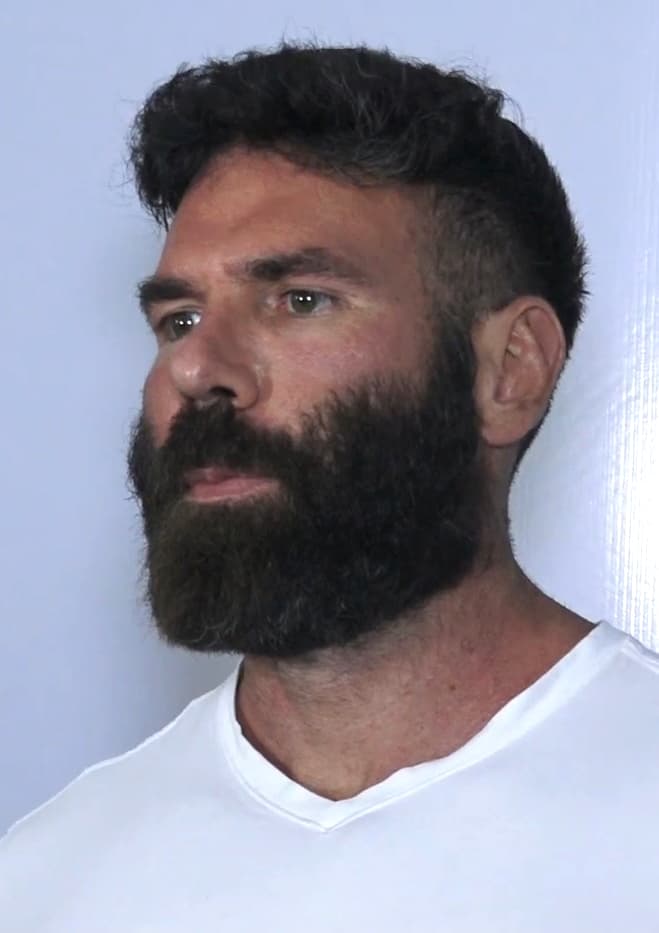
Dan Bilzerian's wealth is inseparable from his persona. The Tampa-born influencer has spent fifteen years constructing a public image so on purpose outsized that separating the fortune from the theater requires forensic patience. He's 45, worth around $100 million by our reckoning, and nearly every dollar carries a disputed origin story.
That $100M figure is broadly consistent across trackers. Times of India and Gate.com both landed at $100M in recent coverage. PokerTube's May 2026 analysis placed the range between $100M and $200M, a spread that reflects genuine ambiguity rather than sloppy math. We weight toward the lower bound. The income streams are real; the verification record is thin.
What's clear is that Bilzerian's wealth draws from at least five distinct buckets: high-stakes poker, inherited capital, a lifestyle brand called Ignite, social media endorsements, and minor acting work. Each bucket tells a different story about how this fortune was built. And how fragile parts of it remain.
How Bilzerian's $100M Ranks Against Poker and Influencer Peers
At $100M, Bilzerian sits above most professional poker players but well below elite social media moguls. His fortune reflects a hybrid career, not dominance in any single category.
The richest card players in the world. Think Doyle Brunson's estate-level legacy or Phil Ivey's long tournament run. Built wealth over decades inside a structured ecosystem of televised events and casino backing. Bilzerian operates differently. He claims his money came from private games, not the felt of a sponsored tournament. That distinction matters enormously for valuation.
Among influencers, $100M is a mid-tier result. Logan Paul and MrBeast have pushed into assets and equity that compound far faster than sponsorship fees. Bilzerian's audience is large. Close to 29 million Instagram followers. But his demographic skews toward passive consumption, not the purchasing behavior that drives eight-figure brand deals.
Still, $100M is a genuine fortune. It places him comfortably above the vast majority of social media personalities and well beyond any poker player whose winnings are fully documented. The qualifier is that documentation, or the lack of it, shadows the entire figure.
The Poker Claims: $45M Built on Games Nobody Witnessed
Bilzerian attributes about $45M of his wealth to private high-stakes poker. He has cited a single-session win of nearly $10.8M, but no independent record confirms these figures.
Our breakdown assigns roughly $45M. The largest single slice. To private poker. Bilzerian has spoken about these games repeatedly. He describes sessions with billionaires where the buy-ins alone exceed most annual salaries. The $10.8M single-game claim, reported by Times of India, is the most cited data point. It is also entirely self-reported.
Private games leave no public record. There are no hand histories, no third-party witnesses on record, no tax filings that corroborate casino-scale winnings. PokerTube noted in its May 2026 profile that the poker wealth story is 'widely disputed,' a polite way of saying that the poker community at large remains skeptical.
That skepticism doesn't make the claim false. High-stakes private games are real and lucrative. Wealthy amateurs who play for social reasons routinely transfer money to skilled professionals. Bilzerian demonstrably understands poker theory. The problem is epistemological. We simply cannot verify the scale, so we hold this estimate with less confidence than the others.
What poker clearly did provide was a gateway. Even if the winnings are overstated, documented early gameplay gave Bilzerian a credible entry point for the gambler persona that drives every downstream business.
“A $100M fortune built on unverifiable poker wins and a brand that lost $30M is not a fraud. It is simply a balance sheet that requires more trust than most.”
The Trust Fund Foundation: $25M in Inherited Capital
A trust established by his father Paul Bilzerian. Valued near $11.7M in 1997. Likely reached Bilzerian around 2010, giving him the seed capital that made high-stakes play possible.
Paul Bilzerian was a corporate raider (someone who buys controlling stakes in companies and forces asset sales). His legal battles with the SEC are well documented. Before those troubles concluded, he placed assets into a trust for his children. PokerTube's research pegged that trust at about $11.7M as of 1997.
Compound that figure over thirteen years at a modest return, and the trust's value by 2010. When it reportedly became accessible. Would be meaningfully higher. We assign $25M to the inherited wealth category. That accounts for both the trust's appreciated value and other family-adjacent capital transfers that are harder to trace.
This is the most contested part of Bilzerian's biography. He has positioned himself as self-made. Critics, including voices in the poker world, argue that the trust fund was the real foundation. That without it, neither the poker bankroll nor the Ignite launch capital would have existed. Both things can be partially true.
What's not in dispute: money from his father's era reached him. The trust itself is a matter of public record. Our $25M estimate reflects what that capital plausibly became by the time it funded his adult life.
Ignite International: A Brand That Spent More Than It Earned
Ignite, Bilzerian's lifestyle brand selling e-cigarettes, CBD, and spirits, contributed an estimated $15M in net value despite reporting losses exceeding $30M in its early years.
Ignite launched with the same theatrical energy as everything else in Bilzerian's portfolio. E-cigarettes, CBD products, vodka, water. The brand was a lifestyle extension, not a focused consumer play. For a period, it worked as a marketing vehicle. Bilzerian's feed was the ad campaign, and his followers were the target market.
The financial reality was harsher. PokerTube's reporting cited losses above $30M in the brand's early operating years. Gate.com's analysis similarly characterized Ignite as a cash-heavy operation that prioritized visibility over margin. A company burning that kind of capital is not a wealth engine. It's a promotional budget with a stock ticker.
We still assign $15M in net value to Ignite. Here's why: the brand covered an enormous portion of Bilzerian's personal overhead. Private aviation, staffing, event costs, even some real estate expenses ran through the company. That means cash that would otherwise have left his personal accounts stayed intact. The brand's true contribution is partly measured in expenses it absorbed, not revenue it generated.
The longer-term picture for Ignite remains cloudy. Multiple lawsuits, leadership changes, and a shrinking vape market have all complicated the brand's trajectory. We treat the $15M as a conservative recovery value on the capital and exposure Bilzerian put in.
Acting and Memoir: A $5M Footnote With Documentary Value
Film appearances and a published memoir add roughly $5M to the total. Modest sums, but they create a verified income paper trail that anchors the broader wealth narrative.
Bilzerian has appeared in action films, typically in roles that require him to play a version of himself. The fees for these parts are not publicly disclosed, but supporting roles in mid-budget productions carry standard day-rate or flat-fee structures. Over several projects, the aggregate is real money, even if it doesn't move the needle on a $100M estate.
His memoir adds another layer. Book advances for celebrity titles vary widely, but a figure with genuine social media reach and a controversial biography can command meaningful upfront payments. Royalties on top of that extend the income stream over years.
The value of these ventures is partly symbolic. They represent documented, verifiable income. Something in short supply across the rest of Bilzerian's portfolio. For anyone trying to construct a defensible net worth estimate, documented earnings, even small ones, carry outsized analytical weight.
How Bilzerian Allocates Capital: Assets, Overhead, and Risk
Bilzerian's capital allocation prioritizes liquid assets and hard goods. Real estate, vehicles, and cash. Over reinvestment in scalable businesses, which limits long-term stacking.
The lifestyle is not just marketing. It is also the portfolio. Private jets, luxury properties, and exotic cars represent real capital held in physical form. These assets can be sold, leveraged, or depreciated. They are not purely consumptive, though they do carry high maintenance costs relative to financial holdings.
What Bilzerian has not done. At least not visibly. Is invest in the kind of equity positions that turn mid-nine-figure wealth into ten-figure outcomes. There is no public record of meaningful venture bets, public market positions, or real estate development at scale. His capital appears to stay close to home, in assets he can see and touch.
That conservatism, if that's what it is, protects against catastrophic loss. It also caps the upside. A $100M fortune invested passively at a 7% annual return doubles in roughly a decade. A $100M fortune spent on operating a global lifestyle brand and maintaining a fleet of aircraft does not.
Legal Exposure and Structural Risks to the $100M Figure
Ongoing litigation tied to Ignite and unresolved questions about the origin of his poker wealth represent the two largest threats to the current $100M valuation.
Ignite generated lawsuits alongside its losses. Shareholder disputes, vendor claims, and regulatory scrutiny of the vape and CBD sectors have all created legal exposure that could result in significant cash outflows. The timing and scale of any settlements are unknown, which is precisely why they represent a risk rather than a line item.
The poker wealth story also carries structural legal risk. Undocumented income of any kind creates tax complexity. If the winnings are real and were not properly reported, that gap could surface at a moment of heightened scrutiny. If the winnings were partly fabricated for brand purposes, then the foundation of the self-made narrative collapses. And with it, some of the endorsement premium his brand commands.
These risks are not certainties. They are the reason we hold our estimate at $100M rather than the high end of PokerTube's $200M range. Uncertainty in the origin of wealth is itself a valuation discount.
Where the $100M Goes From Here: Trajectory Through 2028
Without a scalable new revenue engine, Bilzerian's $100M is likely to hold steady or erode modestly. The lifestyle overhead is high and the influencer premium is fading.
The base case is preservation. Bilzerian is 45. His peak earning years as an influencer are probably behind him, and no new business has emerged to replace Ignite's role as a revenue and expense vehicle. If he shifts toward more passive capital allocation. Index funds, real estate income. The fortune holds. If the lifestyle operating costs continue at current levels without fresh income, it erodes.
An upside scenario exists. Ignite could be restructured or sold at a value that returns capital. A new venture. Particularly anything tied to the sports betting or cannabis sectors, where his demographic aligns well. Could create a fresh income layer. His memoir and any documentary work could extend the content revenue cycle.
The downside scenario involves legal costs and a continued decline in social media relevance compressing both income and the brand premium that inflates his valuation. At that point, the figure migrates toward the hard asset base: real estate, vehicles, and whatever cash is held in reserve.
Our estimate of $100M as of June 2026 reflects the most defensible reading of the available data. It matches the Times of India's recent figure, aligns with PokerTube's lower bound, and is confirmed by Gate.com's independent analysis. We hold it with moderate confidence. Which, for a fortune this opaque, is about as confident as anyone should be.
How the $100M adds up
- Private high-stakes pokerBilzerian claims the bulk of his wealth comes from private poker games against billionaires, including a self-reported $10.8M single-game win, though these claims are largely unverified.$45M45%
- Inherited trust fund / family wealthA trust set up by his father Paul Bilzerian was valued at ~$11.7M in 1997 and reportedly became accessible around 2010, widely seen as a foundational source of capital.$25M25%
- Ignite International (lifestyle brand)Bilzerian founded Ignite, selling e-cigarettes, CBD, vodka, and water; despite a reported $50M+ loss in 2019, the brand also covered many of his personal expenses, obscuring net contribution.$15M15%
- Social media influence & endorsementsWith nearly 29 million Instagram followers, Bilzerian commands significant sponsorship and brand-deal revenue tied to his curated high-lifestyle persona.$10M10%
- Acting roles & other venturesBilzerian has appeared in several films and has authored a memoir, contributing minor but documented income streams beyond poker and brand activities.$5M5%
Ezra Linwood — Ezra Linwood covers wealth, alternative assets, and the economics of celebrity for Neon Hollywood.
Disclaimer: Net-worth figures are editorial estimates built from publicly available reporting, filings, and market data — see our methodology. They are not verified statements of any person’s finances and nothing here is financial advice.


Social Media and Endorsements: 29 Million Followers, $10M in Value
Bilzerian's Instagram audience of nearly 29 million generates an estimated $10M in cumulative endorsement and sponsorship value, though deal sizes have likely declined as platform demographics shift.
At peak, Bilzerian was one of the most-followed men on Instagram. Brands paid for access to that audience. Casino platforms, lifestyle products, firearms accessories, supplements. The rate card for an account of his size and engagement level can run into six figures per post. Over years of activity, those fees accumulate.
We place $10M in total value here, reflecting cumulative earnings rather than a current annual run rate. The important context: influencer economics are deteriorating for legacy accounts. Younger creators on TikTok and YouTube command higher engagement-per-follower ratios. Bilzerian's content style. Static luxury photography. Does not translate well to the short-form video formats that dominate advertiser spending in 2026.
His audience is also harder to monetize than it looks. Followers drawn to aspiration content do not click affiliate links at the same rate as followers drawn to tutorials or reviews. Brands have become more sophisticated about this distinction. That limits the ongoing value of his social footprint even as the follower count stays large.