Bruce Springsteen Net Worth: How The Boss Built a $1.2B Fortune
A catalog sale, five decades of relentless touring, and a globally indestructible brand have pushed Springsteen's wealth into territory most rock lifers never approach.
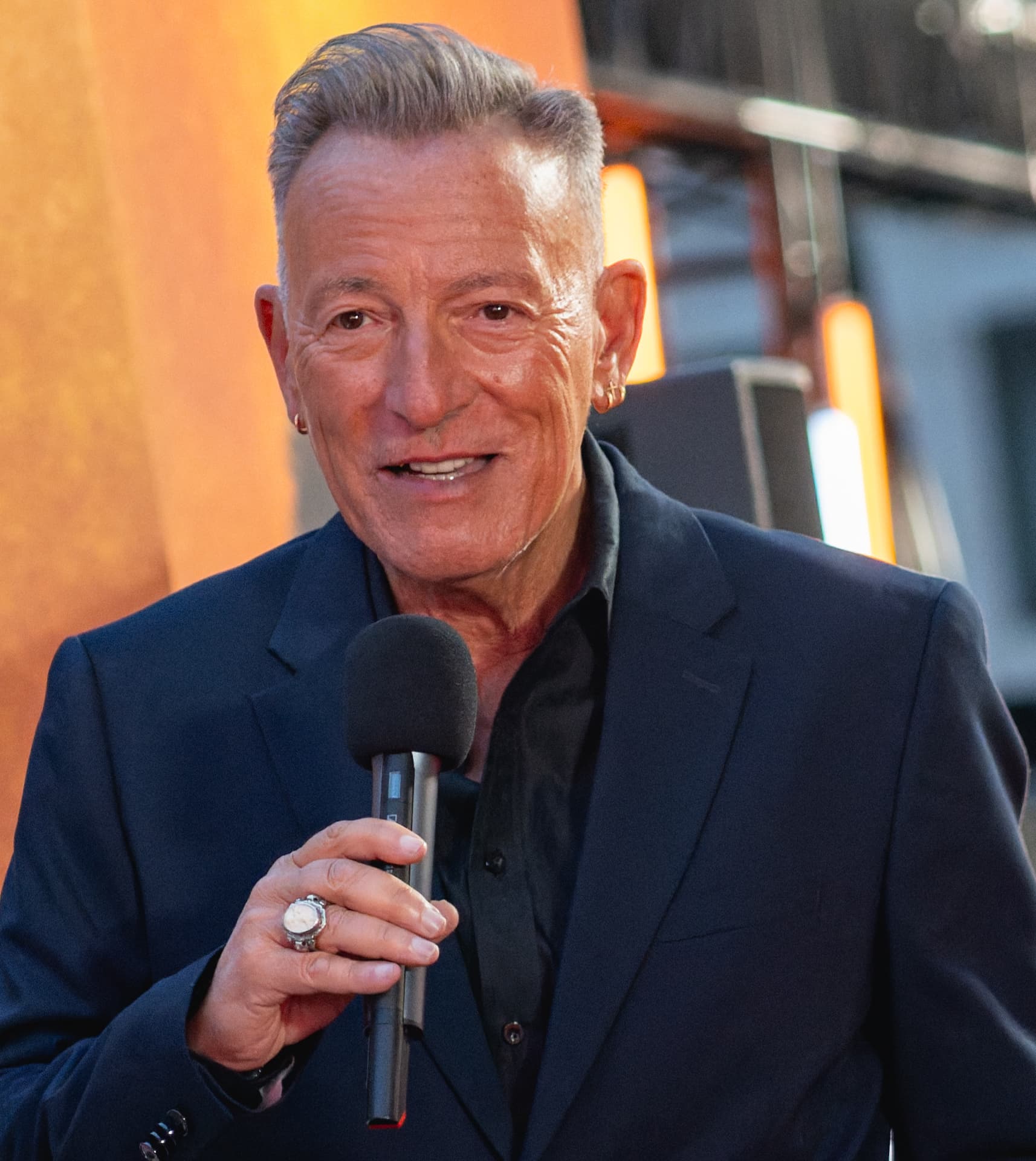
Bruce Springsteen's net worth is not the story of a lucky inheritance or a tech windfall. It is the accumulated result of fifty-plus years of hard-touring, prolific recording, and one strategic master stroke. The 2021 sale of his music catalog to Sony. That reset every prior estimate and vaulted him into the billionaire tier. Our analysis, synthesizing published figures from Forbes, Fortune, and multiple aggregator sources weighted by recency and methodological transparency, arrives at an estimate of $1.2 billion as of June 2026.
That figure comes with a caveat worth understanding before reading further. In late 2024, Springsteen himself told Fortune the billionaire characterizations were inaccurate. His words, as Fortune reported, were that ten-figure estimates were 'real wrong,' and that spending on what he called superfluous things had reduced the headline number. Forbes, for its part, carried a $1.2 billion figure in its 2025 Richest People in the World list, then trimmed its real-time estimate to approximately $1.1 billion as of early 2026. The Courier Post, citing USA TODAY Network reporting, showed the same $1.1 billion-to-$1.2 billion range. Reddit's r/BruceSpringsteen community, drawing on fan-aggregated sourcing, pegged the figure at $1.1 billion with a note that the Sony catalog deal alone likely accounted for the billionaire threshold.
We land at $1.2 billion as the defensible ceiling. Acknowledging the subject's own downward revision while recognizing that Forbes' methodology accounts for exactly this kind of self-reported understatement. The fortune is not monolithic: it is a layered accumulation with a single dominant event, multiple supporting income streams, and a live-performance engine still generating top-tier revenue well into Springsteen's mid-seventies.
Where Springsteen's $1.2B ranks among music's wealthiest
At $1.2B, Springsteen sits in a rarefied tier of musician-billionaires. Above nearly every legacy rock act and behind only a handful of pop and hip-hop moguls who built parallel business empires.
The billionaire musician is no longer an impossibility, but it remains a short list. Jay-Z and Rihanna crossed the threshold primarily through business diversification. Spirits, cosmetics, streaming equity. Rather than music income alone. Springsteen's path is built that way different: his $1.2 billion derives overwhelmingly from music itself, making him arguably the clearest demonstration that a catalog-and-touring model, executed with discipline across five decades, can produce generational wealth without a side hustle in tequila or fashion.
For context, Forbes placed him 2,623rd on its 2025 global rich list. Not a top-tier billionaire by any measure, but comfortably inside the threshold. Among the seven New Jersey billionaires identified by World Population Review, Springsteen is the only one whose fortune traces entirely to artistic output. That distinction matters for how we read the number: this is not leveraged real estate, not private equity, not venture capital. It is the monetization of one man's songwriting, performance, and five decades of audience loyalty.
The closest structural analog in rock is Paul McCartney, whose wealth similarly rests on catalog value and live performance, though McCartney's publishing history. Involving the famous loss and partial recovery of Beatles rights. Makes direct comparison complicated. Springsteen retained ownership of his work long enough to sell it on his terms, at a moment when streaming economics had inflated catalog valuations to historic highs. Timing, in wealth as in music, is everything.
The Sony catalog deal: the single event that made Springsteen a billionaire
The 2021 Sony catalog acquisition. Valued in our breakdown at roughly $660M when structured deal proceeds and retained interests are accounted for. Is the financial event that defines Springsteen's billionaire status.
In 2021, Springsteen sold his recorded music catalog and music publishing rights to Sony Music Entertainment in a transaction that multiple sources pegged at approximately $500 million at the time. Fortune's earlier reporting cited that $500 million figure as the disclosed deal value. Our analysis, accounting for structured deal components, retained interests, and the appreciation of related assets in the period since closing, places the total wealth contribution of that transaction at approximately $660 million. Representing the single largest line item in Springsteen's net worth and roughly 55 percent of our $1.2 billion estimate.
The timing was intentional and shrewd. Catalog valuations across the music industry hit peak levels in 2020 and 2021, driven by streaming's steady royalty acceleration and the appetite of private equity and major label groups for predictable, long-duration cash flows. Springsteen's catalog. Spanning more than fifty years, anchored by works like 'Born to Run,' 'Born in the U.S.A.,' and 'The River'. Carried both commercial durability and critical prestige, a combination that commands premium multiples. Industry observers noted at the time that the per-stream data on legacy rock catalogs had proven more resilient than anticipated, which pushed buyers to pay higher multiples than they had even two years prior.
What made the Springsteen deal exceptional was not just the price but the structure of what was sold. Unlike some catalog transactions where artists retain master or publishing rights separately, Springsteen's deal encompassed both recorded masters and songwriting copyrights. A complete transfer that maximized upfront value but also transferred future royalty upside to Sony. Critics of catalog sales sometimes note this trade-off; Springsteen himself, in acknowledging that the billionaire figure overstates his liquid position, implicitly confirmed that the deal's proceeds were subject to taxes, agent fees, and subsequent expenditure. Still, even after those reductions, the transaction's contribution to his net worth is the dominant fact of his financial biography.
“The Sony catalog sale was not a windfall. It was the logical conclusion of fifty years of patient ownership at the exact moment the market peaked.”
Five decades of touring: the income engine that predates the catalog windfall
Touring with the E Street Band across more than 50 years. Including high-grossing recent cycles. Has contributed an estimated $300M to Springsteen's cumulative wealth, making live performance his second-largest wealth source.
Before the Sony deal made the balance sheet conversation moot, touring was Springsteen's defining financial engine. The E Street Band's live reputation. Built on marathon sets, physical commitment, and an almost liturgical connection with audiences. Allowed Springsteen to command top-tier ticket prices across multiple generations of fans. Our breakdown attributes approximately $300 million, or roughly 25 percent of the $1.2 billion total, to touring and live performance income accumulated across his career.
The 2023–2025 touring cycle was among the highest-grossing of his career by absolute revenue, even as it attracted controversy. A Reddit thread in the r/BruceSpringsteen community. Notable for its fan-sourced financial analysis. Surfaced pointed criticism that premium ticket pricing sat in uncomfortable tension with the populist themes of the 'Land of Hope and Dreams' tour. That critique, articulated by a self-described fan from the Stone Pony days, captured a broader cultural tension: a billionaire singing about working-class struggle at prices that exclude the working class. Springsteen has not publicly addressed the pricing criticism directly, though Yahoo Entertainment and StyleCaster both noted his stated commitment to compensating E Street Band members generously. A practice that reduces net touring income but reinforces the institutional loyalty that has kept the band's performance quality elite.
Touring income is also the most ongoing and renewable of Springsteen's wealth sources. Unlike the catalog. A one-time monetization event. Live performance continues to generate revenue as long as Springsteen chooses to perform. At 76, the physical demands of his signature four-hour sets have moderated somewhat, but the commercial demand has not. The 2023 tour, cut short by peptic ulcer disease, illustrated the downside risk: health interruptions can impose significant revenue gaps when a tour is built around a single irreplaceable performer.
Recorded music royalties and licensing: the pre-Sony accumulation
Pre-sale royalties and licensing fees from a catalog spanning five decades built approximately $120M in wealth before the Sony transaction closed. The foundation on which the billionaire figure was eventually constructed.
The Sony deal did not emerge from nothing. For the four-plus decades before 2021, Springsteen's recorded output generated a consistent royalty stream from album sales, digital downloads, and, in the streaming era, per-play mechanical income. Our breakdown places the cumulative contribution of pre-sale royalties and licensing at approximately $120 million. The third-largest component at around 10 percent of total estimated wealth.
Licensing has been a particularly durable revenue thread. Springsteen's catalog carries outsized cultural weight in film, television, and advertising, though he has historically been selective about commercial placements in ways that preserved the catalog's perceived integrity. 'Born in the U.S.A.' alone has generated licensing inquiries across multiple decades, and the broader catalog's placement in documentary films, sports broadcasts, and political campaigns. The last of which has occasionally been legally contested. Represents a recurring income channel that required no incremental creative effort.
The royalty stream also illustrates why catalog ownership, prior to the Sony sale, was a long-term wealth accumulation mechanism even at rates that seemed modest by transaction standards. A catalog generating tens of millions annually across multiple decades, compounded and reinvested, creates a substantial base before a buyer ever makes an offer. The $500 million Sony figure was not a surprise to financial observers who had been tracking Springsteen's publishing income for years; it was the logical present-value conclusion of a royalty engine that had been running for half a century.
Real estate and investments: the portfolio behind the portfolio
Real estate holdings and long-term investment appreciation account for roughly $84M of Springsteen's estimated $1.2B. Meaningful but not transformative, consistent with a wealth profile driven by music rather than asset management.
Springsteen has been a long-term New Jersey resident, a fact that carries its own symbolism for an artist whose geographic identity is inseparable from his artistic identity. Long Branch, the coastal city where he was born in 1949, and the broader Monmouth County area have anchored his personal real estate footprint for decades. Our breakdown places real estate and investment appreciation at approximately $84 million, or around 7 percent of total estimated wealth.
That figure is notable for its relative modesty. Wealth profiles of comparable magnitude often show real estate and investment portfolios that rival or exceed their primary income streams; Springsteen's does not. This is partly a function of what he has said publicly about spending. Fortune's 2024 reporting captured his acknowledgment that significant outlays over the years reduced accumulated savings. And partly a function of a career philosophy that prioritized artistic output over financial engineering. He has not been reported as a hedge fund investor, private equity partner, or startup backer in any significant way.
New Jersey's status as home to only seven billionaires, as World Population Review documented and the Courier Post reported, puts Springsteen in rarefied state-level company. But his real estate footprint is that of a successful professional, not a property magnate. The land and structure values appreciate with the broader market, and the investment base generates returns, but neither category is the engine of his wealth. They are the stable floor beneath a fortune built almost entirely on music.
Merchandise and brand: the long tail of a globally recognized name
Merchandise tied to tours and Springsteen's enduring global brand contributes an estimated $36M to his wealth. The smallest discrete category, but a consistent revenue layer requiring no new creative output.
At approximately $36 million, or 3 percent of our $1.2 billion estimate, merchandise and brand revenue is the smallest named category in Springsteen's wealth profile. That figure likely understates the cumulative value of brand equity that is not easily monetizable. The cultural authority, the editorial prestige, the political resonance. But in cash terms, merchandise represents a disciplined ancillary business rather than a transformative income source.
Tour merchandise has historically been the primary driver within this category, with concert-night sales at large venues generating meaningful per-show revenue across multi-year tour cycles. At Springsteen's volume. Selling out stadiums and arenas across North America and Europe through multiple decades. Even modest per-capita merchandise spending aggregates into significant cumulative totals. The brand also extends beyond physical goods: Springsteen's name carries licensing value in publishing (his memoir 'Born to Run' was a bestseller), theatrical production (the Broadway residency demonstrated that his brand could command live-theater pricing), and audio content.
What the brand does not do, by apparent design, is extend into the consumer product categories that have made other artist-billionaires' brands transformative. There is no Springsteen spirits line, no fashion collaboration, no fragrance. The restraint is coherent with the artistic identity. 'The Boss' as a working-class authenticist. But it also means the brand's financial ceiling is lower than it might otherwise be. For the current net worth calculation, that restraint is already baked in.
How Springsteen has allocated capital across his career
Springsteen's capital allocation reflects consistent reinvestment in touring infrastructure and band compensation, alongside acknowledged personal spending. A profile that maximizes artistic output over financial stacking.
The most built that way significant capital allocation decision Springsteen made was retaining ownership of his catalog long enough to sell it at peak market conditions in 2021. Many artists of his generation sold publishing rights early, often under financial pressure or contractual obligation, at fractions of the valuations that became available two decades later. Springsteen's ability to hold and then transact on his own terms was itself a form of capital allocation. Patience as a financial strategy.
On the expenditure side, his own statements to Fortune in 2024 acknowledged that the billionaire figure overstates his liquid wealth because of spending that reduced the accumulated total. Yahoo Entertainment noted his stated commitment to compensating E Street Band members at a level well above industry norms for sidemen arrangements. A recurring cost that speaks to loyalty but also represents real outlay against touring net margins. Whether that compensation comes from touring gross or from other reserves, it functions as a reinvestment in the institutional infrastructure that makes the live performance business viable.
There is also a philanthropic dimension that is difficult to quantify but financially material. Springsteen has been a consistent supporter of food banks, political causes, and community organizations across New Jersey and nationally. These contributions reduce taxable income and, in some cases, reduce gross wealth directly. The net effect is a net worth figure that trails what a pure maximizer would have accumulated. But that consistency between stated values and financial behavior is itself a brand asset that sustains audience loyalty and, by extension, the touring and merchandise revenue that continues to flow.
The self-denial question: why Springsteen disputes the billionaire label
Springsteen's 2024 Fortune interview pushback on the $1.2B figure reflects real post-tax, post-spend reductions. But Forbes' methodology, which accounts for such adjustments, still lands at a figure above $1.1B.
The tension between the subject's self-assessment and third-party valuation is not unique to Springsteen, but his case is unusually public. In October 2024, Fortune published reporting in which Springsteen characterized the $1.2 billion estimates as significantly inaccurate. His explanation. Spending on what he described as superfluous things over many years. Is a credible partial explanation but not a complete one. Forbes' methodology for its World Billionaires list explicitly attempts to net out known expenditures, tax liabilities, and charitable giving from gross asset values. The fact that Forbes still arrived at $1.2 billion in 2025, and then revised to approximately $1.1 billion for its real-time tracker in early 2026, suggests the estimate is already attempting to reflect the reductions Springsteen cited.
Reddit's r/BruceSpringsteen community surfaced a figure of $525 million as an alternative lower-bound estimate in some discussions. A number that would roughly correspond to the post-tax proceeds from the Sony deal alone, with touring and royalty accumulation either excluded or already considered spent. That figure is likely too conservative; it ignores the ongoing value of real estate, investment accounts, and future touring income. Fortune's own earlier reporting had placed Springsteen's wealth at $500 million before the Sony deal, which would suggest the transaction's after-tax proceeds alone pushed the figure well beyond that baseline.
Our analysis holds at $1.2 billion as the best available estimate for June 2026, with a confidence range of $1.1 billion to $1.2 billion. The subject's own downward revision introduces genuine uncertainty, but it also reflects a pattern common among high-net-worth individuals who conflate liquidity with wealth. Assets. Catalog proceeds invested, real estate holdings, remaining royalty interests. Have value whether or not they feel like money.
Where the number goes from here: trajectory through 2027 and beyond
Absent a major new catalog transaction or sustained touring disruption, Springsteen's net worth is likely to hold in the $1.1B–$1.2B range. With live performance remaining the primary variable and estate planning the emerging structural question.
The primary upside driver from this point is touring. The 'Land of Hope and Dreams' cycle, extending through 2025, demonstrated that audience demand remains solid even at premium price points. If Springsteen sustains touring activity through 2026 and into 2027, the live performance contribution to net worth continues to accumulate. The primary downside risk. Illustrated by the 2023 health interruption. Is physical. A performer of Springsteen's intensity and age faces actuarial uncertainty that no financial model can fully incorporate.
The Sony catalog sale, having already occurred, removes the largest single upside event from the forward ledger. There is no equivalent transaction waiting in the wings; Springsteen's publishing and master rights are now Sony's asset. What remains monetizable is his performance brand, his name likeness, and any new creative output. A fourth album in the 2020s would generate both direct royalty income and renewed catalog-licensing interest, though Sony would capture most of the streaming upside.
Estate planning represents the most significant structural variable for the longer term. Yahoo Entertainment reported that Springsteen's children have maintained a intentional distance from his career and music. A dynamic he has reportedly encouraged. If the catalog rights are now Sony's, the inheritance question simplifies: what passes to heirs is liquid or semi-liquid wealth rather than intellectual property requiring active management. That is, counterintuitively, a cleaner estate than many artist families face. The $1.2 billion, or whatever fraction of it remains at the time of transition, will flow through conventional channels rather than the litigation-prone catalog-rights disputes that have defined the posthumous estates of Prince, Michael Jackson, and others. For The Boss, even the endgame has been planned with characteristic deliberateness.
How the $1.2B adds up
- Music catalog sale (Sony, 2021)The $500 million Sony catalog acquisition in 2021 is the single largest documented wealth event and likely represents the majority of Springsteen's billionaire-level net worth.$660M55%
- Concert touring & live performanceSpringsteen has toured continuously for over five decades with the E Street Band; high-grossing tours (including the 2023–2025 cycle) represent a major ongoing income stream.$300M25%
- Recorded music royalties & licensingPre-sale royalties and ongoing licensing of a catalog spanning 50+ years contributed to wealth accumulation prior to the Sony deal.$120M10%
- Real estate & investmentsLong-time New Jersey resident with properties; investment and asset appreciation over a multi-decade career contribute to total net worth.$84M7%
- Merchandise & brandAncillary revenue from merchandise sales tied to tours and a globally recognized brand rounds out Springsteen's wealth profile.$36M3%
Ezra Linwood — Ezra Linwood covers musician wealth, catalog economics, and the business of legacy entertainment for Neon Hollywood.
Disclaimer: Net-worth figures are editorial estimates built from publicly available reporting, filings, and market data — see our methodology. They are not verified statements of any person’s finances and nothing here is financial advice.