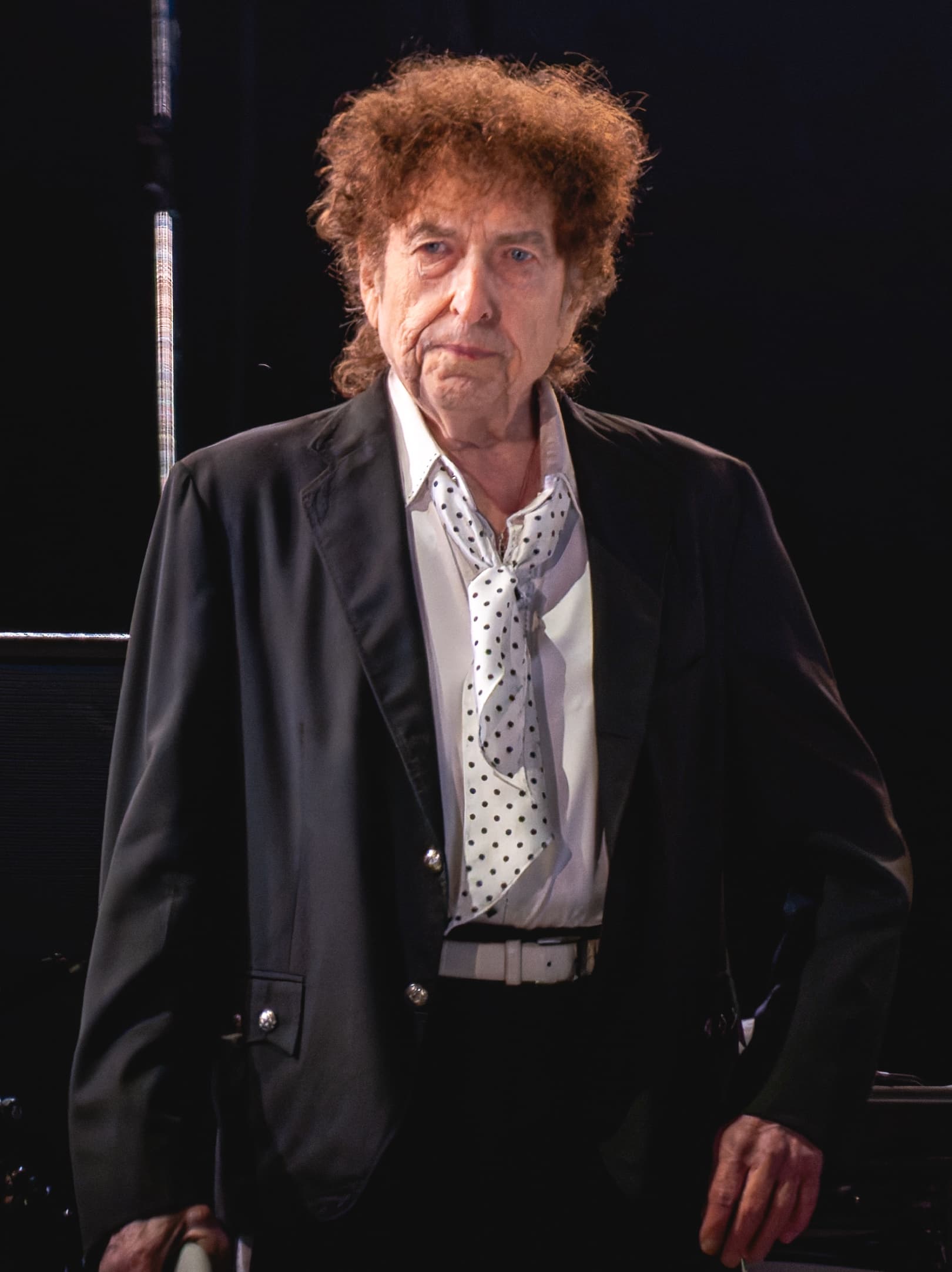
Bob Dylan arrived in New York City in early 1961 with almost nothing. By mid-decade he was approaching his first million. Today, our analysis places his net worth at $500M as of June 2026. A figure corroborated by Celebrity Net Worth, AOL Finance, and Yahoo Entertainment, all of whom independently landed on the same number in recent years.
The architecture of that fortune is specific. Two catalog deals. One with Universal Music Publishing, one with Sony Music. Account for the overwhelming majority. Touring adds a steady, if secondary, income layer. Real estate, visual art, books, and a whiskey brand fill the margins. What makes Dylan's wealth distinctive is not its scale alone but its composition: it is built almost entirely on the commercial value of words.
Reading this figure requires one caveat. The $400M Universal deal and the $200M Sony deal represent cash already received. They are not ongoing royalty streams but lump-sum transactions. Dylan exchanged future income rights for immediate liquidity. That changes how the number builds up from here.
Where Dylan's $500M Ranks Among Musician Fortunes
At $500M, Dylan sits at the top tier of musician wealth globally, trailing only a handful of artists whose fortunes are built on equity stakes or tech investments rather than pure music IP.
Celebrity Net Worth pegged Dylan at $500M in its most recent update. Andrew Ayers, writing on LinkedIn in late 2024, arrived at the same headline figure. That convergence matters. It means multiple methodologies, applied independently, land in the same place.
Put Dylan against his folk-rock contemporaries and the gap is stark. Paul Simon's wealth is estimated in the $200M range by multiple trackers. Joan Baez operates at a fraction of that. Dylan's fortune is not merely larger; it is built that way different, built on IP monetization rather than accumulated royalties.
Among all working musicians, only a small number. Paul McCartney, Jay-Z, Rihanna. Have crossed the half-billion threshold. McCartney's path ran through equity and real estate as much as music. Dylan's ran almost entirely through song. That is the more remarkable story.
The Universal Deal: How $400M Changed Dylan's Balance Sheet
Dylan's 2020 sale of his publishing rights to Universal Music for around $400M was the single largest music publishing acquisition of an individual catalog at the time it was announced.
In December 2020, Dylan sold his songwriting catalog. The underlying publishing rights (meaning ownership of the compositions themselves, not the recordings). To Universal Music Publishing Group. Our analysis, drawing on figures cited by Andrew Ayers and Celebrity Net Worth, puts the transaction value at about $400M.
The catalog covered roughly 600 songs written across six decades. 'Blowin' in the Wind,' 'Like a Rolling Stone,' 'Mr. Tambourine Man'. Each one a revenue-generating asset that collects licensing fees every time it appears in a film, advertisement, or streaming playlist. Universal was buying that future income stream in perpetuity.
Why sell? Dylan was 79 at the time. Estate planning logic is straightforward: a lump-sum payment is taxed once, at known rates. A royalty stream flows to heirs across generations, creating valuation disputes and tax events at every transfer. By converting the asset to cash, Dylan simplified a balance sheet that Andrew Ayers, writing from an estate-planning perspective in late 2024, described as a complex inheritance challenge regardless.
The deal reset how the industry valued songwriter catalogs. Within months, Bruce Springsteen sold to Sony for a reported sum in the same range. Dylan's transaction was the accelerant.
“Dylan built half a billion dollars by converting art into commerce. Then converted the commerce back into cash before anyone could take it from him.”
The Sony Masters Deal: A Second $200M Transaction
In 2022, Dylan sold his master recordings. The actual recorded performances. To Sony Music for around $200M, completing a two-part IP liquidation that together totals roughly $360M of his current net worth.
Masters (the recorded performances of songs) and publishing rights (the underlying compositions) are separate assets. Dylan, unusually, owned both. The Universal deal addressed publishing. Sony addressed masters.
Yahoo Entertainment and AOL Finance both reported the Sony transaction at about $200M, completed in 2022. Combined with the Universal deal, Dylan received around $360M. Or about 72% of his total estimated wealth. From these two transactions alone. That concentration is extraordinary even by music-industry standards.
Sony's logic was straightforward. Streaming has made catalog deep cuts financially viable again. A song that earned modest royalties in the CD era now accumulates micro-payments from hundreds of millions of streams. Dylan's back catalog. Which had already earned Celebrity Net Worth's estimate of about $15M per year in royalties before the sale. Was a durable, appreciating asset.
The combined effect of both deals is that Dylan converted depreciating-in-practice (because he was aging) future royalty rights into hard capital. He now holds the cash. Universal and Sony hold the rights.
Never Ending Tour: What Six Decades of Live Performance Generates
Dylan's touring operation, running nearly continuously since the late 1980s, generates an estimated $4M to $12M per year. A meaningful income stream, though a secondary one compared to the IP deals.
The Never Ending Tour. A label Dylan never formally used but the press adopted. Began in 1988. He has played hundreds of shows per year in most subsequent decades. Forbes has pegged his annual touring revenue at somewhere between $4M and $12M, a range that reflects year-to-year variation in venue size and geography.
Our analysis attributes about $50M of Dylan's current net worth to the compounded value of touring income over time. Roughly 10% of the total. That figure accounts for decades of accumulated, retained touring proceeds rather than a single year's gross.
At 85, Dylan still tours. The pace has slowed. But the revenue has not collapsed. His 2024 residency at the Beacon Theatre in New York drew strong ticket sales and press coverage. The tour is no longer the financial engine it once was. The IP deals dwarfed it. But it remains a real operating business.
Touring also serves a function beyond revenue. It keeps Dylan's name commercially active, which supports licensing demand for his songs. A dormant artist's catalog is worth less. Dylan's relentless presence on stage is, in part, a marketing strategy for an asset he no longer formally owns.
Pre-Sale Royalties: The Wealth That Compounded Before the Deals
Before selling to Universal and Sony, Dylan was reportedly earning around $15M per year in catalog royalties. Income that, retained over decades, built the financial foundation his IP deals later monetized.
Celebrity Net Worth reported Dylan's pre-sale royalty income at about $15M annually. That figure, if reasonably accurate, suggests that the wealth story did not begin with the 2020 Universal deal. It had been building for decades.
Our analysis assigns about $50M. Another 10% of the total. To this pre-sale royalty accumulation. That is a conservative estimate of what decades of $15M annual streams, partially reinvested and partially spent, might leave as retained wealth by the time the catalog sale closed.
Dylan's catalog earned those royalties through an unusually broad range of licensing. His songs appeared in films, political campaigns, television commercials, and sporting events. 'The Times They Are a-Changin'' alone has been licensed hundreds of times. Each placement generated a fee. Over decades, that adds up to a substantial base.
Real Estate and Physical Assets: Malibu, Scotland, and Beyond
Dylan's real estate holdings. Including a Malibu compound and a Scottish castle. Represent about $20M of his total estate, a modest share but a meaningful real-asset layer.
Andrew Ayers flagged Dylan's real estate holdings as a notable estate-planning variable in his 2024 LinkedIn analysis. The Malibu compound and the Scottish castle are the two most-cited properties. Our analysis values the combined portfolio at about $20M. Roughly 4% of total net worth.
That is a small proportion for a half-billion-dollar estate. Most ultra-high-net-worth individuals hold 15–25% of wealth in real property. Dylan's ratio is low because the IP sales shifted so much of his balance sheet into liquid assets. The real estate is significant in absolute terms; in context, it is a footnote.
The Scottish castle merits a brief note. It is not a vanity purchase in the conventional sense. Dylan has maintained a private, peripatetic lifestyle for decades. A remote castle is, for someone who has spent 60 years being recognized in public, a practical asset as much as an aesthetic one.
Ancillary Income: Art, Books, and the Whiskey Brand
Visual art sales, published memoirs and poetry, and his Heaven's Door whiskey brand collectively add about $20M to Dylan's net worth. A small but diversified income tier that reflects his breadth as a commercial creative.
Dylan's visual art. Iron sculptures, paintings, and welded metalwork. Has sold at major auction houses and through gallery shows. The prices are real. A single large-scale iron piece can command six figures. But volume is limited, and our analysis treats the cumulative contribution as modest within the full picture.
'Chronicles: Volume One,' his 2004 memoir, sold millions of copies and earned royalties for years afterward. His Nobel Prize in Literature. Awarded in 2016. Renewed global interest in his written work and drove a measurable spike in book sales. The Nobel itself carries a cash award, though that figure is small against the broader estate.
Heaven's Door, the whiskey brand launched in 2018, is the most conventionally entrepreneurial thing Dylan has done. It operates in a crowded celebrity spirits market. Our analysis treats it as a minor contributor. Included in the $20M ancillary bucket. Rather than a meaningful driver. The brand has not achieved the scale of, say, Ryan Reynolds's Aviation Gin, which sold for a nine-figure sum. Heaven's Door remains a boutique operation.
Capital Allocation: What Dylan Did With the Money
Dylan's financial strategy. Converting illiquid IP into cash, holding real estate lightly, and maintaining an active touring business. Reads as a intentional de-risking of a fortune built on artistic output.
The choice to sell publishing rights and masters, rather than hold them, is a capital allocation decision. Dylan chose certainty over optionality. Had he retained the catalog, its value might have grown further. Streaming economics continue to improve for legacy artists. He gave that upside to Universal and Sony in exchange for cash in hand.
For a man in his eighties with six children from two marriages. And, per Andrew Ayers's 2024 analysis, a family dynamic that complicates inheritance planning. Liquidity is rational. A $400M cash asset is easier to divide, tax-plan around, and legally document than a $400M royalty stream whose future value depends on streaming platform pricing and algorithmic promotion.
The whiskey brand and the art practice suggest Dylan is not done creating commercial assets. He is simply creating smaller ones now. The capital-allocation logic is consistent: keep the core business (touring) running, monetize the legacy assets (catalog), and add diversified income lines at the margin.
Trajectory: Where the $500M Goes From Here
With his two major IP deals closed, Dylan's wealth is unlikely to grow dramatically. But it is also unlikely to shrink, given his stable touring income and the enduring commercial relevance of his catalog.
The $500M figure is largely crystallized. The big IP monetization events are behind him. What remains is the touring operation. Generating an estimated $4M to $12M annually per Forbes. And the ancillary income from art, books, and spirits. Neither is a growth engine at the scale of the catalog deals.
Yahoo Entertainment's recent estimate also landed at $500M. AOL Finance and Celebrity Net Worth agree. The consensus is unusually tight for a private individual's wealth. That convergence suggests the figure is not expected to move dramatically in either direction in the near term.
The more interesting question is where the $500M lands after Dylan. Andrew Ayers, writing in late 2024, argued that the estate's complexity. Six children, multiple family structures, a notably private patriarch. Makes the distribution of this fortune a harder problem than its accumulation. Dylan built half a billion dollars by converting art into commerce. Distributing it equitably will require a different kind of skill entirely.
One tailwind: Dylan's catalog, now owned by Universal and Sony, will continue to appreciate as streaming grows. Dylan doesn't benefit financially from that appreciation anymore. But his estate's cultural value. Which indirectly supports things like book deals, documentary licensing, and art prices. Remains tied to the catalog's prominence. The songs keep working, even after the check has cleared.
How the $500M adds up
- Catalog & masters IP sales (Universal + Sony)The two landmark deals — $400M to Universal for publishing rights and $200M to Sony for master recordings — represent by far the largest component of Dylan's accumulated wealth.$360M72%
- Never Ending Tour & live performanceDylan's continuous touring since the late 1980s generates an estimated $4–$12M per year in revenue, per Forbes, representing a meaningful but smaller ongoing income stream.$50M10%
- Song catalog royalties (pre-sale era)Prior to the Universal deal, Dylan was reportedly earning ~$15M/year in royalties from his catalog, which over decades would have compounded into substantial retained wealth.$50M10%
- Real estate holdingsDylan holds notable real estate including a Malibu compound and a castle in Scotland, which represent tangible asset value within his estate.$20M4%
- Ancillary ventures (artwork, books, whiskey brand)Dylan generates supplemental income from visual art sales, published works, and his whiskey brand, contributing a minor share to overall net worth.$20M4%
Ezra Linwood — Ezra Linwood covers music-industry wealth, IP economics, and the financial architecture of legacy artists for Neon Hollywood.
Disclaimer: Net-worth figures are editorial estimates built from publicly available reporting, filings, and market data — see our methodology. They are not verified statements of any person’s finances and nothing here is financial advice.