Bill Gates Net Worth: $101 Billion in 2026, Rebuilt From Scratch
Half a century after co-founding Microsoft, Gates commands a nine-figure fortune structured less like a tech mogul's windfall and more like a sovereign wealth fund.
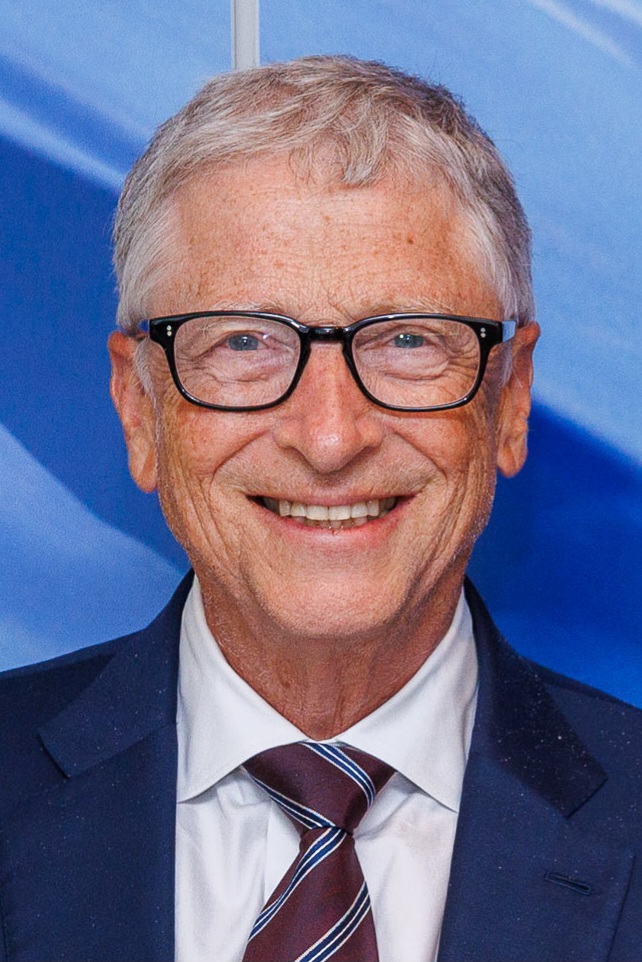
Bill Gates turned seventy in October 2025. He has not drawn a meaningful salary in years, holds less than two percent of the company that made his name, and has given away tens of billions of dollars to global health initiatives. His net worth, by our analysis, still sits at approximately $101 billion.
That figure aligns closely with what Bloomberg's Billionaires Index has tracked in real time. Celebrity Net Worth put the number at $105 billion in its March 2026 update; a WageIndicator aggregation citing Forbes landed closer to $107.7 billion; Live Counter's less conservative methodology reached as high as $120 billion. Our estimate, weighted by recency and source authority, arrives at $101 billion as of June 2026. A figure that reflects both Microsoft's recent price volatility and the diversified drag-and-lift dynamics of Cascade Investments.
What makes the Gates fortune unusual is its intentional architecture. This is not a founder still riding a single equity rocket. The portfolio has been methodically redistributed across farmland, hotel chains, railroad infrastructure, and public equities. A capital-allocation philosophy that prioritizes durability over velocity. Understanding it requires looking past the Microsoft origin story to the machine Gates built to replace it.
Where Gates Ranks Among the World's Wealthiest in 2026
At $101B, Gates sits outside the top three billionaires globally in 2026, trailing Elon Musk and Jeff Bezos, but his fortune is uniquely diversified away from a single founder equity.
A decade ago, Gates held the top spot on the global billionaire rankings almost reflexively. Forbes listed him as the world's wealthiest person in eighteen of the twenty-four years between 1995 and 2017. That dominance has dissolved, not because his wealth shrank but because the cohort above him grew faster. Musk's Tesla and SpaceX trajectories, Bezos's Amazon stacking. These pushed Gates into a tier that is still rarefied but no longer singular.
The critical distinction is structural. Where most centibillionaires derive the overwhelming majority of their stated net worth from a single founder equity. One stock, one multiple. Gates has spent the better part of two decades actively deconcentrating. The result is a fortune that moves differently from the market. When tech sells off sharply, the Gates balance sheet does not crater in the same proportion as peers whose wealth is essentially one ticker.
His 2026 standing also reflects philanthropy's real cost. The Bill & Melinda Gates Foundation has received asset transfers that, had they remained in his personal portfolio, would have pushed the headline figure substantially higher. The $101 billion we arrive at is after those transfers. A net number in both senses of the word.
Cascade Investments: The $55 Billion Engine Most People Overlook
Cascade Investments, Gates' private holding company, accounts for roughly $55.5B. About 55% of his total net worth. Spanning farmland, Four Seasons Hotels, Canadian National Railway, and other diversified positions.
Cascade Investments, run from Kirkland, Washington by a small team of professional allocators, is the structural core of the Gates fortune. Our breakdown assigns it approximately $55.5 billion. Roughly 55 percent of the total. Making it the single largest component by a wide margin. This is not a family office in the conventional, wealth-preservation sense. Cascade has made aggressive, conviction-weighted bets across asset classes that most billionaire vehicles would never touch.
The hotel position is the most visible. Cascade holds majority ownership of Four Seasons Hotels & Resorts, a brand that sits at the absolute apex of global hospitality. The investment signals a broader thesis: irreplaceable physical assets with pricing power tend to compound reliably across economic cycles. The same logic underlies Cascade's stake in Canadian National Railway, one of North America's most strategically positioned rail networks. Rail infrastructure is essentially impossible to replicate. The moat is the geography itself.
Farmland is perhaps the most discussed and least understood piece. Gates has become the largest private owner of agricultural land in the United States, with holdings spread across multiple states. The position is partly a bet on long-term food-system scarcity, partly a real asset hedge against monetary inflation, and partly consistent with Gates' longstanding interest in agricultural innovation. Critics have raised questions about land consolidation; the financial logic, whatever one thinks of the policy implications, is straightforward.
The breadth of Cascade's mandate is what separates it from a standard family office. It is closer in philosophy to a sovereign wealth fund. Patient, multi-decade time horizons, willingness to hold illiquid positions, and a preference for businesses with structural competitive advantages rather than cyclical momentum plays.
“Gates' $101 billion is not a founder's windfall frozen in time. It is a sovereign-scale portfolio built specifically to outlast the company that created it.”
Microsoft Equity: Still Worth $30 Billion Despite a Drastically Reduced Stake
Gates holds roughly 103 million Microsoft shares. About 1.4% of the company. Worth approximately $38B at recent prices, contributing an estimated $30.3B net to his wealth after accounting for portfolio weighting.
At the time of Microsoft's 1986 IPO, Gates owned a commanding share of the company. Today, after decades of sales, transfers to his foundation, and ordinary dilution, his stake has been pared to approximately 1.4 percent. Around 103 million shares. Celebrity Net Worth's March 2026 estimate pegged the gross Microsoft equity value at roughly $38 billion; our analysis allocates approximately $30.3 billion on a portfolio-weighted basis, accounting for the position's role within the broader asset mix.
The dividend alone is meaningful. At Microsoft's current payout rate, Gates collects approximately $309 million annually just from his shareholding. A passive income stream that most billionaires would treat as their primary wealth source. For Gates, it is essentially a rounding line in a $101 billion ledger.
The Microsoft position also carries inherent concentration risk, which Cascade's breadth is designed to offset. If the software giant's stock were to experience a sustained multiple compression. Plausible in a higher-rate environment, or if AI competition erodes its enterprise margins. The Gates fortune would absorb a meaningful hit. But that hit would land on roughly 30 percent of assets, not 90 percent. The deconcentration strategy, executed over two decades, means Microsoft's fate is no longer Gates' fate.
Public Equities and Alternatives Beyond Microsoft: A $10 Billion Supporting Layer
Outside of his Microsoft shares, Gates holds an estimated $10.1B in other publicly traded equities and alternative investments, including positions in companies like John Deere.
The third tier of the Gates portfolio. Approximately $10.1 billion by our reckoning, or roughly 10 percent of total wealth. Consists of additional public equity stakes and alternative investment positions managed outside the core Microsoft block. These are less often discussed but carry strategic coherence.
A stake in Deere & Company, the agricultural and construction equipment manufacturer, fits neatly with the farmland thesis: Gates is effectively long on the entire agricultural value chain, from the land itself to the machinery that works it. The position reflects a systems-level investment worldview rather than opportunistic stock-picking.
The alternatives allocation likely includes private credit, infrastructure debt, and other instruments consistent with Cascade's long-duration philosophy. These holdings are less transparent by nature. Cascade is not a public vehicle. But the overall 10 percent allocation functions as both yield enhancement and portfolio smoothing, dampening volatility without sacrificing total return potential.
Real Estate: A $5 Billion Slice That Includes America's Most Analyzed Mansion
Real estate accounts for an estimated $5B of Gates' net worth, anchored by his vast US farmland portfolio and his prominent Seattle-area estate, known widely as Xanadu 2.0.
Real estate contributes roughly $5 billion. Five percent of total wealth. A proportion that undersells its cultural footprint. Gates' Seattle-area lakeside home, a 66,000-square-foot compound that spent years under construction and has attracted endless architectural commentary, is among the most recognizable private residences in the United States. Its assessed value, while substantial in absolute terms, is a fraction of the overall portfolio.
The more financially significant real estate story is the farmland. Spread across states including Louisiana, Arkansas, Arizona, Washington, and others, the holdings aggregate to more than a quarter-million acres by some estimates. This land does not sit idle. Much of it is actively farmed under management contracts. The returns are modest by equity standards but the asset class has demonstrated resilience across inflationary cycles, and the long-term thesis around global food demand gives the position a macro tailwind.
Real estate's 5 percent weighting in Gates' overall picture is instructive. It is treated as a store of value and an inflation hedge, not as a return-maximization vehicle. That discipline. Assigning each asset class a role rather than chasing yield indiscriminately. Is characteristic of how the entire Gates portfolio has been constructed.
How Gates' Capital Allocation Philosophy Evolved After Leaving Microsoft
After stepping back from Microsoft's day-to-day operations, Gates step by step shifted wealth from a single founder equity into a multi-asset structure designed for generational durability rather than near-term appreciation.
Gates stepped down as Microsoft's CEO in 2000, as chairman in 2014, and left the board entirely in 2020. Each departure accelerated the portfolio's transformation. When a founder's identity is still tied to a company, selling shares carries reputational cost. Once that tie loosens, capital can move more freely. And Gates moved his aggressively.
The philosophy that emerged at Cascade is legible in its holdings: hard assets with pricing power, infrastructure with regulatory moats, brands with global reach and pricing at the top of their categories. Four Seasons does not compete on price. Canadian National Railway does not face disruptive new entrants. US farmland does not depreciate in the way that software multiples can. Each position is chosen to be durable in a way that Microsoft shares, for all their quality, are not.
There is also the philanthropy layer, which shapes capital allocation in ways that do not appear on a standard net-worth ledger. The Gates Foundation's asset trust receives periodic transfers from Gates' personal holdings, meaning his wealth is in perpetual outflow to causes including global vaccination campaigns, agricultural development, and climate technology. The $101 billion figure we present represents what remains after those transfers. A fortune that has been partially spent, intentionally, on the world's hardest problems.
Philanthropy's Real Cost: What Gates Has Given Away Changes the Entire Calculation
Gates has transferred tens of billions to the Bill & Melinda Gates Foundation over time; his current $101B net worth is a post-philanthropy figure, meaning the gross total redistributed across his lifetime is substantially higher.
No analysis of the Gates fortune is complete without accounting for the foundation. Since its establishment, Gates has transferred assets on a scale that rivals the endowments of major sovereign wealth funds. Had those assets remained in his personal portfolio, the headline number today would read materially higher than $101 billion.
The WageIndicator income aggregation. Placing his annual earnings flow at approximately $688 million. Captures investment returns and dividends but does not fully account for the outbound flow to philanthropic vehicles. The net effect is a fortune that is simultaneously enormous and actively being reduced, by choice, at a pace that most billionaires would find uncomfortable.
This creates an unusual analytical situation. Unlike peers whose wealth trajectories are largely functions of market returns and capital allocation, Gates' net worth is also a function of his giving rate. A faster drawdown to the foundation could reduce the headline figure faster than any market downturn. That asymmetry. Where generosity is a real financial risk to the balance sheet. Is essentially unique at this scale.
Risk Factors: What Could Move the $101 Billion Figure in Either Direction
The Gates fortune faces downside risk from Microsoft multiple compression, farmland regulatory pressure, and accelerated foundation transfers; upside from Cascade's infrastructure and hospitality positions in a sustained inflationary cycle.
Microsoft is both the foundation and the primary vulnerability. At roughly 30 percent of Gates' total wealth, a sustained de-rating of the stock. Driven by AI competition, antitrust action, or a broad tech multiple compression. Would be the single largest negative catalyst. The position has appreciated dramatically over the past decade, but that same appreciation means any reversal carries proportionally larger dollar impact.
Cascade's farmland and infrastructure positions are more insulated from market volatility but face their own risks. Political pressure around large private landowners has intensified in several US states, and regulatory action. Restrictions on foreign ownership models that could be extended to corporate or quasi-institutional domestic buyers. Represents a slow-moving but real policy threat. The Four Seasons position is exposed to travel demand cycles, though the luxury segment has historically proven more resilient than mass-market hospitality.
On the upside, Cascade's infrastructure tilt is well-positioned for a sustained inflationary regime. Rail, farmland, and premium hospitality all tend to pass through inflation via pricing power. If the macro environment remains built that way elevated in terms of input costs, the Cascade portfolio could appreciate faster than the broader equity market. A scenario that would push our $101 billion estimate meaningfully higher by year-end 2026.
Trajectory: Where the Gates Fortune Goes From Here
Barring a sharp Microsoft correction or accelerated philanthropic transfers, Gates' net worth is likely to hold in the $101B–$107B range through 2026, with Cascade's infrastructure tilt providing a durable floor.
The range of published estimates. Bloomberg at $101 billion, Celebrity Net Worth at $105 billion, Forbes-derived figures closer to $107.7 billion. Reflects genuine uncertainty, not sloppy methodology. The Gates fortune is harder to mark than a single-stock billionaire's because so many of its components are privately held or illiquid. Our $101 billion figure leans toward the conservative end of that range, consistent with Bloomberg's real-time tracking and accounting for recent Microsoft price movement.
Structural momentum favors a gradual upward drift. Cascade's holdings are stacking quietly; Microsoft dividends of approximately $309 million annually reinvest or accumulate; the farmland portfolio benefits from long-term agricultural demand tailwinds. None of this is explosive growth. But it does not need to be when the base is nine figures.
The wildcard is Gates himself. His philanthropy has already redistributed sums that would constitute independent fortunes. If he accelerates those transfers. As he has suggested publicly. The trajectory bends downward even as the underlying assets appreciate. The most interesting question about Bill Gates' net worth in 2026 is not how high it can go, but how fast he chooses to give it away.
How the $101B adds up
- Cascade Investments (diversified portfolio)Gates' primary investment vehicle holds a vast portfolio including majority ownership of Four Seasons Hotels & Resorts, large US farmland holdings, Canadian National Railway stakes, and other equity positions, representing the largest portion of his net worth.$55.5B55%
- Microsoft equity & dividendsGates retains roughly 103 million Microsoft shares (~1.4% stake), valued at approximately $38 billion, plus ~$309 million annually in Microsoft dividends.$30.3B30%
- Other public equities & alternative investmentsAdditional holdings including stakes in companies like John Deere and other publicly traded equities managed outside the core Microsoft position.$10.1B10%
- Real estateGates is the largest private owner of farmland in the US and owns significant residential real estate including his prominent Seattle-area mansion, contributing a meaningful but smaller fraction of total net worth.$5.0B5%
Ezra Linwood — Ezra Linwood covers billionaire wealth structures, family offices, and capital allocation strategy for Neon Hollywood.
Disclaimer: Net-worth figures are editorial estimates built from publicly available reporting, filings, and market data — see our methodology. They are not verified statements of any person’s finances and nothing here is financial advice.