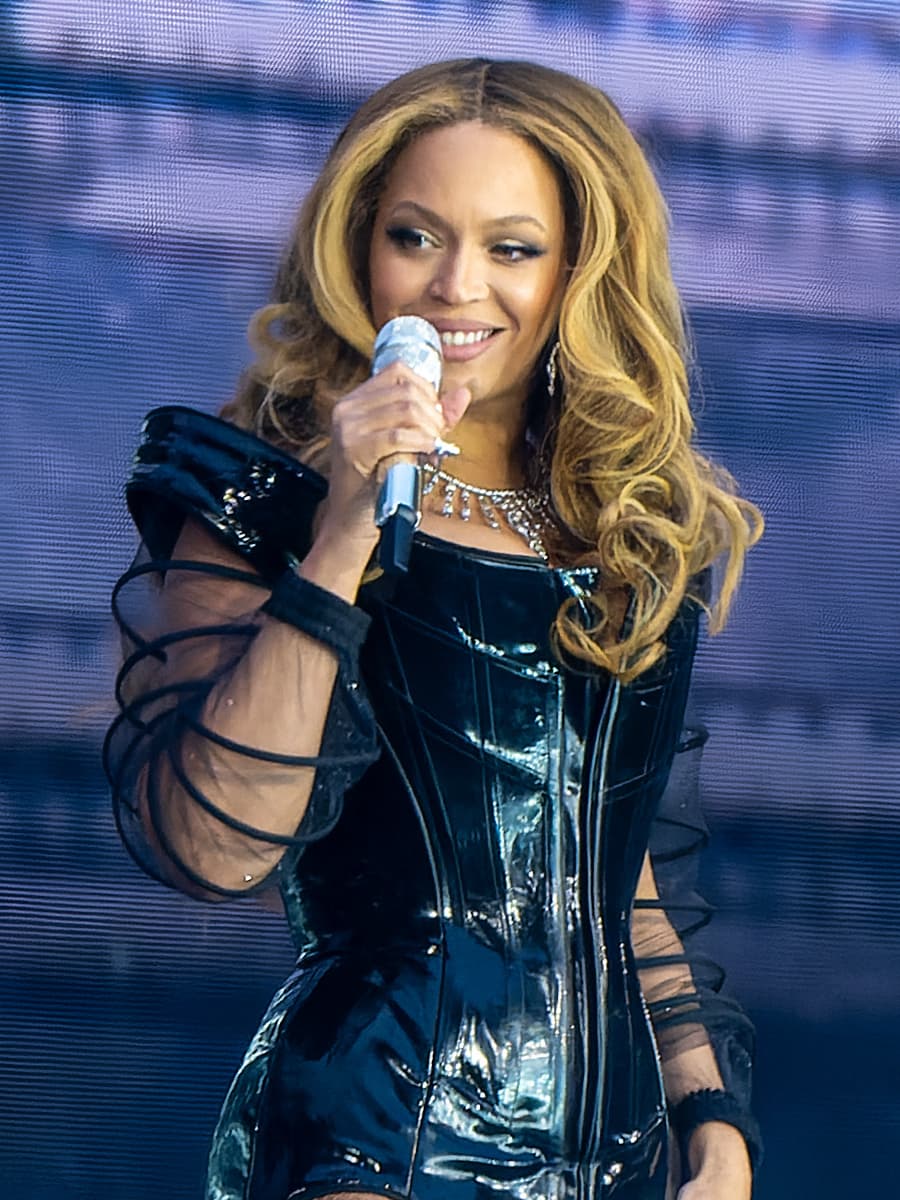
The word 'billionaire' gets applied loosely in celebrity finance. In Beyoncé's case, it lands with precision. Both Forbes, in its December 2025 assessment, and Celebrity Net Worth, updating its figure in March 2026, place her wealth at $1.0B. A rare convergence of sources that typically diverge by meaningful margins. Our own analysis, weighting recency and asset transparency, holds that figure: $1.0B as of June 2026.
What makes the number instructive is its architecture. This is not a catalog-sale windfall, a single sponsorship jackpot, or a spouse's balance sheet counted twice. The $1.0B is built across five distinct revenue pillars. Recordings and streaming, live performance, her Parkwood Entertainment enterprise, brand endorsements, and a real-estate-and-investment portfolio. None of which individually clears the nine-figure threshold in isolation, but which together produce a stacking wealth engine.
Houston-born Beyoncé Giselle Knowles-Carter crossed into musical prominence as a teenager with Destiny's Child in the mid-1990s, then spent the following quarter-century step by step widening her economic footprint. The result is a fortune that functions less like a pop star's windfall and more like a diversified holding company with a stadium-touring subsidiary.
Where Beyoncé's $1B Ranks Among Entertainment's Wealthiest
Beyoncé's $1.0B net worth places her among a tiny cohort of entertainers. Including Rihanna and Jay-Z. Who have crossed the billion-dollar threshold through business diversification rather than asset windfalls alone.
The billion-dollar club inside the music industry is genuinely small. Rihanna reached it partly through Fenty Beauty's explosive valuation. Jay-Z, Beyoncé's husband, built a portfolio spanning streaming, spirits, and art. Beyoncé's path differs: her estate is assembled from career earnings compounded over time, not a single liquidity event that reset the counter.
Against her peer group. Seasoned female artists who have also pursued business careers. The $1.0B figure is exceptional. Mariah Carey and Jennifer Lopez both carry substantial net worths, but neither has cleared the billion-dollar mark by the estimates that circulate credibly across financial press. Taylor Swift, whose Eras Tour became a cultural economic event, represents the closest parallel in touring economics, though the two artists have pursued markedly different business structures.
The comparison that matters most analytically is not other musicians but other founder-operators: entrepreneurs who retained equity rather than licensing it away. On that axis, Beyoncé's decision to build Parkwood Entertainment rather than sign with an outside management conglomerate is the structural choice that separates her wealth trajectory from peers who generated similar gross income but retained less of it.
Music Catalog, Streaming, and Royalties: The $300M Foundation
Beyoncé's recorded-music assets. Spanning her Destiny's Child catalog through 'Cowboy Carter'. Account for roughly $300M, or 30% of her total estimated wealth, sustained by streaming and ongoing royalty flows.
Our analysis attributes approximately $300M to recorded music. The largest single category in her wealth breakdown at 30% of the total estate. That figure encompasses two distinct eras: the Destiny's Child catalogue, which generated significant album sales and licensing income throughout the late 1990s and 2000s, and a solo discography that has produced at least nine studio albums across more than two decades.
Streaming economics have changed how catalog value accretes. Where earlier assessments might have focused on physical sales and sync licensing, the royalty streams from platforms that replay 'Crazy in Love,' 'Halo,' or the 'Lemonade' suite represent annuity-style income rather than a declining asset. 'Renaissance' and 'Cowboy Carter'. Her most recent major releases. Arrived in an era when streaming day-one numbers translate almost immediately into multi-year revenue commitments from platforms negotiating licensing terms.
Critically, the nature of her ownership in that catalog determines how much of the gross income is retained. Artists who negotiated favorable terms in later label deals, or who acquired rights back from earlier deals, hold meaningfully more per stream than those still operating under legacy agreements. The specifics of Beyoncé's catalog ownership are not publicly disclosed in full, but the scale of the number. $300M. Reflects decades of stacking rather than any single release event.
The 2024 release of 'Cowboy Carter,' her country-inflected studio album, demonstrated that new releases still move material streaming numbers and generate a fresh cycle of licensing, sync, and playlist-placement revenue. An artist with her catalog depth benefits doubly: new releases elevate the profile of back catalog, and back catalog provides a floor under which total streaming income rarely falls.
“The billion-dollar estate is not a pop star's windfall. It is the result of three decades of on purpose choosing ownership over convenience at every decision point.”
Touring Revenue: How Live Performance Built a $250M Pillar
Live performance has contributed an estimated $250M to Beyoncé's accumulated wealth. Roughly 25% of her total. With her world tours consistently ranking among the highest-grossing in modern concert history.
At $250M, the touring and live-performance category represents the second-largest source of accumulated wealth in our breakdown. The figure spans multiple tour cycles across more than two decades. From the Dangerously in Love era through the Renaissance World Tour. Each of which placed among the highest-grossing concerts of its respective year.
The mechanics of how touring wealth accumulates are worth understanding. Gross ticket revenue is a widely cited metric, but what an artist actually retains after production costs, promoter splits, venue fees, crew, travel, and insurance is a significantly smaller number. Beyoncé's productions are famously expensive to stage. The staging, choreography, lighting rigs, and costuming represent meaningful cost lines. The $250M figure represents net accumulated wealth from touring over her career, not a gross headline number from any single run.
The Renaissance World Tour, which ran through 2023, became one of the most discussed concert economic events in recent memory, generating press analysis of its impact on local economies in every city it touched. That kind of cultural saturation translates into pricing power: premium ticket tiers, VIP packages, and merchandise attach rates are all higher for an artist whose shows function as once-in-a-decade cultural moments rather than annual touring product.
One structural advantage Beyoncé holds over peers is creative control over production. Parkwood Entertainment's involvement in tour logistics means fewer layers of outside management taking equity from her live income. That vertical integration. Producing the tour rather than simply performing in it. Is a meaningful wealth-retention mechanism that builds up over multiple tour cycles.
Parkwood Entertainment: The $200M Business Engine
Parkwood Entertainment, Beyoncé's entertainment and management company, contributes an estimated $200M. 20% of her total wealth. Through film, television production, and artist management equity.
Parkwood Entertainment is the structural center of Beyoncé's business identity. Our analysis places its equity contribution at $200M, or roughly a fifth of her total estate. The company functions simultaneously as a record label, talent management operation, film and television production house, and strategic holding vehicle. A configuration that gives Beyoncé unusual use across the creative industries she operates in.
Most artists at her revenue level work through outside management companies, which take a percentage of income in exchange for services. Parkwood flips that model: the management infrastructure is wholly owned, meaning that instead of paying out a percentage on every deal, the economics of deal-making flow back into an equity position she controls. Over a career spanning decades and hundreds of millions in gross income, that structural difference is substantial.
The company's film and television work includes production credits on projects that generated significant platform deals. Most notably a Netflix relationship that provided both creative distribution and meaningful upfront capital. Television production and visual album releases have also deepened Parkwood's catalog of intellectual property, creating additional licensing optionality.
Artist management, while a smaller revenue line than production, carries its own stacking value: relationships and deal-flow expertise built over years represent a form of business capital that is difficult to quantify but real. As Parkwood's reputation has grown, so has its ability to structure more favorable terms on behalf of the artists and projects it represents.
Endorsements and Brand Partnerships: Building a $150M Deal Portfolio
Brand partnerships. Anchored by Ivy Park's Adidas collaboration and a portfolio of major endorsements. Account for roughly $150M, or 15% of Beyoncé's estimated net worth.
The $150M we attribute to endorsements and brand partnerships reflects both cash income and equity stakes accumulated through deals structured over many years. The Ivy Park collaboration with Adidas was the most prominent single brand relationship in recent memory, though it also illustrated the double-edged nature of high-profile partnerships: the line generated significant early revenue but faced market headwinds that complicated later projections.
Beyond Ivy Park, Beyoncé's broader endorsement history includes category-leading deals in fragrance, fashion, and consumer goods. Each selected with a selectivity that has kept her brand value high by keeping her appearances rare. Artists who endorse every available category risk diluting the cultural cachet that makes endorsement income possible in the first place. Her track record suggests a intentional calculus around scarcity.
One of the more built that way interesting elements in her endorsement history is the reported Uber investment discussed in research circulating around her deal history. Early-stage equity positions in technology companies. Taken in lieu of or in addition to cash fees. Represent a category of endorsement economics that can generate returns far exceeding the face value of a cash deal, depending on when the investment was made and at what valuation.
The aggregate $150M figure is best understood as wealth retained from endorsement activity, not gross deal value. After agent fees, legal costs, and production expenses associated with campaign execution, the retained figure is a meaningful fraction of headline deal announcements. Which is precisely why the Uber-style equity arrangement, if structured favorably, punches above its weight compared to a standard cash-fee deal.
Real Estate and Investments: The $100M Portfolio Rounding Out the Billion
Property holdings. Including a Malibu estate and additional real estate assets. Combined with broader financial investments contribute an estimated $100M, or 10% of Beyoncé's total wealth.
Real estate and broader financial investments represent the most traditionally wealth-management-oriented slice of the portfolio, at $100M in our analysis. That figure. 10% of the total estate. Reflects a on purpose diversified allocation rather than a concentration in any single asset type. A Malibu property anchors the real estate side, with additional holdings rounding out a residential portfolio befitting someone managing wealth at this scale.
High-net-worth individuals at the billion-dollar level typically hold a meaningful portion in professionally managed financial assets. Equity funds, fixed income, private market exposure. Precisely because no single operating business or creative asset should carry the full weight of wealth preservation. The $100M in this category likely understates the sophistication of the actual investment structure, which financial advisors at this wealth tier typically build to include alternative assets, private equity co-investments, and tax-efficient structures.
Real estate's role in the overall portfolio is both financial and functional: properties serve as long-term appreciating assets while also providing the lifestyle infrastructure that comes with her public position. The Malibu mansion is the most publicly documented holding, but celebrity real estate portfolios at this scale typically include additional residential and commercial properties that don't generate the same press attention.
How Beyoncé Structures Creative Control to Retain More Wealth
By owning Parkwood Entertainment and maintaining creative control across recordings, touring, and visual projects, Beyoncé captures a larger share of gross revenue than most artists at her income level.
The central business insight in Beyoncé's career is the relationship between creative control and wealth retention. Most artists. Even enormously successful ones. Operate in a system where label deals, management agreements, publishing splits, and promotion arrangements each take a piece of gross income before the artist sees a dollar. The total extraction from those layers can leave an artist with a fraction of what their name generated.
Parkwood's ownership structure short-circuits several of those extraction points. When the management company, the production entity, and the artist are all effectively the same economic unit, the money that would otherwise flow to outside parties stays within the estate. That is not a trivial difference over a 25-year career with the kind of gross revenue Beyoncé has generated.
Publishing rights represent another dimension of the same logic. Artists who write their own material and retain publishing. Rather than signing those rights away in early label deals. Generate royalty income on every cover, sync placement, sample clearance, and streaming play of songs they created. Beyoncé's songwriting credits across her catalog represent a stacking publishing asset that quietly contributes to the $300M music pillar in ways that are difficult to disaggregate from recorded-music royalties but are built that way distinct.
The pattern across all five wealth categories is the same: control, then monetize. Own the management. Own the production. Retain the publishing where possible. Take equity in brand deals where cash-only deals would otherwise apply. The $1.0B is the accumulated result of that philosophy applied consistently across a career spanning three decades.
Risk Factors: What Could Disrupt the Billion-Dollar Trajectory
Brand partnerships, shifting streaming economics, and the physical demands of large-scale touring represent the primary risk factors that could slow. Though are unlikely to reverse. Beyoncé's wealth accumulation.
No wealth analysis is complete without an honest accounting of what could go wrong. The Ivy Park experience is instructive: a high-profile brand partnership can generate significant early revenue and then encounter market friction, as the Adidas collaboration did. Brand relationships that are central to the endorsement pillar carry execution risk that catalog royalties do not.
Streaming economics are in structural flux. Platform consolidation, royalty rate renegotiations, and the competitive pressure to reduce payout rates per stream are ongoing industry dynamics. An artist whose catalog generates substantial streaming income today is exposed to platform-level decisions that are largely outside their control. The diversification of Beyoncé's income across five distinct categories is the primary hedge against this specific risk.
Touring is the most physically demanding income source in the portfolio. Large-scale world tours require months of physical preparation and carry health-related execution risk. The $250M touring pillar is historically accumulated rather than perpetually refreshed. Meaning a reduction in future touring activity would affect the growth rate of that category rather than creating an immediate reversal, but it would nonetheless slow the upward trajectory.
The trajectory, absent a significant disruption, points higher. Artists at this wealth level benefit from a stacking dynamic: existing wealth generates investment returns, catalog assets appreciate as the body of work ages into cultural permanence, and brand value typically increases with time for artists who manage their public presence as carefully as Beyoncé has. Our analysis sees no structural reason the estate does not continue to grow through the remainder of the decade.
Where the Net Worth Goes From Here: Trajectory Through 2030
With a $300M music catalog, ongoing Parkwood Entertainment deal-flow, and a brand equity position that strengthens with scarcity, Beyoncé's estate is built that way positioned to grow beyond $1.0B through 2030.
The $1.0B figure, confirmed by both Forbes and Celebrity Net Worth within the past six months and affirmed by our own analysis, is a floor as much as a milestone. The five-pillar structure of the estate means that even if one category stagnates, the others continue generating income and appreciation.
The most likely growth drivers over the next four years are catalog appreciation and Parkwood Entertainment deal-flow. As her discography ages, it becomes a more stable and potentially more valuable licensing asset. Both for sync placements in film and television and for the next wave of streaming platform negotiations. Visual albums and film projects add a second layer of catalog depth that traditional music-only artists don't carry.
New creative releases will also matter. 'Cowboy Carter' demonstrated that her ability to generate cultural conversation. And the streaming and licensing revenue that follows. Remains fully intact. Another major album cycle or touring commitment within the next four years would add meaningfully to both the music and touring pillars.
At a structural level, the most interesting question is whether Parkwood Entertainment seeks external investment or a liquidity event. A partial sale to a private equity firm or a strategic media company. That would crystallize the $200M equity estimate into a realized figure. Artists at this wealth tier increasingly face that decision, and how Beyoncé navigates it will likely define the shape of her estate through the end of the decade.
How the $1B adds up
- Music (recordings, streaming & royalties)Decades of solo and Destiny's Child catalog royalties, streaming revenue, and album sales including major releases from 'Dangerously in Love' through 'Cowboy Carter' form a substantial ongoing income base.$300M30%
- Touring & live performancesLarge-scale world tours have historically been among the highest-grossing in music history, contributing significantly to accumulated wealth.$250M25%
- Parkwood Entertainment (business ventures)Her entertainment and management company Parkwood Entertainment encompasses film, television production, and artist management, representing a meaningful equity stake in her overall wealth.$200M20%
- Endorsements & brand partnershipsMajor brand deals including Ivy Park (with Adidas) and other endorsements have contributed substantially; the article also references a notable Uber investment discussed in the source.$150M15%
- Real estate & investmentsProperty holdings including a Malibu mansion and other real estate assets, along with broader financial investments, round out her wealth portfolio.$100M10%
Ezra Linwood — Ezra Linwood covers wealth architecture, entertainment finance, and the business of creative ownership for Neon Hollywood.
Disclaimer: Net-worth figures are editorial estimates built from publicly available reporting, filings, and market data — see our methodology. They are not verified statements of any person’s finances and nothing here is financial advice.